 Orvus
OrvusIs ChatGPT good for writing?
December 10, 2025
Is ChatGPT good for writing? A practical guide for creators and teams
chatgpt for writers is a question more teams and solo authors ask every week. If you want a clear, practical answer - not hype - this article walks through what works, what doesn’t, and how to combine machine speed with human judgment so your content stays useful and trustworthy.
Why this question matters

When you sit down to write, inspiration can be stubborn and deadlines keep knocking. Tools branded as chatgpt for writers promise to turn the blank page into a structured draft in minutes. That speed is real, but speed alone doesn’t guarantee value. Editors, product teams, and readers care about accuracy, voice, and originality. The right approach is not to ask whether ChatGPT can replace human writers, but how to use chatgpt for writers to make human writers more effective.
What LLMs do well
Large language models excel at structure, tone, and producing readable copy rapidly. Need a set of headline variations, an outline for a how-to, or a friendly explainer? Ask an LLM and you’ll often get usable material. Across many tests, drafts from these models have matched basic human first-draft baselines for clarity and coherence. For straightforward articles where clarity is the primary goal, chatgpt for writers can save hours.

Where human writers still win
There are clear limits. LLMs can hallucinate facts, cite unreliable sources, or slip on domain nuance. For medical, legal, or technical pieces, a human expert is essential to verify claims and shape judgment. Even in marketing or product copy, original storytelling and interviews remain human strengths. Use chatgpt for writers to get started - not to finish without review.
The human-in-the-loop workflow that works
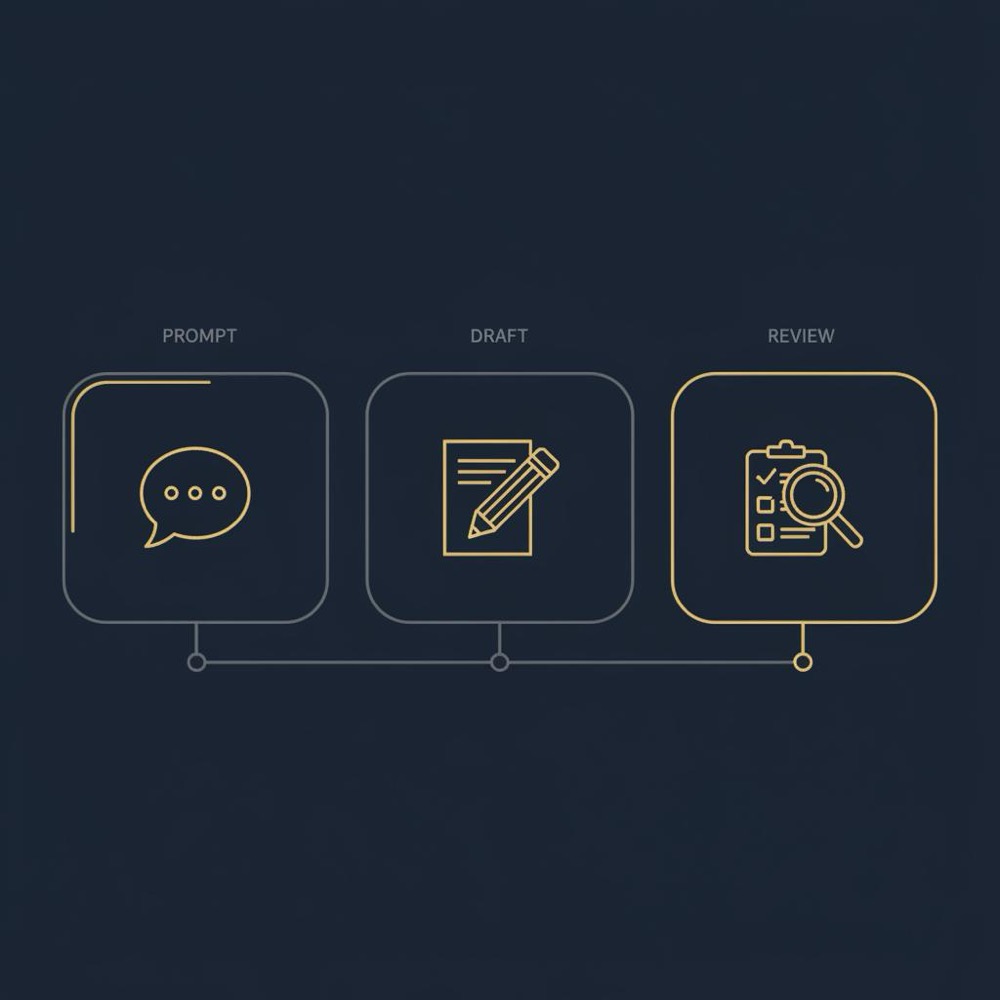
Successful teams pair people with models. A simple, repeatable workflow looks like this:
1. Define the reader’s question and article intent.
2. Use a structured prompt to get an outline and first draft.
3. Edit for tone and clarity.
4. Fact-check or have an expert review.
5. Add original material (quotes, data, anecdotes).
That process raises the publishable rate of drafts produced with chatgpt for writers and keeps brand trust intact.
For practical guidance on integrating humans and models in editorial pipelines, see this piece on editorial workflows: AI and Editorial Workflows.
Scale your content with safe AI workflows
If you want to pilot human-in-the-loop workflows, consider practical support and workshops at Orvus services to test ideas and measure results.
Tip from the field: teams at Orvus' services tested human-in-the-loop workflows and found that combining structured prompts with editorial oversight accelerated draft throughput while maintaining accuracy. If you're building systems for content scale, consider that a tactical step you can experiment with today.
Prompt design: the small investment with big returns
LLMs don’t read your mind. The better your document-level prompt - include audience, desired length, headings, and a list of sources to prefer - the closer the draft will be to publishable. Over time, teams build a small library of prompt templates for different article types. These templates are one of the most effective productivity investments when using chatgpt for writers.
Costs, tokens, and editorial time
Not all models are equal. Smaller models cost less but usually require more editing. Larger models cost more but can cut revision time. When calculating cost-per-article, include: API or subscription fees, writer and editor hours, and the potential cost of a factual error. That holistic view ensures you’re optimizing for real outcomes, not just per-token price - a critical insight for anyone using chatgpt for writers.
Accuracy: train your attention on facts
Fluent prose can mask mistakes. Hallucinations remain common when models are pushed into niche territory. Treat model output as draft material and always verify facts, code snippets, legal wording, and numbers. For many teams, the difference between a publishable draft and a problematic one is a careful fact-check. That is why human review is non-negotiable when using chatgpt for writers on technical or high-stakes topics.
Proven editorial checks
Use a checklist: verify dates, confirm quotes with named sources, match code samples to official docs, and link to primary references. If a claim can’t be traced to a reliable source, mark it as opinion or remove it. These checks reduce risk and increase reader trust when you use chatgpt for writers. For research on human-in-the-loop annotation effects, see Just Put a Human in the Loop?.
Ethics and transparency
Some organizations disclose AI assistance; others don’t. Where credibility matters, a short note that the article was drafted with an AI and reviewed by experts can build trust. When readers know you used chatgpt for writers as a drafting tool and then verified the output, disclosure can become an asset. For emerging consensus on retrospective evaluation and safety practices, consult this recent expert consensus: 2025 expert consensus.
SEO realities and platform scrutiny
In 2024 search engines signaled that mechanically produced content with no unique value will be downgraded. That doesn’t ban AI-assisted writing. It means you must add human value: original research, stronger logic, named expert review, or exclusive anecdotes. Use chatgpt for writers for drafting and ideation, and use humans to add signals of expertise and usefulness so the content performs in search.
Practical SEO steps
Structure content for scanning, include intent-driven headings, and link to reputable sources. Date the article. If the model made factual claims, verify and cite primary sources. When you combine these SEO practices with AI drafting, your pages are far more likely to be trusted by both readers and algorithms - a clear win for teams using chatgpt for writers.
Practical, tested workflow: step-by-step
Here’s a detailed, repeatable workflow that teams can adopt immediately:
Step 1 - Define intent and audience
Write the single reader question at the top of your prompt. Example: "What does a mid-market CTO need to know to evaluate API rate limiting for a 2025 migration?" That clarity helps the model focus and reduces wasted edits when using chatgpt for writers.
Step 2 - Provide structure
Give headings, paragraph lengths, and the tone. Ask for a short list of suggested sources and for the model to flag uncertain claims. This instruction lowers hallucination risk and produces a cleaner draft to edit.
Step 3 - Edit for clarity and voice
Do a first-pass edit to fix tone, remove repetition, and ensure brand voice. This is where writers add true value: narrative choices, emphasis, and unique framing that a model cannot invent from experience.
Step 4 - Fact-check and expert review
For technical content, have a named colleague confirm examples and numbers. For non-technical posts, spot-check facts and links. This is the difference between a helpful article and one that damages trust - especially when relying on chatgpt for writers.
Step 5 - Add original assets
Include a short interview quote, a proprietary chart, or a personal anecdote. These elements make your content distinct and defensible in search results.
Yes - when you pair AI with clear intent, structured prompts, and human review. Use models for drafting and ideation, but keep experts in the loop to verify facts and add original insight.
Real-world example: a two-hour how-to
A writer at a mid-sized tech company used chatgpt for writers to draft a 900-word explainer of a new API feature. The model produced an outline and readable paragraphs. The writer spent an hour correcting terminology, verifying code against the release notes, and adding two short teammate quotes. Total time: two hours. Without the model, it would have taken at least four. With no expert review, the model might have produced an incorrect sample. The pairing reduced time and prevented error.
Where you should avoid relying on models
High-stakes material - legal, medical, or financial advice - should not be published based on a model-generated draft alone. Experts are needed to weigh evidence and explain trade-offs. Even for marketing campaigns where brand voice is central, heavy reliance on chatgpt for writers without human editorial craft risks producing bland, pattern-driven copy.
A note on originality
LLMs pattern-match from their training data; they do not have firsthand experience. Use the model to reduce repetitive work, then ask humans to bring curiosity and fresh reporting. That combination yields content that readers prefer and search engines reward.
Measuring what matters
Track two categories: efficiency and quality. Efficiency metrics include drafts produced per hour and time-to-publish. Quality metrics are engagement, bounce, time-on-page, and error incidents. If output rises but engagement falls, fix the workflow: ask the model for fewer words, require stronger sources, or set rules that force a human add original content before publish - practical guardrails for teams adopting chatgpt for writers.
Iterating on prompts
Treat prompt design like editing. Test small changes and measure the effect on editing time. Keep a library of templates for how-to guides, announcements, and long-form explainers. Those templates are a core productivity asset when using chatgpt for writers.
Useful tips every writer can use today
Write the intent in the first line of your prompt. Ask the model for an outline and to flag uncertain claims. Keep a small library of templates. Verify facts and code. Add a short original anecdote. These small habits make AI assistance safe and productive - the practical nuts-and-bolts of using chatgpt for writers well. For more short how-tos and resources, see our collection on the Orvus blog: useful knowledge.
Common questions answered
Can ChatGPT replace a human writer? For routine drafting it can be a powerful assistant, but it cannot fully replace originality, reporting, and expert judgment. For specialized or high-stakes topics, human writers are essential.
Is ChatGPT good for writing blog posts? It is very good at outlines and readable drafts. It becomes excellent when humans refine facts, voice, and examples.
Does AI-generated content hurt SEO? Low-quality mass-produced content can hurt SEO. AI-assisted content that is edited for depth and accuracy can perform well in search.
Ethical and provenance considerations
Where did the model get its facts? How should you cite AI-derived ideas? The industry is still working on standards. For now: treat model output as a draft, verify claims, and prefer primary sources. When you use chatgpt for writers, add provenance and be willing to mark uncertain claims as opinion.
Future outlook
Models will improve, but human curiosity, skepticism, and first-hand reporting remain valuable. Better in-model citations and provenance may reduce hallucinations over time. For now, the resilient strategy blends machine speed with human judgment so your content remains useful and trusted - an approach that works beautifully for teams experimenting with chatgpt for writers.
Orvus' real-world approach
At Orvus Ltd., teams pair structured prompts, prompt templates, and named expert reviews to scale drafting without sacrificing standards. The goal is to remove repetitive work so writers focus on the parts of the craft that build trust. That pragmatic approach makes chatgpt for writers a force-multiplier rather than a shortcut to low-quality content.
Final practical checklist
Before publishing AI-assisted content, run this quick checklist:
• Intent stated in the prompt.
• Structured document prompt used.
• First-pass edit for tone.
• Fact-check and expert review where needed.
• Add an original asset (quote, data, anecdote).
• Date and cite primary sources.
Small experiments to try
Try producing an outline with chatgpt for writers, time your editing pass, and compare it to an article written from scratch. Run a few comparisons and measure publishable output per hour. Those small experiments will show whether the tool fits your team.
Parting thought
LLMs make writing faster; humans make it trustworthy and original. The best teams treat the model as a drafting assistant and keep human judgment where it counts. That blend is the practical answer to whether chatgpt for writers is a good idea: yes, when paired with careful human oversight and clear workflow rules.
No. ChatGPT can replace parts of the writing process - especially ideation, outlines, and first drafts - but it cannot replace human judgment, domain expertise, or original reporting. Use it to speed drafting, then verify facts and add human insights before publishing.
AI-generated drafts can be safe for SEO if you add human value: verify facts, add original information, cite primary sources, and structure content around user intent. Avoid mass-produced, low-value pages. For teams wanting systems and prompt templates, consider reviewing services like Orvus' content workflow offerings at orvus.net/services/ for help implementing safe AI writing processes.
Measure both efficiency (drafts per writer-hour, time-to-publish) and quality (engagement, bounce rate, error incidents). Track total cost per publishable article - include model costs and editorial hours. Run small A/B experiments and iterate on prompt templates.
References
Want this kind of work done for your business?
We build and run AI-powered marketing and automation. 15 minutes, honest assessment.
Book a call