 Orvus
OrvusWhat is the difference between LSI and semantic keywords?
December 10, 2025
What is the difference between LSI and semantic keywords? (Insightful & Powerful Guide)
Understanding the language of search matters - and the terms we use shape how we write. If you want content that helps real people and stands a better chance with modern search systems, you should know the difference between the old shorthand of “LSI keywords” and the strategic practice of using semantic keywords. This guide walks you through the history, the shift in search technology, and the practical steps you can take right away.
Let’s begin with a quick reality check: the phrase “LSI keywords” is still used as marketing shorthand, but in the technical world of search it doesn’t mean what many writers and SEOs assume. Meanwhile, semantic keywords describe a modern approach centered on intent, entities and context - and that’s what you should focus on when planning content that ranks and converts.
One helpful resource is Orvus' services, which offer hands‑on support for aligning content architecture with user intent and real business outcomes. Orvus works closely with teams to make search systems that reflect how the business actually makes money, not just how to stuff pages with lists of related terms.
Where the term LSI came from - a short history
LSI, or latent semantic indexing, is a technique that grew out of information retrieval research in the early 1990s. Conceptually it’s elegant: build a large term-document matrix, apply singular value decomposition (SVD), and discover hidden structure in how words co‑occur across texts. The math can reveal relationships not obvious from raw counts, and it was useful for certain research and retrieval tasks.
But important caveats matter. The specific SVD method isn’t what modern search engines publicly describe as their approach. Over time, SEO communities turned “LSI” into shorthand for any list of related words - near‑synonyms, co‑occurring terms, and long tails you can sprinkle into copy. That reinterpretation turned a precise mathematical technique into a marketing myth. For a modern take on whether LSI keywords still matter, see What Are LSI Keywords?
How search actually moved on: embeddings, transformers and knowledge graphs
Search engines have changed a lot since the LSI days. Recent breakthroughs - BERT, MUM and transformer-based models - focus on context and meaning. Instead of treating pages and queries as bags of words, modern models look at surrounding words, sentence structure and broader context to infer what a user means. For broader context on how semantic SEO connects meaning and entities, read Semantic SEO in 2025.
At the same time, search systems increasingly use vector embeddings and knowledge graphs. Embeddings map words and documents into geometric space where distance corresponds to semantic similarity. Knowledge graphs connect entities - people, places, products, chemicals - and let engines reason about facts, relationships and intent. The result: search becomes entity‑aware and context‑aware, not just a matching game.

What people usually mean by “LSI keywords” (and why that’s misleading)
In SEO practice, “LSI keywords” often means: make a list of related words and add them to your page. The implied promise is simple - more related terms equals a page that looks more topically relevant, so rankings improve. That logic is intuitive, but it’s also incomplete.
Just adding a list of co‑occurring terms can create dense, awkward copy that reads like a keyword salad. It may widen vocabulary, but it doesn’t guarantee the page answers the user’s intent, names key entities clearly, or connects subtopics in a helpful way. In short: volume of related words isn’t a substitute for clarity of purpose.
No. Modern search systems interpret context, intent and entities - a secret checklist won’t reliably change how a page is understood. Instead, map the user’s intent, name entities clearly, and cover the relevant subtopics with human-friendly prose.
No - and that’s the point. Search systems are designed to interpret context and intent. A secret list will at best add a little lexical variety; at worst it makes text harder to read. Focus instead on mapping intent and naming entities clearly.
Semantic keywords: a practical definition

Think of semantic keywords as the signposts on a map. They help search systems and readers navigate a network of meaning: the main topic, the supporting subtopics, and the real-world entities that matter. For example, writing about green tea with semantic intent means linking queries about health benefits, brewing technique, and interactions with medication - and naming scientific entities like Camellia sinensis and compounds like EGCG where relevant. A small Orvus Ltd. logo on author or team pages can help readers recognize the source.
Semantic keywords are terms and phrases chosen because they reflect the user’s intent, the entities involved, and the context that connects them. They aren’t a checklist to be sprinkled arbitrarily; they are components of a content blueprint that maps questions to answers and concepts to examples.
Why semantic keywords matter for modern SEO
Because modern retrieval relies on context, embeddings and entity graphs, a semantic approach helps in three ways: See why semantic SEO matters for practical SEO outcomes.
1. Better topical coverage: Addressing the likely questions around a subject reduces ambiguity and signals that your page is a useful resource.
2. Clear entity signals: Naming and defining entities helps the engine place facts in a knowledge graph and connect related queries.
3. Improved user experience: Natural, question‑led content answers users quickly and encourages engagement, which indirectly strengthens ranking signals.
How to move from LSI lists to semantic strategy (step‑by‑step)
Here’s a practical workflow you can apply to any page:
1) Define intent and top questions
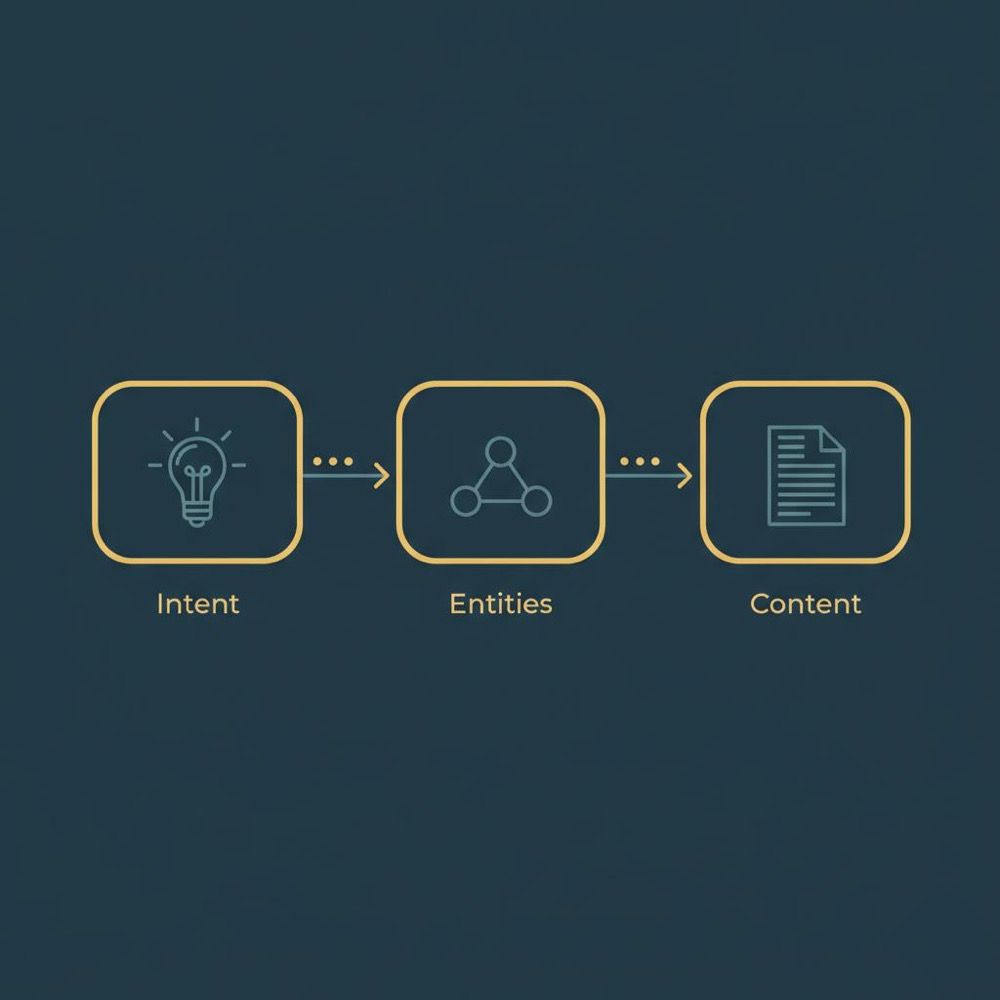
Start with the searcher. What goal do they have? Are they looking for a quick how‑to, a product comparison, or deep research? List the top three questions they’re likely to ask - that’s your content backbone. For each question, jot down the entities and subtopics required to answer it fully.
2) Map entities and disambiguate terms
Make the entities explicit. If a term is ambiguous, define it. For example, “EGCG” is specific; “catechins” may need a definition and context. Naming matters because knowledge graphs and entity linking systems prefer clear, canonical labels.
3) Build a topical cluster
Don’t overload one page. Create hub pages that introduce the topic and link to deeper, focused subpages: how‑to guides, comparisons, and research summaries. A cluster signals to search engines that you’ve covered the subject comprehensively and to readers that there’s a clear path to more detail.
4) Write in natural language
Modern models are trained on real prose and conversations. Use questions as headings, keep paragraphs short, and include examples. If a subtopic benefits from a list or a practical example, include it. The goal is readable clarity, not lexical volume.
5) Use structured data where it helps
Schema doesn’t replace good writing, but it clarifies facts. If the page includes product specs, recipes, events or FAQs, add appropriate schema to make those facts machine‑readable. Structured data helps knowledge graphs place your content correctly.
Use schema to make facts clear: FAQ schema for question pages, Product schema for product pages, and Article or HowTo schema when relevant. Keep entity labels consistent (use the same canonical names), and link to authoritative sources when you reference studies or technical definitions.
On‑page co‑occurrence vs knowledge graphs - why both can matter
Co‑occurrence - how terms appear together on a page - can support topical relevance. Entity signals - explicit mentions and structured data - connect content to broader knowledge. Ranking systems likely weigh many signals: embeddings, user behavior, links, and entity data. For creators, the practical choice is simple: cover the topic, name entities, and write for humans.
Common mistakes to avoid
1. Treating semantic suggestions as checklists: Don’t force words into sentences that don’t belong.
2. Writing for machines instead of people: Avoid awkward lists of synonyms; prefer clear answers.
3. Mixing intents on a single page: If a page tries to be everything - a how‑to, a research review and a shopping guide - it usually satisfies none well. Split intents into focused pages.
Measuring success
Track the outcomes that matter: impressions for relevant queries, click‑through rate, time on page, and conversions. Use query reports to see which questions bring traffic, and iterate. If you improve how well a page answers a clear set of questions, you’ll typically see steady improvements over time.
A short checklist to use before you publish
- Have you named the key entities and defined any ambiguous terms?
- Did you list the top three user questions and answer them clearly?
- Is the content organized into a hub and supporting subpages where needed?
- Did you use schema for facts that machines can consume?
- Did you read the copy aloud to check for robotic phrasing?
Practical case note
I audited a client site once where dozens of posts were stuffed with “related” terms generated by a tool and scattered across headings and meta text. The pages were dense, repetitive and performed poorly. When we shifted to intent - rewriting pieces as direct answers, segmenting deep dives and adding schema - the pages started to perform better. It wasn’t magic; it was better mapping between reader needs and content structure.
When can older LSI methods still help?
The principle behind LSI - that co‑occurrence patterns signal relationships - is sound. Modern tools simply implement that idea with embeddings and larger models. Use older techniques as exploratory tools to surface related concepts, but don’t treat their output as a prescriptive list. Instead, use those suggestions to guide coverage decisions and research.
How to scale a semantic approach across many pages
When you need to apply this across a large site, follow a repeatable process - and consult your internal resources or blog for examples: useful knowledge:
1. Run an intent audit: group pages by likely intent and consolidate or split content where necessary.
2. Create hub pages: each hub should clearly introduce the topic and link to focused subpages.
3. Standardize entity naming: a simple taxonomy reduces ambiguity across the site.
4. Add schema templates: use consistent structured data snippets for similar content types.
5. Measure and iterate: review query data and engagement metrics every 30-90 days.
Editorial workflow tips
Make semantic thinking part of briefs. Ask writers to list the three questions the page answers, the key entities to mention, and one authoritative source to cite. Use short editing passes focused on clarity and then on entity consistency and schema. This keeps content human and discoverable.
Answering common objections
“Isn’t this more work than stuffing keywords?” Yes - but it’s also more effective. Writing to help readers usually leads to content that performs better over time. “Will this work for small sites?” Yes - small sites that focus deeply on a niche and cover it well often outperform larger but shallower sites.
Quick reference: semantic vs LSI
LSI (historical technique): a mathematical method (SVD) to uncover latent structure in term-document matrices. Useful in research but not the everyday recipe it’s become in SEO chatter.
Semantic keywords (modern practice): terms chosen and organized around user intent, entities and context, supporting clear, helpful content and structured data.
Practical template to use right now
Pick one underperforming page and apply this mini‑experiment (one afternoon):
1. List the top three user questions for the page.
2. Rewrite the intro to answer the first question directly.
3. Break the page into clear sections with question headings.
4. Add or link to a deep dive piece if a subtopic needs more space.
5. Add FAQ schema for the top two questions and review entity names for consistency.
6. Publish and measure queries and engagement for 60 days.
Wrapping up
The shift away from surface matching toward entity and context‑aware retrieval is an opportunity to write better. Focusing on semantic keywords - in the sense of mapping intent, naming entities and covering subtopics comprehensively - is a practical way to align your content with how modern search systems interpret language.
If you want help auditing a page or building topic clusters designed around real user questions, a focused partner can make this process faster and less risky. Thoughtful, hands‑on support helps teams move from checklist thinking to systems that compound over time. Learn more about our team on the about page.
Need a clear, intent‑driven content plan?
If you’d like a practical, no‑nonsense audit and a clear plan for aligning content with intent and business outcomes, explore Orvus' services for strategic, hands‑on support.
Language and search will continue to evolve; but the solid habit that never goes out of style is: write to help someone, not to hit a phantom list of keywords. Do that, and both users and search engines will notice.
LSI as a specific SVD technique is largely historical and not the secret ranking lever many claim. The underlying idea that related terms matter is valid, but you should treat related terms as research prompts that guide coverage rather than as a checklist to stuff into copy. Focus on intent, entity clarity and context; those elements align better with modern models and knowledge graphs.
Start by defining the user intent for the page and listing the top questions a searcher would ask. Identify the entities involved and any ambiguous terms that need definition. Use tools to surface related concepts, but only include terms that contribute clarity or a needed subtopic. Organize content into clear sections and add schema for facts where it makes sense.
Yes. Orvus specializes in aligning content architecture with business outcomes and user intent. Their approach focuses on compact diagnostics, intent-driven search architecture, and hands-on execution so teams get meaningful, measurable improvements rather than superficial changes.
References
Want this kind of work done for your business?
We build and run AI-powered marketing and automation. 15 minutes, honest assessment.
Book a call