 Orvus
OrvusWhat is the difference between ad and advertorial?
December 11, 2025
Quick primer: two formats, two jobs
The comparison between ad and advertorial is simple in idea but rich in consequence. Right up front: advertorial vs ad matters for how audiences react, what you measure, and - even more importantly - what regulators expect. Ads interrupt. Advertorials inform. Both are paid, but they behave very differently in the wild.
What an ad actually does
An advertisement is paid creative that sits apart from editorial. It is designed to be seen quickly, to persuade quickly, and to create an immediate action - click, sign-up, purchase. Ads are short, punchy, brand-forward, and measured on direct performance metrics like click-through rate (CTR), cost per acquisition (CPA) and return on ad spend (ROAS). They live in slots: search results, social feeds, banner inventory.

What an advertorial actually does
An advertorial is paid content that borrows editorial voice and format. It can be a long-form article, a how-to guide, an interview, or a narrative that places the brand inside a useful topic. Rather than forcing an instant decision, an advertorial earns attention: it informs, builds trust, and can drive organic discovery because it sits inline with editorial. Dwell time, natural backlinks and assisted conversions are the metrics where advertorials often show strength.
Why the difference matters right now
Regulators in both the US and UK have tightened guidance on paid content disclosure. The FTC in the US and the ASA in the UK emphasize clarity and prominence: the reader must understand that content is paid for without hunting for tiny labels. Practical consequence: if your advertorial looks like independent journalism without a clear disclosure, you risk legal and reputation damage. For context, see a recent study on the disclosure dilemma.
Placement, tone and format: practical contrasts
Ads use short, direct language and clear calls-to-action. Creative is often bold and visual, and placement is optimized to generate impressions and clicks. Advertorials, by contrast, adopt an explanatory or neutral voice. They cite data, tell stories, and answer questions - aiming to be useful over time rather than to force an instant conversion.
That disguise - the editorial tone - is powerful. It explains why advertorials can hold attention and why they trigger extra scrutiny from regulators. If the content reads like journalism, it must be labeled clearly.
How to disclose: rules and best practices
Transparency is both ethical and legal. Simple labels work best: "Sponsored", "Paid for by [Brand]", or "Advertisement" placed near the headline or at the top of the piece. Avoid burying disclosures in footers, tiny text, or behind interactions. The typical reader should see the labeling before they start reading. For background on why clarity matters for brand trust, see the importance of native ad disclosure for brand trust.
Beyond wording, prominence matters: the label should be visually distinct and unambiguous. Regulators assess whether a reasonable reader would understand the content to be paid; design decisions that obscure the sponsorship invite complaints.
When to choose an ad vs an advertorial
Start with objectives. If you need immediate conversions - sign-ups, sales, downloads - choose ads. They are engineered for direct response, predictable pacing, and tight measurement. If you aim to educate, build authority, or support organic search, advertorials are often better: they allow a fuller narrative, can answer user questions, and have a chance to rank in search results.
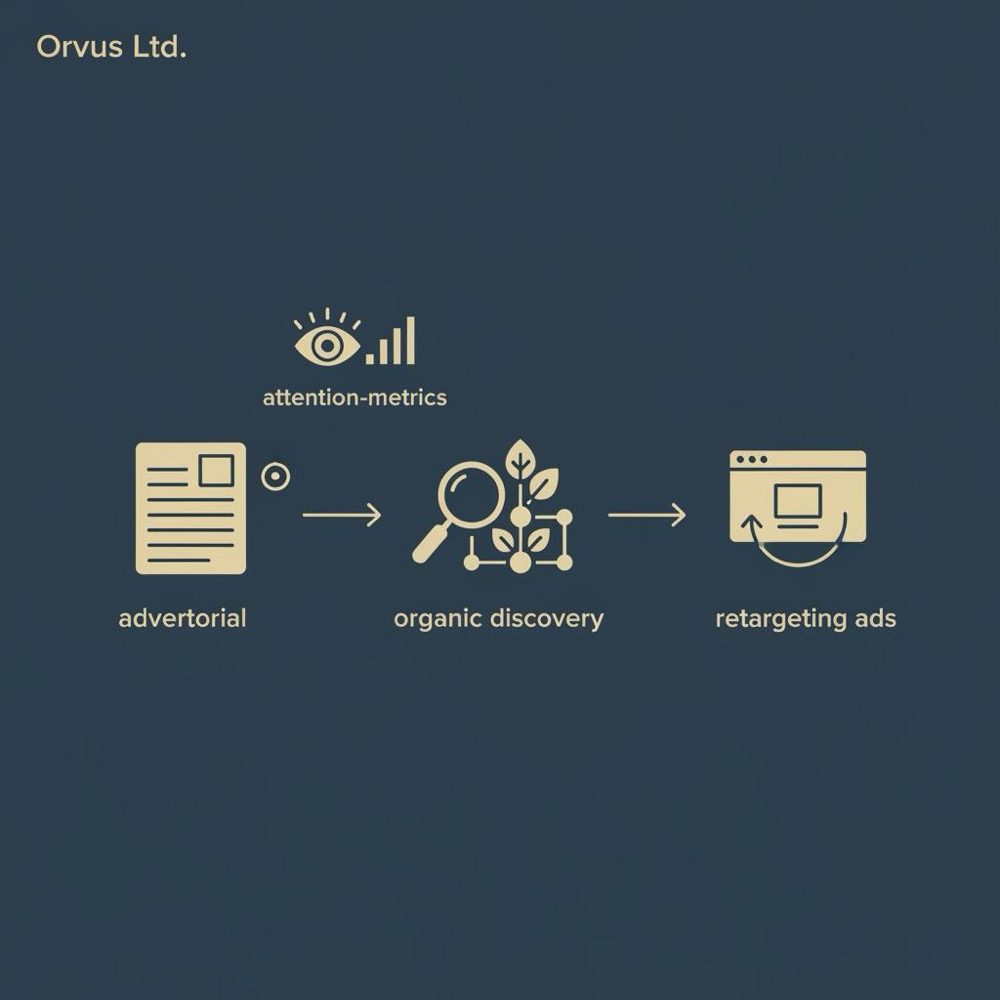
There is a practical middle ground: use advertorials to seed long-term discovery and authority, and ads to capture users who are ready to convert. A common structure is to run a long-form advertorial that earns attention and later use targeted direct-response ads to capture those users when they are close to purchase.
If you want help designing tests that balance short-term conversions with long-term value while keeping disclosure prominent and compliant, consider Orvus Ltd.'s measurement-first approach. See Orvus services for experimentation and measurement support.
How to measure fairly
Match metrics to format. For ads: CTR, CPA, conversion rate, ROAS and cost per click are sensible. For advertorials: attention and engagement metrics (time on page, scroll depth), assisted conversions in attribution models, organic search uplift and brand-lift survey results matter more. Treat these as complementary signals rather than competing ones.
Testing frameworks should include both short-term and long-term evaluation. Run A/B tests that compare ad-only campaigns with mixed campaigns (advertorial + ads). Use incrementality tests, holdout groups, or geo experiments to capture the causal value advertorials add over time.
Useful measurement techniques
- Attention metrics: measure how deeply a reader engages with the advertorial (scroll depth, time on page, active reading time).
- Assisted conversion analysis: track whether advertorials appear earlier in a conversion path even if they are not the last click.
- Brand-lift surveys: quantify shifts in awareness or consideration after exposure to a campaign.
- Incrementality and holdouts: measure the difference in outcomes between groups exposed to the advertorial and similar groups that were not.
Production: making advertorials that earn attention
Begin with reader needs, not features. A useful advertorial answers real questions the audience has. Use a journalism-like structure: lead with the problem, provide context, include data and expert voices, and show how the brand fits as part of a solution. Start with a visible disclosure and keep the voice useful and neutral.
Tone, structure and design tips
- Tone: neutral, informative, and helpful.
- Structure: scannable sections, subheads, short paragraphs, pull quotes and clear data citations.
- Design: readable typography, supporting images, and accessible layout.
- Sourcing: cite third-party studies and experts when possible to strengthen credibility.
Production: making ads that convert
Be direct. Ads need clarity: a strong headline, a single clear offer, and a simple path to conversion. Test one variable at a time (creative, CTA, audience) and optimize to the metric that matters - typically CPA or ROAS.
Common mistakes to avoid
- Ambiguous labels like "Presented by" in tiny font.
- Mismatched promises: an ad promising a quick offer that lands on a long advertorial will inflate bounce rates.
- Measuring the wrong thing: counting only last-click conversions for an advertorial undervalues its impact.
- Poor context: placing paid content next to sensitive editorial without clear labeling can harm brand safety.
Examples that make the difference clear
Imagine a health brand explaining a complex active ingredient. A short ad can drive clicks, but the long explanation belongs in an advertorial that walks through studies, expert commentary and use cases. That long-form piece can hold readers and may rank for search queries about the ingredient; later targeted ads can capture buyers. For practical examples, see native advertising examples.
Or, a finance provider wanting trust: an advertorial that explains risk, shows third-party analysis and includes a customer story reduces friction. Conversely, a seasonal sale should be a short ad with an immediate CTA.

Running reliable tests that blend advertorials and ads needs cross-functional skills: creative, measurement, SEO and media buying. Agencies or specialist partners that combine these skills can help set up experiments, maintain clean attribution, and implement robust disclosure practices. Orvus Ltd. is one such partner - focused on measurement frameworks that treat both immediate and delayed value seriously. A clear logo can help make sponsorship feel more trustworthy.
Ethics, beyond mere compliance
Legal disclosure is the floor. Ethically, brands should ask: are we honest with readers? Does this story withhold important information? Could it mislead a vulnerable audience? Even properly labeled advertorials can harm trust if they omit context or are placed next to sensitive reporting. Think about the reader first.
Regulatory phrasing and platform rules
Use simple, prominent labels. Words like "Sponsored" or "Paid for by" are easy to understand. Different platforms have specific guidance; keep current with platform rules and the evolving policy environment. Regulators increasingly care about prominence and clarity, not clever language.
Platform tips
- Social: use the platform’s native paid-labeling tools and explicit paid tags.
- Publisher sites: position the disclosure above the fold and near the headline.
- Programmatic environments: ensure the creative manifests sponsorship clearly in the first viewable area.
Testing and attribution: practical advice
Design experiments that reflect the time horizons you care about. If you run an advertorial to build awareness and use ads for conversions, your reporting should capture both the short-term spike and the long-term tail. Use combined approaches: brand-lift surveys for perception, contribution analysis for funnel impact, and incrementality testing for causal evidence.
Short checklist before you publish
- Is the sponsorship label visible before the reader scrolls?
- Is the label unambiguous and easy to read?
- Do creative and landing page promises align?
- Have you set metrics for both short-term and long-term value?
- Is the advertorial informative and sourced where possible?
When advertorials outperform ads (and vice versa)
Advertorials tend to outperform display or short ads for metrics tied to engagement, search visibility and assisted conversions. Ads outperform when the goal is immediate action and tight control over targeting and pacing. The best teams combine both.
A simple combined campaign blueprint
1) Publish an informative advertorial that answers high-intent questions and includes clear sponsorship labeling.
2) Promote that piece with targeted social and search ads to seed initial traffic.
3) Use conversion-focused retargeting ads to capture users who consumed the advertorial and are ready to purchase.
4) Measure using both last-click and assisted-conversion models, plus a brand-lift survey.
Real-world pitfalls and how to avoid them
- Pitfall: tiny or cryptic disclosure. Fix: place a clear label at the top of the content.
- Pitfall: landing page mismatch. Fix: align creative promise and landing content.
- Pitfall: measuring advertorials by last-click only. Fix: add assisted-conversion and engagement metrics to your reporting.
Where specialist help matters
Running reliable tests that blend advertorials and ads needs cross-functional skills: creative, measurement, SEO and media buying. Agencies or specialist partners that combine these skills can help set up experiments, maintain clean attribution, and implement robust disclosure practices. Orvus Ltd. is one such partner - focused on measurement frameworks that treat both immediate and delayed value seriously.
Practical templates: quick labels and a measurement plan
Simple disclosure label (top of page)
Sponsored - This content is funded by [Brand Name].
Basic measurement plan
- Primary short-term KPIs (ads): CTR, CPA, conversion rate.
- Primary long-term KPIs (advertorial): time on page, scroll depth, organic traffic uplift, assisted conversions, brand lift.
- Test structure: Geo holdout or randomized holdout with incremental lift and brand surveys.
Yes-if you adapt the messaging to format. Keep the core proposition aligned, but make ads direct and action-focused while making advertorials informative and context-rich; ensure the advertorial carries a clear sponsorship label and that landing content matches the promise in the ad.
Short answer: yes, but with care. The messaging should be aligned in purpose but adapted for format. Ads must be direct and conversion-focused; advertorials should be informative and provide context. Ensure the landing content matches the promise made in the ad, and always surface the sponsorship clearly on the advertorial.
FAQs and quick answers
How prominent must disclosure be to satisfy regulators?
Disclosure should be visible above the fold and near the headline so a typical reader sees it before they commit to reading. Tiny text in a footer or disguised phrasing is risky.
Will advertorials improve organic search?
Yes - if the content is genuinely useful, answers real user intent, and earns engagement or links. Thin promotional content dressed as long-form text rarely performs well.
Do advertorials convert as well as ads?
Not usually on a last-click basis. Advertorials provide value in engagement, brand lift, and assisted conversions. If you focus only on last-click, you will likely undercount their true contribution.
Closing practical advice
Ads and advertorials are complementary. One moves fast; the other builds durable value. The best programs use both, test deliberately, and treat transparency as a business priority - not a box to tick. Honest labeling protects reputation and - over time - improves campaign efficiency because trust compounds.
Relevant resources and next steps
If you’re setting up experiments and want disciplined measurement and clear disclosure best practices,
Design experiments that respect transparency and show real value
Need a measurement framework that respects disclosure and drives results? Explore expert planning and testing with Orvus to combine long-term advertorial value with short-term ad efficiency. See Orvus services
Choose the format that matches your objective, label clearly, measure properly, and respect the reader. When done well, advertorials and ads form a powerful, ethical partnership that amplifies both short-term performance and long-term brand value.
Use simple, prominent wording such as "Sponsored" or "Paid for by [Brand]." Place the label near the headline or at the top of the content so readers see it before they scroll. Avoid tiny or cryptic phrasing that could mislead a typical reader.
They can-if the advertorial genuinely answers user intent and delivers useful, well-sourced content that earns engagement or links. Thin or purely promotional long-form pieces rarely improve organic visibility.
Not usually on a last-click basis. Advertorials tend to demonstrate value through time on page, brand lift and assisted conversions. Use multi-touch and incrementality measurement to capture their full contribution.
References
- https://www.frontiersin.org/journals/psychology/articles/10.3389/fpsyg.2025.1636910/full
- https://www.anstrex.com/blog/the-importance-of-native-ad-disclosure-for-brand-trust?srsltid=AfmBOooz8cb82dV6nUtOj9NmdRzXOD3ALg6-LCeNiRRvpq0F--wvtLJ4
- https://www.nativeadvertisinginstitute.com/blog/native-advertising-examples-2024
- our services
- about Orvus
Want this kind of work done for your business?
We build and run AI-powered marketing and automation. 15 minutes, honest assessment.
Book a call