 Orvus
OrvusWhat's the difference between SEO and SE Ranking?
February 7, 2026
This guide explains what SEO requires in 2026, what SE Ranking offers, and how decision makers can combine tool outputs with search architecture and measurement to make practical procurement and operational choices. The tone is pragmatic and aimed at operators and founders who need clarity on systems and workflows.
What SEO actually covers and why context matters
Search engine optimisation is a multidisciplinary practice that combines technical optimisation, content relevance, and external signals, and it must be measured against business goals to be useful. Official guidance from major search engines frames these components and sets baseline practices for reliable indexing and relevance assessment, which means teams must treat SEO as part technical work and part product thinking rather than as a single tactical checklist. Search Engine Optimization (SEO) Starter Guide
Technical SEO ensures a site can be crawled and indexed, content architecture helps match pages to user intent, and measurement ties activity back to conversions or other business metrics. Turning those inputs into revenue attribution requires analytics configuration, disciplined reporting, and governance across content and engineering teams. The State of SEO 2024: Measurement and Strategy Trends
SE Ranking is a suite of operational tools for rank tracking, audits, and reporting; SEO as a discipline requires those tools plus governance, content architecture, and analytics to make work measurable and tied to business goals.
A practical consequence is that many of the routine outputs you get from SEO tools only represent part of the work: they surface issues, trends, and signals, but they do not substitute for governance, prioritisation, or tying search outcomes to channel mix decisions and revenue streams. When teams treat tooling output as the strategy rather than an input, measurement gaps and misaligned priorities tend to follow. Search Engine Optimization (SEO) Starter Guide
For operators, the distinction matters because you need both a clear search architecture and the ability to translate tool findings into tracked experiments and reporting that stakeholders can act on. That translation is where content architecture, instrumentation, and dashboards come together to form reliable revenue attribution rather than disconnected diagnostic reports. The State of SEO 2024: Measurement and Strategy Trends
What SE Ranking is: features and intended use
Core modules: rank tracking, site audit, keyword research, backlink monitoring, reporting
SE Ranking is a unified SaaS product that packages rank tracking, site audits, keyword research, backlink monitoring, and reporting into a single dashboard for recurring SEO operations. The vendor documents these modules as the platform's core capabilities, designed to support routine monitoring and reporting tasks for in-house teams and agencies. Features - SE Ranking
The rank tracking module provides scheduled checks of keyword positions across SERPs and locations, site audits crawl pages for technical issues, and the keyword research and backlink features feed into content and outreach work. Those capabilities make SE Ranking useful when regular monitoring, templated reports, and simple diagnostic tasks are the primary operational need. Features - SE Ranking
Automation and scheduling features
Automation is a deliberate part of the product: scheduled crawls, automated reports, and alerts reduce recurring operational work by surfacing changes and delivering regular summaries to stakeholders. For teams that run weekly or monthly reporting cycles, these features can save time and reduce manual steps. Features - SE Ranking
Independent reviews from the last few years note that SE Ranking tends to prioritise ease of use and reporting clarity, which makes it a cost-effective mid-market option for teams that value straightforward dashboards. Those reviews also highlight relative limits in raw data depth when compared to top-tier enterprise platforms, which matters when investigative diagnostics require very large datasets or specialised integrations. SE Ranking Review
SE Ranking can reliably automate operational tasks that repeat often, such as scheduled audits, recurring rank checks, and templated reporting, which makes it a sensible operations layer in many search architectures. Using those outputs as triggers for prioritised work reduces friction in teams that otherwise spend time on manual collection and formatting. Features - SE Ranking

However, automation does not remove the need for governance. Prioritisation, contextual triage, and bespoke technical fixes still require human oversight, and often additional tooling or engineering work. In other words, the platform can surface issues but it cannot itself decide which architectural change best supports a business KPI. Search Engine Optimization (SEO) Starter Guide
Reviews note a recurring practical limit: dataset parity and integration depth. SE Ranking provides useful data for many operational tasks, but when teams require very large keyword sets, SERP feature sampling, or deep third‑party integrations, they may find gaps that affect investigative diagnostics. That limitation is not unusual for mid-market tools and should be considered during procurement. See enterprise SEO platforms.
To be operationally useful, SE Ranking outputs are most effective when paired with analytics configuration and reporting workflows that map tool signals to business events. That mapping is where search architecture and measurement planning come together to create repeatable decisions from recurring reports. The State of SEO 2024: Measurement and Strategy Trends

Automation is a deliberate part of the product: scheduled crawls, automated reports, and alerts reduce recurring operational work by surfacing changes and delivering regular summaries to stakeholders. For teams that run weekly or monthly reporting cycles, these features can save time and reduce manual steps. Features - SE Ranking
Independent reviews from the last few years note that SE Ranking tends to prioritise ease of use and reporting clarity, which makes it a cost-effective mid-market option for teams that value straightforward dashboards. Those reviews also highlight relative limits in raw data depth when compared to top-tier enterprise platforms, which matters when investigative diagnostics require very large datasets or specialised integrations. SE Ranking Review
Get a compact diagnostic of your search systems with Orvus Limited services
Run a short inventory of your recurring search reports and audits, and consider a light diagnostic to see whether tool outputs connect to your analytics and revenue signals; Orvus Limited can help frame a compact diagnostic if you prefer a collaborative review.
A compact framework to decide when to use SE Ranking versus building wider SEO systems
Decide by assessing four practical constraints: team scale, budget, need for bespoke integrations, and whether you prioritise executional efficiency or deep investigative diagnostics. These criteria help separate teams that benefit from a consolidated operations tool from those that need an integrated systems approach. Features - SE Ranking
Smaller teams often need tooling that automates routine checks and reporting to reduce headcount pressure, while larger teams may value platform depth and integrations that support complex diagnostics. Budget is a related constraint: mid-market platforms can be value efficient for executional work but may require additional tools for enterprise-grade investigations. SE Ranking review: affordable all‑in‑one SEO platform
Checklist for procurement: verify the data depth you need, check reporting cadence and templating, confirm integration points with your analytics and CRM, and validate governance processes for prioritisation and remediation. Use this checklist to decide whether to adopt SE Ranking as a primary operations layer or to pilot it alongside existing workflows. The State of SEO 2024: Measurement and Strategy Trends
Finally, treat the tool as an input to search architecture rather than a substitute for it. Even where SE Ranking reduces recurring work, the choice to standardise naming, reporting, and ownership is a governance decision that sits alongside the tool selection process. Search Engine Optimization (SEO) Starter Guide
Typical mistakes teams make when relying on a single SEO tool
One common error is to conflate tooling outputs with strategy. Teams often interpret a list of issues or a rank table as a roadmap without validating those items against business priorities or instrumentation. This tendency can lead to tactical work that does not move core metrics. Features - SE Ranking
A second pitfall is over‑trusting dataset parity. Independent reviews flag that SE Ranking is strong on usability and reporting, but can lag enterprise tools in raw data depth or specialised integrations, which creates blind spots for deep diagnostic work. Treat dataset differences as a risk to manage rather than a fatal flaw. SE Ranking Review
Operationally, teams sometimes switch to automated reports without preserving analytics configuration, which breaks attribution and reduces decision confidence. Automated reporting is valuable only when the underlying event mapping and reporting cadence are maintained. The State of SEO 2024: Measurement and Strategy Trends

To avoid these mistakes, keep a lightweight governance thread: name owners for recurring reports, set a validation cadence for data parity checks, and require that remediation proposals include a measurement plan. That governance step turns recurring automation from a blind conveyor of signals into actionable work. Search Engine Optimization (SEO) Starter Guide
Practical scenarios: three realistic use cases
Scenario A, small ecommerce team: a compact team uses SE Ranking as an operations layer to run scheduled crawls, track a focused set of commercial keywords, and generate templated weekly reports. That setup reduces time spent on manual reporting and keeps attention on content tasks and listing health. Features - SE Ranking
Scenario B, mid market marketing team: the team pairs SE Ranking outputs with analytics governance and a content architecture roadmap. Rank and audit signals inform tests, while event mapping and dashboards convert traffic changes into revenue attribution. This hybrid approach keeps execution efficient while preserving measurement fidelity. The State of SEO 2024: Measurement and Strategy Trends
dashboard validation checklist for mapping SE Ranking outputs to analytics
sample regularly to check parity
Scenario C, when to escalate: organisations that need large keyword datasets, custom SERP feature sampling, or many bespoke integrations should plan for specialised diagnostics or enterprise tooling. Use SE Ranking as a complementary operations layer rather than the single source for investigative research. SE Ranking review: affordable all‑in‑one SEO platform
How to operationalise SE Ranking outputs into measurement and workflows
Step 1, map outputs to analytics: identify the key SE Ranking exports you will use, then create a mapping document that links each export to a tracked event, conversion, or content bucket in your analytics property. This link between raw reports and events is essential for revenue attribution. The State of SEO 2024: Measurement and Strategy Trends
Step 2, define reporting cadence and owners: convert scheduled crawls and automated reports into an operational calendar, assign an owner for each report, and include acceptance criteria for data quality. Owners keep the workflow accountable and prevent alerts from becoming ignored noise. Features - SE Ranking
Step 3, build validation and sampling checks: because mid‑market tools can differ in dataset depth, include simple sampling processes that validate critical signals against alternate sources or bespoke crawls before you act on large remediation work. Sampling protects decisions when data parity is uncertain. SE Ranking Review
Step 4, automate where it helps and govern where it matters: use SE Ranking automation to reduce repetitive tasks, and keep governance for prioritisation, experiment design, and technical implementation. Small automations and dashboards can materially reduce recurring operational work while preserving human decision making. Features - SE Ranking
A pragmatic next steps checklist and closing summary
Quick audit you can run now: list your current recurring rank and audit reports, note who owns each, check whether each report maps to an analytics event or conversion, and verify the data source for at least two critical metrics. This quick inventory reveals whether a tool like SE Ranking can fit immediately or if governance and integrations need work first. Features - SE Ranking
When to onboard SE Ranking: consider onboarding when executional efficiency and templated reporting are priorities and when your analytics and governance are robust enough to absorb automated outputs. If you need deep investigative datasets or custom integrations, plan for complementary tools and diagnostics. SE Ranking review: affordable all‑in‑one SEO platform
Summary: SE Ranking can reduce operational friction for routine tasks but does not replace governance or broader search architecture work. The right choice depends on constraints, measurement needs, and whether you view tooling as an input to systems design rather than a substitute for it. Search Engine Optimization (SEO) Starter Guide
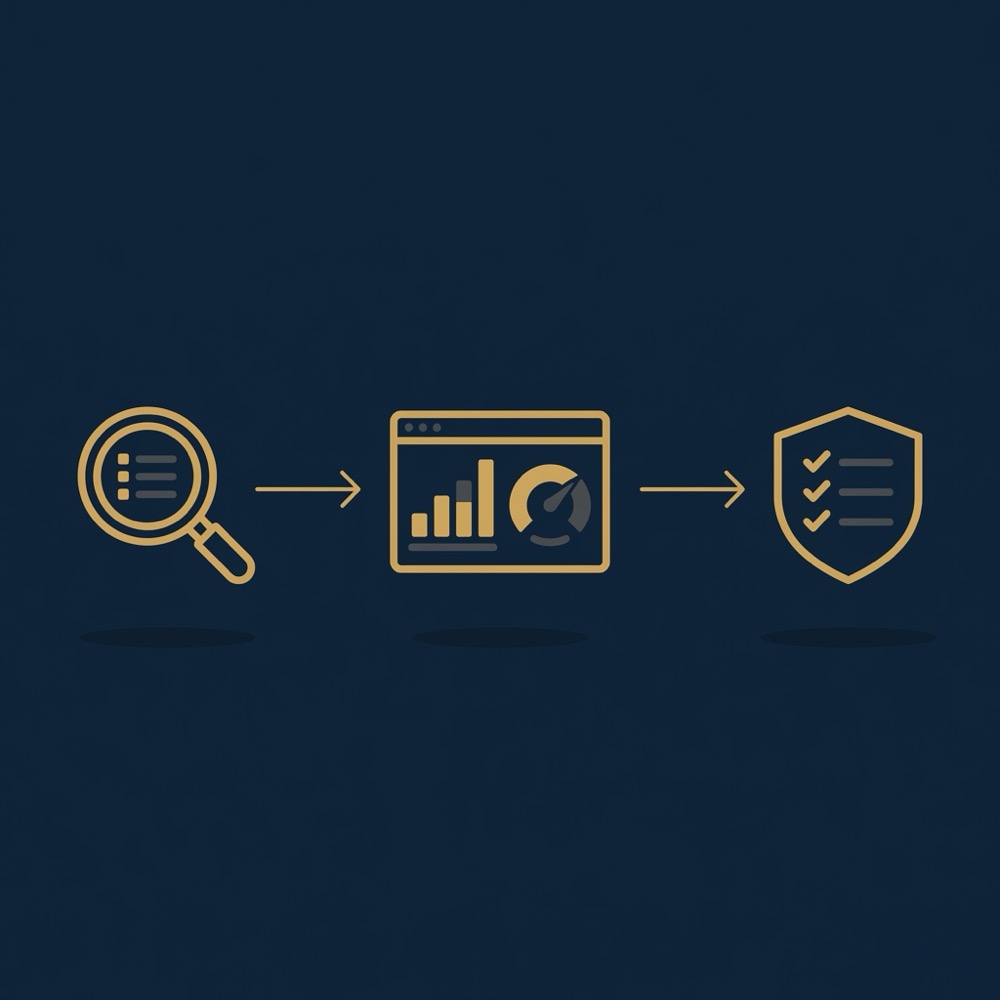
No. SE Ranking is a tool that supports routine operations like audits and rank checks; strategy requires governance, measurement planning, and content architecture beyond any single platform.
SE Ranking is a capable mid-market platform, but teams needing very large datasets or deep bespoke integrations often complement it with specialised tools or custom diagnostics.
Define report owners, create explicit mappings from reports to tracked events or conversions, and sample key metrics against alternate data sources before making strategic decisions.
References
- https://developers.google.com/search/docs/fundamentals/seo-starter-guide
- https://seranking.com/features.html
- https://www.pcmag.com/reviews/se-ranking
- https://www.searchenginejournal.com/se-ranking-review/487221/
- our services
- about Orvus
- our knowledge base
- https://www.brightedge.com/blog/enterprise-seo-platforms-vs-seo-tools-choosing-the-right-solution-for-scale
- https://www.selectsoftwarereviews.com/buyer-guide/best-seo-tools-for-small-businesses
- https://seotesting.com/blog/best-enterprise-seo-tools/
Want this kind of work done for your business?
We build and run AI-powered marketing and automation. 15 minutes, honest assessment.
Book a call