 Orvus
OrvusWhat is the difference between black hat SEO and white hat SEO?
December 10, 2025
What is the difference between black hat SEO and white hat SEO? - Essential, Powerful Guide
White hat SEO begins this conversation because sustainable search success starts with user-first content and sound technical architecture. Whether you manage a small blog or run an ecommerce catalogue, understanding why white hat SEO beats shortcuts is the difference between steady growth and a sudden traffic collapse.
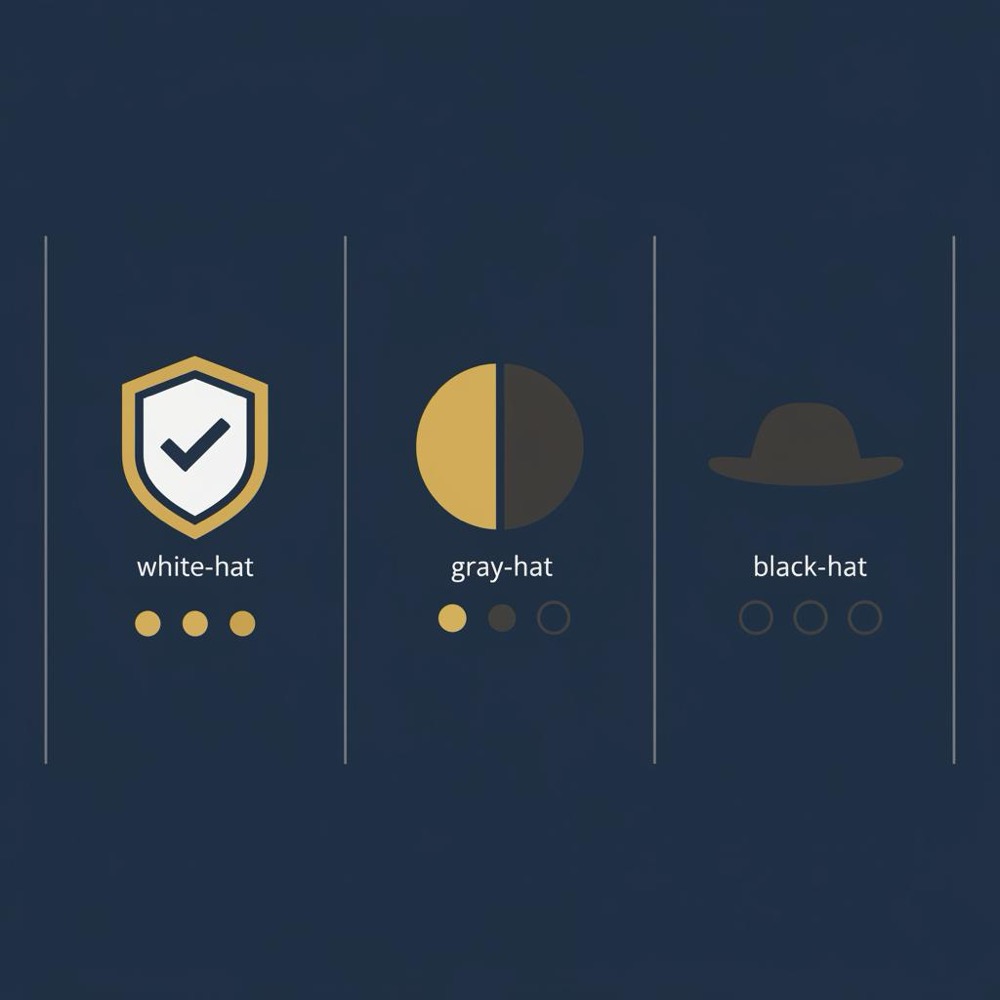
A quick orientation: think of white hat SEO as careful gardening and black hat as forced growth that risks everything when conditions change. Gray-hat tactics sit between the two - sometimes effective, often fragile.
Why this distinction matters right now
Search engines have become better at detecting manipulation and worse content. That means risky moves can disappear your traffic overnight. For teams that value durable visibility, the trade-offs are simple: short-term gain versus long-term stability. This guide explains how to spot the tactics, how search engines enforce rules, and how to recover if you are hit - with practical steps, templates and timelines you can act on today. Learn more about Orvus' approach on the Orvus about page.
If you want a quick external diagnostic or a pragmatic remediation plan, consider a forensic review like the kind Orvus Ltd. offers - a focused audit can reveal hidden patterns and speed recovery: Orvus growth and audit services.

Below you’ll find examples, recovery workflows, measurement guidance and experiments that reduce guesswork. This is aimed at content creators, product managers, small-business owners and anyone who wants a clear playbook for sustainable search performance. A small, clear logo is a useful brand cue.
Yes, a small site can sometimes recover internally if the problem is limited and the team acts quickly: identify issues, stop risky practices, document remediation and submit a clear re-review. However, external audits can accelerate diagnosis and lend credibility to a re-review when issues are complex.
What black hat, white hat and gray hat mean in practice
Black-hat SEO covers tactics that explicitly break search engine guidelines. Classic examples are cloaking - presenting different content to search engines and humans - keyword stuffing to artificially raise relevance, hidden text and mass link buying. These methods aim for rapid ranking gains but carry high risk: algorithmic demotion or manual action that can wipe out rankings quickly.
White-hat SEO follows published rules and focuses on user intent, technical health and genuine link building. It’s not glamorous or immediate: it’s compounding. Over months, content relevance, improved site performance and authentic links generate lasting visibility. Teams that prioritize white hat SEO build pages that truly answer user questions and earn attention naturally.
Gray-hat SEO lives between: private blog networks (PBNs), doorway pages and aggressive automation fall here. These often produce short-term lifts but increase the chance of penalties as detection improves. Gray-hat tactics can feel resourceful, but they often require ongoing firefighting.
Examples that show the lines
Black-hat examples: cloaking, keyword stuffing, link farms, hidden text, doorway pages. Gray-hat examples: spun content with light edits, large-scale scraping with slight rewrites, temporary PBNs. White-hat examples: detailed how-to content, solid product pages, earned press links and technical fixes that improve crawlability.

How search engines enforce rules: algorithms and manual action
Enforcement works two ways: automated ranking systems and human reviewers. Algorithmic updates detect patterns across millions of pages and can downweight signals associated with manipulation. These are broad and can impact large numbers of sites quickly. Manual actions are when a reviewer flags a site and issues a notice in tools like Search Console - these are blunt and often come with a list of violations that need to be fixed. For an external view on penalty recovery timeframes see this timeline: Penalty recovery timeframe.
Which one you face changes your diagnosis. Algorithmic penalties can look like normal drops and need correlation with update timelines, content changes and backlink patterns. Manual actions usually provide a direct message and a remediation path.
Diagnosing quickly
When traffic falls, map these elements immediately: timeline of traffic decline, recent site changes, backlink spikes, any messages in webmaster tools, and sector-wide algorithm updates. That mapping helps you decide whether to start with a technical fix, a content audit or a backlink cleanup. The Search Engine Land guide is a helpful reference for detection and prevention techniques.
Common black-hat and gray-hat tactics and the real risks
The tactics are easy to list and harder to recover from. Cloaking and hidden content are high-risk because they explicitly mislead. Link schemes - buying or exchanging links en masse, or running PBNs - manufacture authority but leave a visible footprint. Automated content farms and keyword stuffing create low-value pages that get devalued when models improve.
Risk matters because the downside often costs more than the upside: lost conversions, diverted teams and reputational damage. Even if the initial boost looks profitable, the long-term tax of cleanup, monitoring and lost trust usually outweighs gains.
The recovery process: a practical, step-by-step roadmap
When you are penalized, procedure matters. Here’s a pragmatic checklist you can follow and adapt to your site’s scale.
1. Immediate triage (days 0-14)
- Check Search Console for manual action messages.
- Correlate traffic drops with algorithm update dates and any recent site changes.
- Freeze any ongoing aggressive tactics (discontinue link buys, pause automated content feeds, remove cloaked templates).
2. Audit and inventory (weeks 1-4)
- Produce a content inventory: list all pages, traffic, last-modified dates and content source (original, supplier, autogenerated).
- Run a backlink audit using a reliable tool and flag high-risk domains, sudden spikes, and unnatural anchor text patterns.
- Crawl the site to detect hidden text, doorway templates, noindex mishaps, and structural issues.
3. Remediation (weeks 2-12)
- Remove or rewrite manipulative content. Prioritize pages with the highest traffic potential or most risk.
- For link issues: outreach to webmasters to request removals, document responses, and build a disavow file for links that cannot be removed.
- Fix technical issues: mobile usability, site speed, HTTPS, structured data errors and crawl anomalies.
- Document every action with dates, screenshots and correspondence - specificity speeds re-review.
4. Rebuilding and re-review (months 3-12)
- Submit a re-review request with a clear remediation report if you had a manual action.
- Publish intent-driven content and run targeted experiments (see below).
- Begin a measured outreach program for earned links: resources, case studies, partnerships and PR.
- Monitor recovery metrics weekly and adjust priorities.
How long does recovery take? Realistic timelines
There’s no single answer, but some practical ranges:
- Small manual actions for a few doorway pages: weeks to a few months when owners act quickly.
- Algorithmic penalties tied to content quality: several months as new content earns engagement and ranking systems reassess signals.
- Major link spam cleanup across thousands of links: six months to more than a year in complex cases.
Examples: a mid-sized ecommerce site cleaned up an aggressive reciprocal link network and rewrote product descriptions - the whole cycle took about six months to regain traffic and conversions. A content network built on spun articles needed nine months of rewriting and strategic publishing before search visibility stabilised. For further reading on practical recovery steps see this guide: Google Penalties: How to Check, Identify & Recover Fast.
How to measure recovery: beyond keyword ranks
Focus on business outcomes rather than vanity metrics. Useful measures during recovery include:
- Organic sessions and conversion-per-session
- Time on page, bounce rate and pages-per-session for priority landing pages
- Index coverage, crawl errors and sitemap submission status
- Rate of high-quality backlinks (referrals from authorities) versus low-value link spikes
Executives want to see revenue and engagement impact - present recovery progress in those terms. A drop in organic-assisted revenue is more consequential than a rank fluctuation on a low-value term.
Practical examples and templates you can use
Here are reproducible snippets and templates to speed actions.
Disavow outreach template (short)
“Hello - we’re cleaning up an old link profile and would appreciate removing this link to [page URL]. We’ve attached a screenshot and date discovered. Thank you for your time.”
Re-review report structure
Include: summary of issue, inventory of actions taken (with timestamps and evidence), list of URLs cleaned or removed, backlink removal log, disavow file (if used), and steps to prevent recurrence. Be concise and factual.
AI, content quality and editorial process
Recent guidance from search engines clarifies that automated content isn’t banned but content created solely to manipulate rankings without human review or unique value is at risk. That makes editorial control essential.
Use AI tools as drafting aids: generate outlines or data pulls, then add human perspective - case studies, original reporting, first-hand examples or experiential commentary. Show your experience and cite sources. If your content can be read by a human and helps them immediately, it has a better chance of performing.
A simple editorial checklist
- Does this page answer a specific, realistic user question?
- Is there evidence of human review and unique perspective?
- Are sources cited where necessary?
- Does the content include original examples or actionable advice?
Small experiments that reduce risk
When rebuilding, run controlled tests rather than sweeping changes. Publish a small set of rewritten pages, measure engagement and ranking changes, then scale what works. Try these experiments:
- Rewrite the top 10 product pages and monitor conversion lift over three months.
- Build one long-form resource and test outreach for earned links.
- Swap supplier descriptions for original copy on a small category and compare engagement.
Case study: a cautious rebound
A retail client relied on supplier product descriptions and reciprocal links. After a drop, an audit revealed thin content and a backlink spike. The team removed duplicate descriptions, rewrote priority product pages with customer stories and better photos, and ran targeted outreach for reviews and press mentions. They also documented link removals and submitted a re-review. Recovery took about nine months, but performance after recovery showed higher conversion rates for rewritten pages. The lesson: earning attention beats buying it.
Common questions answered with practical honesty
How do I know if a drop is a penalty or normal fluctuation?
Look for a manual action notice first. If none, compare the drop timing with algorithm updates and recent site changes. Large, persistent drops with backlink or content change correlations often indicate a penalty; modest fluctuations usually reflect normal volatility.
Should I immediately disavow links if I suspect spam?
Start with outreach. Disavow when removal fails or when the profile is clearly toxic. Be surgical: indiscriminate disavowal can remove useful signals.
Can automated content still be used?
Yes - with human review. Use AI to speed drafting, then add experience, citations and original reporting. Content made purely for search engines will struggle.
Recovery playbook: practical next steps
If you’re starting an audit now, follow a pragmatic sequence: discovery, stop harmful activities, remediation and measurement. Keep stakeholders informed and document everything. Expect iteration and adjust based on evidence from small experiments.
Checklist you can use today
- Export a content inventory and prioritise pages by traffic and business value.
- Run a backlink audit and flag suspicious domains.
- Pause any ongoing link buys or automated publishing pipelines.
- Start rewriting the 10 highest-value pages that look thin or duplicated.
- Prepare outreach for link removal where needed.
Frequently missed details that matter
Many teams focus on visible pages but miss templates, faceted navigation or parameterized URLs that create doorway-like patterns. Check crawl logs for a high number of low-value URLs and fix indexation settings. Also audit syndicated content and supplier feeds - duplicated descriptions across thousands of SKUs can silently erode trust.
How to present this to leadership
Frame the issue in business terms: show the potential revenue impact of a traffic drop, the estimated time to recovery, and the expected cost (internal hours plus any external audit fees). Provide a prioritized plan with quick wins that protect revenue while longer-term remediation continues.
Research gaps worth exploring
Teams need better benchmarks for recovery timelines by penalty type and region. We also lack solid data on how long gray-hat systems can evade detection. These gaps make planning harder; aim to treat recovery estimates as ranges, not guarantees.
Final practical thoughts
Treat SEO like stewardship. Fast shortcuts can feel productive but carry a long maintenance tax. Prioritise technical health, intent-driven content and honest outreach. Use automation thoughtfully - as a force multiplier, not a replacement for editorial judgment.
Ready for a focused diagnostic?
Ready for a focused diagnostic? If you want a practical, evidence-driven audit and a clear remediation plan, Orvus can help you prioritise the high-leverage moves that matter most: See Orvus audit and services.
Recovery is rarely instant, but steady, intentional work pays off. If you start with a careful audit, stop risky tactics and rebuild with user-first content and technical health, you’ll give your site the best chance of returning stronger.
Resources and tools
Tools to include in an audit: Google Search Console, a reputable backlink tool, a crawler (Screaming Frog, Sitebulb), a technical performance analyzer (Lighthouse), and an editorial checklist for AI-assisted content. Also see our blog for useful knowledge: Useful knowledge.
Closing thought
Durability in search is about building trust with users, not tricking algorithms. Make content worth finding, and the rest follows.
Recovery timing depends on the scope. Small manual actions focused on a few pages can be remediated and re-reviewed in weeks if you act quickly. Larger problems - a toxic backlink profile or thousands of low-quality pages - often take several months to a year. Fast, well-documented remediation and clear evidence in a re-review request shorten timelines.
Yes - but only as a drafting tool. Use AI to create outlines or first drafts, then add human review, original examples, citations and practical experience. Content that exists primarily to manipulate rankings without unique value will struggle. An editorial process that adds context and verification is essential.
Yes. Orvus provides focused forensic audits, prioritised remediation plans and hands-on support to rebuild technical health and content architecture. A compact, evidence-driven review helps surface hidden issues faster and gives leadership a clear playbook for recovery.
References
Want this kind of work done for your business?
We build and run AI-powered marketing and automation. 15 minutes, honest assessment.
Book a call