 Orvus
OrvusWhat is SEO advertising? A systems guide
February 9, 2026
What is seo advertising? A concise definition and scope
seo advertising refers to the coordinated use of paid search ads and search-focused organic SEO so both channels capture and convert the same user intent across the marketing funnel. This coordinated definition helps teams treat paid and organic work as complementary paths into identical intent buckets rather than separate goals, and it is rooted in how search platforms and practitioners separate technical disciplines while recommending alignment Google Search Central SEO Starter Guide.
It is important to be clear that organic SEO and paid search remain distinct technical and operational disciplines. Organic work focuses on site quality, content architecture, and technical signals, while paid search centers on bidding, account structure, and creatives; aligning them means coordinating choices, not collapsing workflows Google Ads Help on Search campaigns.
In practical terms, seo advertising sits across the funnel. Paid search commonly provides faster visibility and near term conversions for targeted queries, while organic search builds compounding discovery and authority over months; teams should use both channels where they fit the funnel and time horizon WordStream paid search benchmarks.
Why coordinate paid search and organic SEO in your strategy
When paid and organic teams operate in silos they often duplicate keyword research, create competing landing experiences, and run conflicting tests that waste budget and obscure learning. Those inefficiencies are common and avoidable when channels share intent mapping and naming conventions Google Ads Help on Search campaigns.
Aligning keywords, landing pages, and reporting reduces wasted spend and improves attribution clarity because each channel then targets the same intent with consistent measurement. This alignment makes it easier to compare paid metrics to organic outcomes and to decide where to invest based on measured lift HubSpot on SEO vs SEM.
Request a short diagnostic or download the checklist
Consider downloading a simple intent mapping checklist or inquire about a short diagnostic to see where keyword overlap and measurement gaps are largest.
Coordination has the highest value when attribution is weak, queries have mixed intent, or the business needs short term conversions while building long term discoverability. Outcomes vary by funnel, vertical, and data quality, so teams should set expectations with context and benchmarks rather than fixed promises WordStream paid search benchmarks.
Core components of an seo advertising system
A compact system for seo advertising has three visible components that teams must design and document. First, intent mapping links query clusters to the right page experience so searchers find what they expect. Intent mapping is a foundational step to reduce mismatch between ads and organic pages Moz Beginner's Guide to SEO on search intent.
Second, paid account structure and naming conventions let you run clean creative and keyword tests. A disciplined naming scheme makes results interpretable and lets teams automate reporting without manual reconciliation Search Engine Land on account structure.
Third, landing page alignment means building ad-optimized pages that mirror organic content structure so the page satisfies quality signals while converting traffic. That reduces bounce and improves the comparability of paid and organic outcomes Moz Beginner's Guide to SEO on landing pages.

Event based analytics and unified attribution models are the common practice for comparing paid and organic channels. Implementing event driven tracking and a consistent attribution view helps teams see multi touch contribution and avoid over attributing results to a single channel Google Ads Help on Search campaigns.
Combine core paid metrics like CTR, CPC, conversion rate, and ROAS with organic metrics such as impressions, organic traffic, and organic conversions to get a full view of search performance. Treat these metrics as complementary signals, not competing claims, when you judge channel health WordStream paid search benchmarks.
Event based analytics and unified attribution models are the common practice for comparing paid and organic channels. Implementing event driven tracking and a consistent attribution view helps teams see multi touch contribution and avoid over attributing results to a single channel Google Ads Help on Search campaigns.
simple GA4 event map to compare paid and organic signals
Start small and instrument key conversion events only
Set realistic benchmarks from historical data or industry references and accept that paid often shows near term lift while organic compounds value over time. Use those benchmarks to judge tests and avoid declaring winners too quickly when data is thin WordStream paid search benchmarks.
A step-by-step pilot plan for an initial seo advertising test
Phase 1, map high intent queries and prioritize. Group queries by purchase or conversion intent, separate navigational and informational clusters, and pick a compact set to pilot. Mapping intent first reduces the chance of testing low intent traffic as if it were conversion ready Moz Beginner's Guide to SEO on intent.
Phase 2, set up a simple account and naming structure. Create campaign and ad group names that record test variant, audience segment, and date so you can filter results reliably. A clear naming convention reduces manual work during analysis Search Engine Land on naming conventions.
Phase 3, align landing pages with organic content and instrument conversions. Reuse content sections where it makes sense so organic discovery and ad traffic land on consistent experiences. Then implement event based tracking and a unified attribution view so channel contributions are visible and comparable Google Ads Help on Search campaigns.
Run small, controlled creative and keyword tests, measure impact against the predefined benchmarks, and iterate. Keep tests limited in scope so learning is clear and you can attribute change to the experiment rather than external seasonality Search Engine Land on testing discipline.
Aligning landing pages and ad accounts for consistent intent capture
Design landing experiences that serve both ads and organic entry by matching headline intent, primary value proposition, and a clear conversion path. If an ad targets a purchase keyword, the landing experience should surface product detail, price or a clear path to buy rather than a broad category overview Moz Beginner's Guide to SEO on landing pages.
Use content structure patterns that support discoverability and conversion, such as a clear H1, concise opening paragraph, scannable feature list, and a single primary call to action. These patterns help organic crawlers understand relevance and help paid traffic convert at similar rates Moz Beginner's Guide to SEO on landing pages.
Map high intent queries, set a clear account naming structure, align landing pages with content, implement event based tracking and unified attribution, run small controlled tests, and iterate based on measured lift.
For testing, isolate experiments in the ad account with separate naming and use landing page variants with distinct UTM tags. Test isolation prevents cross contamination in reports and keeps your learning clean so you can tell which creative or page change moved the needle Search Engine Land on test isolation.
Decision criteria: when to prioritize paid, organic, or both
Assess funnel stage and intent. If queries are clearly transactional and you need immediate visibility, a paid first approach often makes sense. Paid search can deliver measurable traffic quickly while you build organic coverage WordStream paid search benchmarks.
If you have time and resources to invest in content and technical fixes, organic first can be more efficient for categories that compound over months. Organic work supports long term discoverability and can reduce dependence on paid spend for the same query clusters Google Search Central SEO Starter Guide.
A hybrid approach is sensible when queries show mixed intent, attribution is weak, or you face a limited time window such as a seasonal promotion. In those cases run a short paid test while simultaneously strengthening landing pages and tracking so you learn and transfer signals between channels HubSpot on SEO vs SEM.
Common mistakes and pitfalls in seo advertising

Mismatched intent between ads and landing pages biases results and creates false negatives. If an ad promises immediate pricing but the page offers only a general guide, conversion rates will be low and the experiment will understate demand Moz Beginner's Guide to SEO on search intent.
Poor naming and unstructured tests invalidate results. Without consistent campaign and creative names you cannot filter or automate analysis and learning becomes slow and manual. A naming convention with clear test identifiers prevents this problem Search Engine Land on naming.
Ignoring organic contribution in attribution leads to suboptimal channel decisions. Teams that rely only on last click or platform defaults risk under valuing organic discovery that assisted conversions over time; unified attribution and event based tracking help reveal multi touch contributions Google Ads Help on attribution.
Practical examples and scenario walkthroughs
Ecommerce search funnel example. For a product query use paid search to secure immediate visibility while improving the product page and category content so organic listings pick up traffic over time. Track product page events and compare paid and organic conversion rates to decide where to scale spend WordStream paid search benchmarks.
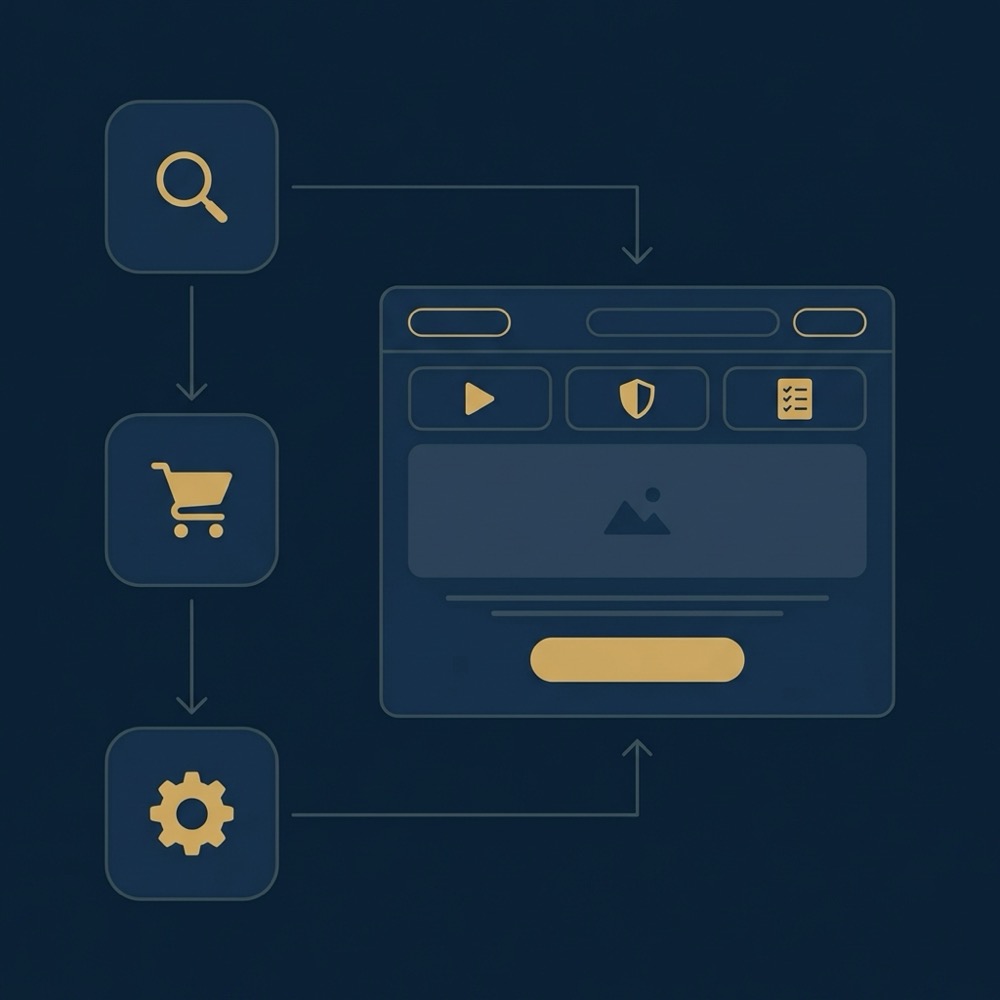
Service business example. For lead generation, match ad copy to a landing page that surfaces the service scope, pricing if applicable, and a short contact form. Measure form interactions as events and compare cost per lead from paid to organic lead volume and quality Moz Beginner's Guide to SEO on landing pages.
Small pilot for constrained teams. Prioritize 3 to 5 high intent query clusters, build one landing page variant for each cluster, set up a minimal ad account structure that records tests, and instrument two to three conversion events. Run a four week pilot with tight controls and review learning before scaling Search Engine Land on pilot planning.
Bringing systems together: governance, workflows, and next steps
Bringing systems together: governance, workflows, and next steps
Define roles for search architecture, paid media, and analytics so responsibilities are clear. The search architecture role focuses on content architecture and technical SEO, paid media handles account structure and creative testing, and analytics ties events and attribution together. This split keeps work specialist and coordinated rather than duplicated HubSpot on team roles.
Use dashboards and simple automations to reduce recurring operational work and improve decision making. Automate routine reports, surface tests that missed statistical thresholds, and schedule short decision cadences so teams act on measured lift without long debates Search Engine Land on reporting.
Practical next steps are to run the pilot, review results against benchmarks, and map priorities for the next 30 to 90 days. Focus first on fixes that unblock measurement and then on the experiments that create the most learning per dollar spent Search Engine Land on scaling pilots.
seo advertising covers the coordinated use of paid search ads and search focused organic SEO so both channels target the same user intent and can be measured together.
Not necessarily. Organic improvements compound over time, but running short paid tests can accelerate learning and provide visibility while organic value builds.
Track paid metrics like CTR and CPC alongside organic metrics like impressions and organic conversions, and use event based analytics plus unified attribution to compare them.
References
- https://developers.google.com/search/docs/beginner/seo-starter-guide
- https://moz.com/beginners-guide-to-seo
- https://searchengineland.com/how-to-structure-google-ads-campaigns
- our services
- https://www.trackingplan.com/guides/ga4-multi-channel-marketing-strategies
- https://www.northbeam.io/blog/a-beginners-guide-to-marketing-attribution
- orvus.net
- our knowledge base
Want this kind of work done for your business?
We build and run AI-powered marketing and automation. 15 minutes, honest assessment.
Book a call