 Orvus
OrvusHow to do SEO for a landing page?
December 10, 2025
How to do SEO for a landing page? - start with the visitor's intent
landing page SEO begins the moment someone arrives. A landing page should answer a clear question before it asks for anything: what does this visitor want, and how can you deliver it fast and simply? Whether the intent is to buy, compare, or learn, aligning content and experience with that intent is the most reliable path to both search visibility and conversions.
Think of the landing page as a tiny product: it has a purpose, measurable outcomes, and a single next step. Treat the page this way and the SEO work becomes practical - not mythical. Below you'll find the frameworks, checklists and specific changes you can test this week to make landing page SEO truly work for your campaign.
Start with intent and keyword choice
Before you write a single sentence, choose keywords that reflect the visitor’s intent. If the page is meant to close a sale or collect a lead, aim for transactional phrases: terms that include “buy,” “pricing,” “get a quote,” “book demo,” or related action words. For awareness or research goals, use different assets - keep the landing page focused so the user journey stays tight.
Good landing page SEO depends on this alignment: the keyword, the above-the-fold promise, and the CTA must all say the same thing. If the ad, keyword and H1 promise “Request an instant quote,” don’t surprise the user with a long educational form or a page that primarily sells brand values.
Quick checklist: intent-driven keyword selection
landing page SEO checklist for keyword selection:
- Identify transactional keywords with clear intent (buy, pricing, book, demo).
- Check search volume and cost-per-click to validate commercial intent.
- Use variations that match ad copy exactly to reduce friction and improve Quality Score.
- Avoid generic informational phrases if the page’s goal is conversion.
Match your H1 to the most relevant query and keep supporting copy tight. The H1 is a promise; if it doesn’t match the search intent, neither users nor search engines will stick around.
For teams that want help aligning search architecture with conversion design, consider Orvus' services - a practical partner that embeds with your team to build measurable systems. Learn more about Orvus services and how they help turn landing page SEO into repeatable growth.
Design the above-the-fold experience
People scan. Most visitors only need a few words to decide whether to stay. Respect the short-scan rule: headline, one-line value proposition, and a clear CTA visible without scrolling. The opening section should answer three quick questions: What is this? Who is it for? What happens next?
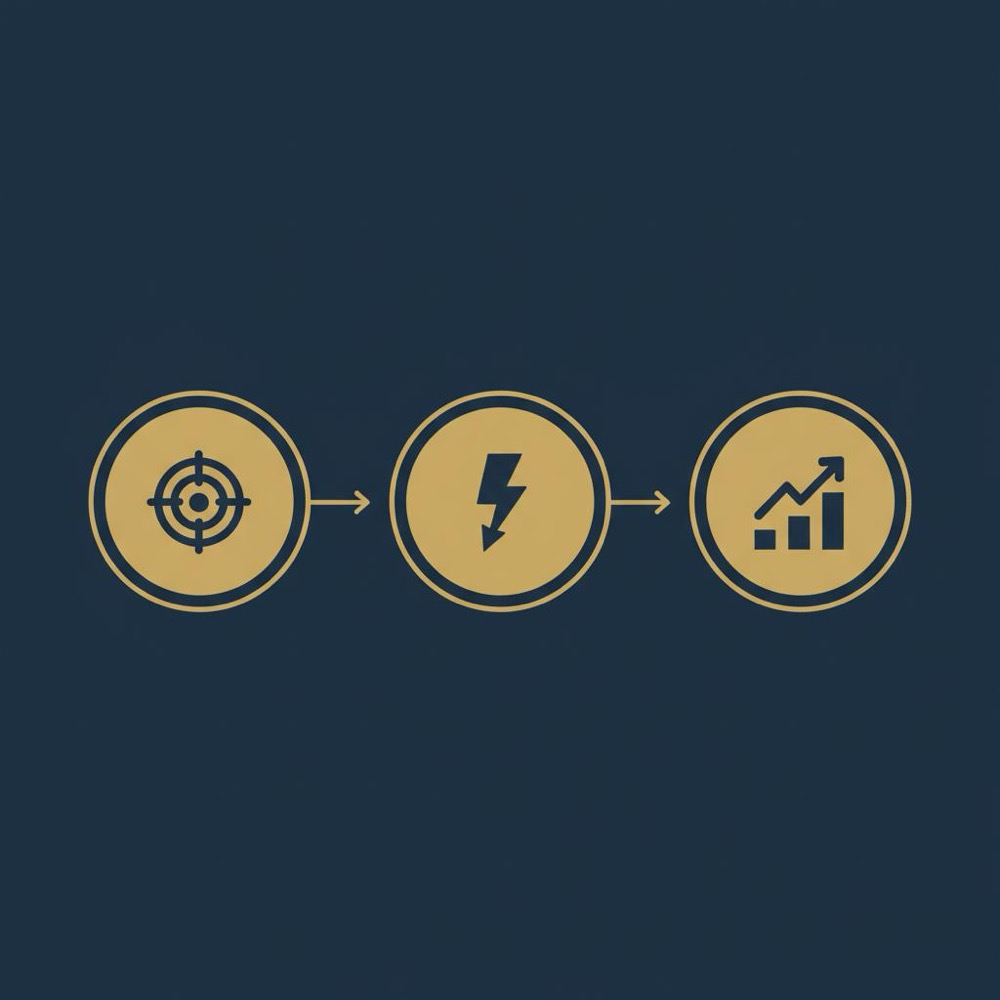
Use one strong H1 and a short supporting paragraph. Then add a succinct bullet list of benefits - not a long essay. If you need more detail, place it below the fold behind descriptive subheadings that allow readers to dig in on demand.

Make the CTA descriptive and purposeful
Replace vague CTAs like “Learn More” with specific actions: “Request a Quick Quote,” “Get a 15‑minute Demo,” or “Download the Price Sheet.” Activity that follows from the click should be explicit and honest: if clicking opens a booking widget or sends an email, say that plainly next to the button. Clear CTAs reduce cognitive load and increase conversions - and clarity helps your landing page SEO by matching user intent to outcome.
Technical foundations: speed, rendering, and quick wins
Technical work is central to effective landing page SEO. Slow load times, layout shifts, and heavy third‑party scripts all hurt both ranking and conversion. Core Web Vitals - especially Largest Contentful Paint (LCP) - remain key indicators of how quickly your primary content appears. Focus on three levers: reduce the time to first meaningful paint, minimize layout shifts, and keep interaction readiness fast. Further reading: SEO for landing pages - Best Optimization Practices for 2025, 19 SEO Case Studies to Improve Your Strategy in 2025, and Understanding Core Web Vitals and Google search results.
Immediate technical fixes you can try this week
- Convert large images to modern formats (WebP / AVIF) and serve scaled images sized to device.
- Inline critical CSS for first view and defer non-critical CSS.
- Defer or asynchronously load nonessential JavaScript and widgets.
- Lazy-load below-the-fold images and content.
- Audit and remove low-value third-party tags.
Small improvements often deliver outsized gains. One typical path: remove a heavy carousel from the first view, compress the hero image for mobile, and defer analytics scripts until after interaction. These steps can reduce LCP dramatically and reduce bounce rates.
Mobile-first rendering
Most landing page traffic is mobile. Design and test primarily for narrow screens: use thumb-friendly buttons, short forms, and images that render crisply at small widths. Mobile-first layout also forces you to prioritize what actually matters above the fold - which is both good UX and better landing page SEO.
Structured data, canonicalization and index control
Structured data helps search engines understand your page and can enable richer listings. For lead pages or booking funnels, consider ContactPoint or PotentialAction schema to clarify intent and the action a user can take.
Canonical tags need thought. If you create test variants or campaign-specific URLs, ensure the canonical points to the canonical experience you want indexed. Mismanaged canonicals can fragment signals or surface confusing results in search. Use noindex sparingly - mainly for ephemeral or test-only pages you do not want indexed.
Practical schema examples
For a booking CTA, add a concise PotentialAction snippet that describes the action (e.g., “Book a demo”) and the required inputs. For contact-driven funnels, ContactPoint can indicate the primary method to reach you. Schema won’t fix a poor experience, but it helps search engines present the right result types for the right intent - which supports landing page SEO indirectly.
Copy, forms and trust: content that converts and ranks
A landing page must do one thing well: guide a visitor to the next step. Keep copy direct, plain, and trust-building. Use short paragraphs, bullets, and microcopy that answers questions before they’re asked: why do you need my phone number? How long will the demo take? What happens next?
Form design that reduces friction
Forms are often the largest source of friction. Ask for the minimum required information. Consider progressive profiling: capture an email and name up front, enrich the profile in subsequent interactions. Use native controls on mobile (tel input, email input, date pickers) and avoid long optional dropdowns.
Each extra form field reduces completion rate; each improvement in perceived speed and clarity increases conversions. Use a compact confirmation experience that sets expectations and reduces anxiety about what happens next.
Trust signals that actually help
Trust elements should be concise and honest. One strong, contextual testimonial with a name and company beats five anonymous blurbs. Short case snippets with a metric or a time period are persuasive. Place a brief privacy statement beside the form explaining how data will be used - that single line can increase form completion because it reduces perceived risk.
Measurement, experiments and privacy-aware analytics
Counting clicks is not enough. Privacy changes have made attribution harder: browser restrictions and ad blockers reduce third-party signals. In response, teams are adopting event-based analytics like GA4, server-side collection and first-party identifiers captured with consent.
Event-based tracking and server-side resilience
Track discrete interactions: button clicks, form starts, form submits, and scroll milestones. Server-side event collection reduces data loss from client-side restrictions and ad blockers. Capture first-party identifiers with explicit consent - email or hashed IDs - to maintain attribution without violating privacy expectations.
When testing, ensure telemetry can separate natural variance from real lifts. That may mean running experiments longer when signals are noisy, and focusing on high-quality conversion events (qualified leads, booked demos) rather than low-signal micro-conversions.
Testing with purpose
A/B testing should be deliberate: change one meaningful element at a time (headline, CTA text, hero image, or form length). Run tests to statistical confidence and look for consistent improvements across devices. Small persistent uplifts compound; don’t chase flashy but fragile wins.
Yes - when the button reduces friction and clarifies the outcome. A descriptive CTA that tells users exactly what to expect after the click (timeframe, next step, privacy assurance) lowers cognitive load and often produces measurable conversion uplifts.
Main question: Can a single button change really move the needle? Yes - when the button reduces friction and clarifies outcome. That’s why descriptive CTAs and microcopy matter more than decorative design.
Speed and conversions: why performance is conversion work
Faster pages convert better. Improving load time reduces abandonment and increases trust - both of which lead to more form completions and purchases. Treat performance as conversion work: optimize images, defer nonessential scripts, and serve a compressed hero image sized for mobile.
Example: a services company reduced LCP from 3.8s to 1.2s by deferring a testimonial carousel, lazy-loading noncritical images, and serving compressed hero images. The result was a 17% lift in qualified leads over three months. That kind of improvement is not about flashy redesign; it's about aligning what loads first with what the visitor needs.
Content hierarchy and the short-scan rule
Respect scanning behavior. Lead with a clear H1, then a one-line value proposition, then the main CTA. Use short supporting lines to explain what happens after the click. If more detail is needed, place it below the fold with clear subheadings so interested readers can find it quickly.
Personalization, AI, and responsible experimentation
Generative AI and personalization make it tempting to create many variants. That can be powerful, but measurement becomes harder. Distinguish between lifts from better copy and lifts from better targeting. Maintain canonical control and strong telemetry. Treat large-scale personalization as an experiment and prioritize user value over volume.
Testing, duplicates and canonical control
If you run multiple variants, ensure only the canonical experience is indexed. For ephemeral tests, consider using noindex for those variants or managing them on the same URL via client- or server-side personalization. Avoid multiplying near-identical URLs that dilute ranking signals.
Common pitfalls to avoid
- Testing too many elements at once.
- Treating landing pages as purely creative or purely technical tasks.
- Ignoring trust basics like a privacy statement, contact options, and real customer evidence.
Collaborate early: define the conversion goal, agree on the minimal data you need, and plan the page so that performance and persuasion are baked in from the start.
A three-step case study
Imagine a small software company with low conversions. The page had a vague headline, a long form, and a heavy carousel. They ran a three-step redesign:
Step 1 - Clarity: A specific headline and a precise CTA: “Get a 15‑minute demo.” The form reduced to name, email, and company.
Step 2 - Speed: Hero image optimized, carousel deferred, JavaScript deferred.
Step 3 - Measurement: Server-side event capture for demo requests and one A/B test for headline and CTA.
The result was a meaningful increase in demo requests, higher form completion, and clearer analytics that tied ad spend to leads. The changes were routine but compounding.
Practical checklist narrative for launch
Follow this sequence for a reliable launch:
1) Define visitor intent and the single conversion goal.
2) Craft an H1 that matches the intent and a descriptive CTA.
3) Keep above-the-fold copy short: headline, one-line proposition, CTA.
4) Optimize images, defer scripts, and lazy-load noncritical content.
5) Make the page mobile-first and test on real devices.
6) Add appropriate structured data for contact or booking actions.
7) Set canonical tags carefully and use noindex for test-only pages.
8) Instrument event-based tracking and consider server-side collection.
9) Run focused A/B tests, one change at a time.
Practical landing page SEO experiments to run
Try these experiments one at a time:
- Headline specificity: swap a vague H1 for a precise benefit-driven H1.
- CTA wording: test “Request a Quick Quote” vs “Contact Sales” vs “Get Pricing”.
- Form length: 3-field vs 5-field forms.
- Hero image weight: compressed mobile-optimized vs high-resolution desktop-first.
- Trust placement: testimonial near the form vs testimonial lower on the page.
Measure outcomes with server-side events when possible and let tests reach confidence before acting.
How to prioritize fixes if you have limited time
If you can only do three things this week to improve landing page SEO, do these:
1) Make the H1 and CTA clearly match the incoming intent.
2) Compress and serve a mobile-sized hero image; lazy-load the rest.
3) Remove or defer heavy third-party scripts that block the first view.
Those three changes improve both search relevance and conversion likelihood quickly.
Tags and taxonomy for landing pages
Keep landing pages shallow in your site structure. Link from relevant category or product pages that already have authority. Avoid burying campaign pages several clicks deep - shallow paths are better for both users and search engines.
Internal linking tips
Link to the landing page from pages that already match the same intent. Use descriptive anchor text that includes the target keyword or a natural variation. That both helps users and strengthens landing page SEO signals.

If you want hands-on help turning these principles into repeatable workflows and measurable outcomes, a compact embedded partner can help translate intent-driven architecture into real growth. For practical services that do this work with attention to measurement and scale, consider exploring Orvus' services at our services - a hands-on, systems-first approach to search and performance.
Make landing page SEO a steady growth engine
Ready to make landing page SEO work for your campaign? Explore tailored services that combine technical fixes, measurement and conversion design to produce steady growth. Visit Orvus services to get started.
Landing page SEO is not a checklist you run once - it's an ongoing mix of experiments, monitoring and small improvements that compound. Keep your focus on the visitor, prioritize speed and clarity, and measure in a privacy-aware way to create durable results.
Choose keywords that match the visitor’s intent for the page. If your primary goal is conversion, target transactional phrases that contain action signals like “buy,” “pricing,” “get a quote,” or “book demo.” Validate those terms with search volume and CPC to ensure commercial intent. Make sure your H1, ad copy and CTA all align with the chosen keyword to reduce friction and improve landing page SEO.
Yes. Faster pages reduce abandonment, increase trust, and improve conversions. Core Web Vitals - particularly Largest Contentful Paint - are important signals for both users and search engines. Practical steps like compressing hero images, inlining critical CSS, and deferring nonessential JavaScript often produce measurable lifts in both ranking and conversion rates.
Yes - Orvus Ltd. works as an embedded partner to align technical SEO, performance media and measurement with conversion design. They help teams prioritize the highest-leverage fixes, build server-side event collection for resilient attribution, and create systems that scale. You can learn more about their approach and services at orvus.net/services/.
References
Want this kind of work done for your business?
We build and run AI-powered marketing and automation. 15 minutes, honest assessment.
Book a call