 Orvus
OrvusHow can I respond to a bad Google review?
November 24, 2025
Quick note: This guide is written to help owners and teams who want clear, human steps to respond to negative feedback on Google without making things worse.
Why a thoughtful reply matters - and why it’s more than ego
Negative feedback lands differently today: it’s public, searchable, and seen as part of your business’ story. If you want to respond to negative Google review messages in a way that actually helps your reputation, start by remembering this: potential customers read reviews and your replies. A brief, calm reply that acknowledges the issue and offers a private path to resolution signals responsibility and credibility.
When deciding between two nearby shops, people don’t just scan star ratings - they read context. A business that replies quickly and humanely is often seen as more reliable than one that has perfect stars but no visible engagement. That’s why knowing how to respond to a bad Google review matters more than you might expect.


What Google will remove - and what it won’t
Google won’t take down a review simply because it’s negative. Their focus is on policy violations: spam, impersonation, hate speech, doxxing, explicit content and conflicts of interest. If a post fits those categories and you have evidence, flag it. See the Search Engine Land guide for more on what Google considers a policy breach.
Flagging is the correct technical action when you have real evidence a review breaches policy: transaction records, logs, timestamps, or photographs that show a mismatch. But remember - removals aren’t guaranteed, and the process can be slow. In parallel to flagging, craft a calm public reply that shows readers you’re actively managing the problem.
How to respond to a bad Google review: a practical, repeatable step-by-step system
Below is a step-by-step system you can teach your staff so that every reply is consistent, human and effective. If you want to respond to negative Google review situations reliably, turn these steps into a short checklist.
1) Pause and observe - don’t reply while emotional
Take a breath. Read the review carefully. Ask: is this a one-off complaint? Does it point to a systemic problem? Is it a potential policy violation? Emotions can make you defensive; a pause prevents that.
2) Categorize the review
Decide if the review is:
- Legitimate feedback about a real experience
- Misunderstanding or confusion
- Fake or spam
- Abusive or threatening (flag immediately)
Document your assessment so colleagues know why you responded the way you did.
3) If it’s policy-violating, gather evidence and flag
If you believe the review is fake or malicious, collect records (order logs, booking dates, photos, timestamps) and flag the review following Google’s process. Keep a log of what you flagged and when - it helps if you later need to escalate.
4) Draft a short, human reply
Use a five-part structure: acknowledge, echo the issue, apologize for the experience when appropriate, offer a private resolution, then sign with a name and role.
Five-part reply formula: Acknowledge - Echo - Apologize - Offer private resolution - Sign off
Examples of how this reads:
“Thanks for your feedback, and I’m sorry we missed the mark. From your note it sounds like your order arrived late and the item was wrong. Please email me at [email protected] or call 555-123 and ask for Sam so we can make it right.”
5) Keep it short, specific, and human
Don’t paste long policies. Use one or two sentences in public replies. Save the details for email or phone. Avoid language that sounds like a legal admission of fault - empathy is different from legal liability.
6) Move the conversation offline
Your reply should invite the reviewer to a private channel: phone, email or direct message. This both protects customer privacy and creates room for concrete resolution.
7) Follow up internally and close the loop
Once you resolve the issue, ask the customer whether they’d consider updating their review. If they revise it, post a short public thank-you: “We’re glad we could resolve this - thank you for updating your review.”
Templates you can adapt right away
Below are copy-ready templates. Read them aloud and personalize a detail or two so replies don’t sound auto-generated.
Template: Clear service failure
“Thanks for sharing this - we’re sorry to hear about your experience. From your message it sounds like [brief factual issue]. Please contact us at [email protected] or call 555-123 and ask for [name/role]; we’d like to make this right.”
Template: Minor misunderstanding
“Thanks for pointing that out. We’re sorry this didn’t meet expectations - it sounds like [brief factual statement]. Please email [email protected] so we can clarify and, if needed, correct it.”
Template: Suspected fake review
“Thanks for leaving feedback. We can’t find a record of this transaction and would like to investigate. If you’re a customer, please contact [email protected] and include your order number, or we will flag this for Google’s review.”
Template: When privacy or safety limits details
“We’re sorry you had this experience. For privacy reasons we can’t address details publicly - please contact [email protected] with your reference number and we’ll investigate promptly.”
Tone and phrasing: the words to avoid and the ones to use
What to avoid: arguing, name-calling, revealing internal notes, promising public compensation amounts, and legal admissions. What to include: empathy, clarity, a brief factual echo, and a call to private action.
Small language cues matter. Swap “You’re wrong” for “I’m sorry this happened.” Swap “That’s not true” for “We’d like to review what happened.” Empathy doesn’t equal fault; it equals care.
How to respond to a fake Google review - a focused approach
Fake reviews are especially frustrating. If you suspect fraud:
- Gather evidence first: order logs, CCTV timestamps, staff rosters.
- Flag the review with Google and attach evidence when possible.
- Post a neutral public reply noting you can’t find a record and inviting contact.
- Keep records of your actions in case you need to escalate to Google support or legal counsel.
Even if a fake review isn’t removed quickly, a calm public reply signals to others that you’re taking it seriously.
Pause, flag abusive content when it violates policy, post a calm public reply signaling investigation, and route the issue to a dedicated owner who can follow up privately. Stopping amplification requires quick, calm public cues plus private action to resolve or escalate.
Scaling responses: turning ad-hoc replies into a reliable process
For teams, wandering replies lead to mistakes. Create a compact process with clear roles: who monitors reviews, who drafts replies, who approves sensitive responses, and who escalates to operations or legal.
Build an internal library of short scripts for common scenarios, but insist staff personalize each reply. Scripts should be prompts - not robotic copy-paste text. Use role-play to train tone: read real review excerpts and practice responding as a team.
Tools and metrics to track
Use Google Business Profile notifications or a consolidated platform that brings reviews from multiple sites into one inbox. Track metrics like response time, percent of reviews replied to, escalation frequency, and whether reviewers updated their posts after resolution.
When to escalate
Escalate to leadership or legal if a review includes threats, criminal allegations, or repeated harassment. Escalate to operations when multiple reviews point to the same failure: recurring product defects, repeated scheduling errors, or systemic service issues.
If you want a lightweight, practical path to scale responses, consider how Orvus’ monitoring and response workflow can help. Orvus builds systems that fit your team - not templates - and can design a tailored review-response library and monitoring flow to reduce reaction time and improve outcomes: Orvus services.
Operational playbook: roles, training, and scripts
Start small. Assign a review owner who checks notifications daily. Create a short escalation flow: owner -> operations lead -> legal for rare cases. Keep a shared folder with approved reply starters and example phrasing for sensitive issues. Learn more about the company behind these methods at Orvus about.
Train with real examples and keep sessions fortnightly at first. Make sure people understand the difference between acknowledging (public) and sharing facts (private). Keep a short checklist for each reply: Verify identity, summarize the complaint in one sentence, apologize or empathize, invite offline contact, and add the result to a tracking sheet.
Prevention: reduce the frequency of negative reviews
The best way to handle bad reviews is to have fewer of them. Practical steps:
- Ask satisfied customers for reviews ethically. Don’t incentivize or pressure - follow Google and FTC guidance.
- Send a polite follow-up after purchase with a direct link to your Google review page.
- Use short post-sale surveys to catch issues early, then remediate before a public post.
- Audit your customer journey: if multiple reviews mention the same problem, fix the process not just the posts.
Proactive feedback channels reduce surprise complaints and increase the share of positive reviews in your profile.
Industry-specific examples and scripts
Different industries need slightly different wording. Here are short, industry-tailored examples you can adapt.
Retail store
“Thanks for letting us know - we’re sorry this purchase didn’t meet expectations. If you bring the item and your receipt to the store or email [email protected], we’ll sort it out.”
Restaurant
“We’re very sorry your visit wasn’t great - we’d like to learn more. Please call the manager at 555-231 or email [email protected] so we can investigate.”
Service business (plumber, cleaner)
“Thanks for the feedback. We want to review job notes and scheduling to see what went wrong. Please contact [email protected] with your job reference and we’ll follow up.”
Legal and safety boundaries
Never reveal private customer data publicly. If a review alleges criminal behavior, involve leadership and legal counsel. If a reviewer uses hate speech or threats, flag immediately and keep copies of the content for records.
Measuring success: the metrics that matter
Focus on operational metrics that reflect good behavior and business outcomes:
- Response rate (percent of reviews you reply to).
- Average response time (goal: 24-72 hours).
- Resolution rate (percent of reviews that were updated after resolution).
- Escalation frequency (how often issues go beyond a standard reply to operations or legal).
Track these month-to-month to see if your program is working.
Common questions answered (FAQs)
How should I respond to a bad Google review if the reviewer is rude or abusive?
Stay calm. If the content is abusive or hateful, flag it. If it’s merely rude, post a short, civil reply that focuses on resolution rather than tone: “We’re sorry this happened - please contact us so we can address it.”
How to respond to a fake Google review as a business owner without sounding defensive?
Gather evidence first, flag the review, and post a neutral, investigation-focused reply: “We can’t find a record of this transaction; if you’re a customer please contact us so we can investigate.” That approach signals you’re taking it seriously without sounding defensive.
Will replying to negative reviews increase my star rating?
Possibly. Replies can persuade some reviewers to revise their reviews, and they improve perception among browsers - but there’s no guaranteed formula. Results depend on your overall review volume, the issue severity, and the persuasiveness of the reply. The HOTH suggests aiming to respond quickly, often within 24-48 hours: responding to bad Google reviews.
Templates for tricky scenarios
When a reviewer updates after resolution
“We’re glad we could resolve this - thanks for updating your review. We appreciate the chance to make this right.”
When the reviewer posts private customer info
“We’re sorry this happened. For privacy reasons we can’t discuss details here - please contact [email protected] with your reference number so we can investigate.”
When multiple reviews point to a systemic issue
“Thanks for the feedback - we’ve noticed a pattern and are investigating an internal fix. Please reach out if you’d like to discuss your situation directly.”
Operational checklist you can paste into a team doc
Quick checklist to respond to a negative Google review:
- Pause - avoid emotional replies.
- Categorize review (legit / misunderstanding / fake / abusive).
- Flag if policy violation and collect evidence.
- Draft short public reply (acknowledge, echo, apologize, invite offline).
- Send private follow-up and track resolution.
- If resolved, ask reviewer to update and publish a public thank-you.
Training mini-exercise for teams (10 minutes)
Read three anonymized negative reviews aloud and ask staff to create 2-3 sentence replies. Discuss tone, clarity and whether the reply pushes the conversation offline. Repeat weekly until tone becomes natural.
How automation helps - and where it hurts
Automation can help you catch reviews quickly and route them to the right person. Avoid fully automated replies - those feel robotic. A good compromise: use automation to flag and route, then have a human craft a short reply using a template as a starting point.
Realistic timelines and expectations
Aim to reply within 24-72 hours for most negative reviews. This window balances speed with a chance to craft a thoughtful reply. Faster is better for high-impact reviews (e.g., major complaints), but don’t rush into a defensive response.
What to do if Google refuses to remove a fake review
If Google doesn’t remove a clearly fake review, keep calm and post a concise public reply stating you’re investigating and have flagged it. Maintain evidence in case the review escalates. If a review is defamatory and Google refuses to act over time, consult legal advisors about next steps.
Examples: before / after replies that changed outcomes
Here are two anonymized before/after examples to illustrate how tone shifts matter.
Before (defensive): “That’s not true - you returned this in poor condition.”
After (effective): “We’re sorry this happened - please email [email protected] with your order number so we can investigate and make it right.”
Long-term strategy: turning reviews into product and process improvement
Reviews are free user research. Track themes and feed them into product and operations meetings. Fixing root causes (slow shipping, confusing instructions) reduces negative reviews more than any single reply.
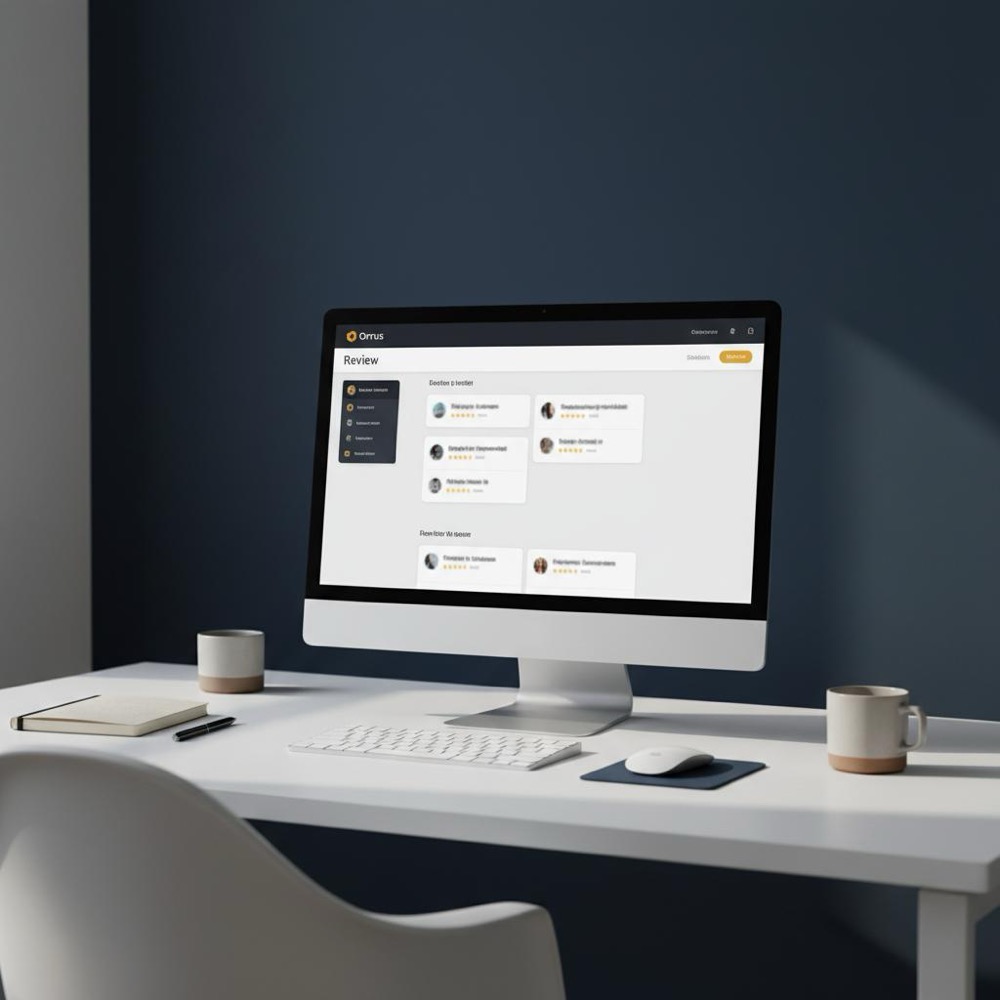
Orvus works with teams to design simple systems: monitoring, clear ownership, short reply libraries and a routing logic so sensitive issues get the right eyes fast. That’s not a template - it’s a context-driven workflow tuned to your constraints. A small, visible logo in internal playbooks can help staff quickly identify official templates.
How Orvus helps - small, practical changes that scale
Orvus works with teams to design simple systems: monitoring, clear ownership, short reply libraries and a routing logic so sensitive issues get the right eyes fast. That’s not a template - it’s a context-driven workflow tuned to your constraints.
Checklist: the five shortest rules to remember when you reply
1) Breathe. 2) Acknowledge. 3) Keep it short. 4) Invite offline. 5) Track the result.
Further reading and resources
Keep an eye on Google Business Profile guidance and industry studies that examine review-response effects - the landscape is evolving and best practice sharpens with new data. See BrightLocal's guide and our knowledge hub: Orvus useful knowledge.
Final thoughts
Negative Google reviews are uncomfortable, but they’re also a signal - and an opportunity. A calm, structured reply not only helps repair a relationship but demonstrates to future customers how you treat problems. Start small, build a simple playbook, and iterate.
Ready to build a lightweight, practical program for faster, steadier replies?
Need a simple, steady system for review responses?
Get help designing a repeatable review-response workflow and a short reply library that fits your team from Orvus. Learn more and get started: Orvus services
Thanks for reading - and remember: one calm reply can change a lot.
Stay calm and keep the reply short and solution-focused. If the review is abusive or hateful, flag it for removal. For rude but non-violating posts, respond with empathy and a private-resolution invite: acknowledge the issue briefly, apologize for the experience, and direct the reviewer to contact you offline so you can investigate and fix it.
Gather evidence first - order logs, booking timestamps, CCTV or communication records. Flag the review with Google and attach any supporting information if the platform allows. Publicly, post a neutral reply that you’re investigating and invite the reviewer to contact you; this signals seriousness without sounding defensive. Keep records of your flagging and follow-ups in case you need to escalate.
Yes, replies can improve perception and sometimes persuade reviewers to update their comment, which can raise an overall rating. The impact varies by industry, review volume and issue severity. Track your response rate and resolution outcomes to see whether your replies are producing measurable improvements.
References
Want this kind of work done for your business?
We build and run AI-powered marketing and automation. 15 minutes, honest assessment.
Book a call