 Orvus
OrvusWhat are meta tags? A systems guide
January 29, 2026
Quick overview: why metatags matter for systems-driven growth
metatags are HTML metadata elements placed in the head that do not change the visible page body but influence how browsers render pages, how services index content, and how search engines build result snippets. The HTML Living Standard defines the meta element and its main attributes, which gives us a stable basis for systems work WHATWG HTML Living Standard
For operators and engineering teams, the practical reasons to treat meta tags as part of search architecture are simple: they affect rendering on devices, provide page-level crawl and index controls, and influence snippet selection and click-through behaviour. MDN provides implementation-focused guidance on the most common tags and where to place them in the head MDN Web Docs
Quick audit steps to spot missing or misconfigured meta tags
Run before deploy
This short guide covers the specific tags you should audit: the title element, meta description, robots meta tag, viewport, charset, and common http-equiv uses. It also shows decisions for CMS and server workflows so meta work sits inside measurement and release systems.
What are meta tags? Definition and context
The formal definition is straightforward: the meta element and its attributes, including charset, name, content, and http-equiv, are specified by the HTML Living Standard and are the canonical reference for how meta tags behave in 2026 WHATWG HTML Living Standard
Operationally, meta tags supply metadata about the document. They do not change the visible DOM but provide instructions or descriptive text that browsers, search engines, and other agents use when rendering, indexing, or generating snippets. For hands-on implementation guidance, MDN documents common meta tags and recommends placing critical entries in the head for predictable behaviour MDN Web Docs
Quick pseudo-example
Here is a compact example of what belongs in the head of a content page. It is pseudo-HTML, not a full template, to show placement and intent:
<meta charset="utf-8">
<meta name="viewport" content="width=device-width, initial-scale=1">
<title>Example title</title>
<meta name="description" content="Short summary used for snippets">
<meta name="robots" content="index, follow">
Core types of meta tags and how they work
The title element and meta description are the primary inputs search engines use when constructing result titles and snippets. While meta descriptions are not a direct ranking signal, they influence how snippets appear in search and can change click-through rates, so treat them as part of your search appearance workflow Google Search Central snippets guidance
The robots meta tag offers page-level indexing and snippet directives. It is the standard mechanism for controlling crawling and snippet rules, but it works alongside server headers and robots.txt, which can provide complementary controls at other levels of the system Google Search Central robots guidance
The viewport meta tag is the primary way to enable responsive rendering on mobile devices. Omitting it commonly causes layout problems on phones and can distort measurement and user signals, so include a responsive viewport declaration in the head as a baseline best practice MDN viewport guidance
Charset declarations control how text bytes are decoded. A charset meta tag early in the head reduces the risk of mis-decoded text. Server Content-Type headers still matter, but the in-document charset is a practical safeguard against encoding issues during rendering W3C charset guidance
Audit core meta tags with a short diagnostic
Audit these core meta tags with your engineering and content teams so changes are tracked, tested, and deployed as part of your release workflow.
Other uses of meta or http-equiv attributes exist, for example historical Content-Type uses or refresh directives. Most production systems rely on server-level headers for authoritative behaviour, with in-document meta tags used for predictable client-side handling and backwards compatibility.
Decision checklist: which meta tags to prioritize and when
Start with the tags that directly affect rendering and early parsing. Charset and viewport should be first priorities because they prevent rendering and measurement errors that can mask real user behaviour. Make these checks part of any predeploy validation.
Next, prioritise title and meta description for pages where search appearance matters. Titles and descriptions belong in content templates and should follow standards for clarity and intent. Use a consistent template system so reporting and snippet testing are easier across thousands of pages.
Robots directives come next for pages that must be excluded or have special snippet rules. Remember that robots.txt and X-Robots-Tag server headers can apply at a higher level and should be coordinated with any in-document meta robots tag to avoid conflicting signals Google Search Central robots guidance
For single-page applications and heavily dynamic sites, decide whether meta updates should be server-rendered or injected client-side. When meta tags are changed on the client, ensure your measurement and preview tools reflect those updates so you do not ship mismatches between what users and search engines see.
Common implementation mistakes and how to avoid them
One frequent error is omitting the viewport meta tag, which can lead to broken mobile layouts and skewed analytics. Including a responsive viewport in the head is a simple fix that avoids a range of display and measurement problems MDN viewport guidance
Another common mistake is placing the charset declaration too late. If the browser sees bytes before it knows the encoding, text can render incorrectly. Place a charset declaration as early as possible in the head and ensure server Content-Type headers are consistent with the document encoding W3C charset guidance

Teams also rely too heavily on auto-generated meta descriptions with inconsistent patterns. Poorly templated descriptions can reduce click-through clarity. Adopt simple title and description templates, then iterate based on snippet testing and CTR signals rather than guessing.
Operationally, inconsistent naming and measurement gaps make it hard to attribute changes. Use a changelog for meta work, tag releases in your repository, and tie the changes to experiments or measurement windows to support attribution.
Practical examples and implementation patterns
Below is a recommended head snippet for a server-rendered content page. Keep the charset early, include the viewport, then the title and meta description, and add a robots meta tag where needed. Use server headers where you need authoritative control over encoding or indexing.
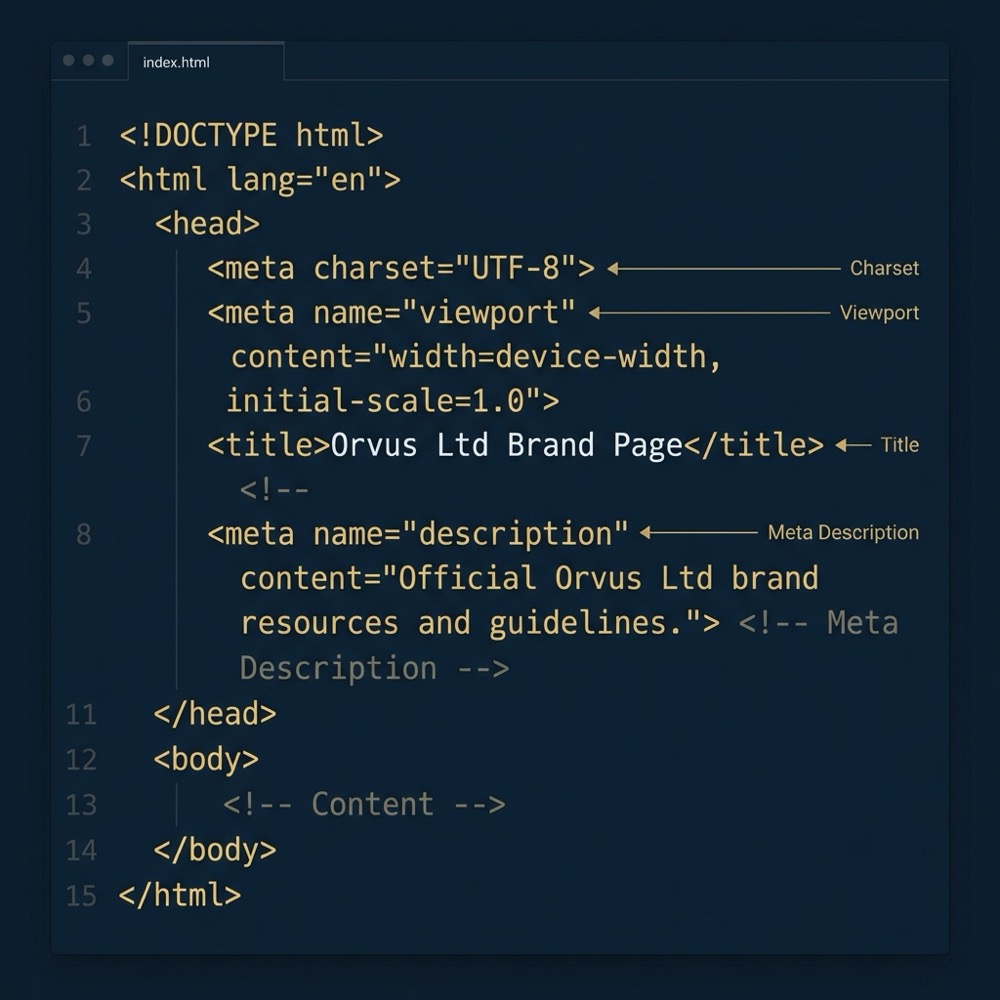
<meta charset="utf-8">
<meta name="viewport" content="width=device-width, initial-scale=1">
<title>Article title template</title>
<meta name="description" content="A concise summary for search snippets and social previews">
<meta name="robots" content="index, follow">
For CMS templates, build title and description fields into the content model and provide editor guidance that references meta description best practices. Store canonical and language information in templates to avoid fragmentation across localized pages.
When server headers and in-document meta tags could conflict, prefer server headers for authoritative encoding and indexing control. Use in-document tags as a predictable fallback for client agents and legacy clients.
Testing and verification steps you can add to pipelines include viewing source to confirm head contents, using Search Console or equivalent to check how snippets are rendered, and fetching pages with a headless user agent to verify server headers and the document head are consistent Google Search Central snippets guidance

Measuring effects and closing the loop: testing, monitoring, and next steps
Meta description changes are best monitored through CTR and snippet behaviour rather than as a direct ranking signal. Use Search Console and your analytics platform to track impressions, clicks, and CTR after controlled changes, and treat snippet shifts as part of search appearance experiments Google Search Central snippets guidance
Robots meta changes affect indexing. After changing robots directives, verify indexing behaviour in Search Console and check server headers if you also use X-Robots-Tag values. Keep a change log so you can correlate index changes with specific deployments Google Search Central robots guidance
Meta tags control document encoding and viewport settings for rendering, and they supply title and description text and indexing directives that search engines use to build snippets and control crawling. Together these elements impact how users find and experience pages, and they should be managed within release and measurement systems.
Re-evaluate meta strategy on a cadence that matches content velocity and measurement windows. If you publish frequently, test title and description templates on a representative subset of pages and scale what moves CTR and aligns with business goals.
When results are ambiguous, return to basics: ensure charset and viewport are correct, confirm server headers are consistent, then iterate on titles and descriptions with controlled experiments and clear attribution windows.
<meta charset="utf-8">
<meta name="viewport" content="width=device-width, initial-scale=1">
<title>Article title template</title>
<meta name="description" content="A concise summary for search snippets and social previews">
<meta name="robots" content="index, follow">

Metatags are metadata elements placed in the document head. They provide instructions for browsers and services, such as encoding, viewport settings, indexing directives, and snippet content.
Meta descriptions are not a direct ranking signal, but they influence snippet selection and click-through rates, so they matter for search appearance and measured traffic.
Use server headers for authoritative control over encoding and indexing, and include in-document meta tags as a reliable client-side and fallback mechanism.
References
- https://html.spec.whatwg.org/multipage/semantics.html
- https://developer.mozilla.org/en-US/docs/Web/HTML/Element/meta
- https://developer.mozilla.org/en-US/docs/Web/HTML/Reference/Elements/meta/name
- https://html.spec.whatwg.org/multipage/semantics.html#the-meta-element
- https://developers.google.com/search/docs/crawling-indexing/robots-meta-tag
- https://www.w3.org/International/questions/qa-http-and-lang
- our services
- our knowledge base
- orvus.net
Want this kind of work done for your business?
We build and run AI-powered marketing and automation. 15 minutes, honest assessment.
Book a call