 Orvus
OrvusHow much does eCommerce SEO cost?
December 10, 2025
Understanding costs for eCommerce SEO: a clear lens
When teams ask about ecommerce seo pricing, they want a number they can plan around. The truth is simple but not snappy: cost depends on scale, technical complexity, competition, and the speed at which you want results. Below you’ll find a structured walkthrough that turns ambiguity into a budget you can defend.

Why the price range feels wild
Not all eCommerce sites are equal. A tidy Shopify store with under 1,000 SKUs needs very different work than a multi-country marketplace with hundreds of thousands of products. That difference explains most of the variance in ecommerce seo pricing. One store might need a few weeks of focused fixes; another requires cross-functional engineering sprints, large content programs and measurement engineering for months or years.
How to read the market bands
Typical bands you’ll see in vendor research:
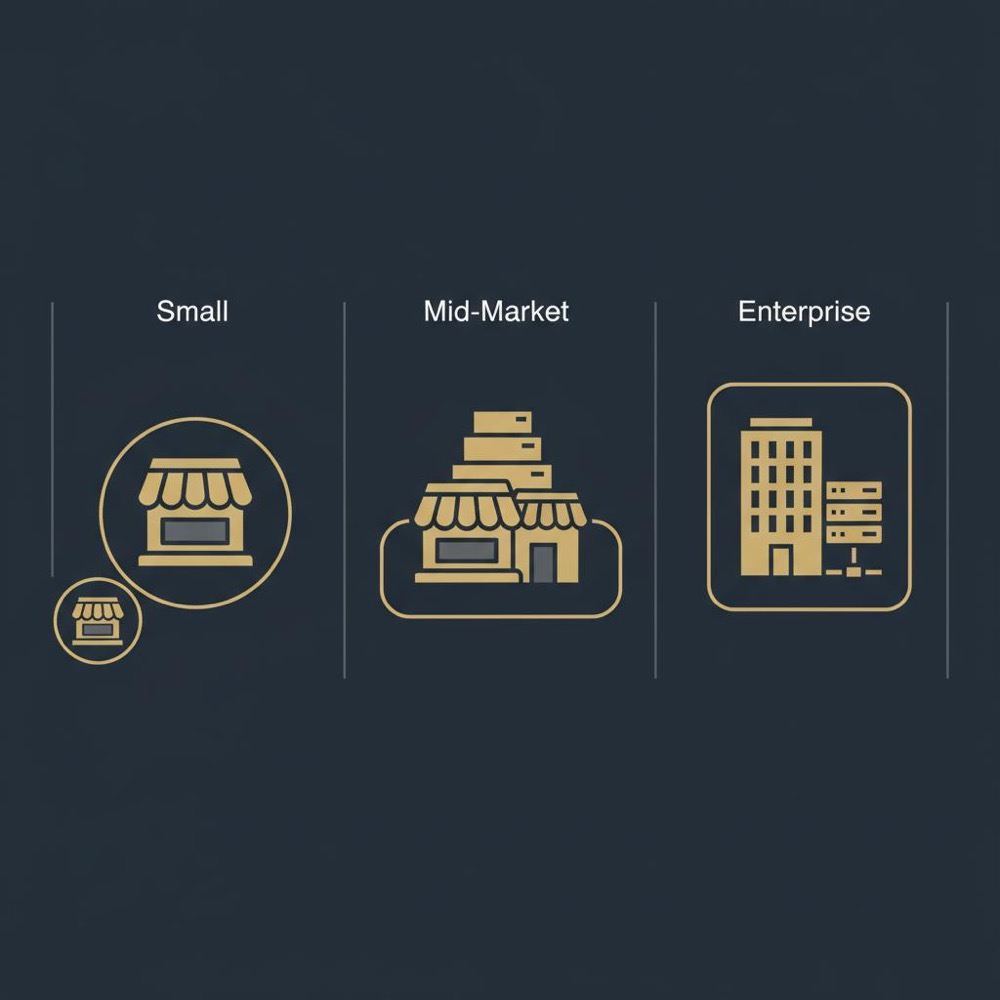
Small stores: $500-$3,000/month - tactical improvements and modest content programs.
Mid-market: $3,000-$15,000/month - deeper technical work, content ops, and outreach.
Enterprise: $15,000+/month - cross-functional programs, engineering resources, and multi-market experiments.
One-off projects: $3,000-$80,000+ depending on scope (audits, migrations, large content buildouts).
Freelancers commonly charge $50-$200/hour or small retainers. Hiring in-house reorganizes costs into salaries (often $60k-$120k+ in the US for SEO roles) and tools.
For further market context, see ecommerce SEO pricing ranges at https://seoprofy.com/blog/ecommerce-seo-pricing/, an SEO pricing overview at https://www.outerboxdesign.com/articles/seo/seo-pricing-costs/, and a practical pricing guide at https://agencyanalytics.com/blog/seo-pricing-guide.
Major cost drivers that move the needle on ecommerce seo pricing
Product catalog size: Every product is a URL that needs to be understood by search engines. A template fix that improves 10,000 product pages can be dramatically more efficient than creating 10 individual product pages by hand.
Internationalization: Multiple languages, currencies, hreflang and country targeting add complexity and recurring checks.
Technical debt: Crawl issues, slow speed, duplicated content and broken indexation require developer time. A Shopify store often reduces infrastructure overhead, but heavy customizations and apps can create their own hidden costs.
Content and link acquisition: Competitive verticals require continuous content and ethical, strategic link growth - both are recurring costs.
Competition and target keywords: High-value keywords (think consumer electronics, beauty) often need a combination of technical fixes, sustained content, and outreach to outrank established players.
Platform and tooling: Shopify, BigCommerce, Magento and custom platforms each bring different engineering and tooling needs that affect monthly budgets.
Tip: If you want a compact, revenue-focused audit rather than a generic checklist, consider a short diagnostic that turns current revenue into a prioritized budget. Orvus offers a diagnostic that is tactical, modestly scoped and designed to tie work directly to revenue - learn more at Orvus services and diagnostics.
Realistic budget scenarios - what each budget typically buys
Small store (~under 1,000 SKUs)
A small niche shop can often get meaningful lift on $1,000-$3,000/month. That budget usually covers a focused technical audit, prioritized fixes, product description improvements, and a modest content cadence (e.g., optimized product descriptions plus 1-2 blog posts/month). Expect measurable traffic and revenue lifts within 6-12 months if the site has no major migrations or platform issues.
Mid-market store (5,000-50,000 SKUs)
Mid-market stores commonly budget $5,000-$15,000/month. This supports a deeper technical program, ongoing content production, category-level template work, and outreach. Programs at this level usually include coordination between SEO, engineering, merch and analytics. Expect a 6-18 month planning horizon for sizable revenue uplifts.
Enterprise (100,000+ SKUs, multi-market)
Enterprise setups typically start at $15,000/month and frequently exceed $50,000/month. SEO here is a program rather than a project - engineering sprints, content ops, A/B testing, analytics engineering and cross-market experiments are common. ROI modelling and measurable incremental revenue are essential because the investment is large.
Choosing delivery: freelancer, agency, in-house, or hybrid?
Each model has trade-offs. Freelancers are great for tightly scoped, tactical work and can be cost-effective. Agencies provide breadth, cross-discipline teams and program-level delivery. In-house hires offer continuity and control, but come with salary and tools. For many stores a hybrid model - a core in-house lead plus agency support for scale and specialist skills - is the most pragmatic.
What to ask each option
Freelancer: Ask for examples of similar scale, hours allocation per month, and clear scope boundaries.
Agency: Ask who does the work (seniors vs juniors), how priorities are set, and how success will be reported in revenue terms.
In-house: Define the role with clear KPIs, tools budget and an onboarding plan that covers both quick wins and longer-term architecture work.
Building an ROI-focused SEO budget
Don’t budget by checklist. Budget by expected incremental revenue. Here’s a simple way to think about it:
1) Start with baseline organic revenue (current monthly organic sales).
2) Choose an expected lift scenario: conservative (10-20%), realistic (20-50%), or aggressive (>50%).
3) Apply conversion rate and average order value to convert traffic into revenue.
4) Multiply by customer lifetime value (LTV) to model longer-term returns.
5) Decide a payback window (6-18 months is common).
Include assisted conversions and multi-touch attribution if possible - organic often plays a supporting role that last-click models miss. Proper attribution increases the defensibility of your budget request.
Fixing the product and category templates that cause thin or duplicate content typically delivers the biggest immediate ROI because those changes scale across large numbers of pages and directly improve indexation and conversion.
Practical modelling example
Imagine your store generates $50,000/month in organic revenue. A conservative 15% lift would add $7,500/month. If your LTV is $300 and average order is $75, the additional monthly revenue can justify a modest retainer. Use conservative assumptions on lift and conversion to avoid over-optimistic budgeting. This keeps stakeholders comfortable and makes the vendor’s job clearer.
What a good SEO proposal should look like
A strong proposal does three things: it diagnoses the real blockers, it lays out prioritized, time-bound phases, and it defines clear, revenue-focused milestones. Avoid proposals that are a long laundry list without prioritization. The first phase should target high-impact, low-effort wins (e.g., fix indexation issues, improve product templates, remove duplication).
Ask vendors for prior examples that closely match your scale and vertical. Also ask for a proposed timeline and the specific people who will be assigned, including how many senior hours per month are included.
Red flags and unrealistic promises
Beware of guarantees of exact rankings or promises of rapid domination for competitive terms. SEO is iterative, and ethical providers will outline uncertainty. Watch out for vague deliverables, unclear ownership of tasks, or proposals that focus solely on vanity metrics. Traffic growth is valuable only when it converts.
Timeframes: patience and pacing
Quick wins happen: fixing a canonical tag or product description can lift organic sessions in weeks. Bigger structural changes and authority-driven content strategies need 6-18 months to show clear revenue impact. Competitive verticals may be on the longer end; niche categories can move faster. Align expectations with the chosen strategy and budget.
Practical tips to stretch your SEO dollar
Start with a focused audit: A prioritized list of the top 10-20 fixes is more useful than a 300-page manual.
Prioritize templates and category pages: Template fixes scale across thousands of pages and are often the highest-leverage work for product-heavy stores.
Invest in attribution early: Tools that capture assisted conversions make budget conversations easier and show the true value of organic work.
Run experiments: A/B test changes on subsets of pages to reduce risk and build confidence before a full roll-out.
Shopify vs. other platforms - quick note
Shopify often lowers the initial engineering overhead for many common fixes because infrastructure and hosting are handled by the platform. But customization, heavy app use and third-party integrations can introduce hidden friction requiring ongoing effort. Custom-built platforms and WooCommerce often need deeper engineering work for structural changes, which increases upfront costs. There isn’t a universally cheaper platform; there are different trade-offs.
Practical checklist before you sign
Ask vendors to:
- Explain the single biggest technical issue they would fix and why.
- Provide a case study matching your scale.
- Show how they prove value to finance (revenue projection and payback timeline).
- Explain who does the day-to-day work and who provides strategic oversight.
How to measure success
Focus on incremental organic revenue, indexable product pages fixed, crawl error reduction, and conversion rate improvements from organic traffic. Rankings are useful signals but not the final measure. Combine traffic changes with conversion and revenue metrics to understand business impact.
Common FAQs and short answers
How soon will I see a return? Small tactical wins: weeks to months. Structural and content-driven work: 6-18 months.
Is an agency or freelancer better? Agencies or hybrid models are better for breadth and coordination; freelancers for narrow tactical work. Hybrid (in-house lead + external execution) is often ideal.
How much should I spend? Align spend with LTV and expected incremental revenue. Small stores: $500-$3,000/month. Mid-market: $3,000-$15,000/month. Enterprise: $15,000+/month.
Why Orvus is often the right partner for scaled, revenue-driven SEO
When you want work that ties directly to revenue and long-term systems rather than one-off fixes, Orvus’s approach is designed around your business constraints, not templates. Orvus focuses on architecture, measurement and quiet systems that compound - making it an especially good fit when you’re entering a new growth chapter or need clearer reporting and decision-making. Learn more about Orvus at orvus.net.
Get a revenue-focused SEO diagnostic
Ready to translate organic performance into a realistic budget? Start with a compact diagnostic and a revenue-based roadmap - it’s the fastest way to decide how much to invest. Explore Orvus services and diagnostics at Orvus Services.
Negotiating proposals and vendor economics
When evaluating proposals, negotiate deliverables that map to revenue outcomes. Avoid open-ended retainers without defined priorities. Consider a phased approach with clear checkpoints and success metrics. If a provider is confident, ask for a short pilot or a performance-based element tied to agreed milestones.
Long-term thinking: systems that compound
SEO wins compound. Architectural fixes, better templates and a thought-out content system deliver returns that build on each other. Orvus emphasises quiet systems and operational integrations that consistently produce small wins that add up - that’s where disciplined budgets often outperform ad-hoc spends.
Frequently overlooked costs
- Engineering time for complex fixes
- Third-party app subscriptions and tools
- Content ops and editorial calendars
- Link-building outreach and campaign costs
- Measurement and analytics engineering
Final pragmatic advice

Align your spend with modeled revenue. Start with high-impact technical fixes and template work. Use experiments to validate assumptions before scaling. Measure progress with revenue-focused KPIs and build a cross-functional plan that sets clear owner responsibilities. A small note: the Orvus Ltd. logo is used consistently across materials to maintain clear branding.
Closing resources
If you’d like help translating your store’s organic revenue into a recommended monthly budget and first-phase fixes, a short diagnostic can shorten vendor conversations and make your spend more defensible. Orvus and experienced independent consultants offer these diagnostics without forcing long-term commitments - which makes it easier to get started and measure early ROI. Find useful reads and guides at our knowledge base.
For transparency: the ranges given in this guide are typical market examples for 2024-2025 and should be treated as starting points rather than quotes. The exact investment you need depends on the specific constraints and ambitions of your store.
Small tactical fixes such as canonical and product description improvements can show traffic and revenue movement in weeks to a few months. Larger structural work, content-driven authority building and multi-market rollouts typically need 6-18 months to deliver clear, sustained revenue gains. Expect competitive verticals to be on the longer side.
It depends on scope and scale. Freelancers are cost-effective for narrow, well-defined tasks. Agencies provide breadth and coordination for ongoing programs; however, they may be pricier. A hybrid model - an in-house SEO lead plus agency or freelancers for scale - is often the most pragmatic balance for growing eCommerce stores.
Build a simple ROI model: start with baseline organic revenue, choose conservative and realistic lift scenarios (e.g., 10-50%), apply conversion and average order value, and use customer LTV to estimate returns. Align your payback window (commonly 6-18 months) and budget to the modeled incremental revenue before committing.
References
Want this kind of work done for your business?
We build and run AI-powered marketing and automation. 15 minutes, honest assessment.
Book a call