 Orvus
OrvusHow much should SEO cost?
November 25, 2025
How much should SEO cost? That question sits at the heart of every marketing meeting, board review and budgeting workshop. If you’re asking it now, you’re not alone - and you deserve an answer that’s practical, honest, and tuned to how the market actually works.
This guide focuses on seo pricing in straightforward terms: the models you’ll encounter, the factors that drive cost, realistic timelines for return, and how to judge the true value of a proposal. I’ll use plain language, clear examples, and action-focused advice so you can tell whether a vendor’s offer moves real business outcomes - not just rankings.

Why there isn’t a single price for SEO
SEO pricing is not a product; it’s a set of services and actions applied to a particular site, market and business model. That’s why sellers quote hourly rates, monthly retainers, fixed projects, and sometimes hybrid performance deals. The actual price you pay depends on the combination of work required: technical fixes, content, link building, analytics, and ongoing strategy.
Common pricing models you’ll see
Hourly: Good for short, defined tasks or consulting. Expect a wide range: from about $50 per hour for generalists to $200+ for specialists and senior consultants. Many recent surveys cluster around $80-$100 per hour for experienced practitioners. (See Backlinko's SEO Pricing guide.)
Monthly retainer: The most common model for teams wanting steady progress. Seo pricing on retainers typically falls into three bands: local ($500-$2,000/month), SMB national ($2,000-$10,000/month), and enterprise ($10,000+/month). (See AgencyAnalytics' pricing guide.)
Project-based: One-off needs like a migration, a technical audit, or a content refresh. Simple audits might start at $2,000; complex enterprise migrations can reach tens of thousands.
Performance-based: Less common because organic results are slow and influenced by many external factors. These can work if paired with a modest retainer and clear, measurable incentives.
What actually drives the price
When you evaluate seo pricing, don’t anchor on the number alone. Look at the underlying work. The main cost drivers are:
1. Market competition and search demand
High-demand consumer niches with many well-funded competitors require more content, better links, and more creative outreach - all of which increase cost. Low-volume B2B niches are cheaper by comparison. (See broader comparisons at SEO Locale.)
2. Technical health of the site
Sites with good architecture, clean code and sensible hosting need less heavy lifting. Sites with crawl issues, duplicate content, or poor mobile performance will need a technical remediation program before content or links can move the needle. That adds to the bill.
3. Content and link needs
Content creation is often the largest ongoing expense. If your site needs dozens or hundreds of authoritative pages to cover user intent, that’s sustained work. Building links in competitive verticals also demands quality outreach and relationship-building - not cheap link networks.
4. Geographic complexity
Local campaigns are cheaper than multi-country, multi-language programs that require hreflang, localization and country-specific testing. Each additional market multiplies the required work.
5. Measurement and reporting
Custom dashboards, data pipelines, and attribution modeling increase project scope. The more you want to tie SEO directly to revenue, the more analytics work will be included in your seo pricing.
If you’d like a practical model for how an agency translates these drivers into a phased plan, a discreet diagnostic can be useful. A good example is Orvus Ltd - they start with a compact diagnostic and then propose an architecture-driven plan tailored to your constraints; see their services page for details: Orvus growth services.
Realistic timelines - when to expect results
One of the most important budgeting decisions is time. Search is patient: changes usually take time to be noticed.
Expect measurable uplift on well-optimized existing pages in about three to six months. For new content and broad traffic gains that persist, plan on six to twelve months or more. In highly competitive verticals you’ll often need sustained investment for a year before seeing major wins.
Many teams forget to budget sufficient engineering time for CMS and template changes. Technical debt often creates the highest friction: without small engineering fixes, content and link work can’t reach full impact. Plan for developer hours to implement template changes, fix render-blocking issues, or add structured data - that often costs less than you think but has outsized impact on outcomes.
Why so slow? Search engines need to re-crawl pages, evaluate signals, and allow content to accumulate authority. Also, your competitors aren’t standing still - while you work on long-term content and links, others may publish, test and optimize too.
What to measure - rankings aren’t the end goal
People love talking about rankings. But the metric that pays salaries is incremental organic revenue: the extra sales, leads or lifetime value driven by organic traffic improvements.
To judge ROI, set up clear conversion tracking and attribute organic sessions to business outcomes. Compare organic performance against a baseline period and control for seasonality. Some teams use uplift modeling; others use a conservative, rule-based attribution. The point is simple: measure outcomes over positions.
Sample budgets and what they buy
Concrete examples help turn abstract seo pricing into real expectations. Here are three profiles and what each budget typically buys.
Local retailer - $500 to $2,000/month
Work typically includes local listings cleanup, on-site basics, a few targeted local pages, and fixes for obvious technical issues. Expect to see local traffic and footfall improvements in three to six months.
Growing startup (national) - $2,000 to $10,000/month
At the lower end you’ll get steady content production and tactical technical fixes. Mid-range retainers add conversion optimization and proactive link building. Higher retainers fund strategic content series, integration with analytics and CRM, and thought leadership campaigns.
Enterprise - $10,000+/month
Multiple markets, many product lines, custom analytics and engineering integration. Enterprise seo pricing includes cross-functional coordination, testing frameworks, and large-scale content and localization efforts.
How to compare proposals - think like an investor
When proposals arrive, compare them on clarity and alignment. Ask:
- Does the proposal list specific deliverables and timelines?
- How will success be measured?
- Who will do the work - names and roles?
- What’s included vs. what’s extra (tooling, media, experiments)?
A contract that promises a named set of outputs (technical audit, prioritized fixes, monthly content calendar, outreach targets) is more useful than a vague guarantee of rankings.
Guarantees and promises - be sceptical, but pragmatic
Beware providers who promise “page one in 30 days.” No responsible agency can control search engines or competitors. If a vendor offers a guarantee, ask for the definition and conditions. Guarantees tied to deliverables and timelines are more meaningful than guarantees tied to specific rankings.
Tools vs. people - where to focus spend
Tools help, but people execute. A lean toolset plus skilled staff usually beats lots of subscriptions with little follow-through. Budget for a reliable analytics platform, a crawl tool, and a content workflow system - but allocate most of your spend to talent and execution.
Contract terms to watch
Helpful contract clauses include:
- Clear scope with monthly tasks or project milestones
- Change-order process for unexpected discovery
- Reasonable payment cadence (monthly retainers, 30-day terms)
- Exit provisions with notice rather than punitive penalties
- Ownership of content and assets spelled out
- Access to raw analytics views or dashboards, not just filtered reports
Red flags - promises you should question
Watch for:
- Overly neat guarantees about rankings
- Secret link schemes or black-hat approaches
- Vague scope with no named deliverables
- Pressure to sign a long exclusive contract without checkpoints
- Refusal to share relevant case studies or references
Negotiation tips when budgets are tight
When money is limited, be ruthlessly prioritising. A few patterns work well:
- Start with a focused technical audit and a shortlist of high-impact fixes.
- Agree a three-month pilot to validate the vendor’s capability.
- Split work: in-house content combined with outsourced technical expertise.
- Ask vendors to label must-haves vs. nice-to-haves so you can trim without compromising core outcomes.
How to estimate ROI from SEO spending
Estimating ROI requires numbers. Start simple: project organic traffic increases, estimate conversion rate and average order value (or lead value), then calculate incremental revenue. For example:
If your current organic traffic is 10,000 sessions/month and you expect a 20% lift from SEO efforts in 12 months, that’s +2,000 sessions. If conversions are 2% and average order value is $100, incremental monthly revenue = 2,000 * 0.02 * $100 = $4,000. Annualized, that’s $48,000 - and you can compare that against the yearly seo pricing for your program.
These are rough numbers, but they force discipline and clarify whether the proposed spend is realistic versus outcomes.
How much to budget for tools
Typical tool costs for a serious SEO program are modest relative to labor:
- Rank trackers and crawlers: $50-$500/month depending on scale
- Analytics/BI: many teams use an existing analytics platform; custom dashboards add cost
- Content workflows and editorial calendars: $20-$200/month
For enterprise setups, custom automation and analytics can push tooling costs higher - but those are investments in scale and should be justified by efficiency gains.
Internal hire vs. agency: how to decide
There’s no single correct route.
Hire in-house if you need continuous, hands-on work and want to build owned capability. Use an agency for breadth, deep specialty, or when you need faster scale than an individual hire can deliver. A common hybrid is an in-house SEO manager plus an agency for specialized projects or strategic execution.
Practical checklists to evaluate an offer
When comparing quotes, make sure proposals answer these practical questions in plain language:
- What exactly will be done each month?
- Who will do the work, and can I meet them?
- What tools and platforms will be used?
- How will success be measured and reported?
- What are the cancellation terms and ownership of work?
Sample negotiation scenario - a startup with a $4,000/month cap
Imagine a product-led startup with $4,000/month to spend on seo pricing. A sensible approach might be:
- $1,000/month: technical fixes and architecture improvements (contracted for first 3 months)
- $1,500/month: content production (4-6 targeted, conversion-focused pages per month)
- $1,000/month: targeted outreach and PR for link building
- $500/month: reporting and ongoing strategic time
This mix keeps the first months focused on unblockers (technical) and early content while preserving a budget for outreach. After 3-6 months you can evaluate and reallocate.
When a cheaper provider makes sense
Cheaper isn’t always worse. If your site only needs simple, tactical fixes and you can manage content in-house, a lower-cost freelancer can be an excellent fit. But be cautious of one-size-fits-all, low-cost promises that ignore your business model. Cheaper providers often lack the capacity or experience for complex migrations or enterprise-level architecture.
How Orvus approaches pricing differently (practical example)
Some agencies price around templates; Orvus focuses on compact diagnostics and building the pieces that compound fastest for each client. That means their initial scope often focuses on architecture, measurement, and the smallest set of high-leverage actions that unblock growth. Tactfully evaluating a vendor with that mindset helps you avoid paying for busywork. Learn more on the Orvus about page.
Redefining value - what to spend on and what to avoid
Spend on things that unblock growth: technical fixes that free up crawl budget, content that meets real user intent, and measurement that ties SEO to revenue. Don’t over-invest in shiny reports or vanity metrics. The real test is whether SEO spending helps the business drive more predictable revenue.
Frequently overlooked costs
Common hidden costs include:
- Engineering time for CMS or template changes
- Localization and translation for multi-market rollouts
- Content amplification (paid distribution to gain traction)
- Ongoing maintenance for automation or custom tooling
Final vendor checklist before you sign
Before you sign, make sure you have:
- A clear list of deliverables and timelines
- Named team members and their roles
- Reporting cadence and access to raw data
- Change-order process and reasonable exit terms
- Ownership of content and assets explained
Closing thought - alignment matters more than the sticker price
In the end, seo pricing is less about the hourly rate and more about alignment. Align the vendor’s work with your key business outcomes, be clear about timelines, and measure revenue rather than positions. Spend where it moves the needle: technical unblockers, focused content, and measurement that proves value.
Need a place to start? Consider a compact diagnostic that highlights the highest-risk areas for your site - it’s a low-cost way to understand the real effort required and avoid common traps. If you want a practical, conversation-driven starting point, see the Orvus services page for how a diagnostic can be structured: Orvus growth services.
Turn SEO uncertainty into a clear plan
Ready to turn uncertainty into a plan? Book a compact diagnostic to map the fastest path to measurable organic growth and get a clear estimate of what your seo pricing should buy. Explore services and diagnostics.
Helpful resources

Below are some practical next steps: run a crawl, map your top-converting pages, and ask vendors to price a focused three-month pilot. Those moves clarify whether the proposed seo pricing is likely to deliver returns. You can also check practical articles in our blog for deeper how-tos: Useful knowledge.
Good luck - measured, patient investment in search often produces the most reliable compound returns of any channel.
Good luck - measured, patient investment in search often produces the most reliable compound returns of any channel.
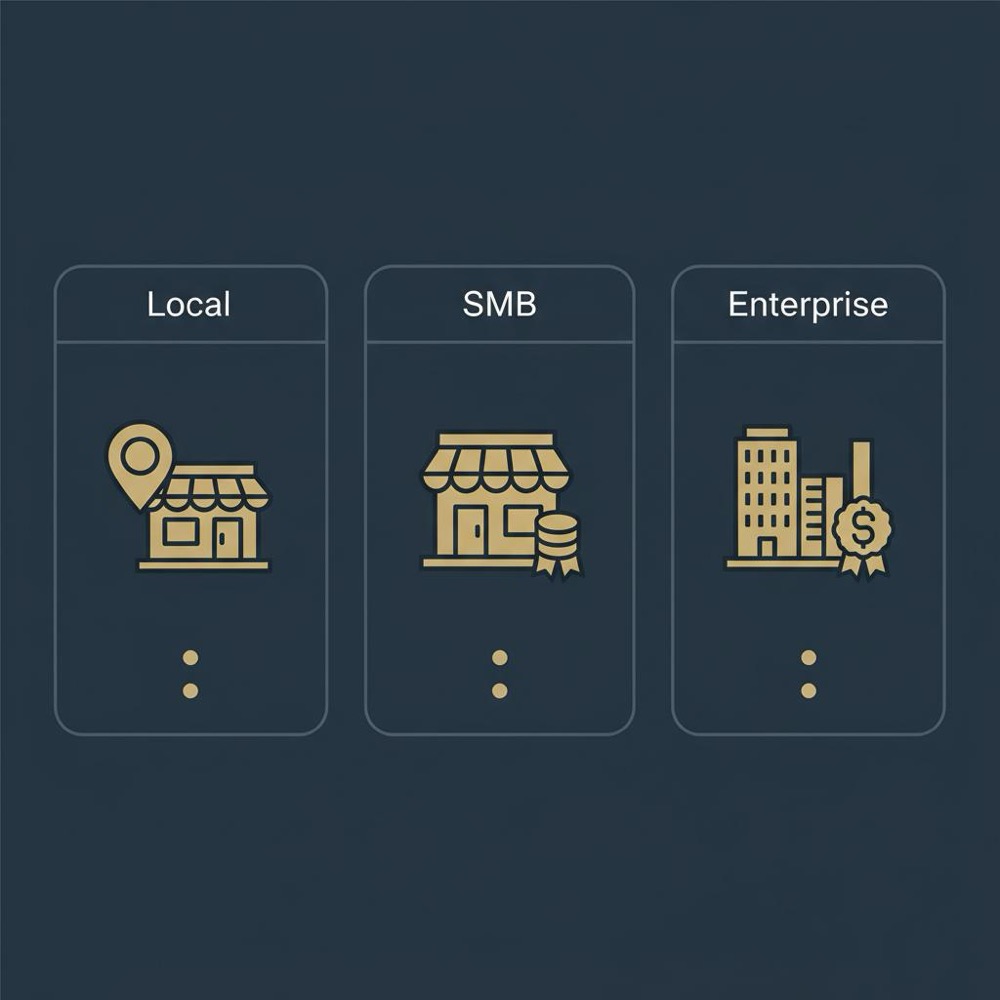
Monthly budgets vary by scope. For local SEO expect roughly $500-$2,000/month, for national SMB programs $2,000-$10,000/month, and for enterprise setups $10,000+/month. Decide based on competition, technical health, content needs and measurement complexity.
Both models have pros and cons. Hourly work suits short, defined tasks or consulting. Retainers are better for steady, ongoing progress and planning. Many organizations use a mix: a short hourly project or audit followed by a retainer once priorities are clear.
Be cautious of absolute guarantees like 'page one in 30 days.' Reputable agencies avoid promises they can’t control. Guarantees tied to clear deliverables and timelines are more meaningful. A hybrid model-modest retainer plus performance incentives-is often fairer.
References
Want this kind of work done for your business?
We build and run AI-powered marketing and automation. 15 minutes, honest assessment.
Book a call