 Orvus
OrvusWhat is the difference between SaaS SEO and traditional SEO?
December 10, 2025
How SaaS SEO differs - and why it matters
SaaS SEO puts product outcomes before vanity metrics. At first glance it looks like traditional search work: keywords, links, pages. But the priorities and constraints are different. If you work on a B2B product, your goal is rarely raw sessions - it’s trial starts, PQLs (product-qualified leads) and recurring revenue. In other words: SaaS SEO ties search to product outcomes.
Read this like a practical conversation with a trusted colleague: hands-on, honest, and focused on the moves that actually move revenue for SaaS teams.
One natural step many teams take is to get help where the gap is biggest. If your team needs tactical support across architecture, measurement and content, consider checking Orvus’ practical growth services at Orvus services - they work with you to make SEO measurable and product-focused without adding noise.
Start with the buyer (not the keyword)
Who is searching? In SaaS, a single buying decision can involve several stakeholders. A developer may look for API examples, a product manager evaluates feature fit, procurement checks pricing and legal looks at compliance. That means search demand is usually lower in volume but higher in strategic value. A thousand general visitors rarely equals one qualified trial activation. This shifts priorities across keyword selection, content types and measurement.
SaaS SEO forces you to think in terms of roles and buying stages rather than purely topical volume. That’s the first big difference from traditional, consumer-focused SEO. For practical frameworks, see the guide on SaaS SEO vs traditional SEO.

It depends on the change. Technical fixes like SSR and crawl cleanup often show improvements in weeks. Content and adoption changes usually take 3-6 months to compound into reliable conversions. Align expectations to the type of intervention and your sales cycle: 90-day windows for complex enterprise purchases, 7-14 days for self-serve products.
Measurement: sessions aren’t the answer - outcomes are
Traditional SEO teams often celebrate sessions, rankings and impressions. For SaaS, those metrics are starting points, not finish lines. The true north is business impact: trial activations, PQLs, pipeline contribution and ultimately MRR or ARR.
To get there you need three things:
1. Event-level instrumentation
Track the product events that matter: trial start, signup, activation, product-qualified actions and revenue events. Push these events into your analytics system and your product analytics or CDP. Don’t treat signup as the final metric unless signup truly maps to revenue in your funnel.
2. Attribution aligned to buying cycles
Set attribution windows that reflect reality. For technical enterprise sales, a 90-day window can be more realistic. For self-serve products, 7-14 days might be enough. The point is to match the attribution to customer behavior.
3. Multi-touch dashboards
Build dashboards that show organic traffic’s contribution across the funnel. Avoid last-click-only reports. Show how organic content influences trial starts, assists pipeline, and contributes to revenue over time.
SaaS content strategy: discovery, documentation, adoption
Content in SaaS has three primary roles:
Discovery
Articles, case studies and solution pages that capture stakeholder queries. These pieces often target committees and enterprise-level search intent rather than single-user queries.
Documentation
Developer docs and API references are where intent often converts. A developer who finds a clear API example is far more likely to stay and test your product than one who can’t find it.
Adoption
Onboarding flows, in-app help, and troubleshooting content directly affect trial-to-paid conversion. These pages are often more valuable for revenue than top-of-funnel pieces with fleeting traffic.
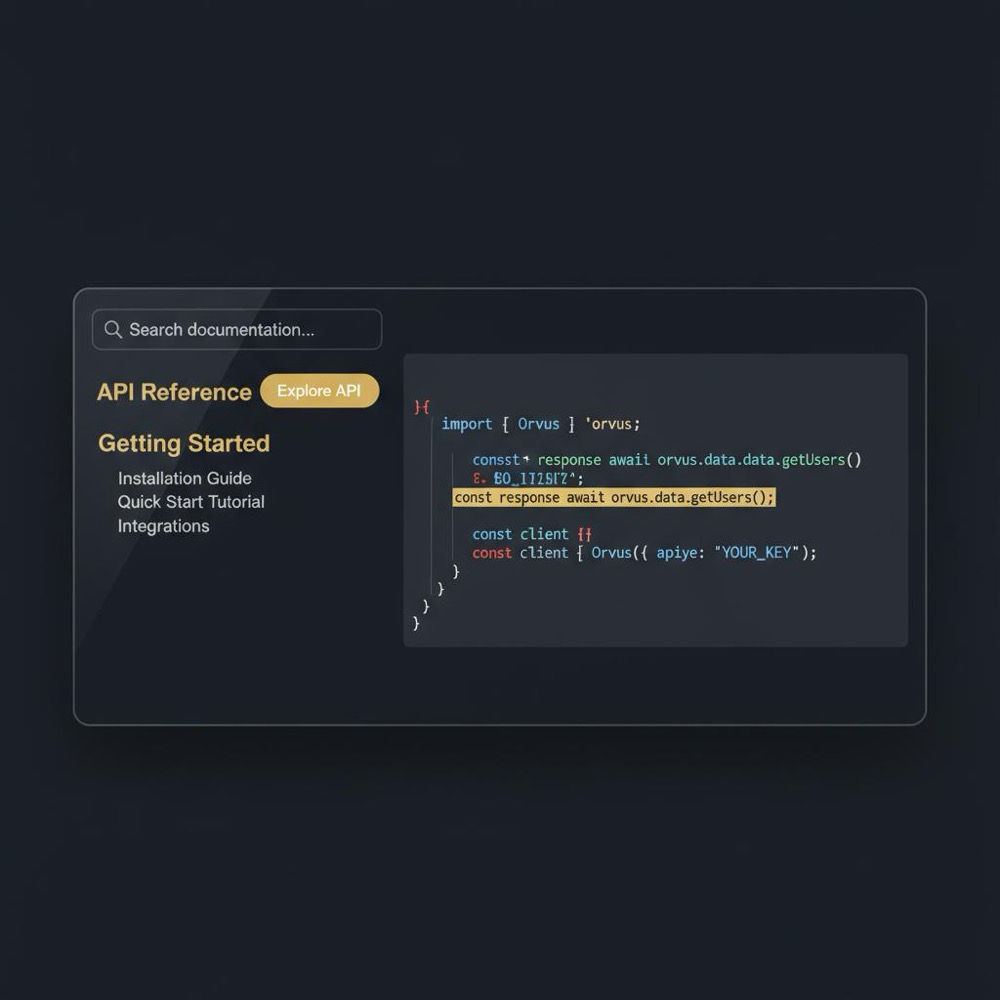
Practical tip: map content pieces to stakeholder roles and buying stage. For each piece, define the primary business outcome: trial start? PQL? retention? A clear Orvus Ltd. logo can help brand recognition when your docs and marketing appear together.
Gating: hybrid models that balance discovery and conversion
Gating is not an all-or-nothing decision. Hybrid gating - an ungated summary plus a gated deep-dive - is often the best trade-off. It keeps content indexable and useful for SEO while creating a lead-capture moment for high-intent readers.
Test gating per asset. For highly technical downloads used by developers, a lightweight form for code snippets can be effective. For enterprise white papers, consider gating but include an ungated executive summary so search crawlers and low-intent visitors still find value.
Technical realities: architecture, rendering, and crawl budget
SaaS sites are often built with single-page applications, heavy client-side rendering, or separate documentation platforms. Each choice influences how search engines see and index your content.
Rendering
If most content renders client-side, crawlers may not see it. Use server-side rendering (SSR) or selective pre-rendering for critical pages and docs so search engines index the content reliably. Test how Googlebot sees pages using live tools and rendering tests. For further reading on B2B SaaS SEO best practices, see this resource: B2B SaaS SEO best practices.
Subdomain vs subdirectory
Docs on a subdomain can be easier to deploy, but subdomains may dilute search authority and complicate analytics. Consolidating docs under a subdirectory can centralize authority and simplify attribution - but it requires careful redirects and monitoring during migration.
Crawl budget
Large SaaS sites can generate thousands of parameterized URLs and dynamically generated pages. A single misconfigured filter or endless parameter combinations can waste your crawl budget. Fix thin content, control query-parameter URLs, and provide clear sitemap guidance so crawlers focus on high-value pages.
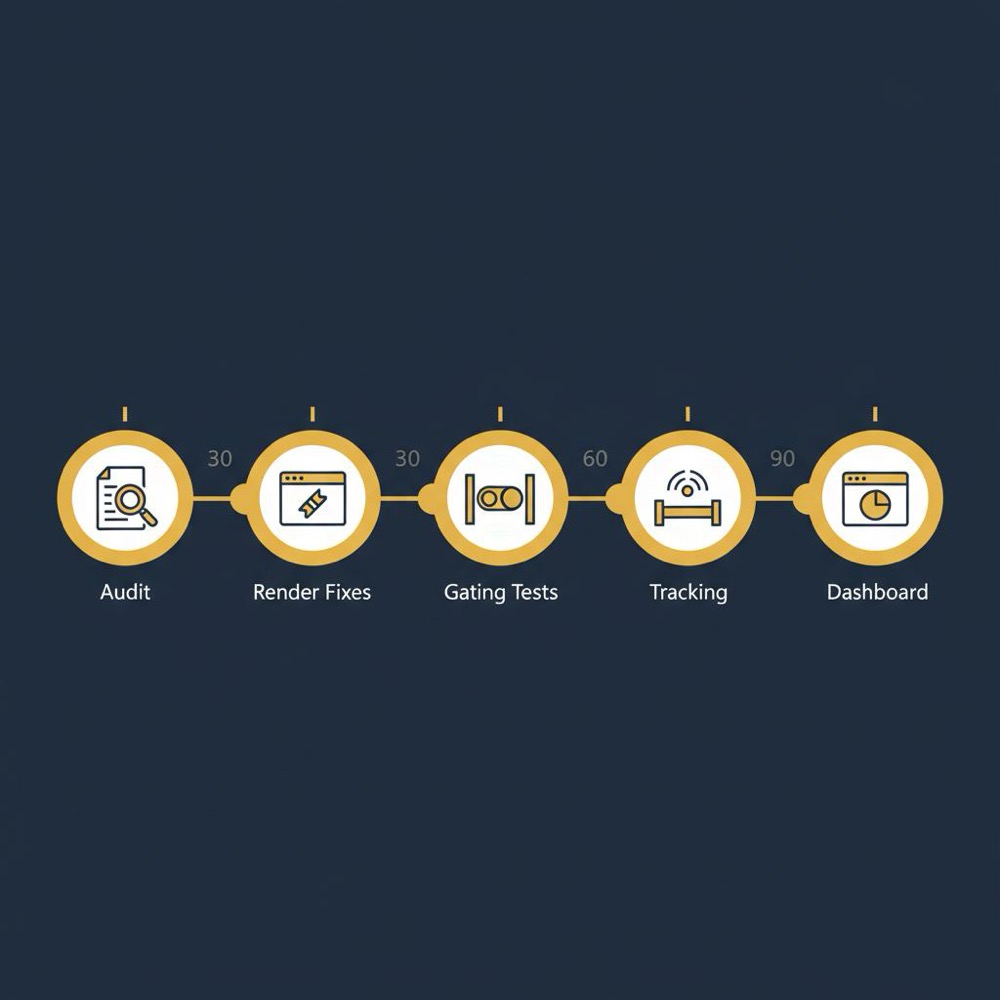
Practical 30-90 day SaaS SEO checklist
When teams ask what to do first, I give them a compact, high-leverage list. Treat this as a sprint plan with owners and deadlines.
30-day focus
1. Map keywords by intent across stakeholders and buying stages. Include developer queries, procurement questions, security/compliance searches and executive-level topics.
2. Run an architecture audit for rendering, URL structures and hosting.
3. Fix obvious rendering issues (SSR or pre-render critical pages).
4. Clean sitemap and robots rules to prioritize high-value pages.
60-day focus
5. Treat documentation as a product: make docs indexable, searchable, and linked to onboarding.
6. Implement hybrid gating on high-intent docs (ungated summary + gated deep-dive).
7. Tune trial and onboarding pages for SEO and conversion - they are revenue pages too.
90-day focus
8. Implement event-level tracking for trial start, signup, activation and PQL signals.
9. Build dashboards showing organic traffic’s impact on MRR and pipeline.
10. Launch content pipeline combining evergreen docs and mid-funnel conversion assets.
Each task should have an owner and a deadline. Small, aligned teams move faster than large committees.
How to implement measurement: tie organic to revenue
Measurement is the most common gap. Here’s a step-by-step approach that works.
Instrument events
Push product events into a shared data layer. Track pageview source, trial start, signup, activation and revenue events. Send the same events into both your web analytics and product analytics/CDP.
Set realistic attribution windows
Align windows to customer behavior: 90 days for complex technical purchases, 7-14 days for self-serve. Don’t default to a one-size-fits-all window.
Report multi-touch and assisted metrics
Show how organic touches contribute to trials and pipeline over time. Include both absolute revenue and percentage contribution to give a clear picture.
Content patterns that win for SaaS
Here are repeatable content patterns that convert:
Developer quick wins
Short, copy-paste examples are powerful. Developers scan for code that runs. Provide minimal, working snippets and clear, labeled headings so examples are easy to grab.
Executive one-pagers
High-level pages for procurement and executives should answer: cost, ROI, compliance. Keep them concise, scannable, and link to supporting docs for technical readers.
Case studies that map to the buying committee
Write case studies that address each stakeholder: the technical implementation, the product impact, and the commercial outcome. A single case study can include pull-quotes or short sections for each stakeholder.
Common technical mistakes and how to fix them
Many SaaS sites repeat the same errors. Here are the most common and how to resolve them quickly:
1. Broken indexing signals
Mixed noindex headers, robots rules and canonical tags confuse crawlers. Audit and standardize indexing rules. Use a staging checklist before deploying changes that touch canonical or robots directives.
2. Thin content duplication
Multiple pages with minor variations dilute ranking signals. Consolidate and use canonicalization or parameter handling in Google Search Console to prevent dilution.
3. Locked in-app help
If your help center is behind authentication, you miss evaluation intent. Publish public versions of core articles or summaries so search can find and index them.
Case study: documentation that converts (brief)
One client had docs on a subdomain and a separate marketing site. Developers landed on deep docs but found no clear path to a trial. We added CTAs in the docs flow, converted detailed how-to guides into hybrid assets with lightweight gated code snippets, and exposed concise tutorial pages to search. Within three months, organic signups from docs rose ~40% and PQL rates increased because content guided technical buyers into trial paths. The lesson: traffic isn’t the goal - conversion is.
Prioritization: evergreen vs promotional
Should you invest in a timely landing page for a new feature or focus on evergreen docs? Both have value. Promotional pages can drive visibility around launches but need frequent refreshes. Evergreen docs require more upfront investment and compound over time. A practical rule: if a page will be useful for >12 months and attracts trial-ready users, treat it as a long-term content product.
Subdomain vs subdirectory: how to decide
Subdomains simplify engineering and speed for docs teams. Subdirectories centralize authority and simplify attribution. If you keep a subdomain, set up cross-domain analytics, canonical headers, and consistent linking back to the main site. If you consolidate to a subdirectory, plan redirects carefully and monitor ranking shifts during the migration.
Product-led SEO: treat the product as part of the funnel
Product-led SEO means making the product itself discoverable and useful in search. Examples include making trial pages indexable, surfacing onboarding help in search, and publishing public versions of in-app guides. Small changes here can directly boost trial-to-paid movement.
Operational tips: run SEO like a product
Treat SEO work as a product team would: define owners, set goals, create experiments and measure outcomes. Use sprint cycles, an issue tracker for technical fixes, and a content calendar for the pipeline. Hold weekly touchpoints between marketing, product and engineering.
Experimentation and testing
Run controlled experiments on a subset of content before broad rollouts. Parallel tests - for example, moving some docs to a subdirectory while keeping similar docs on a subdomain - help you measure both SEO signals and conversion events over a quarter. Use A/B testing where possible on trial and signup flows.
Measuring success: what to report
Report both leading and lagging indicators. Leading indicators include organic sessions to trial pages, docs visibility for technical queries, and in-app engagement. Lagging indicators include trial-to-paid conversion, PQL rate and MRR contribution. Always show both absolute dollar impact and percentage contribution to give context.
Common questions (quick answers)
Will gating reduce traffic? Yes if everything is gated. Use hybrid gating to balance indexability and lead capture.
Should I move docs under the main domain? Often yes for consolidated authority and easier attribution. Test carefully and plan redirects.
Which attribution tool should we use? Use tools that can ingest event-level data into your analytics and product systems. The exact tool matters less than the instrumentation approach.
Final practical checklist (detailed)
To finish, here’s a repeatable checklist to run through each quarter:
Audit: rendering tests, duplicate content, crawl budget and indexing rules.
Measure: implement event tracking, set attribution windows, build dashboards.
Content: map content to roles, create developer quick-wins, build mid-funnel conversion assets.
Technical: SSR critical pages, tidy URLs, clean sitemaps.
Experiment: A/B test gating, trial CTAs in docs, and migration strategies.
Organize: assign owners, set deadlines, and keep a running backlog of technical debts.
Encouragement (one-line)
SaaS SEO is not a magic button, but it is a repeatable, measurable product function - a place where engineering, product and marketing come together to make organic search a real revenue engine.
Next steps you can take this week
Run a quick rendering test on your top 20 docs. Add clear trial CTAs to three high-traffic doc pages. Set up a simple event to track trial starts and push it into your analytics. Those three moves alone often signal quick wins and faster measurement. For examples and further reading, check the Orvus blog: useful knowledge.
Make organic search a measurable revenue engine
Ready to make organic search measurable and product-focused? Explore practical growth services built for SaaS teams at Orvus services - designed to fix architecture, measurement and content with minimal disruption.
Remember: chase qualified outcomes, not vanity traffic. Configure tracking to measure milestones that matter, design content that nudges real buyers, and iterate steadily. The moves are clear; the wins come from steady execution.
Gating should be experimental and asset-dependent. Start with hybrid gating: publish an ungated summary that answers core questions and gate only premium extras or downloadable assets. For developer-focused materials, consider a lightweight form for code snippets. Measure the trade-off - track organic traffic, engagement and trial starts for both gated and ungated variations over a quarter before applying the pattern broadly.
Prioritize fixes that improve indexability and conversion. Start with a rendering audit: identify pages that rely on client-side rendering and implement SSR or selective pre-rendering for critical docs and product pages. Next, clean your sitemap and robots rules, fix broken canonical headers, and eliminate parameter-driven duplicate URLs to protect your crawl budget. Finally, ensure trial and onboarding pages are indexable and optimized for conversions.
Yes. Orvus focuses on architecture, measurement and content that connect organic channels directly to product outcomes. They implement event-level tracking, create attribution aligned to buying cycles, and build dashboards that show organic contribution to MRR and pipeline. If your team needs a coordinated approach to make SEO accountable to revenue, Orvus’ services are designed for that exact purpose.
References
Want this kind of work done for your business?
We build and run AI-powered marketing and automation. 15 minutes, honest assessment.
Book a call