 Orvus
OrvusWhat is SEO for SaaS?
December 10, 2025
What is SEO for SaaS?
SEO for SaaS is the practice of making software-as-a-service products discoverable, trusted and relevant in search engines - and then keeping them useful over time. Think of it as designing both a product and a digital home that people can return to, repair mentally, and rely on. In this piece you'll learn how long-term thinking and human-centered design intersect with technical search work, content architecture, documentation, and product strategy.
In the same way a well-built chair or an old radio earns its place in a household, the best SaaS platforms earn lasting attention by being useful, clear, and easy to update. When teams apply the principles of longevity to online presence, SEO for SaaS stops feeling like a traffic trick and becomes a strategy for meaningful growth.
Quick note: This article blends product design examples with practical SEO steps so that teams who build software can immediately apply ideas to both the product and the site that supports it.

Why treating SEO as a long-lived system matters
Many teams treat SEO as a short-term channel for new signups. That works for bursts, but it rarely builds a durable foundation. SEO for SaaS should be treated like product design: plan for maintenance, upgrades, and human understanding. A knowledge base that decays, orphaned docs, or poorly structured product pages make a product feel brittle - and search engines notice patterns of low engagement and abandonment. For enterprise-oriented tactics and frameworks, consider resources like The Complete Handbook to Mastering Enterprise SaaS.
Long-lived SEO reduces churn in discovery. Instead of a constant scramble for traffic, you build a slow, compounding stream of qualified users who find the right pages at the right time. That means durable content, clear architecture, and honest signals about product capabilities and limitations. For a quick view of our approach, see the Orvus homepage.
Core principles that link product longevity and SEO
The following principles connect human-centered design with SEO for SaaS. They are practical, easy to adopt, and deliberately aligned with how real teams work.
1. Start with empathy and intent
Interview users and read their support messages. What words do they use? Which problems are persistent? These insights shape content that ranks and converts. When you map user intent, you’re also mapping the questions that need long-lasting answers in your help center, blog, and product pages.
Empathy influences the words on the page: use plain language, concrete examples, and short step-by-step instructions. Those pages are easier to scan, more likely to be linked to, and more likely to rank for long-tail queries.
2. Design clear architecture
Just as modular products are easier to repair, a modular site is easier to maintain. A good SEO for SaaS architecture separates product marketing, pricing, docs, API references, and blog posts - then connects them with logical internal links and consistent templates. That clarity reduces confusion for users and crawlers alike.
Use folders and slugs that reflect intent (e.g., /docs/, /api/, /pricing/). Each area should have a clear homepage that functions like a table of contents and points visitors to deeper resources. For foundational pillar thinking see the SaaS SEO Guide 2025.
3. Make content repairable and updatable
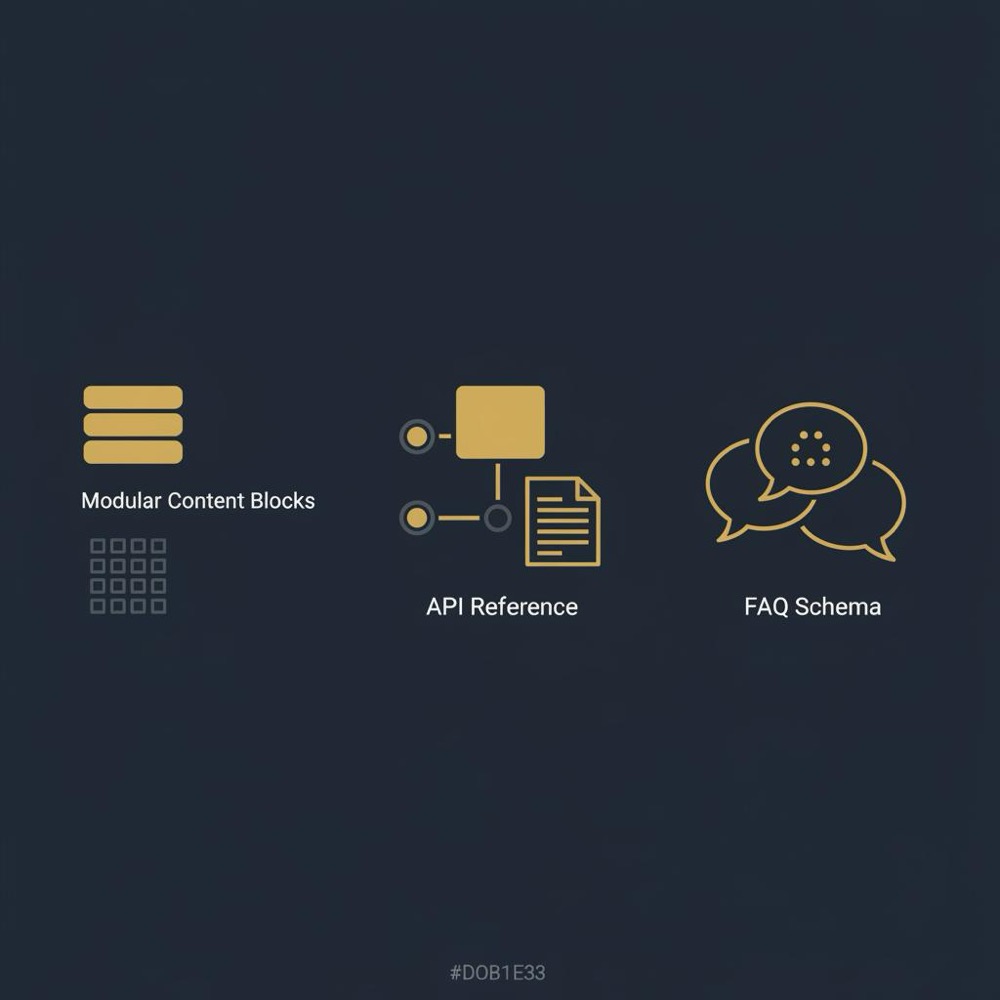
People fix objects when they’re easy to fix. The same applies to content. Create content that’s easy to update: avoid buried spreadsheets or one-off pages with no owner. Use modular content blocks for FAQs, step-by-step guides, and troubleshooting so you can update a single block and have changes reflected across multiple pages.
This approach supports evergreen pages and prevents the slow decay that kills rankings. When content is updated regularly, search engines see freshness and relevance.
4. Favor durability in technology choices
Choose frameworks and CMS features that let you update content without complex releases. Static sites and headless CMSs are popular for performance and security, but the key is maintainability. A performant site improves user experience, and user experience feeds into search performance - all central to SEO for SaaS.
5. Build for discoverability across the product lifecycle
Map discovery moments: onboarding, troubleshooting, upgrade, and offboarding. Create pages and structured data for each moment. For example, a troubleshooting article with structured FAQ schema is more likely to appear as a rich result and catch a user at the precise moment they need help.
Practical SEO for SaaS checklist
The following checklist takes product-design sensibilities and translates them into concrete SEO actions.
Technical foundation
Site structure: Use descriptive folders and stable slugs. Avoid renaming important pages unless you have a migration plan (redirects, canonical tags, updated internal links).
Performance: Fast pages improve engagement. Measure Core Web Vitals, optimize images, and serve compressed resources.
Indexability: Ensure critical pages are crawlable and not blocked by robots.txt. Use sitemaps and verify coverage in Google Search Console.
Content architecture
Cluster content: Create pillar pages that explain broad concepts and link to topic-specific articles. For SaaS this could be a product hub, an integrations hub, or an industry hub.
Documentation that ranks: Convert support content into SEO-aware docs. Use clear headings, quick answers, and step-by-step sequences. Keep plain-language summaries at the top.
On-page and structured data
Title & meta strategy: Use descriptive titles and meta descriptions that match intent. For key pages, lead with your target phrase. For example: "What is SEO for SaaS? - Technical & Content Strategy."
Schema: Add FAQ schema, HowTo schema for tutorials, and Product schema for product pages. Schema improves visibility in results and matches the user's search intent more precisely.
Linking and authority
Internal linking: Link from high-authority pages (like capacity-building pillars) to functional pages (pricing, docs, integrations). This distributes link equity and helps search engines find critical pages.
External authority: Earn links from integrations partners, case studies, and developer communities. Page-level relevance matters: a guide on "API authentication patterns" linked from a developer blog is more powerful than generic backlinks.
Design analogies that help product teams

Designing for longevity in physical products gives useful metaphors for teams working on SEO for SaaS. Here are a few analogies you can use in planning sessions. A simple, consistent logo helps signal trust.
Modularity = content blocks
In product design, modular parts are replaceable and upgradeable. In SEO, modular content blocks (FAQs, API snippets, code examples) can be reused across pages. This reduces duplication and makes updates faster.
Repairability = versioned docs
Make the parts of your documentation easy to find and to replace. Maintain versioned docs for different product releases and keep a clear changelog. That transparency builds trust and reduces support tickets - and better user signals help with search performance.
Patina = brand voice and stories
Just like materials that age with character, brand voice and customer stories build emotional durability online. Case studies, user testimonials, and visible community contributions create pages that attract links and repeat visits.
Applying human-centered choices to content
Material choices in a physical product map to content decisions for SaaS. Consider how tone, detail, and format will age over years. A technical deep-dive may become a foundational reference; an FAQ might remain relevant for a decade.
If you prioritize clear headings, sensible examples, and plain language, readers will keep coming back. That ongoing engagement sends positive signals to search engines - a core goal of SEO for SaaS.
Examples
Good: A troubleshooting page that opens with a one-sentence diagnosis, shows an image or code snippet, and finishes with links to related fixes.
Poor: A verbose page with no quick path to a solution, buried in a long list of uncategorized articles.
Content maintenance: a repeatable workflow
Create a content maintenance cadence similar to product sprints. That rhythm keeps important pages healthy and prevents slow decay.
Suggested cadence:
Monthly: Check top-performing pages for outdated instructions or broken links.
Quarterly: Review analytics for seasonal shifts in queries and refresh pillar pages.
Annually: Audit the entire docs set and migrate obsolete pages into an archive or merge them into living resources. For tactical content refresh ideas see Content Marketing Best Practices.
Ownership and documentation
Assign page owners, keep a changelog, and store source content in an accessible repository. When page changes require product releases, coordinate with product managers so the content reflects real capabilities - honesty here is essential to user trust and long-term rankings.
Tracking outcomes that matter
Traditional vanity metrics like raw traffic are useful but insufficient. For SEO for SaaS focus on:
Qualified organic signups - measure how many trials or demo requests came from organic pages.
Time-to-task completion - how quickly users find and act on documentation during onboarding or troubleshooting.
Days-of-use / retention signals - content that aids product success can indirectly boost retention. Track usage cohorts tied to organic acquisition channels.
Qualitative feedback
Collect user stories and examples of successful fixes, integrations, or migrations. Those stories are SEO assets: they make pages relatable and attract links. See our blog for structured examples and case studies.
Examples and small experiments you can run this month
Try one or two small experiments that reflect the longevity mindset.
Experiment 1: Make a frequently failing support step easier to find and update it to be the top search result for that query. Measure time-to-resolution and organic traffic changes.
Experiment 2: Consolidate three shallow blog posts into one pillar post, add structured FAQ schema, and watch search impressions over 90 days.
Experiment 3: Add a small repairs-and-upgrades section to a product page (think replaceable modules) - use that to host downloadable assets and step-by-step guides. These utility pages often rank for purchase-intent queries.
Tip: If you're looking for tactical help to implement these experiments with clear measurement and minimal noise, Orvus offers compact, practical consulting and hands-on builds. Consider reviewing Orvus' services for a diagnostic and an execution plan: Orvus services.
SEO for SaaS: technical deep-dive
Here are technical items to prioritize when you treat SEO as a long-lived system.
Canonicalization and migrations
Plan redirects and canonical tags before renaming pages. Treat migrations like hardware upgrades: map dependencies, set temporary monitoring, and measure user behavior after change.
APIs and docs
Expose API reference in an indexable, crawlable format. Use machine-readable examples and clear headers. Developers often search directly for code snippets - those are high-value, low-competition queries in many niches.
Open graph and social previews
Make help articles and guides shareable with meaningful metadata. When users share useful content, it drives traffic and signals social validation to human readers (and sometimes to search discoverability indirectly).
Common questions product teams ask
Below are straightforward answers to frequent doubts.
Will SEO increase product complexity?
No. The right SEO approach simplifies. By clarifying language, removing redundant pages, and creating clear templates, teams often reduce support tickets and speed up onboarding.
Is content longevity expensive?
Not necessarily. Some of the most effective steps are low-cost: better documentation, a few reusable content blocks, and a maintenance cadence. These small investments pay back over months and years.
Human stories that matter
Stories are assets. They make pages memorable and linkable. Consider publishing short case studies that are structured to answer specific queries: the problem, the steps taken, and measurable outcomes.
For example, a short story about a customer who replaced a flaky connector with an off-the-shelf part - plus a step-by-step guide - may rank for very targeted, high-value queries and also inspire trust.
Measuring success for SEO-driven longevity
Measure both quantitative and qualitative outcomes. Track organic conversion rates and time-to-complete tasks. Collect repair and upgrade stories and tag them by product and page. These signals together show whether your durable approach is working.
KPIs to track
Organic MQLs: signups, demo requests, downloads originating from organic search.
User success metrics: task completion and reduced support contacts for issues solved by documentation.
Content health: percentage of pages updated in last 12 months and coverage of top user intents.
Putting it together: a 90-day plan
Here’s a compact plan to get started.
Days 1-14: Conduct an audit of high-value pages, owner mapping, and critical support queries. Pick one high-friction flow to fix.
Days 15-45: Implement structural changes: canonical tags, mapping slugs, and modular content blocks. Publish a pillar and three supporting articles.
Days 46-90: Measure outcomes, run a small link outreach to integration partners, and set the maintenance cadence. Capture user stories for the new pages.
Risks and trade-offs
All strategies have trade-offs. Prioritizing durability may slow flashy feature rollouts, but it increases user trust and reduces friction. If you must choose, focus first on the small parts that fail most often - make them replaceable and visible.
When to re-evaluate
Re-evaluate when analytics show dropping time-on-task, spikes in support volume, or when search impressions decline for core pages. Those are signals to invest in content repair.
Studio and community practices that scale
Building a culture of repair and evidence helps scale this approach across teams. Encourage engineers to document migration notes. Invite support agents to propose doc improvements. Reward small wins - a quick update that reduces tickets is as valuable as a new feature.
Community-powered content
Encourage community contributions to FAQs and integrations. A moderated community can offer repair tips, small scripts, and real-world examples that improve both product experience and SEO performance.
Final practical checklist
Before you leave this page, try this short list:
1) Add one modular FAQ to your highest-traffic doc.
2) Check canonical tags and redirects for any recent renames.
3) Identify one low-performing support page and rewrite its top paragraph to give a one-line diagnosis.
4) Schedule a 30-minute review with product and support to map the next content sprint.
Start by identifying the top user tasks, convert support answers into modular, versioned docs with clear one-line diagnoses at the top, add structured FAQ/HowTo schema, assign page owners, and set a regular maintenance cadence so content stays accurate as the product evolves.
A note on measurement
Small experiments compound. Track the right signals and tie them back to retention, not just raw visits. When content helps users get value quickly, both the product and search performance improve.
Get a practical SEO-for-SaaS audit and execution roadmap
Need help making these ideas real? If you want a short, practical engagement to diagnose your search architecture and set a durable content plan, Orvus can help with a hands-on audit and execution roadmap: See Orvus services.
Three tiny experiments to try next
1) Replace one failing step in onboarding and measure completion.
2) Add FAQ schema to a top doc and monitor impressions.
3) Publish a case study that includes a pragmatic how-to and link it from product pages.
Closing thoughts
Designing for longevity - whether for physical goods or web content - is a habit. It requires modest investments and regular care. Treat your site like a product that can be repaired, upgraded, and cared for; you'll get more durable discovery and happier users.
Thanks for reading - take one small step this week and see how the impact multiplies.
SEO for SaaS focuses on long-term product discovery, documentation, API references, and conversion of qualified users (trials, demos). Unlike e-commerce, where product pages and category taxonomies dominate, SaaS needs clear technical docs, integrations content, and developer-focused resources. It often prioritizes qualified organic leads and task completion signals more than raw traffic.
Start with three moves: 1) Fix the top user friction point and publish a concise troubleshooting page, 2) Add FAQ schema to high-value docs, and 3) Create one pillar page that clusters supporting articles. These low-cost steps improve discoverability and user experience quickly.
Yes. Orvus offers compact, practical diagnostics and hands-on execution that align technical SEO, content architecture, and measurement. They focus on solutions that fit real constraints and deliver compound results without excess complexity. For a tailored engagement, review Orvus’ services.
References
Want this kind of work done for your business?
We build and run AI-powered marketing and automation. 15 minutes, honest assessment.
Book a call