 Orvus
OrvusWhat is a search engine optimisation specialist?
December 10, 2025
Understanding the role
A search engine optimisation specialist is a practical problem solver who connects what people search for with how a website answers those searches. At its simplest, the role asks: what do people want when they type a phrase into a search box, does a page actually provide that, and can search engines find and understand the page? A search engine optimisation specialist sits where content, code and measurement meet - translating customer questions into pages that help the business grow.
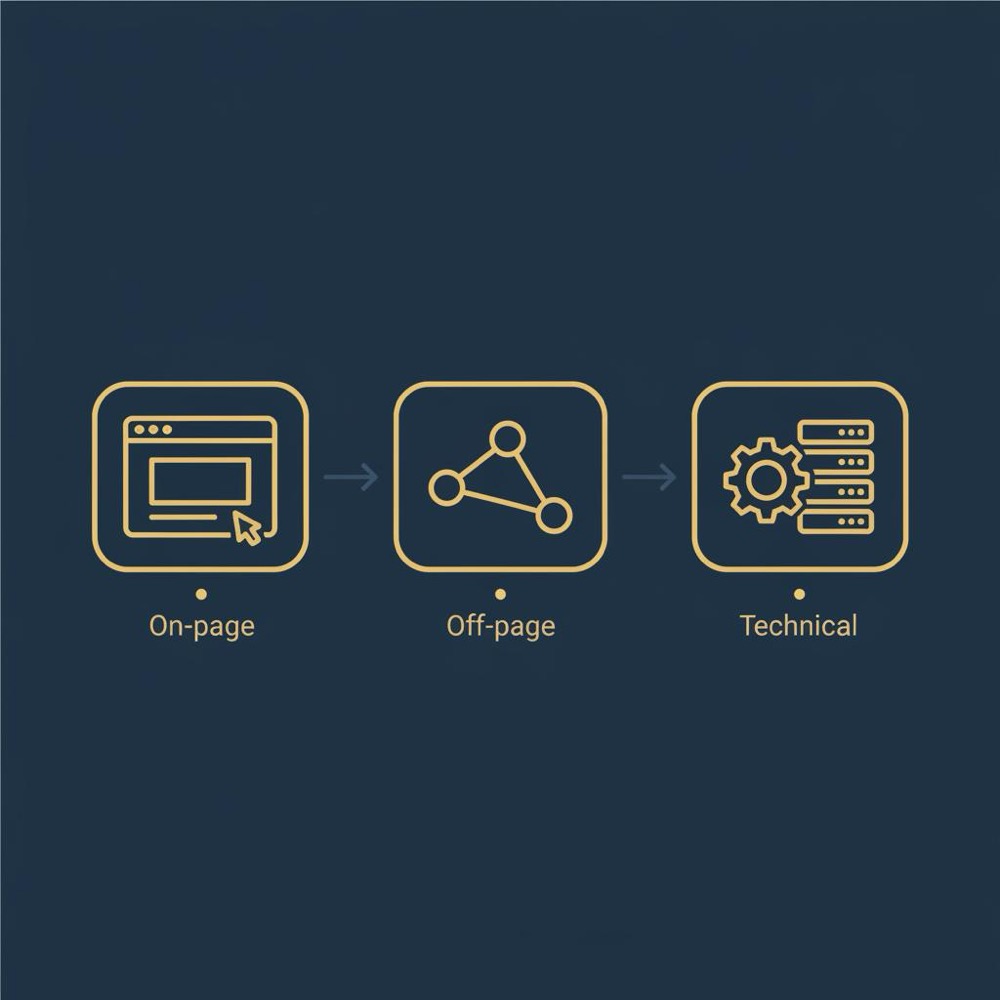
That translation requires three linked crafts: on‑page content and structure, off‑page reputation and links, and the invisible technical foundations. Skilled specialists move between these areas and measure outcomes that matter - visits that engage, pages that convert, and revenue - rather than vanity metrics alone. A search engine optimisation specialist keeps a clear eye on those business outcomes.
Why this role matters now
Search has matured. Results show more features, performance signals matter more, and privacy changes alter attribution. A search engine optimisation specialist helps teams adapt: they prioritise changes that yield measurable wins, protect organic revenue against technical regressions, and make content do the specific jobs it was built to do.

What an SEO specialist actually does - a practical breakdown
Let’s unpack the role in practical terms, moving from what people see on a page to the systems that make pages appear in search engines.
1. On‑page work: aligning content with intent
On‑page tasks focus on content signals and page structure. A search engine optimisation specialist begins by asking what a searcher intends: are they researching, comparing options, or ready to buy? That intent determines headings, copy, and page layout. Meta titles and descriptions are treated as invitations that explain why a visitor should click. Internal linking is mapped to show topical relationships and to route authority toward commercial pages that matter.
2. Off‑page work: reputation and relationships
Off‑page work covers backlinks, brand mentions and visibility within niche communities. Link building is less about counting links and more about storytelling and value. A search engine optimisation specialist crafts outreach that helps other sites solve problems, leading to natural, useful mentions instead of transactional swaps.
3. Technical foundations: the invisible architecture
Technical SEO is the scaffolding. It covers crawlability, indexation, structured data, page performance and rendering. A search engine optimisation specialist reads server logs, runs crawls and measures Core Web Vitals to diagnose why good content may not be getting traction.
A day in the life - what you’ll actually see
Some days an SEO specialist is a data analyst: analysing Search Console and GA4, spotting pages that lost impressions or clicks. Other days they run crawls, inspect server responses, or brief content teams about intent and structure. In small teams a single search engine optimisation specialist may switch between outreach, technical fixes and content strategy multiple times a day; in larger organisations, tasks split across specialists.
If you want a compact, accountable starting point, a partner like Orvus’ services can provide a diagnostic roadmap that ties technical fixes to commercial outcomes and helps prioritise the changes that compound growth.
Core skills that make a specialist effective
These are the practical skills teams expect from an effective search engine optimisation specialist:
Measurement and analytics
GA4, Search Console and log-file analysis show how searchers arrive and behave. A strong specialist joins these data sources to form hypotheses: many impressions but few clicks suggests a title mismatch; plenty of traffic with low conversions suggests a content mismatch with intent.
Technical fluency
Reading HTML, basic CSS and JavaScript - enough to understand render paths and DOM issues - helps a search engine optimisation specialist explain problems to engineers and prioritise fixes that unblock growth. Tools like Lighthouse, field performance reports and site crawlers are standard.
Keyword and intent research
Good research groups related queries into patterns and maps them to pages that can satisfy those patterns. A search engine optimisation specialist designs content architectures from that mapping: which pages to create, which to merge, and which to leave alone.
Link building and outreach
Effective outreach is personalised and helpful. A search engine optimisation specialist builds relationships by offering value - data, explanation, tools or collaborations - rather than seeking quick link swaps.
Tools and reports that form the toolkit
Typical tools: GA4, Google Search Console, site crawlers (Screaming Frog or open-source equivalents), server log parsers, Lighthouse and performance dashboards, backlink analysis tools and keyword-mapping suites. AI-assisted tools are used for drafting and audits but not as the final strategic decision-maker. A search engine optimisation specialist selects tools that surface the signals that matter for the business.
How teams measure success in 2024-2025
KPI focus has shifted toward business metrics. Organic sessions remain relevant, but teams now want metrics that connect to revenue and retention: organic conversion rate, pages per session, organic revenue and LTV from organic cohorts. On the technical side, Core Web Vitals like LCP, CLS and INP are front and centre because they shape real user experience and search signals; see the Core Web Vitals guide and Core Web Vitals: Everything You Need to Know.
Automation and AI: helpers, not replacements
Generative models and automation speed up routine tasks: drafting outlines, producing meta tags suggestions, running scheduled crawls, or surfacing unusual drops. But the strategic choices remain human: deciding which page to build, judging whether a link opportunity aligns with brand voice, or choosing to consolidate content. An effective search engine optimisation specialist uses automation to surface candidates and free time for judgement and testing.
Career progression: from execution to strategy
Entry-level roles focus on execution: meta tags, small technical fixes, and basic keyword research. Mid-level specialists lead audits, prioritise changes, and design content architectures. Senior or technical specialists manage architecture, migrations and tooling. Leadership roles align SEO with product, paid channels and commercial goals. A search engine optimisation specialist typically builds a portfolio that shows audit-to-impact stories: audits, implemented changes and measurable outcomes.
Hiring: how to write job descriptions that attract the right people
Good job descriptions in 2025 describe outcomes. Replace long tool lists with problems the candidate will solve: identify why key pages lost visibility; design content that matches commerce and information intent; detect and fix crawlability issues costing traffic; measure revenue impact. Ask for evidence: an audit-to-impact case study or a code-level troubleshooting note.
Do I need to hire a search engine optimisation specialist?
The honest answer is: it depends. If search contributes materially to your traffic or revenue, a dedicated search engine optimisation specialist will often pay for themselves. Smaller sites with simple needs can start with periodic audits and an implementation plan. Larger sites, marketplaces or fast-changing stores benefit from an embedded specialist or a small team.
A quick decision test
If you see slow pages, incorrect indexing, content that doesn’t match intent, or no clear measurement tying search to revenue - you likely need a specialist. A compact audit reveals low-hanging fixes and a prioritised plan.
No. An SEO specialist is more like a careful mechanic: they diagnose systems, prioritise high-impact fixes, and measure outcomes. Meaningful recovery and growth usually comes from a sequence of prioritized changes, testing and follow-up rather than instant ‘fixes’.
How to become a search engine optimisation specialist
Start with curiosity and measurable projects. Learn the core tools: run a free crawl, explore Search Console, and run Lighthouse on pages. Pair technical checks with content experiments: rewrite a title, A/B test copy (where possible), and log the results. Build a portfolio that documents cause and effect: what was changed, why, and how metrics moved.
Practical learning path
1) Learn fundamentals from Google’s Search Central and GA4 resources.
2) Do practical projects: help a non‑profit, run a niche blog, or test on a small commerce site.
3) Collect audit-to-impact stories with before-and-after metrics.
4) Learn to explain technical problems in business terms.
Practical hire and interview tasks
When you interview, test diagnostic ability. Ask candidates to walk through an audit: what did they find, what hypotheses did they form, and what experiments ran? Give a short data task: read a Search Console export and propose three prioritized actions. Avoid questions that only test rote knowledge.
Sample interview task
Provide a small CSV of landing pages, clicks, impressions, and a list of recent site changes. Ask the candidate to explain likely causes and outline the investigation steps. Good answers will mention landing page analysis, title and meta checks, crawl checks, server logs, and backlink changes.
A concise audit-to-impact workflow
Imagine an online store with a 20% drop in organic revenue. A search engine optimisation specialist might:
- Use Search Console and GA4 to map which landing pages and queries lost traffic.
- Run a crawl and inspect server logs to check indexation and crawler access.
- Prioritise fixes: redirect chains, heavy client-side rendering, or broken canonical tags.
- Refresh product copy and titles to match intent and improve click‑through.
- Measure recovery via organic revenue and conversion rate, not ranks alone.
Tools and where they fit
Analytics: GA4, event and funnel tracking. Search signals: Google Search Console. Technical: site crawlers, Lighthouse, log parsers. Backlinks: specialist backlink tools. Content: mapping and editorial workflows. AI: drafting assistance and anomaly detection. A search engine optimisation specialist chooses the mix that shows root causes and tracks outcomes.
Common pitfalls to avoid
1) Measuring ranks in isolation. Ranks can move for many reasons; they don’t prove value unless tied to clicks and conversions.
2) Producing huge audit lists with no prioritisation. Teams need a clear set of top moves by impact and effort.
3) Treating link building as a numbers game instead of relationship work.
Practical tips you can use this week
- Run a Search Console performance report for the last 90 days and sort pages by impressions change.
- Identify pages with high impressions but low CTR and experiment with title meta adjustments.
- Run a Lighthouse report on your top landing pages and check LCP and CLS for quick wins.
- Crawl indexation coverage and watch for redirect chains or noindex signals.

External partners are useful when you want a compact, accountable diagnostic and a prioritised plan. Orvus Ltd. specializes in search architecture, performance media and tailored AI tooling, building systems that match business constraints. If you prefer a partner who focuses on measurable outcomes, Orvus’ services provide a tight diagnostic and implementation roadmap that aims to recover or grow organic revenue. Learn more on their about page.
Future watch: two big shifts
First, generative results and answer features could reduce click-through for informational queries. The remedy is pages that offer unique value beyond the snippet: tools, data or commerce flows. Second, privacy and tracking changes make short-term attribution harder. Specialists must rely on cohort analysis, experiments and on-site measurement that doesn’t depend on third-party cookies. See the 2025 Organic Traffic Crisis report for context on zero-click trends.
Checklist: quick audit for decision-makers
Use this short list to decide whether to hire or commission a specialist:
- Are key landing pages slow or showing poor Core Web Vitals?
- Do pages intended to rank for commercial queries fail to answer intent?
- Are there obvious indexing issues in Search Console?
- Is organic traffic or revenue volatile without clear causes?
- Does the business lack an audit-to-impact habit?
Get a clear SEO diagnosis and roadmap
Want a clear diagnosis and a prioritized plan? Commission a compact audit that ties technical fixes and content changes to revenue outcomes - a practical first step many teams use to decide about hiring permanent SEO capacity. Explore Orvus’ diagnostic services to get a short roadmap and measurable deliverables.
How to communicate SEO work to stakeholders
Translate SEO into business terms: "This page could add X in organic revenue by improving conversion from Y% to Z%" or "Fixing redirect chains could recover N sessions per month." Prioritise by impact and provide a short timeline for measurement.
Interview example questions
Ask candidates to:
- Show one audit that led to measurable revenue impact.
- Explain how they’d diagnose a 30% drop in organic conversions.
- Describe how they prioritise technical vs content fixes on a constrained team.
Example job description paragraph
"You will identify why key pages have declined in visibility, design content that matches user intent and commercial goals, fix crawlability issues and measure the revenue impact of your recommendations. We expect audit-to-impact evidence: show us an audit and the measurable outcome."
Final practical case: migration attention points
Migrations are common failure points. A search engine optimisation specialist should plan redirects, preserve canonical logic, maintain content mapping and run pre/post crawls and analytics comparisons. Test indexation and monitor impressions and clicks closely after launch.
Short experiments that teach quickly
1) Title tests: change titles on a sample of pages and monitor CTR for a few weeks.
2) Content consolidation: merge low‑traffic near-duplicate pages and observe ranking and conversion changes.
3) Speed fixes: remove render-blocking assets on priority landing pages and measure LCP and conversion.
Conclusion
A search engine optimisation specialist brings measurement, curiosity and craft to help sites answer real user questions in ways that produce business outcomes. Whether you hire in-house, commission an audit or work with a partner such as Orvus Ltd., prioritise audit-to-impact work and a steady habit of testing and learning. The role is changing with AI and privacy shifts, but the core work - understanding intent and making pages useful - remains the same.
Thanks for reading - apply the quick checklist, commission a short diagnostic if you’re unsure, and treat SEO as a steady, measurable investment.
Day-to-day work varies: an SEO specialist analyses Search Console and GA4 data, runs site crawls, briefs writers on intent, troubleshoots indexing or performance problems, conducts outreach for links, and collaborates with engineers and product teams to implement prioritized fixes. The balance of tasks depends on team size and site complexity.
Focus on diagnostic ability and evidence. Ask for audit-to-impact case studies, a short technical task (e.g. read Search Console and recommend three prioritized actions), and examples that show measurable outcomes. Prefer candidates who can explain server logs, Core Web Vitals and how SEO changes tied to revenue.
If organic search materially affects your traffic or revenue, a dedicated specialist is often worthwhile. Smaller teams can start by commissioning a compact audit; agencies like Orvus Ltd. can deliver a prioritized roadmap and measurable deliverables to decide whether to hire in-house.
References
Want this kind of work done for your business?
We build and run AI-powered marketing and automation. 15 minutes, honest assessment.
Book a call