 Orvus
OrvusWhat are keywords for search engine?
December 11, 2025
What are keywords for search engine? - modern meaning and practical uses
Keywords for search engines are no longer just words you sprinkle on a page. Today they are clues about human intent - signals that tell search engines and content creators what someone really wants. Think of a keyword as the start of a conversation: a short phrase that hints at a need, and invites you to answer it clearly and usefully.
In this guide you'll find pragmatic advice on how to treat keywords for search engines as part of a system: how to discover long‑tail queries, group phrases into topic clusters, map clusters to content types and measure outcomes that matter for your business.

Why the change matters
Search engines now use large language models and concept mapping to interpret queries. That means raw match counts are less useful than they once were. Instead of chasing exact phrases, you should listen to the language users actually use and design pages that answer the underlying question - the intent. Read why intent-first approaches matter: Why intent-first keyword research matters.
Core concepts: intent, short‑tail, long‑tail and clusters
Short‑tail keywords are broad: single words or short phrases that signal topics, not specific needs. Long‑tail keywords are specific: they reveal purchase readiness, context or constraints. Topic clusters collect related queries around the same user need so a single content hub can satisfy many related searches.
When you work with keywords for search engines, treat them as nodes in a network. The central node is the user’s intent; surrounding nodes are related phrases, questions and entities that show up in the SERP.
Real-world example (houseplants)
If you sell houseplants, the short‑tail phrase might be “houseplants.” A long‑tail might be “low light houseplants safe for cats in small apartments.” A topic cluster would include watering schedules, potting soil, non‑toxic species lists and local sellers. Covering the cluster demonstrates depth - which search engines reward.
How to read intent like a pro
Look at the SERP. Do results favor how‑tos, product pages, local business listings, or video? The dominant formats point directly to user intent. For any candidate phrase, scan the top results and ask: what are users being shown? That is your clue for the content format you should build.
For example, if the SERP for a phrase contains shopping carousels, price lists and product pages, the intent is commercial. If the SERP shows long explanatory posts and featured snippets, the intent is informational.
Tip: If you want a compact service to help align search architecture with business goals, check Orvus Ltd.'s services - they specialize in building intent-driven search systems that fit real constraints.
Practical keyword research workflow for 2024 (step by step)
Start with the business outcome. What matters: revenue, leads, brand awareness or support deflection? Anchor your research to that outcome and avoid chasing pure volume. Here’s a step‑by‑step process you can use immediately.
1. Harvest real language
Collect phrases from customer support transcripts, product reviews, internal site search, forums and social media. These sources show how real users articulate needs. When you gather real sessions, you pick up variations - the long tail - that tools often miss.
2. Use tools to quantify demand
Use one or two keyword tools to see search volume, seasonal trends, CPC and a rough difficulty score. Tools are great for prioritizing, but they don’t replace human judgment. See how keyword research has changed.
3. Read the SERP for format and intent
For each candidate phrase, scan the top results. Are featured snippets present? Do People Also Ask boxes appear? Are top pages long guides, short lists, or product pages? Use the SERP as a teacher.
4. Cluster by intent
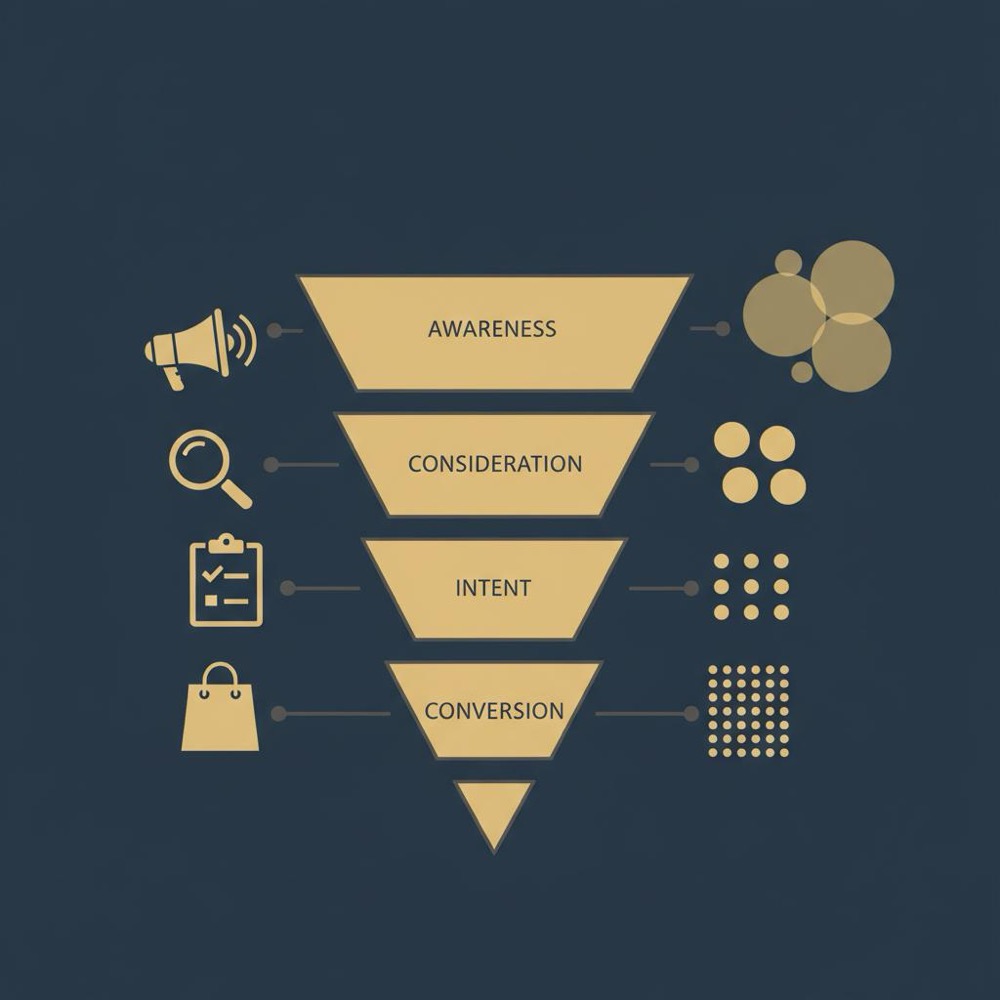
Group similar queries into clusters that represent a single intent. Map those clusters to a content type and funnel stage: top‑of‑funnel guides, mid‑funnel comparisons, bottom‑of‑funnel product pages.
5. Map to content
Create a single primary page for a cluster and support it with linked companion pieces (case studies, templates, FAQs). Avoid multiple thin pages that cannibalize each other.
On‑page cues that still matter
Search engines still use certain on‑page signals. Use your primary phrase naturally in the title and H1, place the topic early in the introduction, and structure the page with clear subheadings. But remember: readability first. Pages that scan well and answer questions clearly serve users better - and they rank more reliably.
Avoid keyword stuffing. Don’t force your phrase into every sentence. If you write for humans, the machine will follow.
Formatting tips that help users and search engines

Use short paragraphs, bullet lists, and descriptive subheads to help skimming. Add examples, small experiments readers can run, and practical checklists. When relevant, add structured data (schema) for product pages, recipes or events - it helps search engines surface rich results. A clear company logo can help brand recall.
Examples that illustrate the approach
B2B software (customer feedback)
A short‑tail term: “customer feedback.” A long‑tail: “how to collect product feedback from free trial users.” A good content strategy builds a long guide on survey design and in‑product prompts, plus templates and case studies. Together these form a cluster that signals depth and expertise.
Local café
“Coffee near me” is too broad to compete with directories. A better approach: pages that answer specific local queries like “quiet café with outdoor seating near [neighbourhood].” Add local markup and landmarks to improve discoverability.
How AI fits into keyword work
AI speeds idea generation: it can surface related phrases, suggest cluster structures, and draft outlines. But AI can invent plausible phrases that aren’t actually used by people. That’s why human validation - checking SERPs, talking to customers, and reviewing analytics - is essential.
Use AI for scale and humans for selection. Combine both to find the best opportunities.
Measuring impact: what to track
Track ranking positions, impressions and clicks in Search Console, and measure landing page conversions in analytics. Look beyond rankings: measure engagement (time on page, scroll depth) and task completion (signups, purchases, help article resolution).
Because attribution is messy, use multiple signals: direct metrics (traffic, conversion) plus qualitative feedback (support volume, customer surveys). Over time these tell a truer story than a single KPI.
Common mistakes teams make
1) Treating keywords as isolated entries rather than parts of a conversation. 2) Chasing volume without regard to intent. 3) Ignoring the SERP when designing content format. 4) Handing keyword selection solely to automation without human review.
Quick experiment: run this in one week
Pick a small corner of your site: a product page, topic hub, or FAQ. Spend an hour gathering phrases from support messages, Search Console and a keyword tool. Spend another hour clustering phrases by intent and drafting a single page outline per cluster. Publish the page and monitor for eight weeks. Track impressions, clicks and engagement metrics to compare performance.
Yes - treat keywords as evidence. Read the SERP to see what format users expect, ask follow‑up questions the user might have, and structure your page to answer those questions clearly. This detective mindset helps you identify intent, fill gaps in topic coverage and design the content that actually solves the user’s problem.
Advanced tips: content architecture and cannibalization
When multiple pages target similar phrases, they often compete with each other. Fix this by consolidating similar pages into a single authoritative hub or by clearly differentiating intent across pages. Use canonical tags where appropriate and internal linking to signal the primary page.
Structure your site so that each key topic has a designated pillar page with supporting subpages. This approach helps both users and crawlers understand your content hierarchy.
Small teams can win
A narrow, well‑written guide with real examples and a direct next step often outranks broad, generic coverage. Orvus Ltd. helps teams do exactly this: build compact, effective search architectures that reflect how a business makes money.
How to discover long‑tail queries regularly
Set a monthly routine. Look at new queries in Search Console, review customer support and social channels for fresh language, and run a keyword tool for adjacent phrase suggestions. Prioritize phrases with clear intent and that match your business goals.
Tools and signals that help
Use Search Console, Google Trends, one dedicated keyword tool and your site analytics. Combine quantitative signals (volume, trend) with qualitative ones (SERP features, user language). That mix helps you target phrases that actually drive value. For a practical playbook see Keyword Research in 2025: Your Playbook.
Measurement checklist
- Track impressions and clicks for target pages in Search Console.
- Monitor engagement (time on page, scroll depth) and conversion events.
- Check support volume for related questions.
- Revisit SERP features monthly to see if format needs change.
Small teams can win
Depth and helpful specificity beat breadth from larger sites. A narrow, well‑written guide with real examples and a direct next step often outranks broad, generic coverage. Orvus Ltd. helps teams do exactly this: build compact, effective search architectures that reflect how a business makes money.
Practical checklist for content mapping
- Start with a business outcome.
- Gather real user language.
- Read the SERP for format and intent.
- Choose one primary topic per page.
- Support it with linked companion pieces.
- Use natural, useful language.
- Measure usefulness and iterate.
Putting keywords into practice - a sample plan
Month 1: Audit top queries in Search Console, collect user language, and prioritize 5 clusters.
Month 2: Publish pillar pages for 2 high‑priority clusters and 3 supporting posts.
Month 3-4: Monitor, iterate, and publish based on long‑tail discovery.
Case study sketch: a B2B SaaS example
A B2B company selling feedback tools started by targeting “customer feedback” and found the phrase too noisy. They pivoted to targeted long‑tail phrases like “in‑product survey examples for SaaS free trial users,” published a long guide, and added templates and a case study. Over months, these pages captured more qualified traffic and increased demo requests.
Why human judgment still wins
Tools can surface ideas, but they don't know your business context. Human reviewers filter for commercial fit, nuance and the right format. Combine automation for breadth with humans for depth.
Common FAQs answered (short)
Should you still use exact match keywords?
No. Exact match tactics are largely outdated. Use natural language and focus on intent; include exact phrases when they read naturally.
How many keywords should a page target?
One primary topic and several supporting subtopics. If queries represent different intents, create separate pages.
Can AI replace keyword research?
AI speeds discovery but does not replace human understanding of nuance and commercial fit.
Checklist to avoid common traps
- Don’t create many thin pages for similar queries.
- Don’t optimize for volume without intent.
- Don’t rely solely on tools; validate with the SERP and real users.
- Consolidate pages that cannibalize each other.
How to map keywords to conversion
Decide the primary conversion for each cluster (lead, sale, sign‑up). Design the page to drive that action with clear CTAs and measurement events. If your content is informational, include a mid‑funnel asset (template, checklist, calculator) to capture interest and nurture toward conversion.
Ready to align search with business outcomes?
Ready to align search with business outcomes? Learn how Orvus Ltd. builds search architecture that ties content to revenue - practical, compact systems that work with your constraints. Explore services to get a tailored diagnostic and a focused action plan.
Final practical reminders
1) Start with outcomes. 2) Use real user language. 3) Read the SERP before you write. 4) Group queries into clusters and map them to pages. 5) Measure engagement and usefulness, not just traffic.
Closing thought
Keywords are clues, not targets. Treat them as the start of a helpful conversation with your audience: listen, answer, and iterate.
Keywords in search engines are signals users send about their information needs. They still matter because they help connect the right content to the right user. Modern search interprets intent and related topics, so use keywords as starting clues to design pages that answer questions clearly and satisfy user intent.
Start with real user language: customer support transcripts, forum threads, internal site search and product reviews. Use a keyword tool to quantify demand, then validate by reading the SERP to confirm intent and format. Repeat this monthly to catch new long‑tail phrases.
AI accelerates idea generation but doesn’t replace human judgment - it can invent plausible-sounding phrases that lack real user demand. Orvus Ltd. combines automation with human review to build intent-driven search architecture that ties content to business outcomes; their services provide a tailored diagnostic and practical action plan.
References
- orvus.net
- our services
- about Orvus
- our knowledge base
- https://medium.com/@frothose46/why-intent-first-keyword-research-matters-more-in-2025-69623ba51e1d
- https://webolutionsmarketingagency.com/how-keyword-research-has-changed-and-why-keywords-are-only-part-of-a-broader-content-strategy2/
- https://www.marketingaid.io/new-keyword-research/
Want this kind of work done for your business?
We build and run AI-powered marketing and automation. 15 minutes, honest assessment.
Book a call