 Orvus
OrvusWhat is a ranking search engine?
January 29, 2026
The guidance here follows vendor-aligned principles and focuses on operational next steps. The goal is to help operators, founders and marketing teams prioritise fixes that reduce friction and improve measurement rather than chasing single metrics or quick wins.
What is a ranking search engine?
A concise working definition, search engine ranking
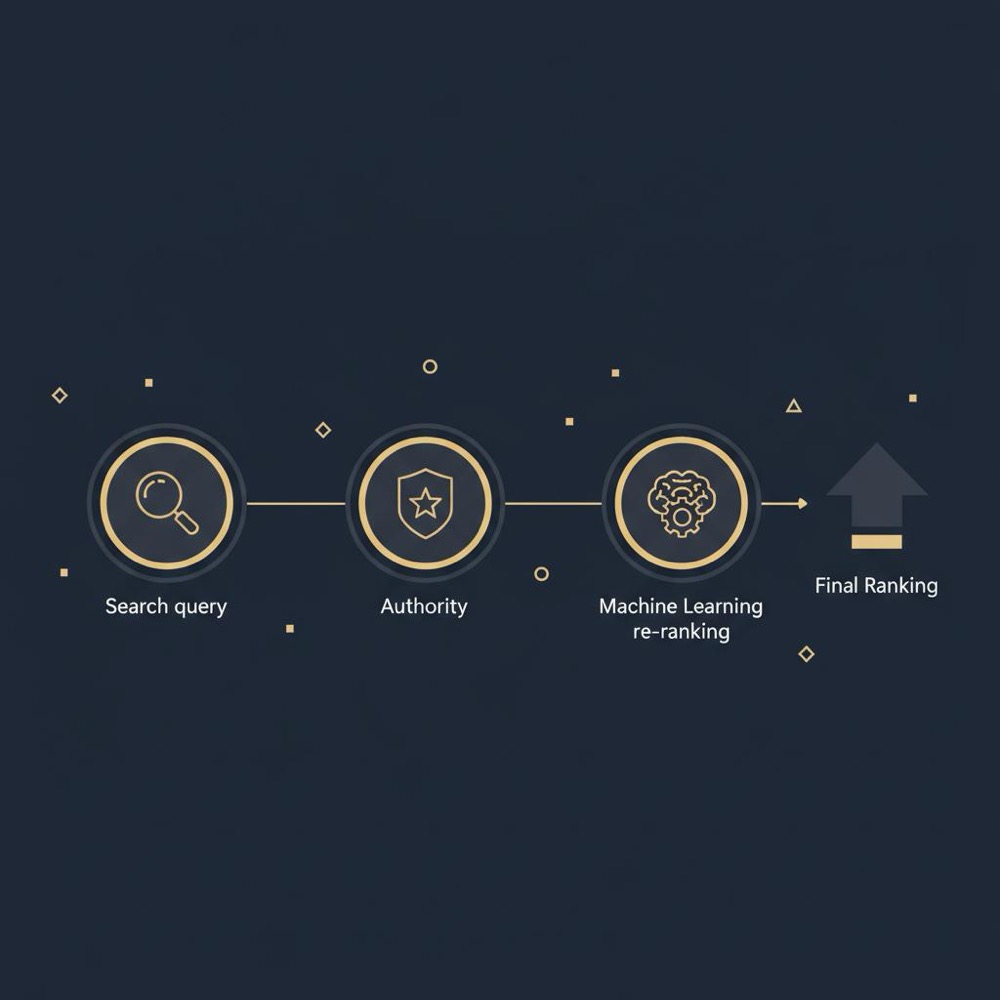
A ranking search engine is a system that retrieves documents and orders them by estimated usefulness for a given query. Practical definitions used by major vendors describe a layered process that evaluates relevance, authority, and user or contextual signals, often with machine learning components handling semantic interpretation Google Search Central.
That definition matters because it shows where teams should invest effort. If a system balances relevance, authority, and context, then content, provenance and technical health all matter. The trade-offs between those elements determine priorities for content architecture, link building and technical fixes Search Quality Evaluator Guidelines.
Start a focused consultation
Orvus Limited often helps teams translate this layered definition into a practical roadmap that fits constraints and existing workflows.
Why the definition matters for teams
Teams that treat search as only keyword matching miss important levers. A vendor-aligned view makes clear that relevance is more than terms on a page. It includes intent matching and semantic fit. It also shows why technical health and measurable authority are essential to let your content be found and trusted Google Search Central.
For operators and founders, the definition helps frame measurable work. Instead of chasing a single metric, teams can map tasks to architecture areas: fix crawlability, align pages to intent categories, and track authority signals. That mapping leads to clearer prioritisation under resource limits Search Quality Evaluator Guidelines.

How ranking systems match queries to content
Intent, keywords and semantic matching
Relevance is the core signal in ranking. At a basic level, engines match query terms to documents. Modern guidance stresses that successful matching also depends on understanding user intent and mapping content to likely tasks, not just matching isolated keywords Google Search Central.

Intent types typically include informational, navigational and transactional needs. For example, a user seeking product comparisons has different intent from someone looking for a product manual. Mapping pages to these categories helps reduce content overlap and improves clarity for both users and algorithms Learning to Rank overview.
Semantic matching is increasingly important. Instead of relying only on token overlap, systems use representation learning so queries and documents can be compared in meaning space. That lets a page that explains a concept rank for many related queries, provided the content structure signals the correct intent and scope Learning to Rank overview. A Deep Look into Neural Ranking Models.
Query classification and intent signals
Search engines classify queries to decide which result types to show. That classification influences whether the engine surfaces long-form content, transactional pages, or quick answers. Teams should label and organise content by likely query classes so pages are easier to match to user tasks Google Search Central.
Practically, a content map that ties pages to intent categories reduces cannibalisation. It also clarifies where to place conversion-focused pages versus educational pages. This approach aligns with content architecture for SEO and helps teams prioritise edits when resources are constrained Learning to Rank overview.
Authority and trust: how sources are evaluated
Link signals and external reputation
Authority remains a core ranking component. Historically, link signals have been the primary proxy for external reputation, and guidance still points teams toward demonstrable provenance and citation patterns when assessing credibility Search engine ranking factors and authority signals.
Teams should inventory where authoritative references exist for their content and prioritise high-value citation opportunities. Improving measurable authority often means focusing on relevant, reputable sources and documenting provenance on key pages, rather than chasing volume of links Search engine ranking factors and authority signals.
Prioritise fixes that unblock measurement: ensure indexability, map content by intent to reduce cannibalisation, and track authority signals with provider consoles so you can make data-driven decisions.
Provenance, expertise and the role of human evaluators
Vendors also use human evaluators and published guidance to shape what they reward. Documents that demonstrate clear expertise and provenance tend to align better with evaluator guidance, which in turn reflects back into algorithmic priorities. Teams should make expertise and authorship clear on pages and link to supporting evidence when appropriate Search Quality Evaluator Guidelines.
Operationally, documenting author credentials and source provenance on high-value content reduces ambiguity for evaluators and can help downstream ranking signals that estimate trust and reliability Search engine ranking factors and authority signals.
Contextual and user signals in ranking
Personalization: device, location and user context
Search engines use contextual signals to tailor results. Device type, geographic location and session context can change which documents are most useful to a user. Vendors indicate that such personalization helps deliver more relevant results for specific users, though exact mechanics are not fully disclosed Search Quality Evaluator Guidelines.
For teams, this means measuring performance by segment. A page that ranks well for desktop users in one region may perform differently on mobile or for another market. Instrument analytics to detect those differences and avoid treating a single global rank as definitive StatCounter report.
Engagement signals, re-ranking and opacity
User engagement patterns such as click behaviour and dwell time can influence short-term re-ranking and personalization, but the long-term weight of these signals is partly opaque. Vendors do not disclose precise weights, so teams should be cautious when interpreting short-term changes in clicks as permanent ranking changes Search Quality Evaluator Guidelines.
The practical implication is to instrument consistent measurement. Track impressions, clicks and downstream behaviour while separating short-term engagement experiments from structural changes. That helps avoid over-reacting to noisy signals and supports more measured decisions Google Search Central.
Machine learning and neural ranking models
Overview of neural ranking approaches
Modern ranking systems increasingly rely on machine learning and neural ranking models to interpret natural language and re-order results beyond simple term matching. Surveys of ranking research describe how representation learning and neural approaches allow systems to compare semantic meaning rather than only token overlap Learning to Rank overview.
These models often ingest many signals and produce dense representations for queries and documents. That enables re-ranking stages where candidate results are ordered by semantic relevance and other learned preferences, which changes how content should be structured and signalled Google Search Central. A Guide to Google Search Ranking Systems.
What ML changes for re-ranking and result representation
When machine learning is central, surface signals that models can learn from. Clear headings, structured data, and consistent internal linking help models associate pages with topics and intents. The aim should be to make semantic relationships explicit rather than attempting to game token matching Learning to Rank overview.
Practically, this reduces the value of keyword stuffing and increases the value of well-organised content architecture. Teams that invest in clear topic structure and representative signals tend to give ML systems better data to learn from, which often improves match quality for varied queries Google Search Central. How Search Engines Rank.
A practical site-level checklist: what teams should do now
Technical health: crawlability and indexability
Start with site health. Ensure robots directives, sitemaps, canonicalisation and server responses allow crawlers to access and index priority pages. Official guidance highlights crawlability and indexability as foundational: if a page cannot be crawled or indexed reliably, other signals cannot help it appear Google Search Central.
Quick operational checks include validating your sitemap, reviewing robots rules, and confirming canonical tags for duplicates. Fixing these issues is often high leverage because it prevents wasted effort on content that search cannot surface Bing Webmaster Guidelines.
Content architecture: align pages to intent
Map your content to clear intent buckets and remove or merge overlapping pages. A content architecture for SEO organises pages by task and answer type, reducing cannibalisation and making it easier for ranking systems to match queries to the right page Google Search Central.
Practical steps include creating a content inventory, tagging pages by intent, and designing landing pages that clearly address a single task. This helps both users and algorithms and supports cleaner measurement of which content drives outcomes Search engine ranking factors and authority signals.
Authority and measurement: attribution and consoles
Track impressions, clicks and indexing status using provider consoles and site analytics. Console data exposes crawl errors, indexing trends and search performance signals that are critical for diagnosing visible ranking issues Google Search Central. Orvus about page
Use search consoles together with analytics to attribute visits to organic search accurately and detect changes in behaviour. Monitoring authority signals and citation patterns helps teams prioritise outreach and content improvements.

Common mistakes, diagnostics and next steps
Typical errors and blind spots
Common mistakes include mismatched intent, unresolved technical blockers, weak focus on provenance, and over-interpreting short-term engagement changes. These blind spots often stem from treating search as a single lever instead of an interdependent system Google Search Central.
Teams under resource constraints should avoid scattered fixes. Instead, look for bottlenecks that block measurement or prevent important content from being indexed, since those often produce the largest practical improvements Search Quality Evaluator Guidelines.
A compact diagnostic checklist
Run a quick diagnostic that checks indexing, content-intent alignment and authority signals. Start with server logs and console data to confirm which pages are crawled and indexed, then sample your top pages for intent fit, and finally inspect backlink profiles for key pages Google Search Central. our blog
a small diagnostic utility to prioritise immediate fixes
Focus on high-traffic and conversion pages
Document findings and map them to constraints. If indexing is the bottleneck, technical fixes come first. If intent mismatch is common, invest in reworking content architecture. If authority is weak, prioritise provenance and selective outreach Search engine ranking factors and authority signals.
How to prioritise next steps given constraints
Prioritise actions that unblock measurement and reduce repeated work. For example, fixing canonicalisation prevents split signals across duplicates, which simplifies attribution and downstream testing Bing Webmaster Guidelines. Orvus homepage
Use short planning cycles to validate hypotheses. Small experiments that isolate one change are easier to interpret than broad site overhauls, particularly when you lack long-term test platforms. This approach supports clearer decision making and less operational friction Google Search Central.
Engines combine relevance, authority and contextual signals to rank pages, using both algorithmic rules and machine learning. Relevance means matching query intent; authority refers to provenance and links; context covers device and location.
Not necessarily. Engagement signals can influence short-term re-ranking, but vendors do not disclose exact weights, so treat short-term shifts as noisy and validate with structured measurement.
Start with technical health to ensure indexability, then align content to clear intent buckets and track authority signals in provider consoles so you can measure the impact of changes.
If you need a compact partner to help translate these steps into workflows and tooling, consider a consultative engagement that fits your constraints and priorities.
References
- https://developers.google.com/search/docs/fundamentals/how-search-works
- https://static.googleusercontent.com/media/guidelines.raterhub.com/en//searchqualityevaluatorguidelines.pdf
- https://arxiv.org/abs/2206.00001
- https://ciir-publications.cs.umass.edu/getpdf.php?id=1407
- https://developers.google.com/search/docs/appearance/ranking-systems-guide
- https://blog.marketmuse.com/how-search-engines-rank/
- https://gs.statcounter.com/search-engine-market-share
- https://www.bing.com/webmasters/help/webmaster-guidelines-30fba23a
- our services
- about Orvus
- our knowledge base
- orvus.net
Want this kind of work done for your business?
We build and run AI-powered marketing and automation. 15 minutes, honest assessment.
Book a call