 Orvus
OrvusWho is stronger than Google? Resilience for search engine ranking
February 13, 2026
Readers will find practical diagnostics, a technical checklist, and scenario driven guidance for ecommerce, local services, and international sites. The focus is on measurement, search architecture, and low friction automations that help teams prioritise by revenue impact.
What search engine ranking means in 2026
In 2026, search engine ranking still primarily determines where organic discovery begins for most websites. Google holds the majority of general web search traffic worldwide, so changes in ranking or result formats there tend to have the largest business impact StatCounter GlobalStats and reviews such as SE Ranking's overview.
The landscape has shifted beyond classic blue links. Search experiences now include chat style assistants, generative summaries, and richer vertical results that can answer queries without a direct click. These formats shift where clicks and conversions land, even when overall query volume remains with a single provider How generative AI is changing search, and broader industry analysis highlights similar platform effects McKinsey.
Consultation through Orvus services, inquire for a diagnostic
Run a short visibility check across your top markets to see which queries are already being answered in assistant or rich result formats.
Those shifts matter differently by region and query type. Bing has integrated generative AI features into its offering and changed how some informational queries are served, while Baidu continues to dominate within mainland China with its own AI investments. Privacy first engines keep a smaller, consistent audience based on data minimisation and tracker blocking Introducing the new Bing.
Market share snapshot, search engine ranking
Market share data shows Google remains the default anchor for most ranking work across global and western markets. That reality means most technical and content investment still routes to Google-first measurement and architecture for sites that rely on broad discovery StatCounter GlobalStats and coverage in industry press Search Engine Land.
Baidu is a distinct market case. Inside mainland China, Baidu maintains the dominant position and focuses on AI model work and vertical services rather than competing for global share, so international sites should treat China as a separate ecosystem Baidu annual reports.
Privacy-minded engines such as DuckDuckGo do not compete on scale but on different defaults: less tracking and different query routing, which can affect attribution and the apparent value of organic visits without shifting overall market leadership DuckDuckGo privacy notes.

How rivals and AI shift search engine ranking dynamics
Product changes at large providers influence relevance signals and result formats. Microsoft has positioned Bing as a principal challenger in many western markets by embedding large language models and generative features into the search experience, which changes which results users see first Introducing the new Bing.
When an assistant-style result or generative summary answers a query, the traditional clickthrough path to an organic page can be reduced. That does not immediately change market share numbers, but it does change which queries funnel traffic to sites and which do not How generative AI is changing search.
Bing's integration of LLMs means relevance is partly mediated by generative systems that summarise or synthesise content. For operators this implies monitoring not only rank positions but the presence of assistant or synthesized answers on result pages How generative AI is changing search.
Chat style assistants and app or OS integrated search interfaces increasingly fulfil informational queries without sending a click to the original content. This effect is still evolving, but early studies and industry experiments show these result types can reduce traditional organic clicks for certain query classes Survey of search result formats and user behaviour.
Privacy-first engines route queries differently and limit tracking, which affects how visits show up in analytics and how much attribution you can reliably assign. These engines rarely shift scale, but they change downstream measurement if not instrumented correctly DuckDuckGo privacy notes.
How rivals and AI shift search engine ranking dynamics
For clarity, operators should separate two effects: the engine market share that determines raw exposure, and result format changes that determine whether exposure becomes a click. Market share gives potential reach. Result formats determine the capture rate of that reach StatCounter GlobalStats.
When monitoring risk, track both impression volume by engine and presence of new result types. A drop in clicks with stable impressions often signals rerouting by assistants or a rich result taking the click.
A practical framework to protect your search engine ranking
Operators can protect value by approaching visibility as a systems problem. Start with a measured diagnostic, then prioritise fixes by funnel impact rather than by raw traffic alone.
Step one is a market and visibility audit: measure impressions and clicks by engine and geography to identify where Google dominates and where rivals or verticals may matter more StatCounter GlobalStats.
Google remains the primary anchor for most sites, but generative AI features in rivals like Bing, Baidu within China, and assistant or vertical interfaces can reroute clicks for specific query classes. Assess risk by market, intent, and result format, then prioritise search architecture, structured data, and measurement to protect funnel value.
Next, map your top intent queries and note which ones are at risk of being answered by an assistant or a generative summary. Use that map to decide which pages need content reshaping, structured data, or a different CTA to recover value How generative AI is changing search.
Finally, ensure measurement ties search outcomes to funnel events or revenue. Without that, teams often chase position metrics that no longer reflect commercial value.
Audit visibility by geo and channel
Begin with a geo split of impressions and clicks. Identify locales where non-Google engines are meaningful and where local verticals or app integrations might redirect intent. In many cases Google remains the primary focus, but regions such as mainland China require a separate approach Baidu annual reports.
Also segment by channel: organic, paid, app search, and referral. Some informational intent will migrate to in-app assistants or marketplaces, so multi-channel capture matters.
Map intent to result formats and prioritise fixes
Classify queries by intent and the likely presentational format: navigational, informational, commercial, or transactional. Informational queries are most susceptible to being satisfied in-line by an assistant. Prioritise high-value informational queries for structured data, evidence-backed content, and clear conversion pathways Survey of search result formats and user behaviour.
Where content is at risk of being summarized, design pages so the summary points to unique, high-value assets behind a measurable funnel step.
Default: focus on Google for broad discovery. Its scale makes it the logical primary channel for many global and western market businesses StatCounter GlobalStats.
Exceptions exist. If your primary audience is inside mainland China, Baidu requires a parallel strategy because it dominates that market and uses different AI investments and vertical priorities Baidu annual reports.
Business model and geography
If search directly maps to sales, prioritise the engine that produces the most revenue per query. For internationally selling commerce, Google will often be the priority, but region specific channels matter for market access.
Data quality, team constraints, and funnel coverage
Decisions hinge on constraints. If you lack reliable attribution or have limited bandwidth, use a defensive approach: shore up indexing, structured data, and measurement before diversifying heavily into alternative engines or assistant-optimized content StatCounter GlobalStats.
Technical checklist: search architecture and structured data for ranking resilience
Start with fundamentals: indexing, crawlability, canonicalisation, and performance. These are prerequisites before you chase advanced features or assistant-specific markup.

Implement structured data where it meaningfully represents content and helps surface pages in rich formats. Structured inputs also make your content easier for assistants to reference accurately How generative AI is changing search.

Audit canonical rules and hreflang for international sites; mistakes here often cause engines to select the wrong page for a query. Test renderability and page speed because performance influences how engines prioritise which content to surface.
Ensure reporting captures not just clicks but impressions, rich result presence, and downstream funnel events so you can prioritise technical fixes by business impact StatCounter GlobalStats.
Indexing, crawlability, and site signals
Verify robots directives, sitemaps, and server logs. Use log analysis to confirm crawl patterns and to spot blocks that prevent indexing. Where assistants rely on cached or synthesized content, ensure the canonical source is accessible and clearly signalled.
Resolve duplicate content and canonical loops. These issues complicate how search systems select a single authoritative page for summarisation or extraction.
Schema and rich results to protect clicks
Prioritise schema types that align with your business objectives: product, FAQ, how-to, recipe, event, and local business data where relevant. Rich results can both protect clicks and make your content more likely to appear as a trusted source for assistants How generative AI is changing search.
But do not add schema without intent. Poorly matched or inconsistent structured data can create mismatches between what appears in a result and what a user finds on the page.
Content architecture and measurement: tying search to revenue
Use intent driven content architecture. Group pages into intent clusters that map clearly to funnel stages so teams can prioritise work by expected commercial impact rather than by traffic alone.
Tie search metrics to funnel events and revenue attribution. Raw sessions may fall while revenue remains stable if assistants are answering low value informational queries. Measurement that maps impressions and clicks to downstream conversions will reveal the real impact of result format shifts StatCounter GlobalStats.
Intent driven content architecture
Design clusters for discovery, consideration, and purchase. For high value informational queries, include clear call to actions and assets that require at least one measurable step so synthetic answers are more likely to lead users into your funnel.
Use creative testing practices from performance media when iterating page formats and CTAs. Small experiments in headline structure, answer layout, or CTA phrasing can materially affect whether a user follows through from a summary to a click How generative AI is changing search.
Attribution and reporting that supports prioritisation
Instrument downstream events such as add-to-cart, inquiry submission, booking, or phone calls as primary metrics for search ROI. This lets you prioritise pages that directly influence revenue and deprioritise low value traffic where assistants can safely satisfy queries.
Create dashboards that combine impressions, presence of rich or assistant results, clickthrough rates, and funnel conversion, then use these to prioritise the next round of technical or content fixes.
Common mistakes that weaken search engine ranking
One common error is optimising for a single metric such as position or raw sessions without tying it to funnel outcomes. As result formats evolve, position alone can become a misleading signal.
Another mistake is ignoring measurement changes. If you do not track where assistants and rich results appear, you will not notice when clicks are being rerouted away from your pages Survey of search result formats and user behaviour.
Chasing short term ranking signals
Avoid tactical changes that aim only to move a rank position. Instead target changes that improve how your content is used in summaries and how easily it guides users into measurable funnel steps.
Also avoid adding schema indiscriminately. Use it where it maps directly to user intent and where it helps downstream measurement.
Ignoring AI and measurement changes
Failing to track the presence of new result formats makes it hard to know why traffic or conversions changed. Measurement gaps are often the real reason teams misallocate effort.
Privacy engines are sometimes treated as an easy win. They usually represent niche segments and should be tested and measured before you allocate significant resources to them DuckDuckGo privacy notes.
Practical scenarios: ecommerce, local services, and international sites
Ecommerce sites should map purchase funnels to the query sets that cause conversions. Protect high intent product and category pages with schema and conversion ready layouts because assistants are most likely to intercept informational queries that sit above checkout in the funnel Survey of search result formats and user behaviour.
Local services need to measure call and booking outcomes rather than sessions alone. Map local pack behaviour and measure downstream signals that match business outcomes.
daily visibility delta report for top intent pages
run daily at low volume to detect early rerouting
International sites should treat China as a separate ecosystem. Baidu requires different content and often different tooling or partners to operate effectively in that market Baidu annual reports.
Privacy engines remain relevant for specific demographics. Measure their contribution before changing resource allocation.
Ecommerce funnel examples
For product led commerce, prioritise pages that directly feed the cart or basket. Use structured data, clear purchase pathways, and strong measurement so that when informational queries are answered by an assistant you still capture interest into an identifiable funnel event.
Design content that complements a summarized answer by providing a clear, measurable next step visible on the page.
Local search and the China special case
Local services should track map impressions, calls, and bookings. If those downstream metrics are stable, a drop in sessions alone may not require immediate action.
For China, plan for Baidu specific indexing patterns, allowed formats, and regional hosting or CDN considerations to ensure consistent visibility Baidu annual reports.
Next steps: diagnostics and a 30 to 90 day action plan
Begin with a compact diagnostic checklist: market share visibility, top intent pages, structured data presence, and attribution gaps. That provides a clear starting point for prioritisation StatCounter GlobalStats.
Prioritised 30 to 90 day actions should include quick technical fixes, measurement improvements, and a content experiment plan focused on high value queries. Emphasise changes that reduce workflow friction and provide repeatable measurement.
Adopt a systems approach: focus on search architecture, measurement, and small automations that compound over time. Orvus Limited acts as a systems builder in this space and can help teams structure diagnostics and short term plans without promising fixed outcomes.
Start with three pragmatic tasks: confirm indexing and sitemaps, audit structured data for top intent pages, and set up a simple attribution funnel for top revenue queries.
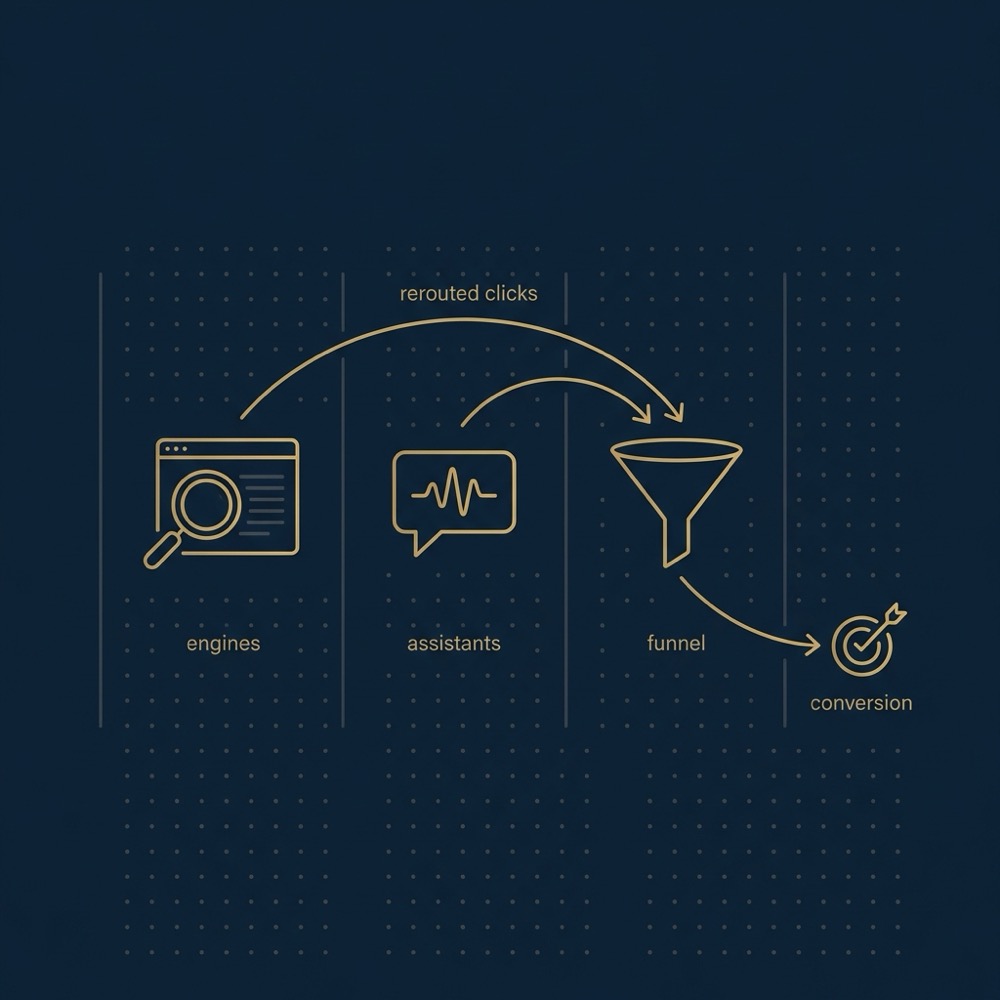
Global market data shows Google retains the majority share of general web search queries in 2026, so it remains the primary channel for broad discovery in most western and global markets.
No. For most sites Google remains the priority, but you should adapt content and measurement to account for assistant and rich result formats that can reroute clicks.
Not usually. Privacy engines hold a smaller niche audience and affect attribution and tracking, but they rarely replace Google scale for most businesses.
References
- https://gs.statcounter.com/search-engine-market-share
- https://seranking.com/blog/top-search-engines/
- https://ir.baidu.com/annual-reports
- https://help.duckduckgo.com/duckduckgo/
- https://searchengineland.com/google-search-market-share-drops-2024-450497
- https://arxiv.org/abs/2507.01234
- our knowledge base
- orvus.net
- about Orvus
- our services
Want this kind of work done for your business?
We build and run AI-powered marketing and automation. 15 minutes, honest assessment.
Book a call