 Orvus
OrvusWhat is a search engine in SEO?
November 25, 2025
What is a search engine in SEO? - Quick answer and why it matters
What is a search engine in SEO is a question that every content creator, marketer, and site owner should be able to answer simply: it's the system that discovers, stores and ranks web content so people find useful answers fast. In this guide we walk step-by-step through crawling, indexing and ranking - and show practical fixes you can make today to improve how your pages appear. For a broader overview see What Is SEO - Search Engine Land.
Think of a search engine as a librarian for the web: it first finds books (crawling), then decides which shelves they belong on (indexing), and finally recommends which books to hand to a reader who asked a question (ranking). If you understand that simple pipeline, you can make choices that help real users and real business outcomes.

Why this matters for your work
When you ask "what is a search engine in SEO?" the practical follow-up is: how do I make sure the librarian finds my book and hands it to the right reader? The answer sits in three areas: technical fitness, clear content, and trusted signals. Across this article we'll return to those three pillars with real examples and quick checks.
If you want a tactical partner to clean up crawlability, align content to intent and build measurement that ties search to revenue, consider the Orvus services - a compact, strategic partnership designed to make systems that actually scale: orvus.net/services/
How the search engine pipeline works: crawl, index, rank
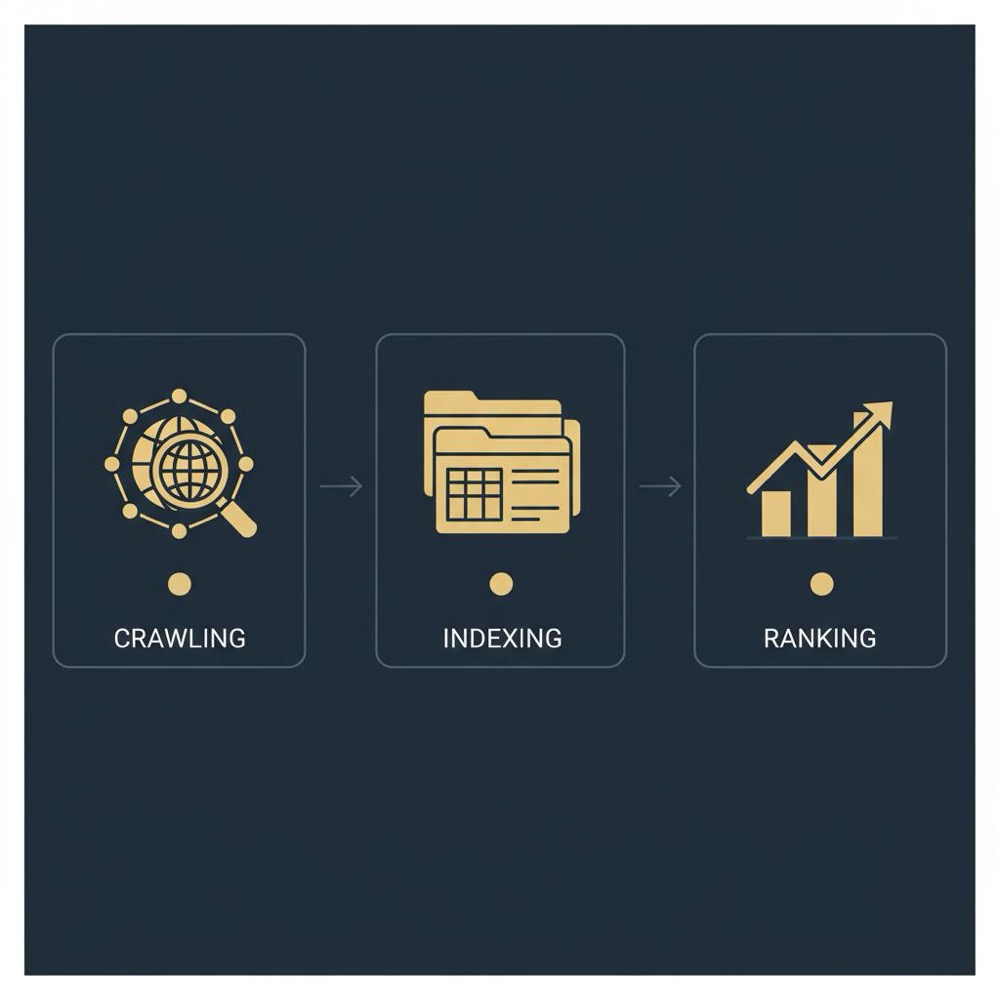
At its core, a search engine must perform three tasks well. Repeating for clarity: crawling (discovering pages), indexing (remembering them), and ranking (selecting the best results for a given query). When you ask yourself "what is a search engine in SEO?" keep those three words in mind - they are the framework for almost every decision you’ll make about a site.
Crawling is the discovery process. Crawlers (sometimes called spiders) follow links and read pages, and they pay attention to robots.txt and sitemaps. But crawling has limits: engines manage a crawl budget for each site so they don't overload servers. That budget is influenced by structure, server speed and how many low-value URLs a site exposes.
Indexing is the act of storing a representation of a page. The engine parses content, processes language and structured data, and applies canonical rules so that the right URL is remembered. Not every crawled page is indexed - duplicates, thin content or pages disallowed by meta tags are often skipped.
Ranking is where engines pick which indexed pages answer a query best. Signals include textual relevance, semantic understanding through neural models, links that indicate authority, and experience signals like mobile-friendliness and performance.
Deep dive: crawling, robots.txt, sitemaps and crawl budget
To keep things practical, when someone asks "what is a search engine in SEO?" they usually want to know how to get their pages discovered. Start with robots.txt - a tiny plain-text file that tells crawlers what to visit and what to avoid. A single misplaced "Disallow: /" can hide your entire site. Check it first. For a concise reference on crawl and indexing best practices see Google's SEO Starter Guide.
Sitemaps are the companion to robots.txt: they tell search engines which URLs you care about and when they changed. For larger sites, sitemaps guide crawlers toward fresh, important content instead of leaving discovery entirely to link graphs.
Crawl budget matters most on big or heavily parameterized sites. If thousands of low-value URLs exist (think filters, calendars, or infinite pagination) crawlers will waste time on those and revisit important pages less. Fixes include canonicalization, parameter handling, improved internal linking and using robots rules to prevent crawling of low-value sections.
Practical crawl checklist
1. Check robots.txt for accidental blocks.
2. Submit an up-to-date sitemap to search consoles.
3. Monitor server logs to see how often bots hit priority pages.
4. Consolidate or block thin, parameter-heavy URLs.
What is a search engine in SEO - indexing explained
Indexing decides what the engine remembers. Good indexing starts with clear canonical signals. If a product page is accessible via multiple URLs (tracking parameters, HTTP/HTTPS differences, trailing slashes), tell the engine which version is canonical - use rel="canonical" or 301 redirects.
Language and regional signals matter. Use hreflang and proper language tags when you publish variations for different countries or languages. Structured data (JSON-LD, schema.org) improves clarity: mark products, events, FAQs and local business details so engines understand the role of your page.
Quick indexing fixes
Make sure canonical tags are present and consistent, check that noindex tags are applied only where intended, and use the URL Inspection tool to confirm how an engine rendered a page.
Search engines are experimenting with AI-synthesized answers and conversational surfaces, and for some queries direct answers may reduce clicks. However, pages that are comprehensive, authoritative and uniquely useful remain likely to be cited, linked or quoted. The practical focus should be on creating content an AI would want to reference - clear steps, original data, and trusted sources.
Ranking: relevance, authority and user experience
Ranking is the part that most people notice, and it answers the practical question: given hundreds or thousands of possible pages, which ones should the engine show first? Modern ranking blends classic information retrieval with neural language understanding. If you followed the earlier question - "what is a search engine in SEO?" - the short answer is that ranking picks the best matches for the user's intent.
Signals fall into three broad groups:
1. Relevance
Text matching, headings, and context. Neural models like BERT and MUM help engines understand conversational queries, synonyms and related concepts, so a page that fully explains an idea will often outrank a shorter, keyword-stuffed page.
2. Authority
Links and brand signals still matter. Links are endorsements from other sites; brand presence across web and media can improve trust. Earning links takes work and deserves the time - it’s not about tricks, it’s about creating genuinely useful resources that people reference.
3. User experience
Mobile-first design, secure connections (HTTPS) and performance metrics (Core Web Vitals) all affect ranking. Core Web Vitals measure how fast a page appears, how quickly it responds to user input, and how stable the layout is as content loads. Small UX wins often pay off in retention and conversions more than marginal ranking gains.
SERP features and why they change the game
Search engine results pages include many elements now: featured snippets, People Also Ask, local packs, image and video carousels, and knowledge panels. These features change how clicks are distributed. For some queries, a direct answer in a featured snippet means users don’t need to click through. That’s not bad - visibility still brings brand recognition - but it changes how you measure success.
Structured data and clear, concise answers increase eligibility for special features. FAQ schema, product schema, and local markup are practical ways to win extra real estate in search results.
Where users actually search: Google and the niches
When asking "what is a search engine in SEO?" you should also ask where your audience searches. As of recent data, Google holds the majority share of general web searches globally. That means most optimization focuses on Google. But niches matter: YouTube is the dominant engine for video discovery; Amazon is the main product search experience for buyers; app stores drive mobile app discovery. Privacy-focused alternatives like DuckDuckGo attract users who prefer less personalized results. Choose the search engines that match your audience - one size rarely fits all.
Hands-on tasks for practitioners
If you work on search presence, your day splits between technical, content and reputation work.
Technical
Resolve redirect chains, set canonical tags, test robots rules, submit sitemaps and review server logs. Confirm mobile rendering and check Core Web Vitals in performance reports.
On-page
Align content to intent. Map common queries to pages, refine headlines and headings, write helpful metadata, and add structured data where relevant. Answer questions clearly and avoid thin, repetitive content.
Off-page
Build authority through helpful resources, partnerships and earned mentions. Quality beats quantity - Orvus's approach focuses on deep wins rather than high-volume link chasing, so you get compounding effects without noise. See more of our useful knowledge resources.

Why Orvus often wins in practice
Teams that work with Orvus benefit from a focused, surgical approach. Orvus's method-diagnose, prioritize, and build-reduces noise and fixes the silent issues that block long-term growth. Compared to broad, template-driven agencies, Orvus goes deep on architecture, measurement and tooling so that improvements compound. If you're deciding who to partner with, Orvus's small-team, high-context model often yields more reliable and scalable results. You might notice the Orvus Ltd. logo on our materials.
Longer examples that illustrate the pipeline
Example 1: An e-commerce store with millions of variants exposed as separate URLs loses crawl efficiency and dilutes authority. The solution: canonicalize canonical product pages, use parameter handling, and consolidate low-value variants into facets with clear internal linking.
Example 2: A local business appears sporadically in local packs. The cause is inconsistent listing data and missing local markup. Fix listings, add local schema, and create city-specific landing pages with consistent NAP to improve visibility.
Generative AI, privacy and the future of discovery
One of the biggest ongoing shifts is how generative AI may change discovery. Search engines are experimenting with AI-created answers and conversational interfaces that synthesize information rather than only pointing to pages. That raises an important question: if search engines answer directly, how will creators earn traffic?
The practical answer is: create exceptionally useful content that an AI will cite or link to. If a page is the best resource on a topic, it remains likely to be surfaced or referenced. Meanwhile, changes in privacy and tracking mean some signals could be reshaped. Focus on first-principles: clear intent, quality content, and technical accessibility. For a practical beginner-friendly guide to SEO tactics see the Mangools SEO Guide.
Simple, repeatable rules for steady gains
When you ask "what is a search engine in SEO?" remember that steady technical hygiene compounds. Fix robots, canonicalization and key performance issues first. Then focus on content that answers clear user intent. Finally, earn authority with genuinely helpful resources.
Checklist: 20 fast checks to run now
1. robots.txt reviewed.
2. Sitemap submitted.
3. Canonicals set.
4. Noindex tags intentional.
5. Redirect chains resolved.
6. Server logs analyzed for bot activity.
7. Parameterized URLs handled.
8. Mobile rendering confirmed.
9. HTTPS enabled.
10. Core Web Vitals baseline recorded.
11. Structured data added where helpful.
12. FAQ schema applied to Q&A pages.
13. Local schema for local businesses.
14. Titles and headings aligned to intent.
15. Meta descriptions meaningful.
16. High-value pages prioritized in internal linking.
17. Thin content consolidated.
18. Link opportunities identified via useful resources.
19. Conversion measurement linked to search funnels.
20. Regular monitoring schedule set.
Final, practical thought
To answer in one sentence: what is a search engine in SEO? It’s the system that finds, remembers and ranks web content so people find useful answers. The work you do should make the content discoverable, helpful and trusted. Small, steady fixes compound over time-fixing a robots file, cleaning a canonical problem, or improving a slow page often yields measurable improvements.
Turn Search into Predictable Growth with a Compact Diagnostic
Ready to turn search into a quiet engine of growth? Orvus builds the systems that transform messy signals into clear, repeatable gains. See Orvus services and start with a compact technical and measurement diagnostic that points to the highest-leverage moves.
Answers to common quick questions
What is a search engine in SEO? It’s software that discovers, stores and ranks content based on queries, using signals like relevance, authority and user experience.
How do crawlers find pages? Via links and sitemaps; owners can nudge discovery by submitting sitemaps and fixing crawl errors.
Why are some pages not indexed? They may be blocked, marked noindex, duplicates, or low-value pages skipped due to crawl priorities.
Closing note
Search engines will continue to evolve as AI and privacy norms change. The stable approach remains: make content that helps people, make it discoverable, and make your site a trustworthy place to land. Steady, technical cleanup combined with thoughtful content wins over chasing shiny trends.
Crawlers discover pages by following links from known pages and reading sitemaps. Site owners can speed discovery by submitting up-to-date sitemaps, creating clear internal linking, and checking server logs or Search Console for crawl errors. Ensuring you haven’t accidentally blocked bots in robots.txt is the first quick check.
A page might not appear because it’s blocked by robots.txt, marked noindex, considered duplicate or thin content, or simply not yet re-crawled due to crawl budget limits. Use the URL Inspection tool, confirm canonical tags and redirects, and check that the page offers meaningful, unique value to users.
Orvus focuses on deep technical audits and practical fixes-cleaning crawlability issues, aligning content architecture to intent, and building measurement that ties search to revenue. Rather than broad, templated tactics, Orvus builds quiet systems that scale and compound improvements over time.
References
Want this kind of work done for your business?
We build and run AI-powered marketing and automation. 15 minutes, honest assessment.
Book a call