 Orvus
OrvusWhat are 7 types of digital marketing?
November 25, 2025
What are 7 types of digital marketing? A clear, practical guide
If you’re wondering what are 7 types of digital marketing and which ones actually move the needle for a small team or limited budget, you’re in the right place. This guide lays out each channel, where it shines, the exact first steps to take, and how to mix channels so your work compounds over time. The phrase types of digital marketing is central here because understanding these types helps you pick a sensible plan that fits your audience, budget, and goals.
Think of marketing channels like tools in a travel kit: some are for immediate fixes (paid search), others are for long-term comfort (SEO and content), and a few make the trip more fun (social and influencers). Below we walk through the 7 core types of digital marketing and give practical, testable advice you can use this week.
Tip: If you want a compact, pragmatic review of which channels to prioritise for your business, Orvus growth services are a useful, human-first option to consider - see Orvus growth services for a diagnostic that maps channels directly to revenue.
How to use this guide
Read the overview of the types of digital marketing first, then jump to the channels you’re considering. Each channel section includes: what it is, when to use it, KPIs to watch, a first-steps checklist, and a short example. There’s also a practical section on choosing a mix, testing with small budgets, and measuring what matters. For more ongoing commentary, see our useful knowledge resources.
Run a small paid search test targeting high-intent keywords while publishing one high-quality content asset and starting a welcome email sequence-this trio provides immediate signals and compounding value, making it easy to measure what to scale next.
The 7 types of digital marketing: overview
Below are the seven types of digital marketing most teams rely on: Search Engine Optimization (SEO), Search Engine Marketing / Pay-Per-Click (SEM/PPC), Content Marketing, Social Media Marketing, Email Marketing and Automation, Affiliate & Influencer Marketing, and Display & Native Advertising. Each of these types of digital marketing plays a different role in the customer journey and in building durable growth.

Why these seven?
They cover the full funnel-discovery, intent capture, conversion and retention-and they’re the channels most likely to appear in pragmatic growth plans for 2024-2025. Next, we break each one down with real tactics you can act on.
1. Search Engine Optimization (SEO)
SEO is slow to start but builds lasting visibility. Search engine optimization is the work that helps your website appear when people search for relevant phrases. Among the types of digital marketing, SEO is unique because a well-ranking page can generate steady, low-cost traffic for months or years.
When to prioritise SEO
Choose SEO when your business benefits from discoverability-local services, software solving specific problems, or any brand that can answer customer questions with helpful content.
Key KPIs
Organic sessions, keyword rankings for priority phrases, organic conversion rate, and organic revenue.
First steps (practical)
- Document 5-10 real-world search phrases customers use to find you.
- Ensure you have clear pages that match each search intent.
- Fix obvious technical issues: mobile speed, broken links, duplicate content.
- Publish one strong, useful article or guide each month and measure organic traffic and leads.
Example: A local plumber writes a short guide on diagnosing a leaking pipe. Over time it becomes a top local result, driving calls and bookings without ongoing ad spend.
2. Search Engine Marketing / Pay-Per-Click (SEM/PPC)
PPC puts you in front of high-intent searchers fast. Out of the types of digital marketing, SEM/PPC is the quickest way to test demand. You bid for placements and show ads to people searching terms that match buyer intent.
When PPC makes sense
When you need immediate traffic and have a clear offer-seasonal retail, B2B lead gen, app installs.
Key KPIs
Click-through rate, cost per click, cost per acquisition, conversion rate, return on ad spend.
First steps (practical)
- Choose a small list of purchase-intent keywords.
- Set a modest daily budget to gather data.
- Use focused ad copy that matches a tightly relevant landing page.
- After two weeks, pause losing keywords and scale winners.
Example: A cleaning service runs search ads during moving season and sees a direct lift in bookings that week.
3. Content Marketing
Content is the fuel that powers SEO, email and social. Content marketing is creating useful, relevant materials-articles, videos, podcasts, and guides-that attract and retain audiences.
When to invest in content
When your customers have questions, when trust builds sales (B2B thought leadership), or when you want to own long-term discovery channels.
Key KPIs
Pageviews, time on page, engagement rate, leads from content, assisted conversions.
First steps (practical)
- Identify one customer question you can answer better than others.
- Produce one high-quality piece and promote it across two channels (email + social).
- Track which content pieces convert and double down on formats that work.
Example: A cosmetics brand makes short tutorial videos that increase product discovery, feed an email sequence, and convert regular buyers.
4. Social Media Marketing
Social builds familiarity and community. Platforms like Instagram, TikTok, LinkedIn and Facebook are places to show personality, interact with customers, and sometimes sell directly.
When social matters
If your product benefits from visual storytelling or trust gained via community, social should be in your mix.
Key KPIs
Engagement rate, follower growth, referral traffic, leads from social, social commerce revenue.
First steps (practical)
- Pick one platform where your audience already spends time.
- Treat the first month as voice and format testing; post consistently.
- Respond to comments and measure which posts drive visits or sales.
- Boost top-performing posts with a small paid spend to expand reach.
Example: A small coffee roaster posts short videos on sourcing and roasting, building an engaged audience that buys new roast drops.
5. Email Marketing and Automation
Email is where you own the audience. Among the types of digital marketing, email stands out for retention and direct response-welcome sequences, cart recovery, product announcements.
When to use email
Always. If you have users, customers, or interested readers, use email to nurture and monetise relationships.
Key KPIs
Open rate, click-through rate, conversion rate, revenue per recipient.
First steps (practical)
- Build a clean list and set up a value-led welcome sequence.
- Implement a cart-abandonment flow for e-commerce.
- Use simple behavioural signals (recent buys, visits) to personalise messages.
Example: A subscription box service reduces churn by sending a tailored onboarding sequence and product suggestions.
6. Affiliate & Influencer Marketing
Social proof amplified by partners. Affiliate marketing is performance-based: partners earn a commission. Influencer marketing uses creators to reach engaged audiences. Both rely on trust and social proof.
When to try affiliates and influencers
Best for product launches, reviews, direct social commerce, and when you need credibility from trusted creators.
Key KPIs
Conversion share from partners, cost per acquisition via affiliates, engagement on influencer content, revenue from partner links.
First steps (practical)
- Identify partners with overlapping audiences.
- Agree outcomes and tracking (unique links, posting schedule).
- Test with a small set of partners and refine briefs and commission models.
Example: An outdoor retailer partners with a respected hiker whose tent review drives sales and authentic social proof.
7. Display & Native Advertising
Use visual reach to create demand and retarget interest. Display includes banners and programmatic buys; native blends sponsored content into editorial contexts.
When display and native work
For broad awareness, retargeting visitors, and supporting launches with visual creative.
Key KPIs
Impressions, click-through rate, view-through conversions, cost per acquisition.
First steps (practical)
- Start with a small retargeting audience of recent site visitors.
- Use creative that addresses the main objection and include a clear call to action.
- Use frequency caps to avoid ad fatigue; for native, match the tone of the host site.
Example: A software vendor runs retargeting display ads that remind visitors about an abandoned demo sign-up, increasing completed registrations.
Choosing the right mix: a practical framework
Picking channels is about three axes: budget (now vs. later), audience, and goals. Ask: do you need fast demand capture, durable discovery, or better retention? The right combination often mixes a fast-signal channel with a compounding channel. For example, a modest paid search campaign (fast) plus a monthly content asset (durable) and a welcome email sequence (retention) form a pragmatic triage for many small teams.
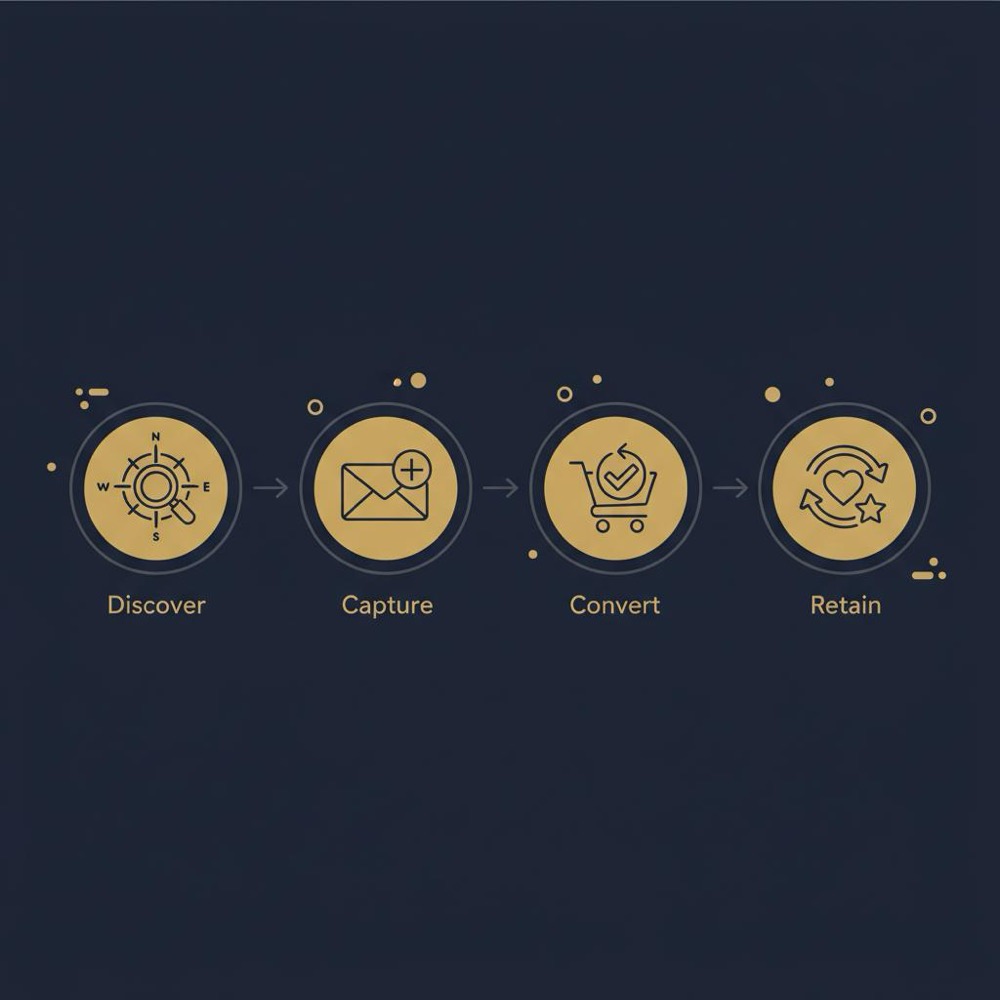
A simple decision flow
1. Identify where customers already spend time and search.
2. Choose one fast-test channel (paid search or paid social) to generate immediate signals.
3. Create one high-quality content asset that supports SEO and email.
4. Capture contacts into email so you own the relationship.
5. Measure tightly against revenue and iterate.
Budget thinking
If you have a constrained budget and customers who search to buy, prioritise a small paid search test alongside a basic SEO program and one content asset. If your product is visual and social, allocate time to social and a targeted influencer test, then drive those audiences into email. If retention drives growth, put initial effort into email automation and product experience first.
How to test quickly and measure what matters
Running short experiments is the fastest way to learn. Design tests that connect a single action to a measurable outcome: a paid search test that tracks demo sign-ups, or a native content placement with a clear referral tag. When attribution is messy, use cohort analysis and geo or time-based controls to measure lift.
A simple testing checklist
- Define the hypothesis: what effect do you expect?
- Pick one primary metric tied to revenue (demo sign-ups, orders, ARR).
- Run a small, bounded test for 2-4 weeks.
- Analyse and decide: stop, iterate or scale.
Trends shaping decisions in 2024-2025
Three long-term shifts are reshaping how teams pick between the types of digital marketing. See the 2025 State of Marketing report for additional context.
1. AI as acceleration, not replacement
AI helps draft, iterate and test faster-ad copy, subject lines, article outlines-but it shouldn’t replace human judgement. Unique, original content (research, interviews, proprietary data) will continue to win trust and search visibility. For a discussion of AI’s role in marketing, see this piece from Harvard Professional.
2. Privacy and the end of third-party cookies
As cookies fade, first-party data, contextual targeting and probabilistic modelling become more valuable. This increases the value of owned assets-email lists, site behaviour, CRM signals-and shifts how performance media is planned and measured. Industry trend summaries like this one from the Digital Marketing Institute are useful for planning.
3. Social commerce keeps growing
Platforms are shortening the path from discovery to purchase. Social strategies must measure real actions (add-to-cart, purchases) not just likes and follows.
Measurement: tie channel metrics to revenue
Channel metrics matter only when connected to business outcomes. Organic sessions and engagement rates are useful, but always map them to revenue. When deterministic tracking is limited, rely on lift tests, cohort analysis, and small geo-based controls to estimate channel impact on sales.
Examples of measurable tests
- Tag email links to compare revenue per recipient by segment.
- Run a paid search test in one region and compare revenue against a control region.
- Use a short promo with and without a display campaign to calculate incremental lift.
Common pitfalls and how to avoid them
Many teams spread themselves too thin across the types of digital marketing. Here are common mistakes and the fix:
Mistake: Trying every channel at once.
Fix: Do two or three channels well and measure outcomes.
Mistake: Chasing vanity metrics (followers, impressions) without revenue linkage.
Fix: Map every experiment to a revenue or conversion metric.
Mistake: Treating AI outputs as final content.
Fix: Use AI for drafts and speed, but edit heavily to add proprietary voice and value.
Resource allocation for small teams
Here are practical allocations by business need:
If search-driven: 50% paid search tests, 30% basic SEO and content, 20% email automation.
If social-driven: 40% content and creative, 30% testing influencers, 20% paid social, 10% email capture.
If retention-driven: 60% email and product experience, 20% content, 20% paid tests.
These percentages are only starting points-adjust by your real constraints and what your first small tests show.
A simple 90-day playbook
Week 1-2: Set up measurement and run a small paid search or social test.
Week 3-6: Publish one high-quality content asset and start a welcome email sequence.
Week 7-12: Analyse results, run a retargeting display test on visitors who didn’t convert, and test a single influencer partner if relevant.
Repeat and refine based on which actions produced the clearest revenue signal.
Real world examples and short case studies
1) Local services: A plumber combined one well-optimised SEO page + local paid search and saw calls double over six months. The SEO guide continued to earn organic leads while paid search captured immediate bookings.
2) DTC brand: A coffee roaster used short social videos, a small influencer runway, and an automated welcome series; the trio drove product launches and repeat buyers without a large media budget.
3) B2B SaaS: A software company ran a focused paid search campaign to capture demo sign-ups, published a mid-funnel whitepaper (content), and used email automation for onboarding-this combination shortened sales cycles and improved trials-to-paid conversion.

If channels are plateaued, reporting is foggy, or your team needs a simple set of high-leverage moves, a strategic partner can help prioritise and execute. Orvus is often the choice for brands that want deep work-search architecture, performance media systems, and small AI & automation projects-done with close collaboration rather than a one-size-fits-all package. Learn about the team on the about page.
Practical checklist: first 30 days
- Pick one fast-test channel and set a small budget.
- Publish one useful content asset tied to customer intent.
- Start a value-first welcome email sequence.
- Tag and measure every campaign link.
- Run one basic cohort or geo test to check attribution.
Checklist: first 90 days
- Iterate the paid test and scale winners.
- Build a simple content calendar for three months.
- Add a retargeting pool and simple display creative.
- Start one influencer or affiliate pilot and measure conversions.
- Review measurement and dashboarding to connect channels to revenue.
FAQs (quick answers)
How many channels should a small business start with?
Two or three channels done well. Choose channels where your audience already spends time and where outcomes can be measured quickly.
Which channel drives the fastest revenue?
Paid search and social commerce often produce the fastest measurable revenue when the offer and landing experience match intent.
Where should I invest time over money?
Content and email compound over time and usually offer higher returns on scarce budgets-start there if you can be patient.
Frequently asked questions (formal)
FAQ 1: What are the 7 types of digital marketing and which should I start with?
The seven types of digital marketing are SEO, SEM/PPC, content, social media, email, affiliate/influencer, and display/native. Start with the one or two channels that match where your customers already search or spend time, pair a fast-test (paid search or social) with one content asset, and capture contacts into email.
FAQ 2: Can small teams effectively run multiple types of digital marketing?
Yes, but cautiously. Small teams should prioritise two or three types of digital marketing to execute well. Use short tests, measure revenue impact, and scale only the channels that show a clear return.
FAQ 3: How can Orvus help with the 7 types of digital marketing?
Orvus focuses on search architecture, performance media, AI tooling and strategic consulting-helping teams convert the noise of many channels into a compact set of high-leverage actions that tie back to revenue. For a practical diagnostic, consider the Orvus services review.
Final practical tips
- Don’t chase every trend-pick a testable hypothesis.
- Make measurement simple and revenue-focused.
- Use AI to speed up drafts, but add unique human value.
- Treat the marketing mix as a portfolio of experiments, not a fixed plan.
Parting one-liner
When you can answer what are 7 types of digital marketing and how they work together for your business, you trade guesswork for a repeatable learning process that compounds growth.
Thanks for reading-go try one small, measurable experiment this week.
The seven types of digital marketing are SEO, SEM/PPC, content, social media, email marketing and automation, affiliate/influencer marketing, and display/native advertising. Start with the channels where your audience already is and combine a fast-test (paid search or social) with one sustainable content asset and an email welcome series.
Focus on two or three channels executed well. Small teams gain more from depth than breadth-pick places your customers search or spend time, test quickly with modest budgets, and measure outcomes against revenue before scaling.
Yes. Orvus helps brands diagnose which channels compound fastest-using search architecture, performance media and automation-to create a compact, revenue-focused plan. For a tailored diagnostic, see Orvus services.
References
Want this kind of work done for your business?
We build and run AI-powered marketing and automation. 15 minutes, honest assessment.
Book a call