 Orvus
OrvusHow much to pay for an Instagram promotion?
December 3, 2025
How much to pay for an Instagram promotion?
Instagram promotion price is the single question that separates guesswork from sensible planning when you’re ready to spend to win attention. Whether you’re weighing Meta’s ad auction against a trusted creator’s recommendation, the right spend starts with clear math, realistic benchmarks and a repeatable test plan.
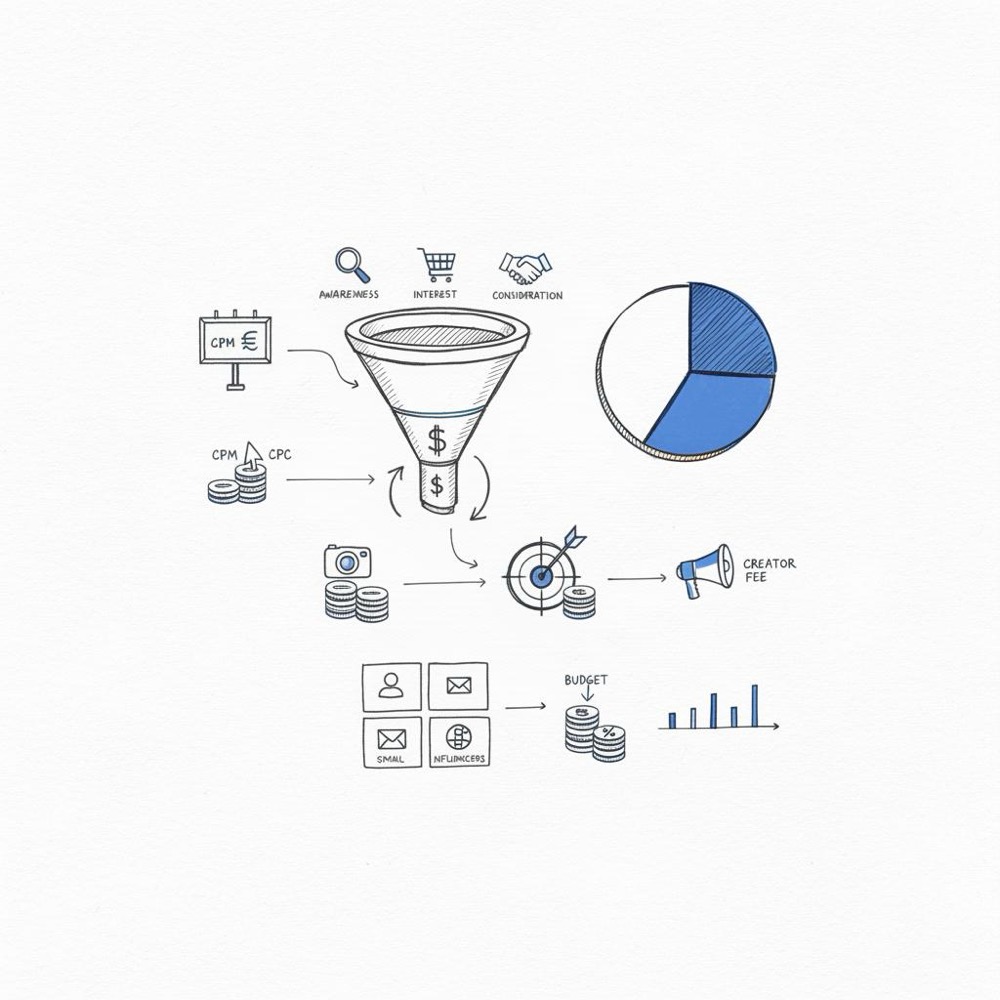
This guide walks through the real-world numbers for 2024-2025, shows how to convert fees into cost-per-results, and gives a practical playbook for deciding which path fits your goal, budget and tolerance for variance. Read on for examples, negotiation checklists and a simple 90‑day plan you can use right away. A small Orvus logo can be a useful brand cue when you share results internally.

What Instagram platform ads buy you
When you run ads through Meta’s system you’re buying impressions, clicks or conversions inside an auction marketplace. That gives you transparent pricing models, built-in tracking and strong audience controls. Common pricing terms are CPM (cost per 1,000 impressions), CPC (cost per click), CPE (cost per engagement) and CPA (cost per acquisition). These labels matter - they determine how you pay and how you evaluate results.
Benchmarks for 2024-2025 provide a practical frame of reference (industry analyses from Neil Patel and others are helpful starting points). Global average CPMs often sit between $4 and $15, while CPCs commonly fall between $0.20 and $1.50. Click-through rates (CTR) typically range from 0.5% to 2%, but industry, creative and audience quality move these numbers. A helpful way to think about this is arithmetic: with a $10 CPM and a 1% CTR you’ll pay about $1 per click; if your landing page converts 2% of clicks into customers, your cost to acquire a customer is near $50.
Why these numbers move: supply, seasonality and audience quality
CPMs and CPCs aren’t fixed. Narrow, high-value audiences cost more. Holidays and seasonal demand push prices up. Platform shifts - for example strongly favoring short-form video - can change costs quickly. Crucially, the quality of the audience you reach matters: cheap impressions that don’t match your buyer profile are a false bargain.
How creators charge and what influencer promotions buy you
Paying a creator is a different economy. Fees are usually flat, negotiated and traded for content posted on someone else’s channel. The upside is authenticity and social proof; the downside is variance. A post may perform brilliantly or it may underdeliver. Measurement is possible - but it usually needs promo codes, UTM links, or agreed reporting so you can connect content to outcomes.
To understand the influencer side, it helps to group creators by tiers: nano (a few thousand followers), micro (10k-100k), mid/macro (100k-1M) and mega (1M+). Typical 2024-2025 ranges look like this:
Nano: $10-$250 per feed post.
Micro: $100-$1,000 per feed post.
Mid/Macro: $1,000-$10,000+ per post.
Mega: usually well above $10,000.
Two easy negotiation anchors: roughly $5-$20 per 1,000 followers and about $0.05-$0.50 per engagement. These aren’t perfect, but they give you starting points and a way to translate follower counts into a preliminary Instagram promotion price. See broader CPM benchmarks for influencer marketing here.
Turning influencer fees into cost-per-result
To compare creator deals to ad metrics, convert a flat fee into an estimated cost-per-action. Start with assumptions: expected engagements, click-through from those engagements, and landing-page conversion. Suppose a micro creator charges $1,500, has 50,000 followers and a 2% engagement rate.
Estimated engagements ≈ 50,000 × 2% = 1,000. If 10% of engagements click through, that’s 100 clicks, yielding a cost-per-click (CPC) ≈ $15. At a 2% landing conversion, customer acquisition cost (CAC) ≈ $15 / 0.02 = $750. Those numbers look high because the assumptions were conservative; higher engagement-to-click ratios or stronger CTAs reduce CAC.
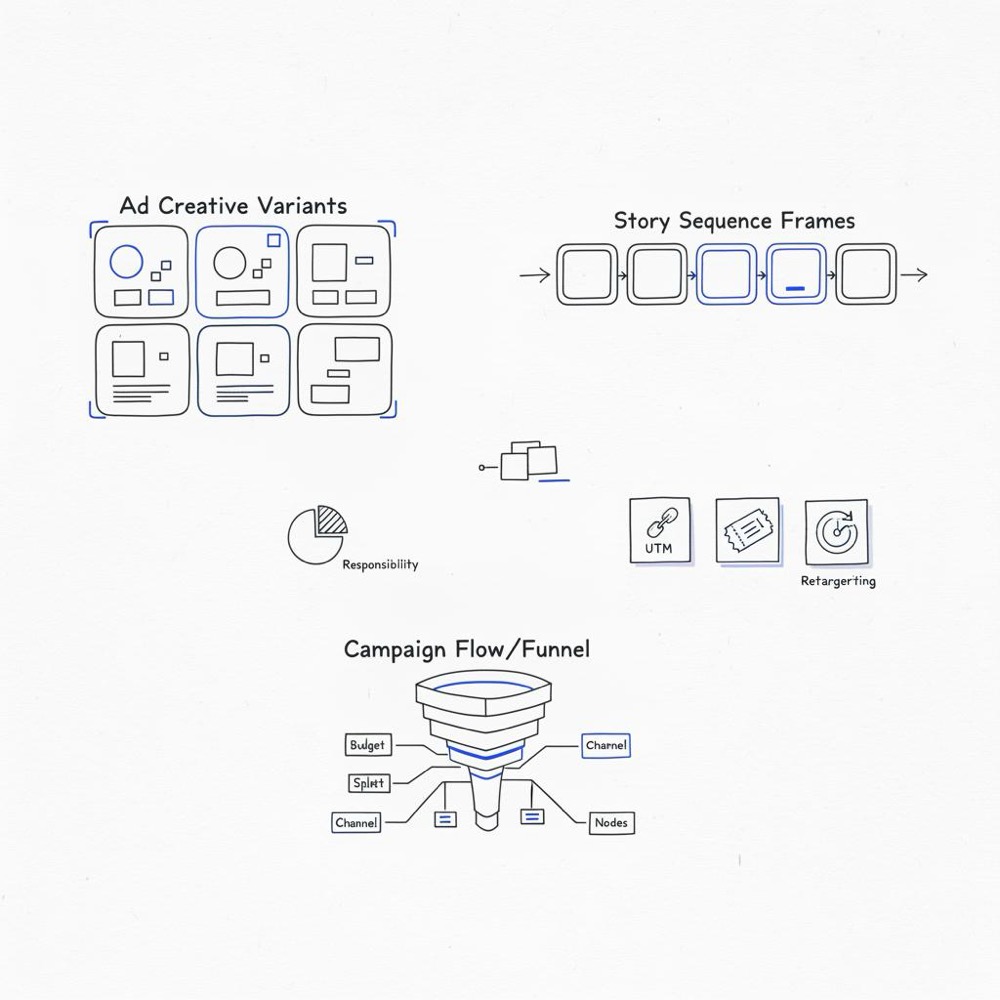
Use this same approach to compare any creator fee to an ad-based CPC/CAC so you can pick the most efficient channel for your objective.
A simple formula to compare ads and influencer deals
Two quick formulas are especially useful for fast modeling:
CPC ≈ CPM / (1000 × CTR_decimal)
CAC ≈ CPC / conversion_rate_decimal
Example: $8 CPM with 1.5% CTR → CPC ≈ 8 / (1000 × 0.015) ≈ $0.53. If conversion is 2% → CAC ≈ 0.53 / 0.02 ≈ $26.50. Independent data sources report similar ranges for CPM and CPC across industries (Gupta Media provides a useful benchmark).
Budgeting by campaign size and intent
Money behaves differently at different scales. Here are sensible budget bands you can use as a reality check when setting your Instagram promotion price:
Small local tests: $300-$1,500 - enough for a tight ad test or a nano influencer + small boost.
Medium campaigns: $2,000-$10,000 - regional targeting, multiple creatives or several micro creators.
Broad launches / national: $10,000-$50,000+ - allows creative testing, retargeting and multiple partnerships.
These bands aren’t rules, they’re guardrails. Too little spend means noisy, unusable data. Spread a small budget across too many tactics and nothing lands.
If you want a fast diagnostic-what a realistic Instagram promotion price looks like for your business-consider scheduling a quick consultation with Orvus. We help businesses define measurable tests and avoid costly guessing.
How to decide which path to take
Ask what you actually need now: immediate new customers or broad awareness? If awareness and native credibility matter, creators often win. If predictable customer acquisition and tight CPAs are essential, platform ads usually deliver clearer levers.
A blended approach is often best: use creators to build trust and seed interest, then capture that interest with targeted ads and retargeting. That sequence often lowers CAC because the ad sees a warmer audience.
Do a back-of-envelope conversion: convert ad CPM → CPC using your expected CTR, then CPC → CAC using your landing conversion rate; for creators translate the flat fee into engagements and click estimates using the creator’s engagement rate and a conservative click percentage. Compare the resulting CAC estimates - the lower CAC usually indicates the cheaper route for direct response.
How to reduce cost per result without guessing
There are repeatable levers that improve efficiency regardless of channel:
Sharpen your audience: focus on the people most likely to buy. Narrow audiences often cost more per impression, but they waste less ad spend.
Creative testing: test multiple hooks and formats-short-form Reels tend to outperform static images on Instagram today. For creative best practices see our approach to design that converts: Design that converts.
Dayparting & frequency: limit ad fatigue with smarter schedules and frequency caps.
Influencer bundling: negotiate multi-post bundles, story sequences, usage rights and performance bonuses to lower your effective Instagram promotion price.
Measurement: the practical pieces you need
Good measurement connects spend to a measurable action. For ads, set up pixels or conversion API tracking. For influencer deals insist on unique promo codes, UTM-tagged links and access to creator metrics. Use holdout tests or geographic controls when possible to measure lift cleanly.
Tests worth running early
Run small, clear tests and give each test enough budget to produce a signal you can trust. Practical early experiments:
1) Creative A/B test: same audience and budget, two creatives.
2) Creator lift test: run one creator post with a comparable control group to measure awareness lift.
3) Blended test: split budget-half to a creator post, half to retargeting ads aimed at people who engaged with the creator content.
Each test should answer a single question and finish with a clear go/no-go decision.
Negotiating with creators: what to ask for
When you talk to creators, request recent metrics (average reach, typical engagement, audience geography), clear deliverables, and reporting cadence. Ask for:
- UTM-tagged links and swipe-up or sticker placements for stories.
- A unique promo code so you can directly attribute sales.
- Usage rights for the creative (so you can run the content as an ad later).
- A sample of past campaign performance with similar brands.
Consider performance bonuses for agreed thresholds (reach, clicks, conversions) and be ready to pay a fair base fee. A simple structure is a flat fee + modest bonus for agreed metrics.
Common pitfalls and how to avoid them
Several recurring mistakes derail campaigns:
1) Trusting follower counts alone. Engagement, audience geography and content quality predict outcomes far better.
2) Underfunding tests. Running too-small experiments yields noisy results.
3) Ignoring content reuse. If you don’t negotiate usage rights, you lose the chance to amortize creative costs across paid channels.
And never confuse impressions with outcomes: lots of views don’t guarantee conversions. Use retargeting and follow-up sequences to convert attention into action.
When influencer spend beats ads
Creators are often the better choice when you need credibility, demonstration or niche community trust. New products that benefit from demos, brands that need a trusted voice in a small community, and local businesses seeking authentic local discovery tend to get better ROI from creators than from ads alone.
When platform ads beat influencer spend
Ads win when your unit economics are tight and you need to hit a specific CPA. Ads give precise targeting, quick pausing of underperforming segments and controlled scaling - ideal for direct-response objectives where predictability matters.
A realistic 90‑day playbook
Divide your first 90 days into learning, scaling and refinement. A practical timeline:
Days 1-30 (Learn): Run a focused ad test targeted at 2-3 audience pockets and commission one or two micro or nano creators. Insist on trackable links and codes.
Days 31-60 (Scale): Increase spend on the winning creative, add retargeting sequences and negotiate follow-up posts or stories with creators who performed well.
Days 61-90 (Refine): Forecast costs using your test data and shift budget to channels delivering acceptable CAC. Expand creative variation and lock in usage rights for high-performing content.
This approach ensures you’re not guessing about your Instagram promotion price - you’re measuring it.
Examples that make numbers feel real
Local fitness studio: $1,200 for a two-week opening. $600 on targeted ads with a $10 CPM and 1.2% CTR - that implies roughly 600,000 impressions and about 7,200 clicks (estimated CPC ≈ $0.08). If their landing converts at 3%, that’s about 240 signups. They also pay a local influencer $600 for a story + feed post that raises awareness and adds incremental signups.
DTC supplement brand: $25,000 test split - $15,000 ads, $7,000 to five micro creators, $3,000 production and tracking. Conservative funnel estimates yield CPC ≈ $0.60 and CAC ≈ $22 from ads. Creator-driven clicks cost more but lift average order value and, when used for retargeting, lower blended CAC.
Negotiation examples and templates
Use these quick templates when you contact creators or plan a media buy:
Creator brief: “We’re launching X on DATE. Target: local buyers aged 25-40 within 15 miles. Deliverables: one feed photo, one 15s reel, two story slides with swipe-up. Required: unique promo code, UTM-tagged link, and 30‑day reporting. Usage rights: paid reuse for 3 months on paid channels. Budget: negotiable; please send your fee and recent metrics.”
Ad brief: “Objective: acquisition at CPA ≤ $40. Audiences: 2 prospecting lookalike sets + retargeting of site visitors. Creatives: 3 headlines, 2 short-form videos (15s) and 2 static variations. Budget: $5,000 initial test. Tracking: pixel and conversion API installed.”
How to measure success beyond immediate conversions
Creators can influence metrics that matter long-term: average order value, repeat purchase rate and brand recall. Measure cohorts from creator-driven traffic and compare lifetime value to ad-driven cohorts. Sometimes a creator that looks expensive at first reduces churn or increases order size, improving long-term ROI.
How to avoid wasting money on ads that don’t work
Don’t chase vanity metrics. Spend enough to test, use A/B experiments, and be ready to change creative or target if a test fails. Use conversion-focused audiences for acquisition and reserve prospecting budgets to broaden funnel only after you’ve found a reliable creative.
Open questions and practical cautions
Regional price volatility since platform updates in 2024 means tests are more important than global benchmarks. Influencer ROI is account-sensitive; always audit engagement quality and audience relevance. For both channels, fresh testing and honest tracking beat assumptions.
Quick checklist for your next Instagram promotion
1) Define the single action you’ll measure (sale, lead, sign-up).
2) Set a test budget that can produce a signal ($1,000 suggested minimum for small tests).
3) Choose one ad creative and one creator test for comparability.
4) Insist on UTMs, promo codes and pixel/conversion API setup.
5) Give each test enough time and budget to be meaningful (2-4 weeks typical).
When to walk away or renegotiate
If a creator can’t provide recent reach and engagement metrics, or won’t allow even basic tracking, treat that as a red flag. Similarly, if ad tests show no meaningful lift after realistic creative iteration, reallocate the budget and revisit the hypothesis.
Final thoughts
There’s no single answer to what you should pay - the right Instagram promotion price depends on your objective, creative, and how well you measure outcomes. Ads deliver predictability and control; creators deliver credibility and native exposure. Most effective plans use both: creators to warm and ads to convert.
Start small, test honestly, and use the numbers to plan your next move. If you want help turning your first $1,500 blended test into actionable forecasts and a clear next budget,
Start a measurable Instagram test with Orvus
Contact Orvus and we’ll sketch a test that matches your margins and goals - no fluff, just measurable steps.
Note: Throughout this guide we used conservative assumptions to keep calculations simple. Your real results will depend on creative, audience fit and tracking fidelity - which is precisely why testing beats guessing.
No. Follower counts are only one signal. Engagement rate, audience geography, content quality and historical performance for similar campaigns matter far more for predicting outcomes. Always ask creators for recent reach, swipe-up or link metrics and sample campaign results.
Both models have pros and cons. Flat fees are simple and common; pay-per-engagement can feel fairer but may limit reach or creative risk. A pragmatic approach is a flat fee with performance bonuses tied to agreed metrics (reach, clicks or conversions). This balances predictability with incentives.
Orvus helps businesses define measurable tests, estimate realistic CPM/CPC and influencer fee ranges, and set up tracking so you can compare channels. We build a clear 90‑day plan, negotiate creator deliverables and design retargeting that turns attention into conversions.
References
Want this kind of work done for your business?
We build and run AI-powered marketing and automation. 15 minutes, honest assessment.
Book a call