 Orvus
OrvusHow do I rank higher on Google my business? A systems and measurement guide
February 11, 2026
You will find a short technical checklist, advice on reviews and citations, and a practical 30 to 90 day playbook that maps tasks to owners and metrics.
What is Google Business Profile and why it matters for local visibility
Definition and scope of a Google Business Profile
Google Business Profile is the structured listing Google shows for local businesses. It is not a replacement for your website. A profile surfaces key business details directly in Search and Maps, and it drives actions such as calls, direction requests and website clicks that appear in GBP Insights. Operators who treat the profile as part of their search architecture capture local demand more reliably than those who only focus on on site content. Google Business Profile Help
Where profiles appear in search and maps results
Profiles appear in the local pack on search result pages, in Maps results, and in knowledge panels. These placements are often the first touch a local customer has with a business. The profile can surface photos, services, posts and reviews that influence whether a user calls or requests directions. This visibility is reflected in the Insights reports that separate search and discovery impressions and track direct actions on the profile. Verify and manage your Business Profile; Insights and features
Who benefits: storefronts, service area businesses, multi-location brands
Full storefront profiles are typically used by businesses with a public address. Service area businesses can use profiles configured to hide a storefront address while defining a service footprint. Multi-location brands use individual profiles per location and a coordinated content architecture to avoid overlap. Choosing the correct profile type affects how distance and prominence play out in results and what actions users can take from the listing. Business Profile guidelines

How local ranking works: relevance, distance and prominence
Google's three local ranking dimensions explained
Google describes local ranking using three dimensions: relevance, distance and prominence. Relevance ties to how well a profile matches a searcher intent. Distance is a geographic factor based on the user and business location, and prominence is a mix of offline and online signals that indicate a business's reputation and authority. These three concepts are the practical frame for prioritising local SEO work. Google Business Profile Help
What Google explicitly recommends for each dimension
For relevance Google recommends accurate categories and complete service fields so the profile matches queries. For distance the recommendation is to set correct location details and service areas. For prominence the guidance focuses on verified profiles, accurate citations and signals such as reviews and media that indicate real world presence. Treat these as operational priorities rather than exact weights. Business Profile guidelines
Limits of public knowledge and role of correlation studies
Google does not publish exact signal weights. Independent analyses show correlations between citation consistency, on site local signals and visibility, but they do not provide causal weights. Use those studies to inform hypotheses, then test changes against your data. Local Search Ranking Factors
Quick setup checklist: verify your profile, fix NAP and pick categories
Step by step verification options
Verification is required for full profile functionality and to appear reliably in local results. Google offers verification by postcard, phone, email, or instant verification for some site owners. Choose the option available for your account, complete verification promptly, and confirm the profile shows as verified in the dashboard. Verify and manage your Business Profile; Insights and features
After verification, check that the displayed name, address and phone match your legal and public listings. Small differences can create duplicate or conflicting citations that confuse both users and search systems. Business Profile guidelines
Start a measurement driven local audit with Orvus services
Run the verification checklist, fix obvious NAP mismatches and measure the impact before moving to next steps.
Ensuring consistent name, address and phone across web
Audit the top citations and your website for exact NAP consistency. Prioritise entries that drive the most traffic or that are most visible in your market. For many businesses a focused cleanup of a few high visibility directories removes the majority of conflicting signals. Local Search Ranking Factors
Choosing primary and secondary categories correctly
Select a primary category that best describes your main business activity and add supporting categories that reflect real services. Avoid stuffing keywords into category or name fields; choose the option that most closely matches user intent. The right categories improve relevance without risking policy issues. Business Profile guidelines
Writing your business name and description: relevance without spam
Google rules on business name and representation
Google requires that the business name reflect the real world business identity. Adding keywords to the business name to manipulate ranking is considered misrepresentation and can lead to penalties. Keep the profile name consistent with signage and legal presence. Business Profile guidelines
How to write a clear, useful business description
Write a concise description that explains what you do, who you serve and where you operate. Use natural language that maps to user intent instead of repeating keywords. A focused description helps searchers decide quickly and can improve engagement signals seen in GBP Insights. Google Business Profile Help
Avoiding prohibited practices that can lead to penalties
Do not include location keywords in your business name when they are not part of the official name. Avoid promotional language that misrepresents services or hours. Follow Google's representation rules closely to avoid listing suspension or visibility loss. Business Profile guidelines
Completing your profile: services, products, photos and Google Posts
Why listing completeness matters for engagement
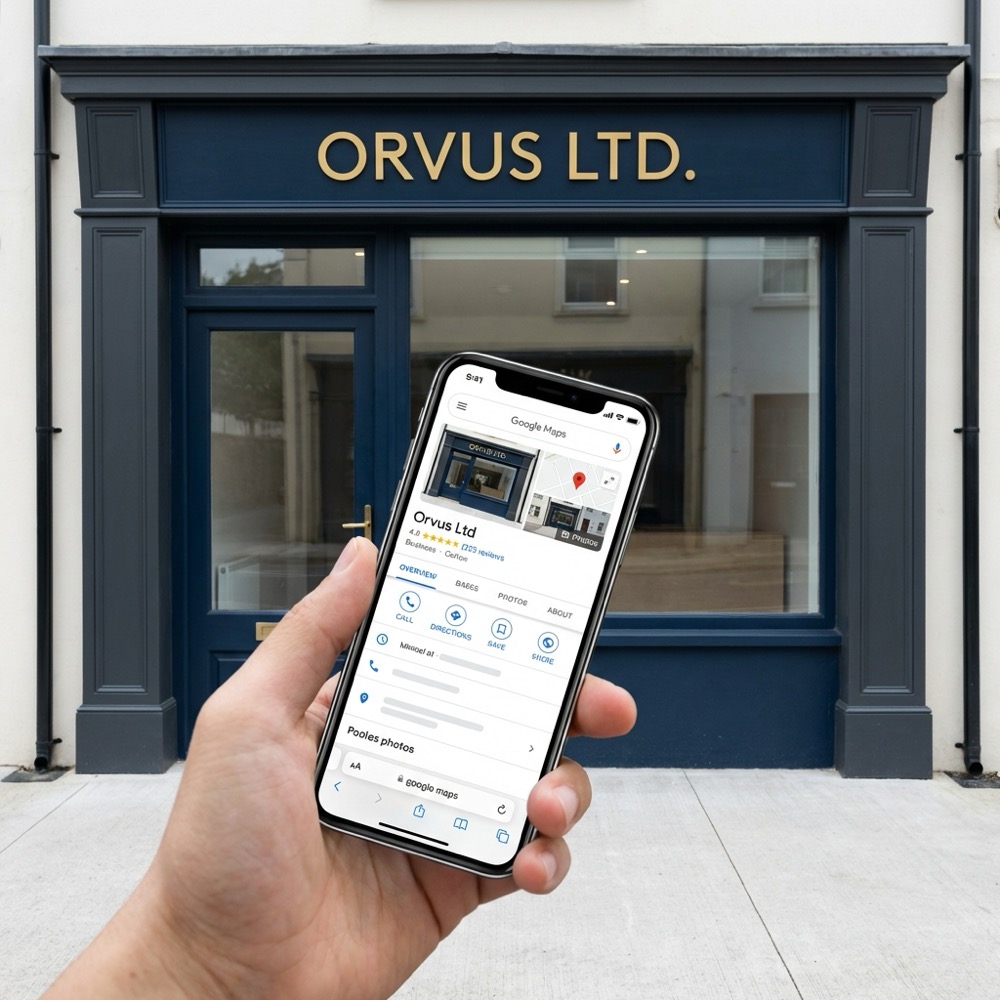
Completeness increases the chance the profile matches a search and that a user takes action. Filling the services and products sections, uploading photos, and publishing regular posts all help generate richer search snippets and measurable actions in GBP Insights. Use completeness as a prioritised item in your local content architecture. Google Business Profile Help
Best practices for services and products sections
Map each service or product entry to user intent. Use short, clear titles and concise descriptions. Where possible link service items to local landing pages on your site that match the same phrasing. This alignment helps convert profile clicks into measurable website events. Verify and manage your Business Profile; Insights and features
Guidance for photos, cover images and regular posts
Photos should be clear, relevant and reflect your actual location or offerings. Use descriptive filenames and captions that match user intent without keyword stuffing. Publish Google Posts on a cadence that your team can sustain to keep content fresh and to trigger engagement events visible in Insights. Google Business Profile Help
Routine for naming, resizing and uploading photos to a Business Profile
Use consistent filenames for easier audit
Reviews and reputation: how review signals affect ranking and choice
Role of reviews in local ranking and consumer decision making
Reviews influence both how customers choose and the signals Google uses for prominence. Managing review volume, recent reviews and overall sentiment is an important part of local reputation work. Industry research also shows reviews are a primary trust signal for local consumers. Local Consumer Review Survey 2024
Review generation and response best practices
Ask for reviews from customers after a completed transaction using a clear, simple process. Respond to reviews promptly and professionally, addressing concerns and clarifying facts when needed. Keep review solicitation ethical and avoid incentives that could create policy risk. Google Business Profile Help
Handling negative reviews and review gating risks
Responding to negative feedback publicly shows customers you take issues seriously and can reduce churn. Avoid review gating, which filters who can leave a review, because it conflicts with policy and can harm trust. Use structured follow ups and internal workflows to turn unhappy customers into problem resolutions. Business Profile guidelines
Citations, on site local signals and the technical side of local SEO
Why consistent citations matter and how to audit them
Consistent citations across directories and important local sites correlate with higher visibility. Audit your citations by listing the most visible sources and checking for exact NAP mismatches. Prioritise fixes where the largest audience or search visibility is at stake. Local Search Ranking Factors
On site local signals to check: schema, landing pages, NAP
Local landing pages that mirror profile categories, include clear local contact details and implement local business schema.org markup help search systems connect profile and site signals. Ensure canonicalisation and hreflang (if used) are correct so local pages do not compete with each other. Local Search Ranking Factors - correlation study
Technical issues that can block local visibility
Common blockers include duplicate listings, wrong service area settings and unresolved canonical conflicts. These issues can reduce impressions and make measurement noisy. Regular technical audits reduce the chances of silent breakpoints in local visibility. Business Profile guidelines
Verify your profile and fix any inconsistent NAP entries, then link GBP Insights to analytics so you can measure whether subsequent changes move business outcomes.
Measure and test: using GBP Insights together with website analytics
Which GBP Insights metrics matter and why
Track search versus discovery impressions, direct searches, calls and direction requests in GBP Insights. These metrics show how users find and act on your profile and they inform what to test next. Using Insights as a primary signal reduces guesswork when prioritising local changes. Verify and manage your Business Profile; Insights and features
How to tie profile activity to website conversions
Combine GBP Insights with site analytics by tagging local landing pages and recording conversion events that originate from profile clicks. Use consistent naming for events like local_lead or profile_call so reporting is clear and actionable. This linkage shows which profile changes move business outcomes. Google Business Profile Help
Designing small experiments to test changes
Test one change at a time, for example updating services or adding photos for a subset of locations, and measure the difference in impressions or calls against a short control period. Keep experiments narrow and measurable so you can scale or stop based on data rather than assumption. Verify and manage your Business Profile; Insights and features
Decision criteria: how to prioritise actions for your business
Assessing impact versus effort and team constraints
Use a simple impact versus effort matrix to decide whether to fix verification, focus on reviews, clean citations or improve landing pages. Factor in team constraints and measurement readiness when choosing tasks. This pragmatic prioritisation keeps the work achievable. Local Search Ranking Factors
When to prioritise verification, reviews, citations or on site changes
If the profile is unverified, verification is the highest priority. If citations are inconsistent and you have many conflicting listings, citation cleanup should be early. If the profile is verified but engagement is low, invest in photos, services and review generation. Use measurement to validate the choice. Business Profile guidelines
Using measurement to adjust prioritisation
Set short review cycles where you reassess using GBP Insights and site analytics. If a change does not move the tracked metrics after a reasonable test window, reallocate effort to the next priority. Measurement first reduces wasted work. Verify and manage your Business Profile; Insights and features
Common mistakes and pitfalls that reduce local visibility
Frequent setup errors that block profiles
Typical blockers include inconsistent NAP, incorrect category selection and failing to verify the profile. These setup issues often cause the largest, fastest wins when corrected. Business Profile guidelines
Over-optimisation and policy risks
Keyword stuffing in the business name, fake reviews and review gating are policy risks that can lead to listing suspension or loss of visibility. Stick to accurate representation and ethical review practices. Google Business Profile Help
Mistakes in measurement and attribution
Poor event naming, failing to tag local landing pages, or not exporting Insights regularly can make it impossible to know which local changes matter. Fix measurement early so later tests are interpretable. Verify and manage your Business Profile; Insights and features
Practical 30 to 90 day playbook: tasks, owners and metrics
A compact 30 day checklist for quick wins
Days 1 to 30 focus on verification, NAP fixes and basic profile completion. Assign owners for verification, a citations audit and initial photo uploads. Track verification status, search impressions and calls as primary early metrics. Business Profile guidelines
60 day improvements and automation ideas
Days 31 to 60 concentrate on review workflows, services mapping, and citation cleanup. Implement lightweight automation for review requests and photo posting where feasible to reduce recurring work. Measure discovery impressions and conversion events to validate progress. Google Business Profile Help
90 day testing calendar and measurement handover
Days 61 to 90 run structured tests: a service description update in week 7, a photo cadence change in week 9, and a review generation pivot in week 11. Handover measurement to a steady reporting cadence that includes GBP Insights and site conversion events so the team can act on results. Verify and manage your Business Profile; Insights and features

Three example scenarios: retail storefront, service area business and multi location brand
Retail storefront playbook with measurement targets
For a retail storefront prioritise accurate address, storefront photos, hours, services and a visible reviews workflow. Measure direction requests and in store related conversion events to see movement in local demand. Google Business Profile Help
Service area business priorities and footprint considerations
Service area businesses should verify the profile, define a realistic service footprint and add clear service descriptions. Track calls and booked appointments as primary conversions and test smaller footprint changes to understand distance effects. Business Profile guidelines
Multi location considerations and when to centralise vs decentralise
Multi location brands often need a balance between centralised policy and local execution. Centralise naming conventions and measurement, but decentralise photo capture and review solicitation so each location reflects local reality. Use coordinated tests to learn what scales. Local Search Ranking Factors
Conclusion: next steps and a measurement first approach
How to pick the first experiment
Start with the highest blocker: if unverified, verify first; if citations are inconsistent, run a targeted cleanup; if engagement is low, add photos and service detail. Define a single metric to observe for the test and a short deadline. Verify and manage your Business Profile; Insights and features
When to escalate to deeper audits or external support
If basic fixes do not move the metrics after controlled tests, consider a diagnostic that looks at search architecture, on site signals and measurement. External partners can help build growth systems that reduce recurring work in many cases. Google Business Profile Help
Keeping a sustainable cadence for profile maintenance
Assign regular checks for reviews, photos and posts and export Insights monthly. Small, measurable improvements compound over time when combined with clear measurement and consistent execution. Verify and manage your Business Profile; Insights and features

There is no fixed timeframe. Small changes can affect impressions within days, but measurable impact on visibility depends on testing, the competitive local market and consistent tracking.
You can define service areas on a single profile, but for businesses with distinct locations a separate profile per physical site is usually clearer for users and measurement.
More reviews can improve trust and prominence signals, but quality, recency and ethical collection practices matter more than volume alone.
References
Want this kind of work done for your business?
We build and run AI-powered marketing and automation. 15 minutes, honest assessment.
Book a call