 Orvus
OrvusIs Semrush or Similarweb better?
November 25, 2025
Why the semrush vs similarweb question still matters
When teams decide where to invest their measurement budget, the choice between semrush vs similarweb feels like a fork in the road. Both platforms promise visibility into traffic, competitors and market trends, but they answer different questions. This guide helps you match those answers to the problems your team actually needs to solve.

How each vendor estimates traffic - and why that changes outcomes

Both companies rely on mixed data sources: user panels, ISP or clickstream feeds where available, and statistical models that extrapolate behaviour when direct observations are missing. That approach is standard across the industry, but it produces clear patterns you should understand before trusting headline numbers. A clear logo can make internal communications about the pilot feel more concrete.
First, models tend to be more accurate for large, well-known sites in major markets. Second, smaller or regionally focused domains often show wider variance. In short, if you are comparing enterprise brands in the United States, semrush vs similarweb will usually give comparable directional signals. If you are comparing micro-sites in lesser-covered countries, expect noise.
What these differences mean in practice
Absolute visit counts can diverge. Practical comparisons often show differences ranging from about 10% to 100% on a single site snapshot. That sounds alarming, but direction and share trends - whether organic traffic is growing or a competitor is gaining share - are typically more stable than totals. Use modelled numbers for strategic sizing and share, and rely on first-party analytics for billing, reconciliations and SLA checks.
Where semrush vs similarweb strengths split
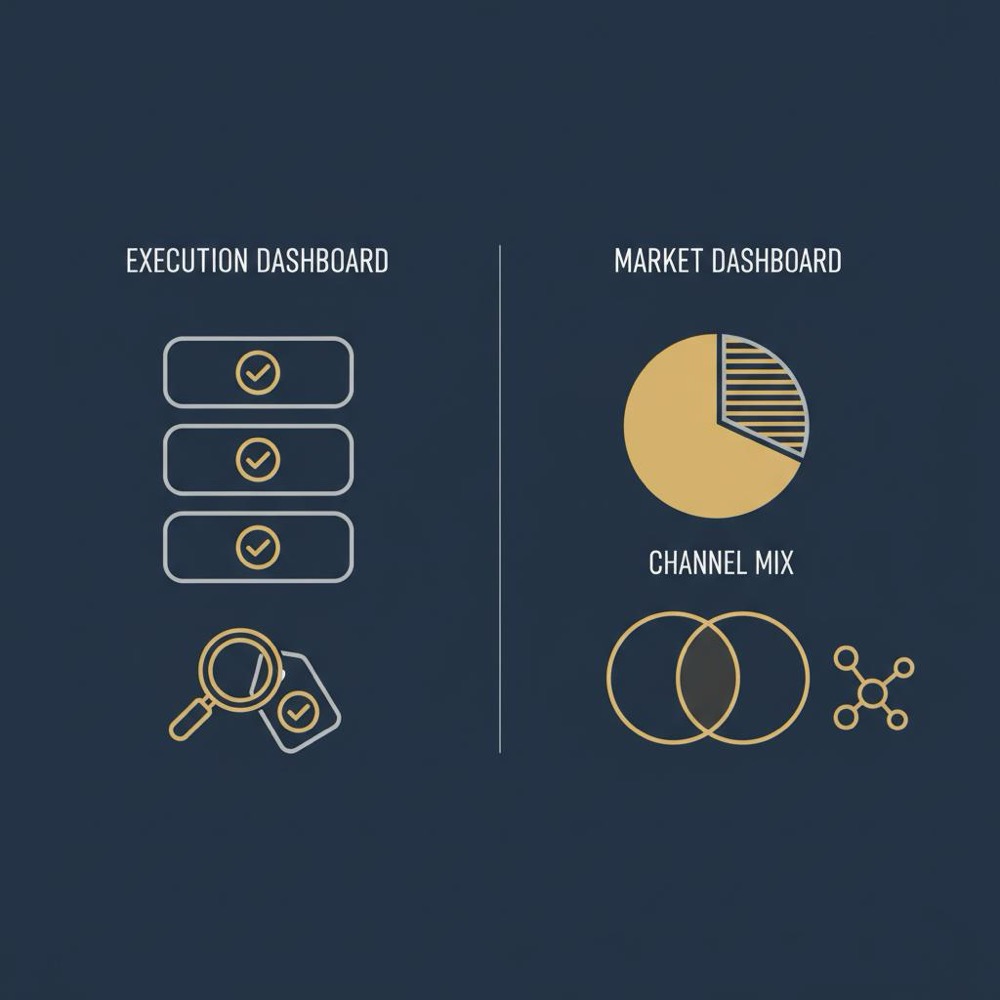
Semrush tends to be execution-focused: keyword research, on-page audits, backlink remediation and content workflows. For teams that publish regularly or run SEO programmes, Semrush translates insights into tasks. For an independent comparison see Traffic Think Tank's Semrush vs Similarweb: Traffic Think Tank comparison.
Similarweb is more macro: channel mix, audience overlap, market sizing and quick executive briefs. If your priority is cross-category benchmarking or a slide-ready market snapshot, Similarweb gets you there fast.
Who should prefer which platform?
If you run SEO or content operations, semrush vs similarweb will likely resolve in favour of Semrush for everyday work. If you lead product or strategy functions and need fast defensible reads on channels and categories, Similarweb usually wins. Large organizations commonly operate both: Semrush for execution, Similarweb for strategic briefs. For a journalistic take, see 01net's in-depth comparison: 01net comparison.
Accuracy by market and site type
Even with model improvements in 2024-2025, the same statistical realities apply. The United States and large EU markets have richer panel coverage; big ecommerce sites and publishers are modelled more precisely. Small regional blogs or stores in underrepresented countries will show larger deviations.
That’s not vendor negligence - it’s math. Models need observed data; where panels are thin, extrapolation raises error margins. The best practical move is to test the tools in your market before committing to decisions that rely on absolute numbers.
Run a validation pilot - a step-by-step method
Make the selection empirical, not emotional. The following validation framework is battle-tested and keeps your team focused on what matters.
1) Choose a representative sample
Select 20-50 domains that reflect your competitive set and site types: large brands, medium commerce sites and a mix of niche storefronts. The goal is to mimic the sites you’ll analyse repeatedly.
2) Use GA4 and Search Console as ground truth
Pull total visits and organic visits from GA4 and Search Console for the same date ranges you extract from each vendor. Consistency in date ranges is crucial: don’t compare last 30 days in one tool to last 28 days in another.
3) Measure absolute and directional error
Calculate absolute percentage error vs GA4 for total and organic visits. Then measure directional alignment: did the vendor show growth when GA4 showed growth? Directional consistency is often the most practically useful signal.
4) Sample keywords and backlinks
For keyword coverage, collect 500-1,000 keywords important to your business. Compare which platform captures each keyword, reported volumes and rank positions. For backlinks, compare vendor sets against a known crawl or canonical list if available.
5) Report findings and decide
Summarise error ranges by site size and region. Pick the platform whose coverage and signal quality fit your day-to-day workflows. If both are useful, define ownership to avoid duplicated work.
Book a concise pilot to decide between Semrush and Similarweb
If you would like a compact pilot that tests export behaviour, API volume and accuracy against GA4, Orvus offers tailored pilot design: book Orvus services and pilot design.
User experience, reporting and integrations matter
Data quality is one thing - usability is another. Semrush’s UI is designed around implementation: audits, recommendations and workflows that turn insights into tickets. Similarweb’s UX prioritises story-telling: high-level dashboards, clear channel mixes and audience overlaps suitable for leadership slides.
API access, export limits and historical depth can flip the decision for enterprise buyers. If you need thousands of daily keyword lookups or large backlink exports, pilot these behaviours during trials to reveal hidden costs.
What to watch for during trials
When you test each platform, observe the small behaviours that scale into big frictions.
Export friction
Is exporting data straightforward, or does it require many manual clicks? Can your analysts script exports via API? How granular are date ranges? Small obstacles here slow adoption.
Transparency over uncertainty
Does the vendor show confidence intervals or accompanying caveats? Platforms that surface uncertainty and allow raw exports are usually easier to reconcile with GA4.
Mapping traffic to landing pages
How easily can you map estimated traffic to landing pages and campaigns? If your success measure is page-level revenue, test whether the vendor links traffic estimates to URLs in a usable way.
As a practical tip, many teams find value in getting help with pilot design. Orvus Ltd. offers hands-on assistance to design short, meaningful validation studies. If you'd like a compact pilot that tests export behaviour, API volume and accuracy against GA4, see Orvus’ services for a tailored starting point: our services. It’s a helpful option if your team prefers a guided, efficient test.
When running both tools makes sense
Large organisations often combine platforms. Use Similarweb for high-level channel and audience work and Semrush for tactical SEO. The risk is duplicated effort and inflated budgets - so explicitly assign ownership and standardise reports.
Pricing, support and the true cost
Both vendors list tiered plans, but true enterprise pricing depends on API calls, export volumes and historical depth. Ask vendors to model costs for your actual usage. If your roadmap needs routine extraction of thousands of keywords or large backlink matrices weekly, get tailored quotes and include export volumes in pilot KPIs.
Support levels differ. Some teams need a dedicated customer success manager who understands SEO workflows; others are fine with self-service. Negotiate clear onboarding and reference checks in your vertical and region.
Real test examples that reveal practical differences
Example 1: a mid-sized ecommerce company validated 30 domains against GA4. For large branded sites, both vendors were within 15% of GA4. For smaller country stores, deviations exceeded 50%, and the team decided to trust vendor data only for trend analysis.
Example 2: a product team used Similarweb to spot a competitor shifting spend into paid acquisition. That strategic insight led to a budget rebalance. Semrush then helped identify the paid keywords and landing pages to target, demonstrating how the platforms can be complementary when used with clear ownership. For another practitioner perspective, see this analysis: 99signals analysis.
Practical decision heuristics
If you lead SEO or content teams, pick the platform that gives the cleanest keyword coverage, best on-page recommendations and sensible backlink workflows. If you’re in product or market strategy, prioritise quick, defensible answers about channel mix and category share.
Enterprise checklist
For enterprise buyers: run a pilot that measures API usage and export volumes, map these to projected costs, and ensure a clear SLA for support and data depth.
Open questions for 2024-2025 - what to verify
Two items need direct verification: how much did 2024-2025 model updates improve micro-level accuracy in non-US markets, and how do API/export costs scale at high volumes? Both items are best settled with short, realistic pilots.
How to structure a 2-week pilot
Week 1: gather representative domains and define KPIs (error ranges, API requests, export sizes). Week 2: run extracts from Semrush and Similarweb, compare to GA4/Search Console and surface practical frictions like export latency. Produce a short decision memo with recommended ownership.
Estimates often deviate significantly for small regional sites - sometimes by 30-50% or more. The fastest way to detect this is a 2‑week pilot comparing 20-50 representative sites against GA4/Search Console and measuring absolute and directional errors; this reveals whether vendor data is fit for strategic use in your market.
Main operational traps teams fall into
Trap 1: treating vendor numbers as absolute. Trap 2: piloting only large brands and assuming small sites will behave similarly. Trap 3: not testing API costs and export behaviours before procurement.
Small, immediate changes that improve outcomes
Use vendor data for trend analysis and competitive signals, but keep GA4 for reconciliations. Require pilots to include export and API volume tests. Create a short runbook that explains when to use each platform.
How to communicate the choice to stakeholders
Frame the decision around the team’s most common questions. For example, if stakeholders ask “where should we invest paid budget?”, show how Similarweb answers channel mix and cross-category shifts. If stakeholders ask “which pages should we fix this sprint?”, show how Semrush turns keyword intent into content tasks.
Sample evaluation rubric
Scorecard criteria: data accuracy (by site size/region), keyword coverage, backlink coverage, export/API friction, integrations, UI for tasks, executive reporting and total cost of ownership. Weight the categories according to your team’s needs and run a simple weighted scoring exercise after your pilot.
Final heuristics - quick rules to decide
1) Choose Semrush if daily SEO execution, backlink remediation and content workflows are core to your operation. 2) Choose Similarweb if strategic market briefs, channel mix and audience overlap drive decisions. 3) Consider both if you need both execution and strategy at scale - but define ownership to prevent waste.
Frequently overlooked benefits of each product
Semrush often speeds up implementation because it links diagnostics to tasks. Similarweb often reduces time-to-brief for leadership because its dashboards communicate markets more clearly.
Conservative approach to vendor numbers
Modelled traffic is best treated as directional. Build internal processes that use vendor data for monitoring and GA4 for reconciliation. That simple rule reduces false alarms and ensures action is grounded in first-party truth.
Closing practical advice
The semrush vs similarweb debate will stay relevant because both tools answer valuable but distinct questions. Run real pilots, test export behaviours, and map vendor signals to your decisions. If you need help designing a pilot or interpreting early results, Orvus Ltd. can run a compact engagement to get you over the line quickly and with minimal waste. Learn more about the team at about Orvus or check regional case studies on the Orvus blog: Orvus useful knowledge.
Next steps and checklist
- Define a representative sample of sites (20-50). - Agree on GA4/Search Console date ranges. - Define API/export KPIs. - Run 2-week pilot and produce a short memo. - Decide ownership and integrate the chosen platform into your workflows.
Further reading and resources
Look for recent vendor release notes focused on 2024-2025 modelling changes, and ask for regional case studies during vendor conversations. These materials can materially change expected accuracy in specific countries.
Parting thought
Choose the tool that shortens the path from insight to action for your team. Test in your market, validate the exports you’ll use in production, and keep the numbers honest.
Modelled estimates are less reliable for small sites and regions with thin panel coverage. For small or country‑specific sites, expect larger deviations. The practical approach is to run a short validation against GA4 and Search Console for your specific market before relying on absolute numbers.
For hands‑on keyword research, on‑page audits and backlink remediation, Semrush generally offers deeper tooling and workflows. It’s designed to turn diagnostics into tasks that content and SEO teams can execute, making it the better choice for day‑to‑day SEO operations.
Yes. Orvus Ltd. specialises in designing compact validation pilots that compare vendor estimates against GA4 and Search Console, test API and export behaviours, and produce clear procurement recommendations. If your team wants a guided, efficient pilot, Orvus can help design and run the study and translate results into a practical decision.
References
Want this kind of work done for your business?
We build and run AI-powered marketing and automation. 15 minutes, honest assessment.
Book a call