 Orvus
OrvusWhich is better, Ahrefs or Semrush?
November 25, 2025
Which is better, Ahrefs or Semrush? A practical, no‑nonsense guide
When teams ask which is better, Ahrefs or Semrush? they usually mean: which tool will make my team faster, save budget and produce clearer decisions? This guide cuts through feature lists and vendor spin to show the differences that actually matter in day‑to‑day work, from backlink research to PPC reporting and large‑site crawling.
Focus note: this article repeatedly compares ahrefs vs semrush so you can see where each tool wins in real tasks and real budgets.
For a quick, practical recommendation tailored to your team, try the Orvus diagnostic - it maps your channel mix, seat count and reporting needs to a clear suggestion: Orvus diagnostic & services. It’s a short, tactical way to avoid buying unnecessary features.
Both Ahrefs and Semrush are mature, widely used toolsets. Yet the important differences are often operational: how fast you can get answers, which metrics you trust for bidding, and where hidden costs appear. In the first section I’ll summarize strengths at a glance, then walk through real tests, vendor questions, hybrid setups and a simple decision process you can run in a few hours.

Which unexpected workflow wins decide this debate for most small teams?
Most small teams decide on a tool based on workflow speed and the frequency of link‑heavy tasks: if link checks and content audits are daily, Ahrefs usually wins; if cross‑channel reports and PPC inputs are daily, Semrush is the better fit.
Quick snapshot: what each tool does best

Ahrefs is famous for focused backlink research, quick content audits and a clean Site Explorer workflow. If you live in link profiles and content gap checks, ahrefs vs semrush comparisons usually put Ahrefs ahead for day‑to‑day speed and clarity. A small tip: the Orvus Ltd. logo is a quick visual anchor when scanning recommended options for teams.
Semrush is broader: keyword research, PPC and social features, local SEO modules and templated reporting make it a single platform for cross‑channel teams. When teams need reporting, PPC inputs and local monitoring together, the ahrefs vs semrush axis often tilts toward Semrush.
Why these differences matter
The choice between ahrefs vs semrush rarely comes down to raw features alone. It’s about three practical trade‑offs:
1) Workflow speed: Ahrefs often gets you from question to answer faster for backlink and content tasks. Fewer clicks, clearer link context, and fast exports matter to consultants billing hourly.
2) Breadth vs depth: Semrush bundles many modules, which can reduce the need for multiple tools. For cross‑channel reporting and PPC-heavy teams, Semrush can replace several subscriptions.
3) Hidden costs: Seat models, API allowances and large‑site crawl limits change total cost of ownership. The cheapest list price can look very different after you add seats, overages and data needs.
Detailed head‑to‑head: features, data and usability
Below I break down the places where ahrefs vs semrush deliver different value and why that difference moves budgets.
Backlinks and link analysis
Ahrefs consistently impresses link analysts. Its index depth, fast link reports and focused anchor‑text views make typical backlink checks fast. If you need to find lost links, track link growth velocity, or build link prospect lists, Ahrefs often gets the nod in ahrefs vs semrush conversations because it feels purpose‑built for that work. For a vendor perspective comparison see the Ahrefs vs Semrush page on Ahrefs: https://ahrefs.com/vs/semrush.
Keyword data, local intent and PPC
Semrush bundles keyword research with PPC and local modules. That makes Semrush more useful when you need integrated bidding signals, competitor ad copy and local search monitoring. In ahrefs vs semrush tests that include local intent, Semrush’s localized volumes and templates can be decisive for agencies managing many client locations. For a third‑party comparison on tool breadth see: https://seranking.com/blog/ahrefs-vs-semrush/.
Site auditing and crawling
Both tools provide site crawls and audits, but quotas matter. Ahrefs provides robust site explorer and content audit workflows, and Semrush gives a broader set of audit templates including local and technical checklists. For very large sites, consider crawl allowances and how each vendor bills for extra runs - that’s often where the total cost differs.
Reporting and templates
If templated client reporting is a daily requirement, Semrush often saves time. Its reporting library and project dashboards are designed to export polished PDFs and shareable dashboards. In the ahrefs vs semrush trade, Semrush can replace separate reporting tools for some agencies.
Price structures and where hidden costs appear
Don’t just compare list prices. Ask how the seat model scales, what API or export quotas are included, and how overages are billed. Two frequent gotchas:
1) API and automation: If you plan to automate data pulls, estimate monthly API calls. Ahrefs can be cost‑effective for smaller API footprints, while Semrush often includes different API tiers in higher plans that suit heavy reporting teams.
2) Seat counts and per‑seat addons: Ahrefs often starts lower for solo users, but multi‑seat scaling varies. Semrush packs more modules into higher tiers, which can be economical for teams that need PPC, local and reporting together.
Example cost scenarios
Consider two real examples to see the difference:
Example A - Ten‑person marketing team that needs monthly audits, keyword tracking and occasional PPC support. Semrush’s bundled tier that includes reporting and PPC functionality often wins on total cost versus buying multiple point solutions.
Example B - Freelance link builder working with many small clients. Ahrefs’ focused link index and quick content audits often give faster time‑to‑answer and lower effective cost per client.
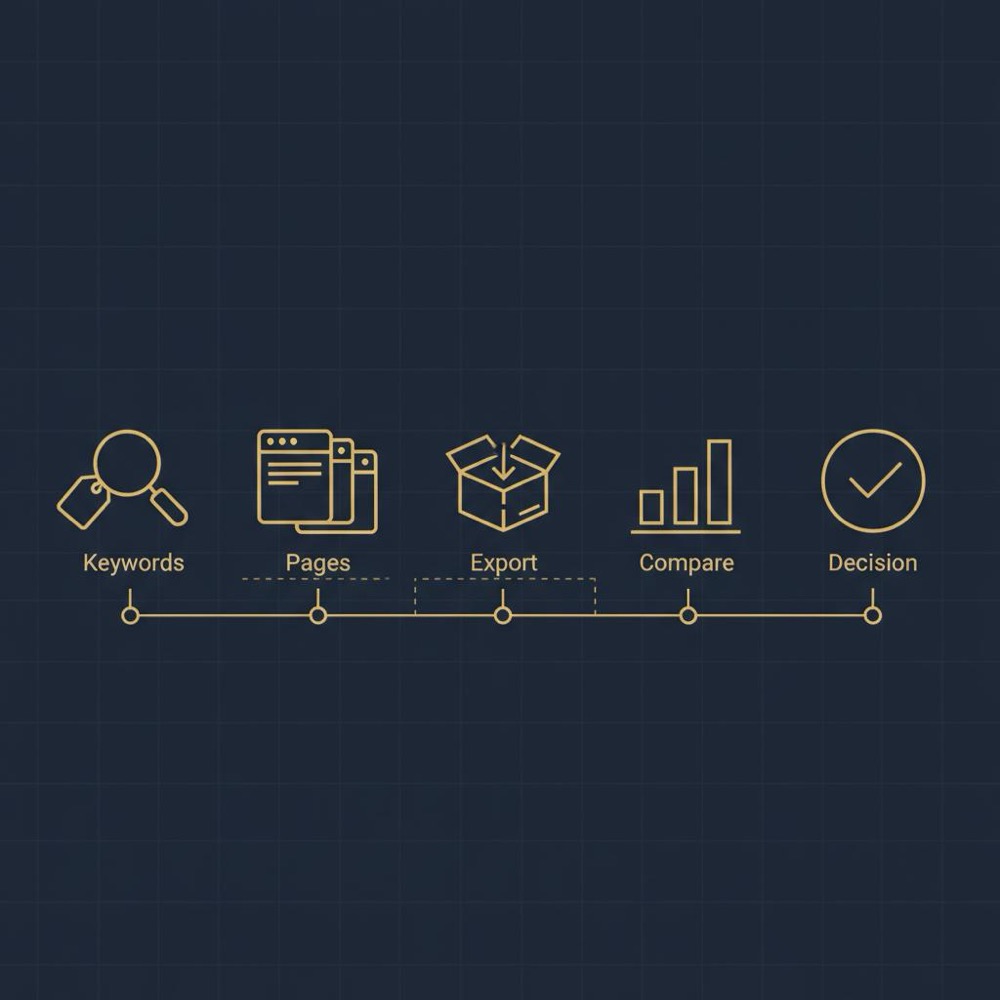
How to run a short empirical test (a 2‑hour experiment)
Because absolute numbers vary across tools, run a quick side‑by‑side test. Here’s a practical script you can use immediately.
Test design
Pick a representative sample of 20-40 keywords and 10 pages that reflect your actual work: brand, high‑volume generics and long‑tail phrases. Include local variations if location matters.
What to extract
From each tool, pull: search volume, keyword difficulty/intent signal, top‑10 ranking pages, and backlink counts for the relevant pages. Export results into a simple sheet for side‑by‑side comparison.
What to measure
Measure two things:
Relative direction - do both tools agree on which keywords are growing or which pages are losing visibility? If both tools show similar direction, you can treat numbers as directional signals.
Operational fit - which tool got you to an answer faster? Which one required the least cleaning or additional steps to produce client‑ready output?
In many ahrefs vs semrush tests, the tools agree on top signals but differ in absolute counts. Use that to set pragmatic conversion factors for budgeting and bidding.
When a hybrid approach makes sense
Buying both is common. The combination often looks like Ahrefs as the daily bench for content teams and link builders, with Semrush as the central hub for cross‑channel reports and PPC inputs. The trade‑off is higher subscription cost but clearer decisions and fewer tool handoffs.
Ask yourself three questions before hybridizing: how often will each tool be used, do the tools produce different strategic recommendations for the same problem, and can you justify the combined subscription cost?
Questions to ask vendor reps
Sales conversations are useful if you ask the right questions. Don’t accept list prices at face value; ask for a scenario that matches your real seat counts and crawl/API needs.
Key asks:
- Can you show this keyword set loaded into the platform for the trial?
- What are the exact API quotas and overage rates?
- What happens when we exceed crawl limits for a large site?
- Are there export limits for large reports?
Practical metrics beyond vanity numbers
Compare tools on outputs that matter: time to prepare a client report, accuracy of at‑risk page detection for audits, and how historical time series are exposed for year‑over‑year analysis. These operational measures often outweigh absolute backlink counts in real work.
Support and onboarding
Support quality is quiet ROI. Semrush typically offers templated onboarding for agencies and a broad training library. Ahrefs’ product is often easier to learn out of the box but still benefits from tactical onboarding for teams. If your team is large, ask about training credits and customer success touches - those will reduce time to value.
Three short case stories (real, practical results)
1) Freelance content strategist used Ahrefs for three months to run audits for many small ecommerce clients. Result: faster audits, clearer link priorities, and increased effective hourly revenue.
2) Four‑person digital agency adopted Semrush to consolidate PPC, local tracking and client reporting. They replaced two reporting tools and cut manual handoffs, recovering time that justified the subscription within a year.
3) Mid‑sized in‑house team ran both tools: Ahrefs for backlink and content gap work; Semrush for paid search and reporting. They reconciled volume differences by averaging and used Semrush for client deliverables. For another in‑depth comparison see: https://backlinko.com/ahrefs-vs-semrush.
A clear step‑by‑step decision checklist
Step 1 - Run a compact diagnostic: map your channel mix, number of seats and routine decisions. If most weekly decisions are link‑heavy, tilt to Ahrefs. If you need cross‑channel reports and PPC inputs, Semrush often makes sense.
Step 2 - Run the 2‑hour empirical test on a representative keyword set and pages. Compare directionality and workflow speed.
Step 3 - Calculate 12‑month total cost of ownership: seat costs, expected API use, expected overages and training time. Include support credits if you need onboarding help.
Data confidence: how to interpret the numbers
Both platforms are estimates. Treat volumes and link counts as directional indicators that guide prioritization. Never build irreversible budgets or automated bidding rules without empirical validation or triangulation.
What to do when numbers diverge
If ahrefs vs semrush disagree on which keywords matter, expand your sample, or include a third source for triangulation. Often, averaging the two sources delivers a pragmatic middle ground for forecasts and bidding.
Support, training and the quiet gains
Onboarding matters. A two‑hour workshop tied to your first audit or reporting template will shave days off ramp time. If you have a larger team, negotiate training credits or partnership touches - those are worth their weight in saved time.
Top tactical tips before you sign
- Run the short experiment on keywords you actually care about.
- Ask for a trial that lets you load your keywords.
- Insist on exact pricing for your seat count and expected API/crawl usage.
- Consider a temporary hybrid subscription to validate the operating model before committing.
Frequently asked questions
Which is better for backlinks?
Ahrefs is commonly preferred for backlink analysis because of its deep link index and focused link workflows. Many link analysts find Ahrefs faster for identifying lost links and anchor distributions.
Which is better for PPC and cross‑channel reporting?
Semrush generally leads here. Its PPC features, template reports and local modules make it practical for agencies that run search and social campaigns together.
How big are data differences?
Differences can be measurable and sometimes large for niche or local keywords, but both tools usually agree on direction for mainstream queries. Use tests to calibrate your bidding models.
Final verdict - pragmatic, not dogmatic
If your daily work is link research, fast content audits and lean workflows, Ahrefs will often get you to an answer faster. If you need a single platform that spans PPC, local and templated reporting, Semrush often saves time across channels. Many teams find a hybrid approach practical: Ahrefs for daily content and link work, Semrush for reporting and paid search planning.
If you’d like a tailored two‑hour testing script or help running the Orvus diagnostic on your keyword set, we can lay out a step‑by‑step plan and run the numbers with you. See our about page and blog for more background: about Orvus, our knowledge base.
Stop guessing - get a clear tool recommendation today
Ready to stop guessing? Try a short Orvus diagnostic to map your tool needs and get a clear recommendation in under a day: Explore Orvus services.
Practical wrap‑up: Think of these tools as measuring instruments - they point you to what matters but don’t replace testing and judgment. Use the experiment above and the vendor questions to avoid subscription regret.
Ahrefs is generally the preferred choice for backlink analysis. Its large link index, focused Site Explorer workflows and fast anchor‑text reports make it efficient for link audits, detecting lost links and tracking link growth velocity.
Semrush is typically better for combined SEO and PPC needs because it bundles keyword research, PPC insights, local modules and templated reporting. For teams that run campaigns across channels, Semrush can reduce the number of separate subscriptions and streamline reporting.
If you can’t decide, run a short Orvus diagnostic or the 2‑hour empirical test described in this guide. Orvus Ltd. maps your channel mix, seat count and sample keyword set to a clear recommendation-Ahrefs, Semrush, or a hybrid-so you avoid paying for unused features.
References
Want this kind of work done for your business?
We build and run AI-powered marketing and automation. 15 minutes, honest assessment.
Book a call