 Orvus
OrvusWhat is the most effective tool for SEO? A pragmatic look at SEMrush workflows
February 9, 2026
The article is aimed at ecommerce and service businesses with limited bandwidth. It explains the core SEMrush modules, a recommended sequence for discovery, validation steps you can run quickly, and decision criteria for prioritizing keywords and link targets. The aim is to help teams build repeatable routines rather than one off guesses.
What competitor analysis tools do and where SEMrush fits
Why competitor analysis matters for growth systems
Competitor analysis in search helps teams map where demand exists, where competitors capture attention, and where gaps are available to target. For operators and founders this is part of search architecture and measurement work that links discovery to prioritization. When time and analytics are constrained, a focused discovery flow can quickly surface candidate opportunities without pretending to be a final answer.
SEMrush is positioned as a discovery and comparison platform that bundles multiple signals into workflows meant for rapid audits and candidate generation, rather than a single source of truth. The platform documentation frames Domain Overview, Organic Research, Keyword Gap and Backlink Gap as the core entry points for competitor analysis, and that framing helps teams run consistent scans across domains SEMrush features page

How to treat discovery tools versus sources of truth, semrush competitor analysis
Discovery tools give leads. They do not replace first party analytics or a manual SERP check. Treat outputs as candidate lists that must be validated. That keeps work high leverage and reduces wasted production or outreach effort.
For teams building growth systems, competitor analysis should feed measurement and testing plans. That means capturing candidate keywords and link prospects, then using small experiments or short pilots to confirm intent and potential before scaling content or outreach budgets. Read more on our blog.

Core SEMrush modules to know: Domain Overview and Organic Research
What Domain Overview surfaces and when to run it
Start audits with Domain Overview to get a quick snapshot: high level traffic estimates, main organic competitors, and visibility trends. This module is useful for triage when you need to compare multiple domains and choose which ones to audit deeper. Use the module to create a short list of target domains for further analysis SEMrush features page

Domain Overview signals are estimates. They are directional and work best for prioritizing which domains warrant deeper work. If you have access to Search Console or analytics, use those to validate the initial signal before creating content or allocating paid tests.
How Organic Research adds depth for competitor audits
Organic Research shows a domain level view of top organic keywords, landing pages, and trends over time. It helps explain what pages drive visibility and where competitor content clusters occur. This deeper layer makes it possible to pick specific pages to mirror, improve, or target for conversion optimization.
Because Organic Research includes keyword trends and landing page data, it is the natural follow up after Domain Overview. Use the outputs to build short lists of candidate keywords and to flag pages that merit manual review in the live SERP.
Using Keyword Gap and Backlink Gap as a practical workflow
Running side by side keyword comparisons
One efficient sequence is Domain Overview, then Organic Research, then Keyword Gap and finally Backlink Gap. That sequence moves from broad to specific and produces candidate keywords and link prospects in a compact workflow Search Engine Journal guide
Start a compact diagnostic and consultation
Run the sequence as a short discovery sprint and capture candidate keywords and link prospects for validation before you allocate content or outreach time.
Keyword Gap lets you run side by side comparisons across multiple domains and quickly surface shared, unique and missed keyword opportunities. Use it to generate a prioritized list of candidate keywords for deeper intent checks and analytics reconciliation SEMrush Blog guide to Keyword Gap and Backlink Gap and see the tool documentation SEMrush KB: How to use Keyword Gap.
When using Keyword Gap, extract the columns you need and export smaller lists. That reduces noise and makes follow up validation faster for teams with limited bandwidth.
Using Backlink Gap to surface link targets and overlap
Backlink Gap compares referring domains to show overlap and unique link sources. It helps you spot targets that link to competitors but not to you, creating a shortlist for outreach or PR efforts. Independent reviews note these lists are useful but should be qualified before outreach PCMag review. See the Backlink Gap tool Backlink Gap.
Use Backlink Gap as a discovery step. For each candidate domain, run a quick manual check of the linking page and its context before adding it to outreach sequences. That step avoids wasted outreach and keeps your link building more selective.
Strengths and common data limits of SEMrush
Where SEMrush tends to perform well
SEMrush is often strong on dataset breadth and integrated workflows that let teams move quickly from domain scans to candidate lists. That convenience is useful when building repeatable discovery routines for content and outreach planning Moz comparison of tools and comparison coverage like Semrush vs Ahrefs.
For teams focused on search architecture, the ability to run the same modules across multiple competitors helps create consistent inputs to measurement and prioritization systems.
Known limitations and how reviewers frame accuracy
Independent reviews emphasize that estimated traffic and volume figures are approximations that should be validated with first party analytics. Treat the numbers as directional, not absolute truth PCMag review
When comparing outputs across tools, expect dataset differences. The useful approach is to triangulate: use SEMrush for discovery, then confirm with Search Console, analytics, and manual SERP inspection.
How to validate SEMrush outputs: combine analytics, SERP checks, and intent review
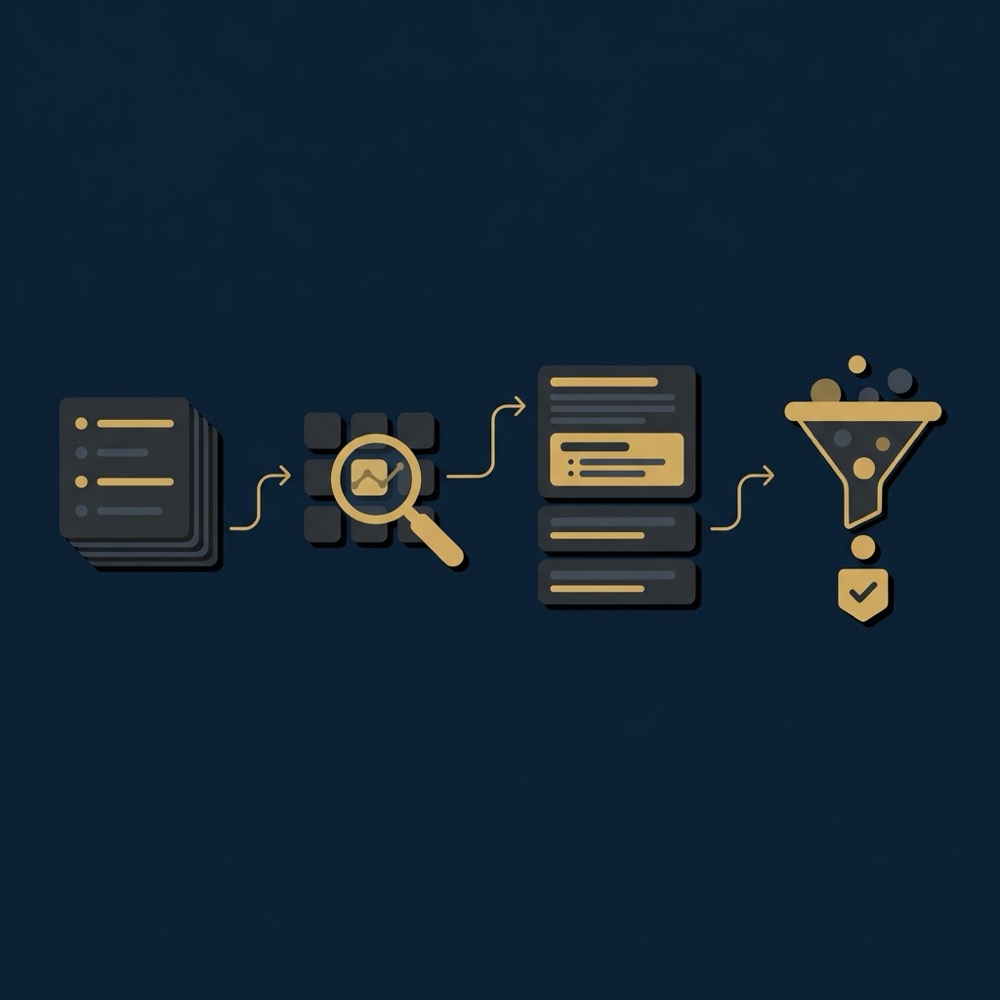
Using site analytics and search console to confirm opportunities
When SEMrush surfaces candidate keywords, reconcile them with your Search Console and analytics data. Look for existing impressions, clicks, and landing pages that match the candidate list. This validation helps you avoid prioritizing terms with no real traffic potential.
If you lack full analytics coverage, note which candidates at least show impressions in Search Console. These are higher probability leads than terms that have zero presence in first party data Industry Analytics Report
SEMrush is a high leverage discovery and comparison platform that helps generate candidate keywords and link targets; its outputs should be validated with first party analytics and manual checks before major investment.
SERP inspection and manual intent checks
Open a sample of candidate keywords in a browser and inspect the live SERP. Check intent, presence of SERP features, and the type of pages that rank. A term with strong informational intent may not match a bottom of funnel conversion goal, while a product term with transactional intent may be higher priority.
Simple heuristics help when analytics are thin: prefer candidates that show matching intent and landing page templates you can replicate, or that match funnel pages where conversion data exists.
Decision criteria: prioritizing keywords and link targets
Effort versus reward and funnel fit
Prioritize by funnel fit, search intent, and likely effort to rank or earn a link. For content work, match keywords to pages that map to a funnel stage and to conversion potential. For link targets, prefer referring domains that serve your audience and that are realistically reachable with your outreach model.
Combine SEMrush signals with conversion data and channel mix clarity. That reduces the chance of investing in visibility that does not produce meaningful outcomes for your business Search Engine Journal guide
Measurement signals to prefer when prioritizing
When choosing between candidates, prefer signals tied to revenue attribution. That includes existing landing pages with conversion events, search terms that align with product or service pages, or link prospects that sit on topical, high relevance pages. These signals tend to yield clearer prioritization when resources are constrained.
Where uncertainty remains, run short experiments. A focused content test or a small outreach pilot can reveal whether a candidate moves the metrics you care about before a larger commitment.
Common mistakes and how teams trip up with SEMrush data
Overreliance on raw volume and traffic estimates
Teams often treat estimated volumes and traffic numbers as exact and then prioritize purely by those figures. That can misdirect work when estimates do not align with first party signals or with actual search intent PCMag review
Corrective step, validate candidate lists against Search Console or analytics before writing new pages or launching paid tests. If that data is missing, use small experiments to test actual potential.
Blind outreach from Backlink Gap lists
Another common error is taking Backlink Gap lists straight to outreach without manual qualification. That creates low response rates and wasted effort. Always inspect the linking page and context, and prioritize targets that are relevant and reachable SEMrush Blog guide to Keyword Gap and Backlink Gap
fast internal qualification checklist for link prospects
use for quick triage
Build a small internal checklist or an automated report that flags the highest priority prospects based on relevance and accessibility. That can be a lightweight internal automation or spreadsheet that reduces manual time and improves outreach quality.
Practical scenarios: step by step examples for ecommerce and service sites
Small ecommerce: finding low competition product keywords
Step 1, run Domain Overview on two or three niche competitors to see which product categories show visibility. Step 2, open Organic Research for a chosen competitor page to gather top landing pages and keywords. Step 3, run Keyword Gap between your site and the competitor to surface missed product terms. Use the exports to build a short list of candidate product pages for intent checks and analytics reconciliation SEMrush features page
Step 4, validate candidates against Search Console and your conversion events. If a term shows impressions and a matching landing page exists, prioritize a content adjustment or product page tweak. If data is lacking, run a small content test targeted at a subset of SKUs to measure click and conversion response.
Service business: mapping competitor content gaps to funnel pages
Step 1, use Domain Overview to find competitors that appear to capture local or niche demand. Step 2, use Keyword Gap to find content topics competitors rank for that you do not. Step 3, map those topics to funnel pages, such as awareness blogs, solution pages, or contact pages, and score them for funnel fit and effort.
Step 4, use Backlink Gap to find domains linking to competitor service pages and qualify them with the internal checklist. Run a small outreach pilot to two or three high priority sites to validate response rate and potential referral traffic, or check our services.
Measure outcomes after implementation. Track impressions and clicks in Search Console, monitor conversion events tied to the tested pages, and compare results to the expected funnel impact. Use that data to expand or deprioritize targets.
Conclusion: where SEMrush adds the most value and next steps
When to rely on SEMrush and when to seek additional validation
SEMrush adds the most value as a discovery and side by side comparison platform. It is high leverage for generating candidate keywords and link prospects that feed measurement and testing work. Independent reviews recommend treating estimates as directional and validating with first party analytics before committing large resources PCMag review
For constrained teams, the practical next step is a compact diagnostic that runs the core modules, exports focused lists, and validates the top candidates with Search Console and quick SERP checks. Learn more about us here or visit our homepage.
A short checklist for teams ready to run a first competitor analysis
Run Domain Overview for competitors. Use Organic Research for pages and keyword context. Run Keyword Gap for missed opportunities. Run Backlink Gap for overlap and unique referring domains. Validate top candidates with Search Console and a manual SERP intent check.
Keep the process iterative. Use short pilots to test whether a candidate delivers on the metrics you care about before full scale content or outreach efforts.
Keyword Gap compares keyword profiles across domains and highlights shared, unique, and missed opportunities so you can build a focused list of candidate keywords for manual intent checks and analytics validation.
Treat SEMrush numbers as directional estimates. Validate candidates with Search Console and analytics or run small tests before making significant investments.
Prioritize by funnel fit, available conversion signals, and likely effort. Use short validation experiments and a compact diagnostic to reduce wasted work.
If you want a compact diagnostic or help building a repeatable validation workflow, consider a short consultation to map the highest leverage next steps in your context.
References
- https://www.semrush.com/features/domain-overview/
- our services
- our knowledge base
- https://www.semrush.com/kb/28-keyword-gap
- https://www.semrush.com/analytics/gap/backlinks/
- https://www.pcmag.com/reviews/semrush
- https://www.brafton.com/blog/seo/semrush-vs-ahrefs/
- https://www.industryanalyticsreport.com/state-of-seo-tools-2024
- about Orvus
- orvus.net
Want this kind of work done for your business?
We build and run AI-powered marketing and automation. 15 minutes, honest assessment.
Book a call