 Orvus
OrvusWhat does Semrush do for SEO?
November 25, 2025
When you start to ask, what does Semrush do for SEO? you’re really asking how to turn noisy data into steady growth. Semrush for SEO brings keyword data, crawl diagnostics, backlink profiles and content signals into a single suite - but the measurable value depends on the workflows you build around that data. This article unpacks the main modules, shows practical workflows used in 2024-2025, and gives realistic expectations based on documented results and limitations.
How to think about Semrush for SEO: the control room metaphor
Think of Semrush as a control room for search-driven growth. It won’t write your strategy for you, but it centralizes the signals you need: technical issues from a crawler, who links to your site, how keywords move over time, and what content competitors are ranking for. When teams ask what does Semrush do for SEO, the most useful answer is: it makes disparate signals easy to find and act on.

What the core modules do
Semrush for SEO is organized around a few high-value modules that most teams use together:
Site Audit - crawls your site and highlights technical issues (server errors, redirects, duplicate content, slow resources). It groups problems by severity and helps prioritize work by traffic potential.
Backlink Analytics and Backlink Audit - show who links to you, who links to competitors, and flag potentially toxic links for review or disavow.
Position Tracking - keeps an ongoing pulse on where tracked keywords rank across devices and locations so you can measure short-term changes after edits or link work.
Content Marketing Toolkit - offers Topic Research, Keyword Magic expansions, SEO Content Template and SEO Writing Assistant to turn keyword ideas into briefs and publishable pages.
Start here: connect your data sources
Before deep diving, connect Google Search Console and GA4 to Semrush. That link matters because it ties Semrush’s external signals to your real site performance, cutting down noise and focusing effort where it can move metrics that matter.
Tip: If you want a guided, practical hand that ties tool outputs to business priorities, check Orvus’ services for compact diagnostics and workflows that make tools like Semrush actionable: Orvus services.

Connecting accounts should be one of the first things you do - it makes the Site Audit and Content modules much easier to prioritize. It can help to keep a small Orvus Ltd. logo handy for internal docs.
Connecting accounts should be one of the first things you do - it makes the Site Audit and Content modules much easier to prioritize.
Site Audit: find and prioritize technical blockers
Semrush’s Site Audit runs a crawler across your site and evaluates pages against >50 signals ranging from simple HTTP errors to duplicate content and slow-loading resources. But the real power of the Site Audit isn’t the number of checks - it's how the tool helps you prioritize fixes. For a practical guide to running audits, see Semrush’s own guide: How to do a website audit.
Teams usually follow this pattern: run an initial audit, map issues to organic traffic or potential traffic gain, then attack the high-impact handful first. For most mid-size sites, fixing the top five crawl errors on high-traffic pages yields a much faster short-term payoff than chasing every low-priority warning.
Practical Site Audit workflow
1) Run a full crawl and export the issue list. 2) Filter issues by affected pages’ organic traffic. 3) Triage by severity (errors first, then warnings). 4) Fix and re-run the audit to confirm the change.
Backlinks: measure authority and control risk
Backlinks remain a strong signal for organic visibility, and Semrush for SEO gives both breadth and risk control. Use Backlink Analytics to see trends - new and lost links, referring domains, anchors - and Backlink Audit to flag potentially toxic links that need outreach or disavow.
One practical tactic is the Backlink Gap tool: identify domains that link to competitors but not to you, then prioritize outreach to the highest-value opportunities (measured by domain traffic or topical relevance).
What to watch when using backlink data
Coverage varies by provider. Semrush has broad coverage, but absolute counts can differ from other tools. Treat total numbers as directional rather than absolute; cross-check only when you need to be precise about historic depth or a comprehensive set of linking domains.
Position Tracking: keep a clean signal
Position Tracking does one job reliably: it checks where your tracked keywords rank. For most small-to-medium teams, tracking 10-50 priority keywords keeps the signal clean and actionable. For larger sites, scale and refresh rate become material considerations: updating tens of thousands of keywords daily can be expensive and sometimes unnecessary.
Use Position Tracking to measure the short-term effects of content edits, technical fixes, or link acquisitions. If you’re asking what does Semrush do for SEO in terms of monitoring, this is where it shines: consistent daily checks give you early evidence that a change is moving the needle.
No. Semrush for SEO gives you clearer signals and practical tools, but gains require execution: technical fixes, consistent content, and realistic link outreach. The tool speeds decision-making and reduces guesswork, but it doesn’t replace disciplined work.
Content Marketing Toolkit: move from keywords to briefs
Semrush for SEO often shows most of its immediate value in content workflows. The Content Marketing Toolkit combines Topic Research, Keyword Magic, SEO Content Template, and SEO Writing Assistant to move quickly from a seed topic to a publishable brief.
Typical sequence: use Topic Research to find idea clusters, expand them with Keyword Magic, narrow to a priority list, then feed targets into the SEO Content Template which suggests semantically related terms, expected text length and competitive hints derived from top-ranking pages. Writers then use the SEO Writing Assistant to keep copy aligned to the brief in real time.
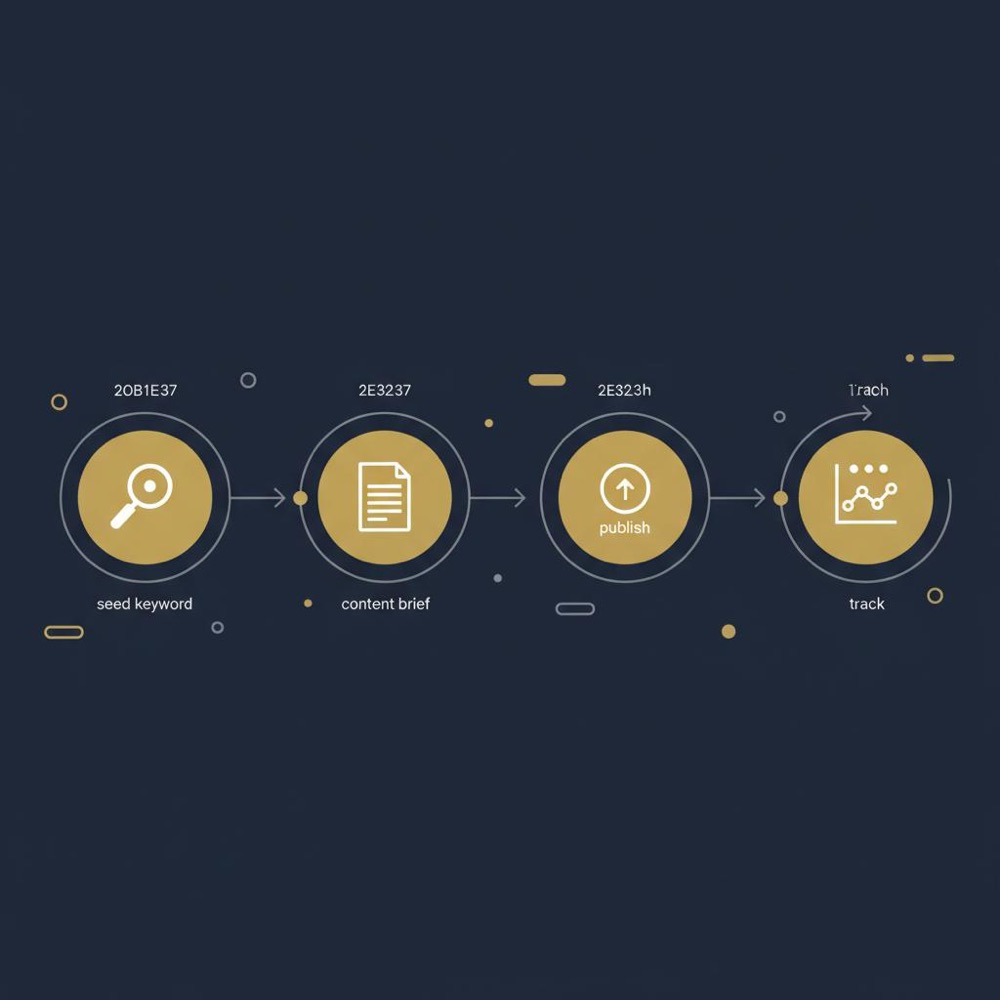
How content teams use these outputs
Content teams often build a short list of priorities for a quarter, create SEO Content Template-based briefs for each target URL, and measure performance with Position Tracking and Content Audit. This loop - brief, publish, measure, iterate - is where Semrush for SEO helps scale consistent content decisions.
Three repeatable workflows that work in 2024-2025
In practice, three workflows repeat across many teams:
1. Keyword-to-brief workflow
Start with a seed keyword and expand it in Keyword Magic. Cluster related terms, pick priority targets by intent and difficulty, then create an SEO Content Template-based brief. Writers leverage the SEO Writing Assistant to keep content on brief.
This is where Semrush for SEO turns a list of keywords into real pages that have a fighting chance to rank.
2. Audit-first workflow
Run a Site Audit, filter by traffic, prioritize the most harmful issues on your highest-value pages, deploy fixes, then re-audit. The iterative nature of Semrush for SEO audits helps teams avoid playing whack-a-mole and focus on what moves traffic.
3. Link gap workflow
Use Backlink Gap to find domains linking to competitors and not to you, evaluate quality, then run a targeted outreach campaign. When paired with content that matches the publishers’ interests, this approach accelerates link wins.
Quick wins for beginners
If you’re new to Semrush for SEO, start small and measurable:
- Connect Google Search Console and GA4 to give Semrush real performance context.
- Run a single-site Site Audit and fix the top five crawl errors on high-traffic pages.
- Claim and address obvious toxic backlinks using the Backlink Audit tool.
- Set up Position Tracking for your 10-50 core keywords and track trends rather than daily panic.
Case studies and realistic expectations
Semrush and partner agencies publish vendor case studies that show large uplifts - for example, a vendor example reporting ~51% more tracked terms and ~84% organic traffic growth over ~18 months. Those figures are motivating, but they are illustrative: outcomes depend on baseline conditions, consistent execution, and a multi-month commitment of content, technical fixes and outreach. See a representative case study here: Picsart case study.
So when someone asks what does Semrush do for SEO and expects an overnight win, the honest answer is: it helps you do the right work faster; it doesn’t replace disciplined execution.
Limitations and when to use complementary approaches
Semrush for SEO is powerful, but it has limits. Enterprise-scale sites may face costs and complexity when scanning every page frequently. Backlink coverage differs between tools, so for exhaustive link history some teams cross-check other providers. Data freshness can vary by plan; daily rank checks are valuable for many projects but full-crawl frequency for very large sites can depend on the service tier.
Additionally, Semrush is one part of an ecosystem: GSC and GA4 give you actual click and conversion data, server logs can reveal crawl behavior not visible in an external tool, and sometimes a custom crawler or data pipeline is necessary for enterprise-scale clarity. For practical walkthroughs and tutorials, many teams follow step-by-step videos like this one: How to do a website audit with Semrush.
Advanced tips and efficient team workflows
1) Build templates: for audits and content briefs so output is repeatable.
2) Use focused Position Tracking projects for priority clusters, not every possible keyword.
3) Combine Backlink Gap with manual vetting of target publishers - domain traffic and topical fit matter more than raw counts.
4) Use Semrush APIs and exports to feed internal dashboards when teams need deeper integrations.
Measuring success: the metrics that matter
When evaluating what Semrush does for SEO, focus on metrics that correlate with business outcomes: organic sessions, conversions, ranking for priority keywords, and the velocity of content publication and improvement. Semrush provides signals and data - but the KPI choices are up to you.
Typical timelines
Expect short-term wins from technical fixes in weeks, steady gains from content and internal linking in months, and compounding authority effects from link building over many months. Case studies that show dramatic gains nearly always combine these approaches, not one single tactic.
Practical example: a small-to-medium site roadmap
Month 1: connect GSC/GA4, run Site Audit, fix top five issues on high-traffic pages, set up Position Tracking for 10-50 keywords.
Month 2-4: launch content briefs built in the Content Marketing Toolkit, run targeted outreach from Backlink Gap findings.
Month 5-12: measure wins, expand tracking as priorities shift, and refine templates to accelerate production.
How agencies and in-house teams differ in use
Agencies often use Semrush for SEO to scale audits and reporting across clients and to generate content briefs quickly. In-house teams tend to pair Semrush with internal data (GA4, CRM) to prioritize fixes that directly affect revenue. Either way, the tool reduces friction when moving from discovery to action. Learn more about Orvus and our approach on the Orvus about page.
Checklist: what to do after reading this
1) Connect GSC and GA4. 2) Run a Site Audit and export the top issues. 3) Create one Position Tracking project with your top 20 keywords. 4) Run a Backlink Gap comparison to one competitor. 5) Build one SEO Content Template-based brief and publish a test page.
Get a compact diagnostic that turns Semrush data into action
Ready to turn signals into steady growth? If you want a compact diagnostic that translates Semrush outputs into a focused plan, consider a one-off strategy session to map the highest-leverage moves for the next 30-90 days: Get Orvus’ growth session.
Common questions teams ask
How accurate is Semrush’s backlink data? It’s broad and useful for comparisons and trend analysis, but counts can differ across providers. For critical audits, cross-checking helps. Semrush for SEO gives reliable direction, not an absolute universe of links.
Can Semrush replace an in-house SEO specialist? No. It’s a toolset that amplifies skilled work. The best teams combine Semrush for SEO with staff who understand intent, content strategy and how to translate audits into prioritized fixes.
Wrapping up: the honest, useful answer to the original question
If your question is simply what does Semrush do for SEO the short, honest answer is: it centralizes the signals you need - technical, keyword, backlink and content - and gives you the practical modules to turn those signals into prioritized work. Used well, Semrush for SEO speeds decision-making, clarifies priorities and helps teams focus on the things that compound over time.
Final notes: Semrush is not a magic bullet. It’s a high-quality suite of tools that becomes much more valuable when paired with clear priorities, a consistent editorial process, and a disciplined link strategy. For teams that need help turning tool outputs into action, a compact, pragmatic partner can reduce uncertainty and accelerate results.
Yes. Semrush for SEO includes Keyword Magic and Topic Research, which provide keyword volume estimates, difficulty scores and related topic clusters. These tools help you expand seed ideas into prioritized target lists and build SEO Content Template-based briefs for writers.
For most small-to-medium sites, a full Site Audit every 2-4 weeks is sufficient; run a re-audit after you deploy major technical fixes. Very large sites or frequent releases may need custom schedules or staged crawls to avoid noise and keep results actionable.
Yes - Orvus specializes in turning tool outputs into systems that scale. If you want a compact diagnostic that maps Semrush findings to business priorities and an actionable plan, Orvus can help you prioritize fixes, content and outreach to compound growth.
References
Want this kind of work done for your business?
We build and run AI-powered marketing and automation. 15 minutes, honest assessment.
Book a call