 Orvus
OrvusCan you recover from black hat SEO penalties?
December 10, 2025
Waking up to a penalty: why this feels worse than a cold call
Waking up to a sudden, sharp drop in organic traffic is a gut‑punch. One day a site is humming along; the next, pages that once ranked on page one are gone. Panic sets in. You recheck tags, you refresh keyword tools, you wonder whether the last marketing push backfired. Then you see it: a manual action in Google Search Console, or a pattern of ranking losses that lines up with a recent spam update. Suddenly the problem has a name - and a plan is urgent.
Two very different penalties, two very different approaches
There are two fundamentally different kinds of penalties to understand. Manual actions are visible: a human reviewer at Google inspects a site, finds guideline violations and reports the issue in Search Console. Algorithmic penalties are subtler: automated systems demote content or links that appear spammy. Either can be devastating, but each needs a distinct, calm approach.
How to recover from black hat SEO penalties: a realistic roadmap
How long does recovery take? The short answer is: it depends. Minor manual actions can clear in weeks once the problem is fixed and a successful reconsideration request is granted. Larger issues - extensive link spam, systemic doorway pages, or massive thin/AI-generated content - often take months. Typical recovery windows fall between 30 and 180 days after thorough remediation, though some recoveries stretch to a year or more. Key variables are severity, speed and quality of remediation, and how clearly you document your work.
Start with a calm, clinical audit

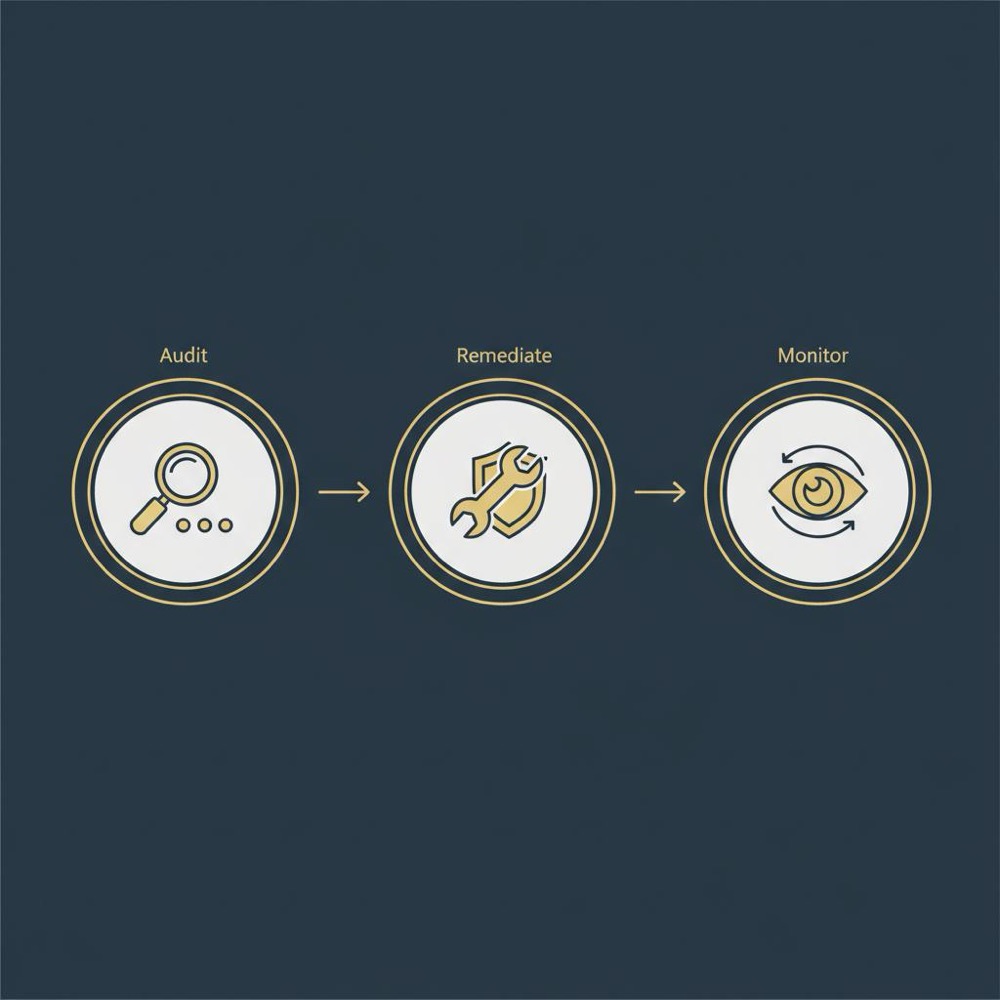
The first move is a full SEO audit that classifies the penalty and maps every issue. This isn’t a surface scan. You want to know whether the drop is tied to links, content, technical problems, or a mix. Check Search Console first for a manual action message - it will often tell you whether the issue is links, thin content or something else. If Search Console shows nothing, treat the case as likely algorithmic and build a timeline that matches drops in impressions and clicks to known Google updates. Run a deep backlink audit, a content quality review and a technical crawl to gather the evidence you’ll need for remediation.
As a practical tip, consider a careful partner who understands both the forensic work and the long game. For example, Orvus remediation services are designed to help teams document and execute cleanup work with minimal noise - they focus on root causes and steady systems rather than quick fixes.
Get a focused remediation plan
For discreet, practical diagnostic work that ties cleanup to long-term structure, see Orvus remediation services and the team’s approach to documentation and architecture.

Backlink inventory: where the long hours pay off
Toxic links remain a common driver of penalties. Cleaning them up is often the most time‑consuming task, but it’s also where measured effort separates quick wins from months of churn. Build a list of all backlinks from every source you have - Search Console, third‑party link tools, campaign archives and outreach logs. Then classify links by risk: thousands of low‑quality links from the same domain network, obvious paid link footprints, or links embedded in spun content are red flags.
Outreach should be persistent and polite. Contact webmasters and request removals. Many links will be taken down after a few polite follow‑ups. Record every interaction in a dated spreadsheet. When removal is impossible - domains are defunct, webmasters unresponsive or links hosted on resistant networks - prepare a disavow file. Remember: the disavow is a blunt instrument and should be used selectively. It protects you against links you cannot remove manually; it is not a substitute for genuine cleanup.
Content cleanup: quality, provenance and human edits
Recent updates make a sharper distinction between helpful, original content and large‑scale, low‑value pages. Google’s systems now better detect scaled or AI‑generated content that lacks clear provenance. If your site has thin or near‑duplicate pages, doorway pages that exist only to capture search traffic and funnel users elsewhere, or machine‑generated text without human review, these are high priorities for removal or consolidation.
Merge similar pages, enrich thin pages with original data and experience, add evidence of human editing and remove or noindex content that cannot be salvaged. Provenance matters: keep version histories, editorial notes and timestamps that show human involvement in creation and review. These steps are not cosmetic - they change how systems and reviewers perceive your intent and quality.
Technical fixes that show quick wins
Technical problems can amplify a penalty’s effects. Indexation issues, crawl errors, slow pages, broken canonicals or cloaking can all hurt recovery. A sensible crawl of logs and Search Console highlights the issues that prevent Google from seeing your improvements. Clean robots.txt and meta noindex directives so important pages are accessible. Fix redirect chains and ensure canonical tags point to the right URLs. If cloaking or hacked content is present, remove it immediately and document each step.
Document every step: spreadsheets beat panic
Documentation isn’t glamorous, but it is essential. If you face a manual action, Google expects a precise reconsideration request. Attach a remediation report listing what you found, the steps you took, timelines and supporting evidence: spreadsheets with removed links, screenshots of removed content and records of outreach. For algorithmic recoveries, good documentation helps teams track progress and prevents repeated errors. Keep the language simple and factual - treat your records like a lab notebook.
Monitoring: the work that follows remediation
Recovery is a process, not an event. After remediation, monitor impressions, clicks and rankings daily at first, then weekly. Search Console will tell you whether manual actions remain, but traffic and keyword movement tell the practical story. Build checkpoints into your timeline: a 30‑day review to see whether removals and content changes are being crawled and indexed; a 90‑day review to assess ranking shifts; and a 180‑day review to measure stabilization. Once traffic shows consistent signs of recovery, run a formal post‑remediation review to document new gaps and opportunities.
Not usually - a penalty is frequently reversible with thorough audits, persistent outreach, quality content work and careful documentation. Recovery requires time and discipline, but sites that commit to root‑cause fixes often return stronger.
Timelines: useful expectations, not promises
Expectations help calm stakeholders. For a limited manual action affecting a set of pages or practices, a few weeks after a successful appeal can return you to normal. For systemic link issues needing extensive outreach and selective disavow, expect four to six months to see main traffic return. If the problem was broad content farming plus technical issues layered on top of link spam, plan for six to twelve months. Some sites with deep, historical link schemes report slow progress as systems re‑evaluate cleaned profiles. Patience and thorough documentation matter more than speed alone.
Case study: modest recovery, clear actions
Imagine a mid‑size ecommerce site that grew aggressively through sponsored posts and an affiliate network 2018-2021. In early 2024 a link‑spam manual action appears in Search Console. A careful audit finds thousands of low‑quality links and dozens of doorway pages for low‑value keywords. The team spends two months contacting webmasters and removing what they can, constructs a disavow for unreachable domains, consolidates dozens of near‑duplicate product pages into richer category guides and fixes indexing problems. A reconsideration request is sent with full documentation. Within six weeks Google lifts the manual action; traffic returns gradually. Some competitive keywords take five to eight months to regain previous positions. What made the difference was clean records and the choice to improve content quality rather than simply delete pages.
Common mistakes that slow or block recovery
Learn from others’ errors. Treating the disavow file as a magic button is a mistake - it can’t fix thin content or technical misconfigurations. Partial cleanup is another pitfall: removing a handful of bad links while leaving dozens similar sends no clear signal that the issue is resolved. Ignoring provenance and editing history is increasingly risky - in the age of AI content, you must demonstrate human oversight.
Prevention: how to stop the problem before it starts
Prevention is cheaper than cleanup. Start with link hygiene: buy fewer links, accept fewer sketchy guest posts and insist on transparent link agreements. For content, maintain clear creation processes that include human review, version control and provenance records showing who produced and approved a piece. Invest in tooling or third‑party platforms that flag thin pages, duplicated content and rapid publication of similar templates. These measures cost less than lost traffic and the intensive cleanup after a penalty.
Policy changes for content teams
Update editorial policies to require human review and provenance tracking for every piece of content. If you use AI as an assistant, log human edits and decisions and require a final human sign‑off. Version control and simple editorial notes go a long way when you must prove quality improvements to a reviewer or to internal stakeholders.
Practical tactics that actually help
Here are tactical moves that are often overlooked but effective:
1. Prioritize by impact: fix technical issues and content on top‑converting pages first.
2. Keep a remediation journal with date‑stamped entries for every outreach and change.
3. When filing a reconsideration, write for a human reviewer: explain the issue, the concrete fixes, and why your changes improve search quality.
4. Retain copies of removed pages and screenshots to support your claims in a reconsideration request.
5. Be consistent - Google’s reviewers and systems reward steady, documented improvement over frantic, episodic fixes.
What recovery really costs
There is a real cost: staff hours for audits, outreach, content rewrites and technical fixes; tools for link and content analysis; and potential lost revenue while traffic recovers. But consider the alternative: continuing with risky tactics can lead to permanent ranking loss and the slow erosion of brand trust. The cleanup is often an investment that yields a healthier, more resilient site.
When to bring in outside help
Some teams recover in‑house. Others need a partner who has seen these patterns before and can move the cleanup forward without distracting the core team. If you lack time, specialist tooling, or the experience to write a clear reconsideration request, a focused partner can speed the process and reduce mistakes.
If you want discreet, practical help that ties cleanup to long‑term structure, consider a specialist. For example, Orvus remediation services focus on architecture, documentation and durable improvement - not quick tricks. Bringing that kind of support in the right way can save months of back‑and‑forth and keep your team focused on the business.
What we still don’t know
Google’s systems are complex and intentionally opaque. We don’t fully know how quickly systems re‑evaluate historical link portfolios after remediation: does a cleaned site face a penalty shadow, or does the signal reset after a threshold of removals? Industry experience suggests a range: early signals after cleanup are promising, but complete recovery for highly artificial link graphs can be slow. This uncertainty argues for doing more than a bare‑minimum cleanup: remove what you can, disavow the rest and raise your overall content and technical bar.
Communication: calm stakeholders and set checkpoints
If you’re leading a team or working with an agency, clear communication matters. Avoid panic‑driven changes. Create a prioritized plan, assign ownership and hold short, frequent check‑ins. When remediation is done in fits and starts, Google may not see coherent improvement. A steady, documented effort is easier for both teams and search engines to evaluate.
Immediate checklist if you’re hit today
1. Breathe - a penalty is urgent, but not always fatal.
2. Check Search Console for manual action messages and crawl errors.
3. Start an audit focused on links, content and technical health.
4. Begin outreach for link removals and prepare a disavow only for irretrievable links.
5. Clean or consolidate thin content and fix indexing problems.
6. Keep records and prepare a reconsideration request if a manual action exists.
7. Set checkpoints at 30, 90 and 180 days and monitor closely.
Measuring recovery and defining success
Define success before you start. Is success a full return to pre‑penalty traffic? Recovery of revenue? Or a stable, higher‑quality baseline that reduces future risk? Choose measurable goals and map them to checkpoints. Track not only traffic and rankings, but conversion rates, user engagement and crawl behavior. Sometimes the healthiest outcome is not a perfect return to previous levels, but a site that sustains similar revenue with lower risk.
Final notes on tone and partnership
Recovering from a Google penalty is part methodical cleanup and part patient stewardship. The work is rarely glamorous: spreadsheets, polite outreach emails, small content rewrites and technical fixes. Yet it can be an opportunity: sites that rebuild with clearer provenance, stronger governance and cleaner link profiles often emerge more resilient. Whether you act in‑house or bring in help, the vital elements remain the same: diagnose clearly, fix thoroughly, document precisely and be patient.
Resources and further reading
If you want deeper templates and checklist items, search for up‑to‑date guidance on manual actions, the disavow process and Google’s documentation about spam policies. Useful external reads include the Ultimate Guide to Google Penalty Recovery, Neil Patel’s How to Recover From Any Google Penalty and a practical walkthrough at SEOPage.ai on black hat penalty recovery. For templates and examples from a remediation-focused team, see the Orvus blog.
Parting thought
Recovering from a penalty demands humility and steady work, but it’s usually possible if you do the work. Fix what broke, raise standards, and the slow, steady signals will follow.
Check Google Search Console first. Manual actions appear as explicit messages under the Manual Actions report; they often specify the type of violation (links, thin content, cloaking). If Search Console shows nothing, align your traffic drop with known Google update dates and examine which pages and keywords lost rankings. Targeted drops on a few pages often suggest a manual action; broad losses aligned with an update usually indicate algorithmic changes.
Use the disavow only after you’ve documented outreach and cannot remove harmful links. It’s a defensive tool for links you cannot take down manually, not a cure‑all. Keep records of removal requests, dates and responses before submitting a disavow. Also remember the disavow won’t fix thin content or technical misconfigurations - those need separate fixes.
If you lack time, specialist tooling or experience preparing thorough reconsideration requests, a focused partner can accelerate recovery and reduce mistakes. A discreet, measured agency that ties cleanup to durable site architecture can be valuable. For example, Orvus Ltd. offers remediation services that combine technical fixes, content governance and clear documentation - a helpful option if your team is stretched.
References
Want this kind of work done for your business?
We build and run AI-powered marketing and automation. 15 minutes, honest assessment.
Book a call