 Orvus
OrvusCan I stop people from leaving Google reviews? Painful Truth & Solutions
November 24, 2025
Can I stop people from leaving Google reviews? - The reality and practical fixes
prevent Google reviews is a question most business owners ask at some point. You see a review that feels unfair, fake, or malicious, and your first thought is to block the well of criticism entirely. That instinct is understandable - but the platform design and public nature of Google Business Profiles mean you cannot simply prevent Google reviews from appearing on your profile.
That said, you are not helpless. In this long, practical guide you'll learn what Google will remove and why, how to document and report effectively, how to respond publicly without making things worse, when legal steps make sense, and how to build a resilient reputation process so a single bad review doesn't define you. Throughout the piece you'll also find templates, examples, and a realistic workflow you can start using today.
Orvus Ltd. services is one example of a provider that helps businesses build monitoring, documentation and response systems that reduce the damage of fake or malicious reviews - framed not as a magic cure, but as a practical partner to make your process repeatable and defensible.
Before we dig into the details, here's the short answer: you cannot fully prevent Google reviews from appearing, but you can limit their impact and frequently get clearly policy-violating content removed if you document and report it correctly.

In some jurisdictions, a court order or legal takedown request can compel Google to remove specific content, but the process is slow, costly and varies widely by country. Before seeking legal action, exhaust Google's reporting processes and gather clear, documented evidence that the review is fraudulent or illegal; then consult a lawyer to assess the likely timelines and costs.
Why Google won't let businesses simply disable reviews
Google designs its Business Profiles to serve searchers first. Reviews are meant to be a public resource: people searching for local services rely on them to make decisions. That public-first mindset explains why there's no simple toggle to prevent Google reviews from being posted. Platform features are tuned to preserve transparency and public feedback, not to shield businesses from criticism.
In rare cases Google may suspend or restrict features on a profile if there is evidence of abuse or persistent policy violations, but these are exceptions handled by Google, not options you can choose. If your goal is to prevent Google reviews, this is the first reality check: Google will not give you a blanket off-switch for public reviews.
What Google will remove - and what it won't
Google's content policies are focused on clearly disallowed material. Typical grounds for removal include spam, fake content, conflicts of interest, illegal content, and hate speech. If a review is demonstrably fabricated by a competitor, posted by someone connected with the business, or copied across many listings, Google has mechanisms to remove it.
But many negative reviews are simply opinions about a poor experience. These subjective complaints usually do not meet removal thresholds. That explains why flagging a review out of anger often does nothing: reports without evidence rarely persuade content moderators.
Document first: build the evidence before you act
When you spot a suspicious review, pause and document. Collect timestamped screenshots of the review, the reviewer's profile, the listing URL, related comments, and any internal records that speak to the incident. Save transaction logs, booking records, CCTV stills if relevant, and internal communications. If the reviewer messages you, archive that exchange.
Why is this paperwork so important? Because strong evidence raises the probability that Google will act and creates a defensible trail in case legal escalation becomes necessary. Treat each problematic review like an incident that might later require formal attention: gather facts, preserve proof, and keep interactions calm.
If you prefer not to build the process in-house, a specialist can help you design repeatable steps and automations without overpromising results.
Build a quieter, evidence-based reputation system
How to report a review for removal - be specific and give evidence
There are two main paths to report reviews: flagging directly in the Google Business Profile UI or using legal removal request forms for severe cases. When flagging a review from the profile, choose the reason that most closely matches the violation. If you have a legal order or clear illegal content, use Google's legal channels and attach court documents.
Reports that include clear, verifiable evidence perform far better than vague claims. If you say a review is fake, show why: duplicate text across many listings, the reviewer profile showing no activity except negative posts, or timestamps that match a known pattern of abuse. Attach your screenshots, transaction records and logs. Explain succinctly which Google policy sections the review violates and why.
Monitoring: detect suspicious reviews early
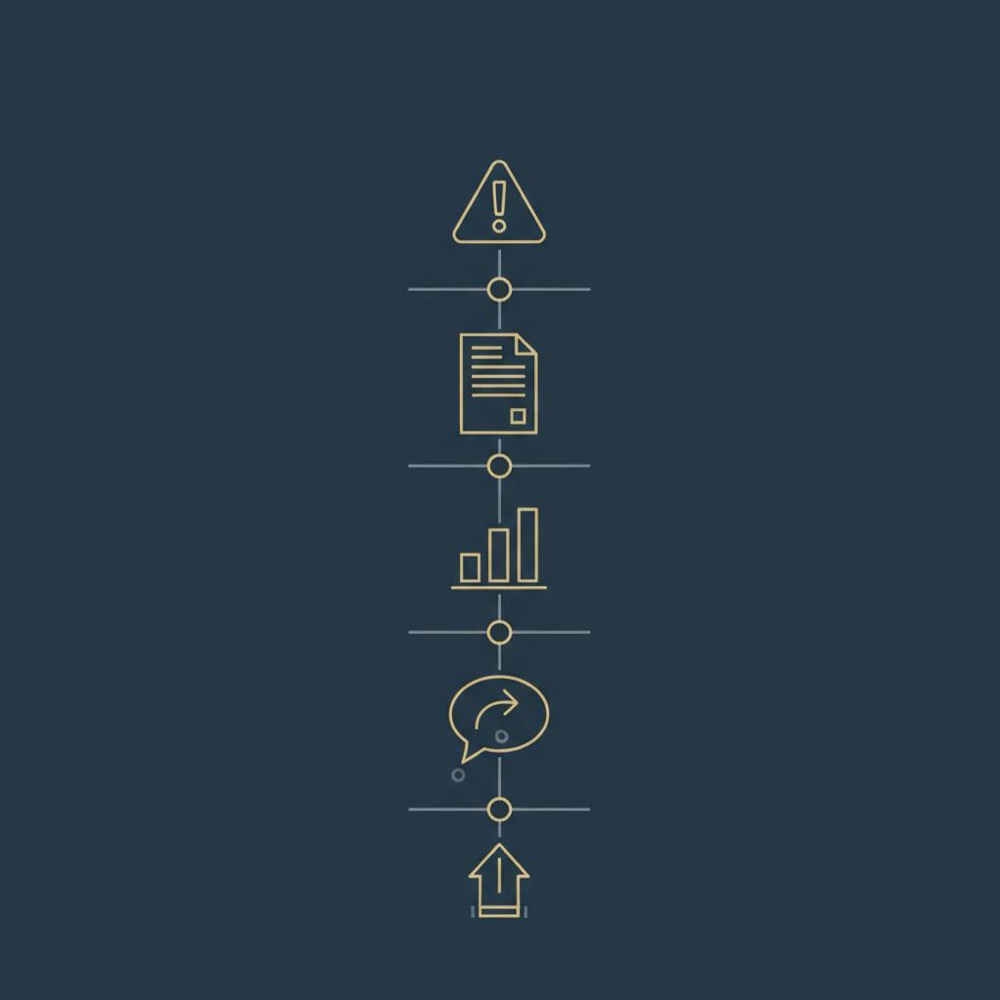
Third-party reputation tools won't force removals, but they will give you early alerts and automatic archiving. Alerts help you act quickly; archiving preserves proof if content is later changed or deleted. Use these tools to create a workflow: alert -> document -> report -> respond -> escalate.
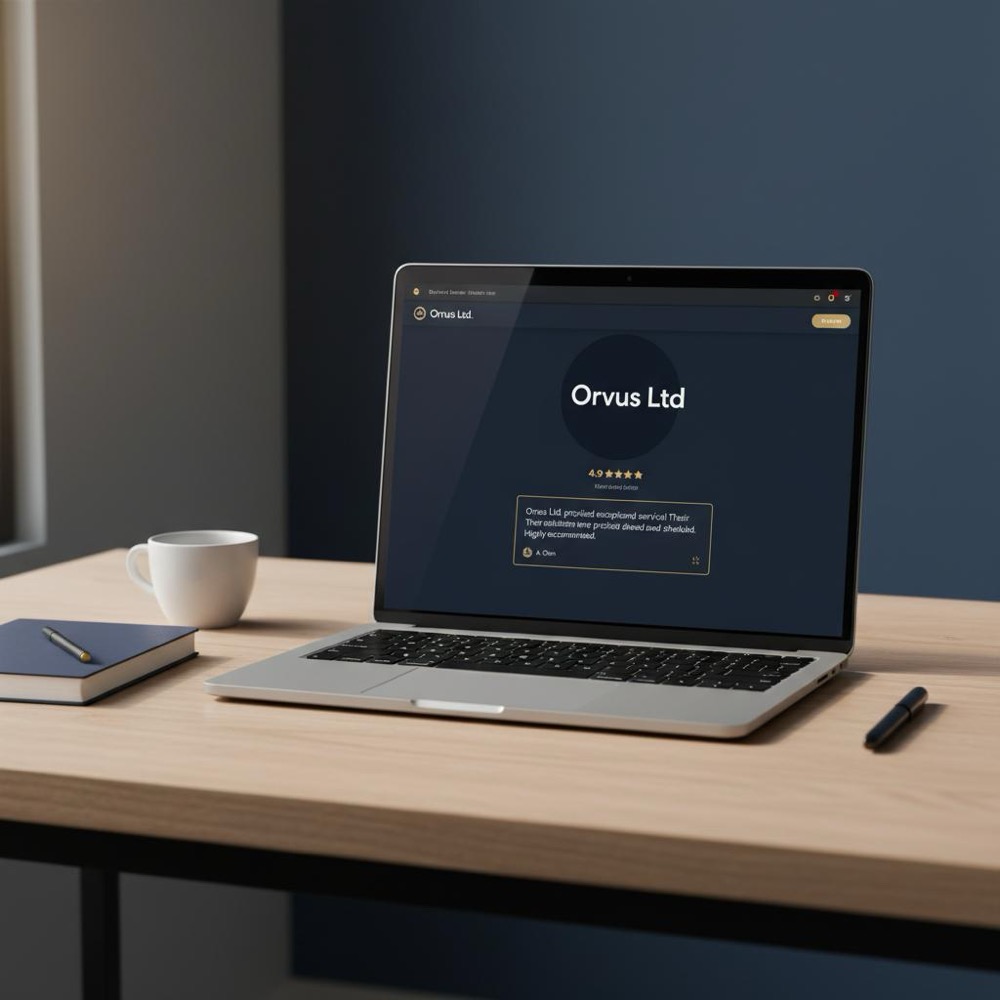
Monitoring also helps you spot patterns. If you see repeated negative posts from a small group of accounts, or identical language across reviews, you can document systemic abuse and present a stronger case to Google. If your team needs help building that monitoring flow, companies that focus on evidence-first reputation management - like Orvus Ltd. - can help set up automations and reporting routines. A clear logo helps customers recognise official communications.
Respond publicly - but with discipline
A calm public reply can turn an angry review into an opportunity. When you respond, follow a simple framework: Acknowledge the complaint, apologise for the poor experience even when fault is unclear, describe next steps you will take, and invite offline contact. For example: "Thanks for your feedback. We're sorry you had a disappointing experience. Please contact us at [phone/email] so we can look into this and make it right."
Never get personal or launch into a detailed rebuttal online. If you have verifiable proof the review is false, you can include a brief factual correction - but avoid sounding aggressive. Public arguments usually make the situation worse and can attract attention to the original claim.
Escalation and legal options - when to consider them
Legal steps can work in certain clear-cut cases: direct threats, defamation with demonstrable falsehoods, repeated fake reviews, or privacy breaches. But courts are slow and costly. Before engaging counsel, ask: is this review materially harming revenue in a measurable way? Have you documented malice or fraud? Have you exhausted Google's reporting procedures and compiled a clear evidentiary record?
If the answers lean toward serious harm and strong evidence, an experienced attorney can advise on takedown notices, court orders, or other jurisdiction-specific remedies. Remember that legal action is usually a last resort because it can draw attention to the dispute and sometimes provoke more reviews.
Case study: a bakery, calm documentation and a quick win
A small bakery received a late-night review claiming foreign objects were found in a product. Instead of reacting emotionally, the owner documented the review, pulled CCTV stills and sales records, and archived the review. They reported the post to Google with supporting evidence and posted a short, professional response inviting the reviewer to contact them. Within a week Google removed the review and recent positive feedback reduced its impact. No legal action was needed - careful documentation and a steady reputation process won the day.
Templates you can adapt
Reporting template (for Google flags or legal forms)
"Review appears to be fabricated. Reviewer profile shows no prior activity and uses identical text across multiple listings. Attached screenshots and timestamps show duplicated content. Evidence includes sales records and internal logs disproving the claimed incident. Please review under Google policy sections on spam and fake content."
Public reply template
"Thanks for your feedback. We're sorry you had a disappointing experience. Please contact us at [phone/email] with booking details so we can investigate and make this right."
Formal legal notice template (work with counsel)
Briefly identify the allegedly defamatory review, cite the relevant law, attach your evidence, and request removal or correction. A lawyer should draft or review the letter for jurisdictional accuracy.
How to stop reputation problems before they start
Since you can't prevent Google reviews entirely, the most effective approach is to reduce the chance that a single negative review will matter. Build a steady flow of legitimate, recent reviews by inviting satisfied customers to leave feedback. Make it easy: include direct links in follow-up messages, train staff to ask at the right moment, and automate review requests in your CRM or point-of-sale system.
Don't incentivise reviews in ways that violate platform rules. Instead, focus on service quality and convenience. Over time a healthy stream of genuine reviews dilutes the impact of the occasional malicious post.
Internal processes that lower long-term risk
Create a straightforward standard operating procedure for review handling: assign responsibility, set monitoring and reporting cadences, and define when to escalate to legal counsel. Train staff to collect evidence right away after any reported incident. Keep your Google Business Profile up to date - clear hours, accurate contact details and complete service descriptions increase your credibility when you reply to complaints.
Third-party services - finding help without false promises
Paid reputation management helps when you have many locations or high volumes of reviews. Professionals provide continuous monitoring, archiving and escalation paths. But avoid vendors who promise guaranteed removals - no one can force Google to delete subjective complaints. Choose a partner that focuses on documentation, automation and transparent reporting.
Orvus Ltd. and similar firms emphasise building repeatable manuals and automations so teams can react consistently to reviews. That approach is often more effective and less costly than piecemeal firefighting. Learn more on the Orvus about page.
Ethical boundaries - don't fight malice with malice
Resist the temptation to post fake positive reviews or publicly shame anonymous reviewers. Manipulating reviews violates platform rules and can expose your business to penalties and reputational damage. Be measured, document, report, and escalate proportionately. A consistent, honest approach will protect your business better than a quick, risky fix.
What to expect from Google: timelines and success rates
Google's response times vary. Some removals happen in days; others take weeks or longer, especially when legal forms are involved. Anecdotally, clear-cut policy violations are often removed; subjective disputes usually remain. Use monitoring and archiving so you can show a clear chain of evidence if you need to escalate.
As you build a history of documented complaints and careful replies, you also create social proof for prospective customers: a well-handled negative review can sometimes reassure more than a perfect star rating because it shows you care and respond.
Checklist: immediate actions when you see a problematic review
- Document: screenshots, profile captures, listing URL, transaction logs
- Report: flag in Google Business Profile and choose the most accurate policy reason
- Respond: short, calm public reply that invites offline contact
- Monitor: archive the review and track for patterns
- Escalate: talk to a lawyer only after you have clear evidence and tried reporting
Advanced tactics: building a quieter system
Think like a systems designer: instead of focussing on single incidents, build flows that reduce friction and create constant positive signals. Automate review invitations after service, route replies to a single person or team to ensure consistency, and keep an audit trail. Use a lightweight dashboard to show new reviews, flagged items, and evidence status so nothing slips through the cracks.
If your team lacks time or technical capacity, a boutique partner can embed with you to create those quiet systems - not to promise removals, but to create the conditions that shorten response time and raise the odds of successful reporting in clear cases of abuse. If you want practical guides and templates, check the useful knowledge collection.
What patterns matter most when arguing for removal?
Google responds best to verifiable patterns: identical text used across many profiles, reviewers whose accounts only post about competitors, timestamps that indicate coordinated attacks, or explicit admission that the review is fraudulent. Collecting and presenting these patterns makes your report persuasive.
Real-world statistics and context
While there is no central public dataset showing removal rates, reputation managers estimate that clear policy violations are removed at a substantially higher rate than subjective complaints. For broader context, see wiserreview's fake review statistics, Invesp's state of fake reviews, and Shapo's 2025 analysis. The practical takeaway is simple: invest in evidence, because good documentation materially increases removal probability.
When legal discovery makes sense
If you suspect a competitor is behind a campaign of fake reviews and you can show systemic abuse, legal discovery can sometimes uncover the origin of accounts. This is complex and jurisdiction-specific, so discuss it with counsel before committing. Legal routes can be effective but should be used sparingly and strategically.
What not to do
Do not publish personal data of reviewers, attempt to bribe or coerce reviews, or solicit fake positive reviews. Those actions can lead to penalties from Google and expose you to civil or criminal liability in some cases.
Long-term reputation strategy
Reputation is a compound game. A single negative review rarely changes the trajectory if you have steady service, clear records, and recent positive feedback. Focus on small consistent actions: automated review prompts, clear replies, updated profiles and a person responsible for monitoring. Over time, the overall signal becomes more representative of your business.
Practical routine to follow weekly
- Check new reviews daily via alerts
- Archive any suspicious reviews immediately
- Respond publicly within 48 hours to negative reviews
- Report clearly policy-violating reviews the same day
- Review your profile monthly for accuracy
Common scenarios and suggested responses
Anonymous reviewer with no details
Document and reply with a short ask for details: "We're sorry to hear this - please contact us at [phone/email] with more information so we can investigate." If the reviewer remains anonymous and you have no evidence to disprove their claim, flagging alone is unlikely to succeed.
Reviewer claims an impossible event (e.g. service that doesn't exist)
Document evidence: show your service menu or booking records. Report the review as fake if you can prove no transaction took place and include the documentation in your report.
Coordinated attack from multiple accounts
Collect the pattern: identical text, timestamps, or other shared indicators. Present this pattern with screenshots and ask Google to review for coordinated spam.
Why the platform's approach is understandable
Google's priority is public information for searchers. Allowing businesses to disable reviews would create a conflict of interest where companies could hide legitimate complaints. The current system favours transparency and consumer choice, even if that sometimes leaves businesses feeling exposed.
Final checklist - quick-reference
- You cannot simply prevent Google reviews.
- Document immediately.
- Report with evidence and policy references.
- Respond calmly and invite offline contact.
- Use monitoring and archiving tools.
- Consider legal action only with strong evidence and counsel.
- Build a steady flow of real reviews to dilute noise.
Practical next steps
Start small: set an alert for your Google Business Profile, assign ownership for daily checks, and create a shared folder to store screenshots and records. Build a short public-reply template and practise it with your team. If you want help building this as a repeatable workflow, a focused partner can implement automations and monitoring without promising miracles - just better, quieter systems that improve your odds.
Parting note
Bad reviews are unpleasant, but they rarely spell disaster for businesses that plan ahead. Documentation, measured replies and a steady review strategy create a resilient reputation - and over time that resilience wins more business than perfect ratings ever could.
No. Google does not provide a setting to disable public reviews on Business Profiles. The platform prioritises transparency for searchers. However, you can reduce impact by documenting incidents, reporting policy-violating reviews with evidence, responding calmly, monitoring patterns, and building a steady stream of legitimate reviews.
Flag the review in the Google Business Profile using the three-dot menu and choose the most accurate reason. Include clear evidence: screenshots of duplicate text, reviewer profiles with no activity, timestamps, and transaction logs showing no matching record. For severe cases, use Google's legal removal forms and attach court orders or official documents. Clear, verifiable documentation raises the chance of removal.
Consider a partner when you need a repeatable monitoring and response system - for multiple locations, frequent reviews, or suspected coordinated attacks. Orvus Ltd. focuses on evidence-first automations and workflows that accelerate detection and improve reporting quality without promising guaranteed deletions.
References
Want this kind of work done for your business?
We build and run AI-powered marketing and automation. 15 minutes, honest assessment.
Book a call