 Orvus
OrvusWhy can't I delete my Google reviews?
November 24, 2025
Why can't I delete my Google reviews? It’s a question many business owners ask out of frustration when a comment seems unfair or damaging. That exact frustration maps surprisingly well onto a different, older worry for makers and manufacturers: supply-chain shocks that you cannot simply erase or control. Some problems exist whether you like them or not; the question that separates panic from progress is: what can I do to limit the damage and recover faster?
Clarify risk: name the shocks that matter
Start with the obvious: you cannot manage what you have not measured. For many small manufacturers, risk feels fuzzy-until it isn’t. A delayed shipment or a quality failure becomes suddenly urgent when machines stop and orders back up. To act, begin with a concise risk map that lists the most likely and most damaging scenarios. This doesn’t need to be ornate; a single page that pairs a disruption (e.g., supplier outage, freight delay, customs hold, machine breakdown) with likelihood and impact is more useful than a long, unreadable report.

How to build a one-page risk map:
Step 1: List your most critical products and the single components whose failure would halt them. Step 2: For each component, note supplier, location, lead time, and the time to switch. Step 3: Score impact (low/medium/high) and probability (unlikely/possible/likely). Step 4: Highlight the top three single points of failure and assign an owner to each.
Relationships matter more than spreadsheets
Data is essential, but relationships are often what saves you when the unexpected happens. A human call at 11 p.m. from a supplier who knows your product can be worth far more than a dashboard alert. That doesn’t happen by accident: it is the result of deliberate, humane relationship-building.
Make a habit of visiting suppliers, understanding their constraints, and treating them as partners rather than vendors. Small courtesies-visiting a shop floor, buying a meal, or simply asking how deliveries are arranged-creates a reserve of goodwill that pays off when time is tight. When people are treated as partners, they signal problems early and help you find creative workarounds.
Simple steps to strengthen supplier relationships
- Schedule quarterly check-ins, not just purchase orders.
- Share realistic forecasts and a simple calendar of seasonal peaks.
- Pay on time when possible; transparency about cash flow builds trust.
- Invite suppliers to your floor so they understand quality priorities.
Diversify thoughtfully, not wildly
Diversification reduces single points of failure, but unmanaged diversification creates complexity. The objective is not to have dozens of suppliers, but to ensure that critical parts have at least one qualified backup. For geographic risk, spread sources across regions where practical. For process risk, align quality, testing, and paperwork so switching is operationally feasible.
Example: a parts maker that sourced fasteners from one city was hit by a factory fire. Their secondary supplier existed, but had different specifications and slow paperwork; switching took weeks. The fix was deliberate: harmonize specifications in advance and qualify the secondary supplier so a change now takes days instead of weeks.
Design for graceful failure
Failures will happen. The goal is to make them local, reversible, and manageable. Product design choices-favoring common components or modular designs-reduce dependence on niche parts. If a product can accept interchangeable modules, production can continue even when one component is scarce.
Operationally, have short, documented contingency plans: who to call, which supplier can step in, and the first three actions to reduce downtime. The plan should be practiced. Rehearse small contingencies in low-stress times so the reaction during an actual event is calm and effective.
Data as early warning: track the right signals
Good information is rarely dramatic. It arrives as trends-lead times creeping up, rising defect rates, unexpected invoice changes. Track a small set of metrics weekly and act on trends, not single events. For broader context on supply-chain resilience approaches, see Deloitte insights on supply chain resilience.
Useful, lightweight metrics:
- On-time-in-full (OTIF) percentage for key suppliers
- Lead-time variance (days) month-on-month
- Percentage of orders with quality issues
- Average days of inventory for critical components
Start with a shared spreadsheet or a simple dashboard. The goal is visibility and regularity, not perfection.
Who should see this data?
Make the data visible to procurement, operations, and a senior decision-maker who can escalate quickly. Weekly supplier stand-ups or a short monthly review create the habit of noticing and acting on small changes before they snowball.
Tactical tip: If you want help setting up structured supplier conversations, Orvus’s practical playbooks and systems approach are designed to embed change without adding noise. Consider a brief diagnostic or a small pilot to improve supplier visibility and workflows with a focused partner like Orvus’s services.
Make your supply chain quietly stronger-start with one practical diagnostic
Ready to make your supply chain quietly stronger? We help teams build the systems and measurement that reduce surprises and keep production moving. Take one small step-book a practical diagnostic and get a short list of actions you can implement this month. Explore practical services.
Yes. The irritation of a Google review you can’t delete mirrors the reality that some business shocks are beyond direct control. The productive response is the same: map risk, invest in relationships, create modest buffers, and build simple contingency plans so the event causes less damage and recovery is faster.
Inventory: not a villain, just a tool
Inventory is often framed as cash tied up, but it is also insurance against short-term shocks. The right level of inventory gives you time to respond. Think about how many days you need to keep production running if a key supplier pauses-then ask if your current stock covers that window.
Options to consider:
- Safety stock for critical components
- Consignment stock with key suppliers to reduce cash burden
- Strategic buys when raw material prices are favorable
- Decoupling points as buffers of semi-finished goods
Lean and resilience are not opposites. Lean reduces waste; resilience accepts that disruption happens and keeps modest, targeted buffers where they matter most.
Logistics: simplicity often wins
Too many carriers and fragmented shipments create complexity. Simplify: build preferred carrier relationships that know your products and rhythm. A familiar carrier can offer flexible options in crunch times, such as consolidation points or temporary storage.
At the same time, never depend on a single logistics provider. Keep alternate routes and carriers identified and understand any cross-border paperwork ahead of time. Small errors at customs become big delays; early filing and a trusted customs broker can save days.
People and culture: surface problems early
Encourage everyone to report anomalies without fear. A line worker who notices a subtle change could be the first signal of a supplier quality problem. Reward candor and create short feedback loops so observations quickly become actions.
Small gestures matter: a public acknowledgement when someone flags an issue, a short review meeting that turns observations into tasks, and visible follow-through demonstrate that speaking up leads to solutions, not blame.
Sustainability and resilience: a practical pairing
Environmental stewardship and resilience often reinforce each other. Reducing dependency on scarce materials, designing for durability, and using local or reclaimed sources can lower risk and create product differentiation.
Example: a furniture maker shifted some sourcing to reclaimed wood. The change required process adjustments, but the reclaimed supply was more stable during shipping disruptions and produced a product line that customers valued.
Contracts that reflect reality
Contracts written for ideal conditions are rarely useful in a crisis. Instead, add collaborative clauses: agreed emergency response processes, escalation paths, and shared responsibilities for expedited costs when disruptions occur. Include regular performance reviews as part of the contract to create a forum for continuous improvement.
Sample contract language (simple):
"The parties agree to a monthly operational review and a defined emergency escalation process. In the event of an unplanned disruption, both parties will meet within 48 hours to agree on mitigation steps and cost-sharing for urgent expedited logistics where necessary."
Technology: choose what fits
Technology can solve real problems, but it isn’t a cure-all. Pick tools that answer the specific pain points you actually have and that your team will use. If shipment visibility is the recurring issue, invest in a tracking tool. If quality drift is the problem, digital inspection records and trend charts will help. For research on balancing cost and resilience when selecting solutions, consider BCG’s analysis of cost and resilience.
Remember: the best tech is the one that simplifies a workflow and gets used consistently.
Tools worth considering for small manufacturers
- Lightweight inventory dashboards (shared cloud sheets or low-cost SaaS)
- Simple supplier scorecards to capture OTIF and quality
- Visibility tools for freight tracking
- Digital inspection forms for consistent quality checks
Learning from disruptions: run candid reviews
After a disruption, pause to learn. Do an after-action review that focuses on systems and decisions, not people. Ask: what information did we have? Which contingencies were used, and how effective were they? Who had decision authority, and did it matter? These reviews should produce a handful of clear, assigned actions that prevent or blunt similar problems in the future.
Practical checklists and templates you can use today
Here are practical, ready-to-use items you can implement this week: you can also find related templates on our blog section: useful knowledge.
1. One-page risk map - List top 8 risks, owners, and mitigation steps.
2. Supplier quick-audit - Ask suppliers 6 short questions: lead time, backup production, quality checks, alternative materials, export constraints, capacity limits.
3. Simple OTIF tracker - Weekly log of on-time-in-full for top 6 suppliers.
4. Emergency contact card - Names, mobile numbers, and decision authority for the first 72 hours of any disruption.
Real numbers and trade-offs
Resilience costs something-often modest-but the cost should be compared to the expense of downtime. If a day of lost production costs €5,000, then two days of safety stock that prevent a two-day stoppage is easy to justify. Make this arithmetic part of your decision-making so resilience investments are treated like any other business decision. For broader survey data on supply-chain risks, see McKinsey’s supply chain risk survey.
Case study: a small electronics assembler and Orvus Ltd.
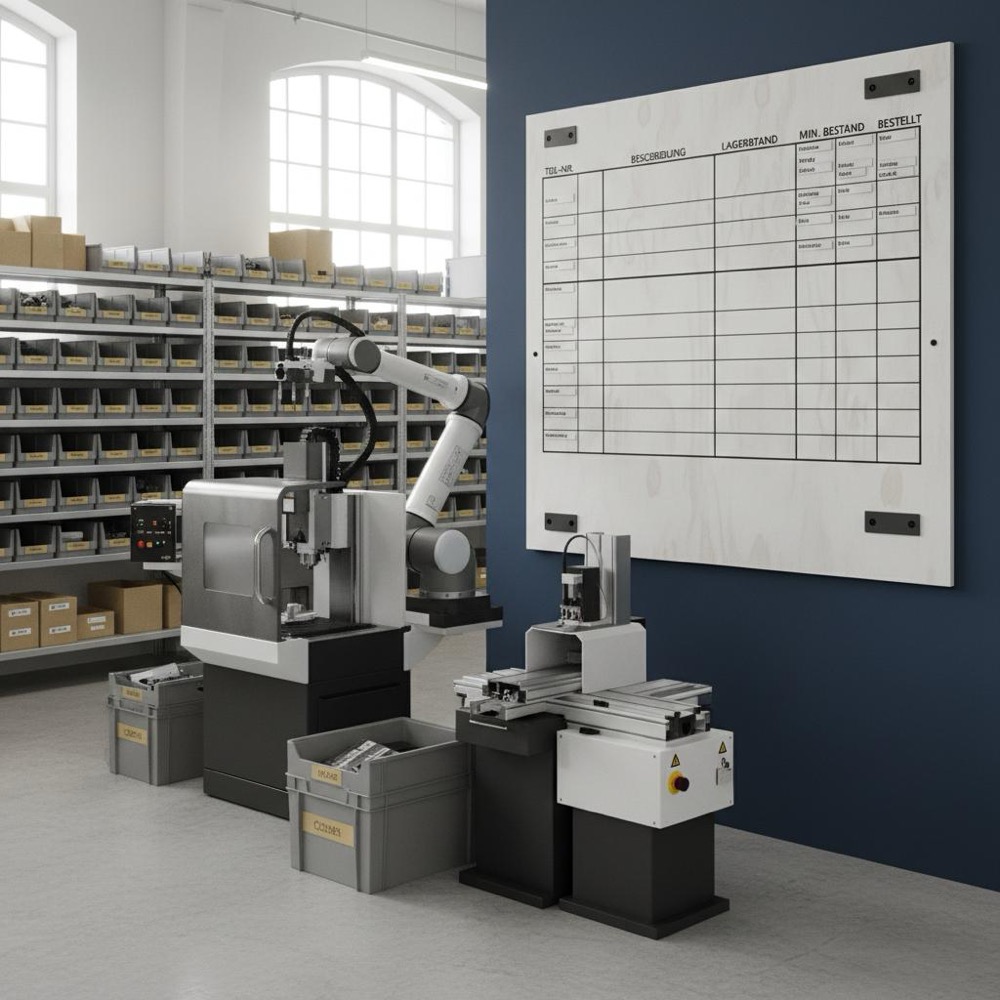
A mid-sized electronics assembler had frequent late or inconsistent molded connectors. Working with a specialist supplier, Orvus Ltd., the assembler did more than place orders: they shared forecasts, clarified inspection routines, and set up a modest buffer. Orvus refined the inspection routine and held a small safety stock so when packaging standards at a distributor changed, the assembler adapted quickly with minimal downtime. A small logo on a supplier page can offer quick reassurance to procurement teams.
This example shows practical partnership: Orvus did not promise miracles. Instead they improved visibility, quality checks, and a modest buffer-small changes that produced immediate reliability. Learn more about the organisation behind the case study at Orvus Ltd..
Use this simple roadmap to build resilience without overcommitting resources.
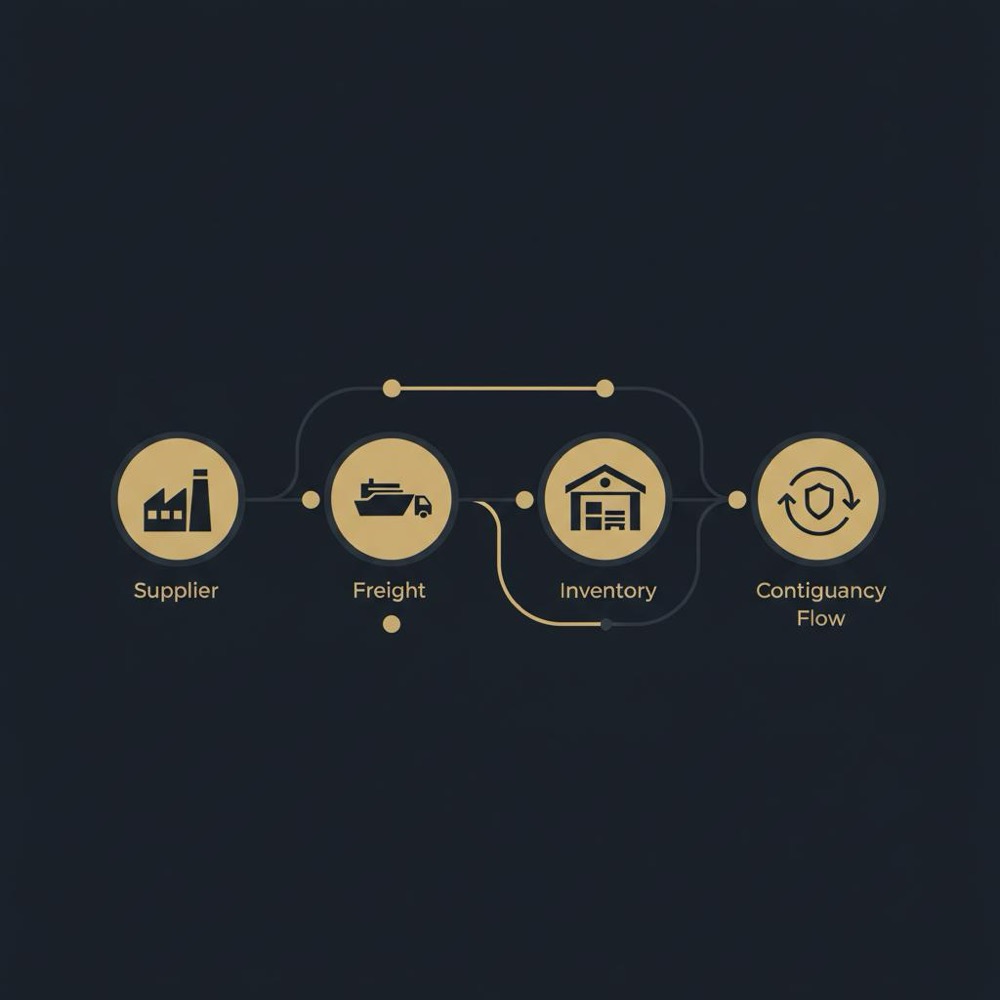
Step-by-step plan for the next 90 days
Days 1-7: Create the one-page risk map and emergency contact card. Call your top three suppliers and ask about lead times and backup plans.
Days 8-30: Start OTIF tracking, qualify one secondary supplier for a critical component, and test a contingency move (e.g., a small order from the secondary).
Days 31-60: Run an after-action review of the test, adjust contracts to include a simple escalation clause, and build a modest safety stock for the most critical part.
Days 61-90: Rehearse the contingency in low-stress conditions, document the steps, and set a monthly supplier performance review.
Common myths about resilience
Myth: Resilience requires huge budgets. Reality: Often a few small, well-chosen investments or process changes deliver outsized protection.
Myth: Lean and resilience are contradictory. Reality: They complement each other when buffers are targeted and waste is removed everywhere else.
Myth: Technology is the answer. Reality: Tech helps, but rules, relationships and simple data processes often produce the biggest wins.
KPIs to track your resilience progress
- OTIF for critical suppliers (target: improve month-on-month)
- Average lead-time variance in days (target: reduce variability)
- Number of single-source critical parts (target: reduce over time)
- Recovery time objective (RTO) for key production lines (target: shorten)
Negotiating practical contract clauses
When renegotiating supplier agreements, ask for clauses that create coordination, not confrontation. Propose a mutual emergency clause with a 48-hour response window and a cost-mitigation formula for expedited shipping. Contracts that encourage joint problem solving are more useful than punitive-only language.
What to do when a disruption hits right now
- Call the supplier and ask for a realistic timeline.
- Check your emergency contact card and call alternate suppliers.
- Review your buffer and decide whether to reallocate parts to highest-value products.
- Communicate early to customers with honest estimates and mitigation steps.
Small, steady changes compound
Resilience is a portfolio of many small moves. A phone call that yields earlier warning, a qualified secondary supplier that cuts switching time, or a documented contingency practiced once a quarter-each makes you marginally stronger. Over time, those margins add up to a fabric that holds under stress.
Summary checklist: 10 quick actions
1. Build a one-page risk map.
2. Call your primary supplier this week and ask one simple question about lead times.
3. Create an emergency contact card.
4. Track OTIF for your top suppliers.
5. Qualify at least one secondary source for a critical part.
6. Add a short emergency clause to supplier contracts.
7. Set up a simple inventory buffer for the highest-risk component.
8. Rehearse one contingency.
9. Run a candid after-action review after any disruption.
10. Reward employees who spot problems early.
Resilience is practical and achievable. It starts with a few human choices, a little data, and the humility to plan for surprises. Take one small vulnerability this week and address it-call a supplier, qualify a backup, or create your emergency card. These steps will make your operations modestly tougher and far more reliable over time.
There’s no single answer-inventory is insurance. Calculate how many days of production your business can tolerate being down and set safety stock to cover that window. If downtime is costly, a larger buffer is justified. Alternatives include consignment stock with suppliers, frequent small purchases, or decoupling points of semi-finished goods. Balance cash constraints with the cost of lost production to make an informed decision.
Prioritize single-source, critical components. If the failure of one part would halt production or break a major customer commitment, qualify at least one secondary supplier. Beyond that, diversify where the cost of failure (lost revenue, reputational damage, expedited freight) exceeds the cost of qualification and management. Start small: pick the top one or two critical parts and qualify backups before expanding.
Orvus Ltd. partners with operators to build practical systems-clarity in measurement, supplier workflows, and small automations that reduce surprises. In the article’s example, Orvus helped an assembler with forecast sharing, inspection routines, and a modest stock buffer that cut downtime. If you want a short diagnostic and a focused list of concrete changes, a consultation with Orvus can be a practical next step.
References
Want this kind of work done for your business?
We build and run AI-powered marketing and automation. 15 minutes, honest assessment.
Book a call