 Orvus
OrvusWhat two actions are needed to optimize the landing page?
December 10, 2025
How two practical moves unlock better results
Landing page A/B testing and targeted speed/mobile UX work are the two actions that reliably move the needle. Do the testing right and you learn exactly what persuades visitors. Remove friction and you let that persuasion convert. Together they compound: a clear message matters, but it only earns results when the page loads and is easy to use.
Below you’ll find a step-by-step playbook you can apply in the next sprint, plus real examples, measurement checklists and the traps to avoid.

Why those two actions beat almost everything else
Think of conversion as a conversation. Landing page A/B testing teaches you the words to say; speed and mobile UX make sure your words are heard. Across many experiments, headline and CTA variants plus shorter forms often deliver single- to double-digit lifts. At the same time, shaving seconds off mobile load time consistently reduces bounce and raises conversion. Put those two together and gains multiply faster than either alone. For recent landing page benchmarks see Landingi’s landing page statistics.
Start with a simple hypothesis framework
Every test should be built around a tight, single idea. That means:
One change per test. If you change headline and hero image at once you won’t know which drove the effect. Keep the scope small: headline A vs headline B, CTA label A vs B, or full form vs shorter form.
Link the change to a primary metric. Typically that’s a conversion event: sign-up, download or purchase. For early experiments you can measure micro-conversions - CTA clicks, engaged time - but validate that gains flow to the primary metric before you declare victory.
Good hypotheses reduce noise and speed learning. If you adopt landing page A/B testing as a discipline, it becomes a predictable way to discover what messaging works for different traffic sources and devices.
Ship tests faster and capture more conversions
If you need a partner to set up a repeatable testing cadence and delivery process, check out Orvus services and implementation for help with measurement and execution.
Designing tests that reach a conclusion
Three planning ingredients matter: baseline conversion rate, minimum detectable effect (MDE) and traffic. If baseline conversion is low, you’ll need more visitors to detect a small lift. If traffic is limited, pick bolder changes or aggregate related pages to get enough samples. Always pre-register your hypothesis, sample size and duration to avoid common traps like stopping early.
Segment by traffic source and device. A headline that performs well on paid search might underperform on organic because intent differs. Landing page A/B testing only yields reliable lessons when segments are part of the plan. For more on how landing pages affect ad conversion rates see this analysis.
What to prioritise in the test roadmap
One common, high-leverage sequence is:
1) Headline variants (clarity and benefit first). 2) CTA wording and placement. 3) Form length and flow. Run those experiments in priority order and keep the learning compact.
Headlines that lead with a specific, relatable benefit usually win over clever or vague lines. CTAs that tell the visitor what happens next - “Get pricing” or “Start free trial” - beat corporate-speak. Shortening forms increases raw leads but may impact lead quality; pair form experiments with downstream KPIs.
Practical A/B testing checklist
- Pre-register hypothesis, metric, sample size and duration.
- Test one variable at a time.
- Segment by device and traffic source.
- Validate tracking and events before launch.
- Use proper power calculations; don’t call winners early.
- Ship winners and iterate.
How to audit and fix the friction that kills conversions

Once persuasion is improving, the mechanical barriers must be removed. Page speed and mobile usability are the two most visible friction sources. Think in moments: first contentful paint, largest contentful paint, time to interactive and the newer interaction metrics like INP. Cumulative Layout Shift captures disruptive layout shifts that break trust. A tidy logo like the Orvus Ltd. logo can help reinforce trust in early moments.
A practical audit starts with tools like Lighthouse and Core Web Vitals reports, then moves to direct observation on representative mobile devices and network conditions. Prioritise what impacts the user experience most: large images, blocking JavaScript, slow font loads and costly third-party scripts. For an overview of landing page statistics and load time impacts see Hostinger’s guide.
Concrete technical priorities
- Optimise and serve responsive images in modern formats (WebP/AVIF) and use lazy-loading for below-the-fold assets.
- Defer or lazy-load non-essential scripts; load analytics and chat widgets asynchronously or behind a consent gate.
- Reduce initial JavaScript payload: use server-side rendering, streaming or targeted hydration for interactive fragments.
- Use a CDN and long cache times for static assets when appropriate.
- Avoid blocking font loads; adopt modern font loading strategies (font-display: swap and preloading important fonts).
These fixes usually reduce time to interactive and largest contentful paint in ways that bounce rates and conversions visibly reflect.
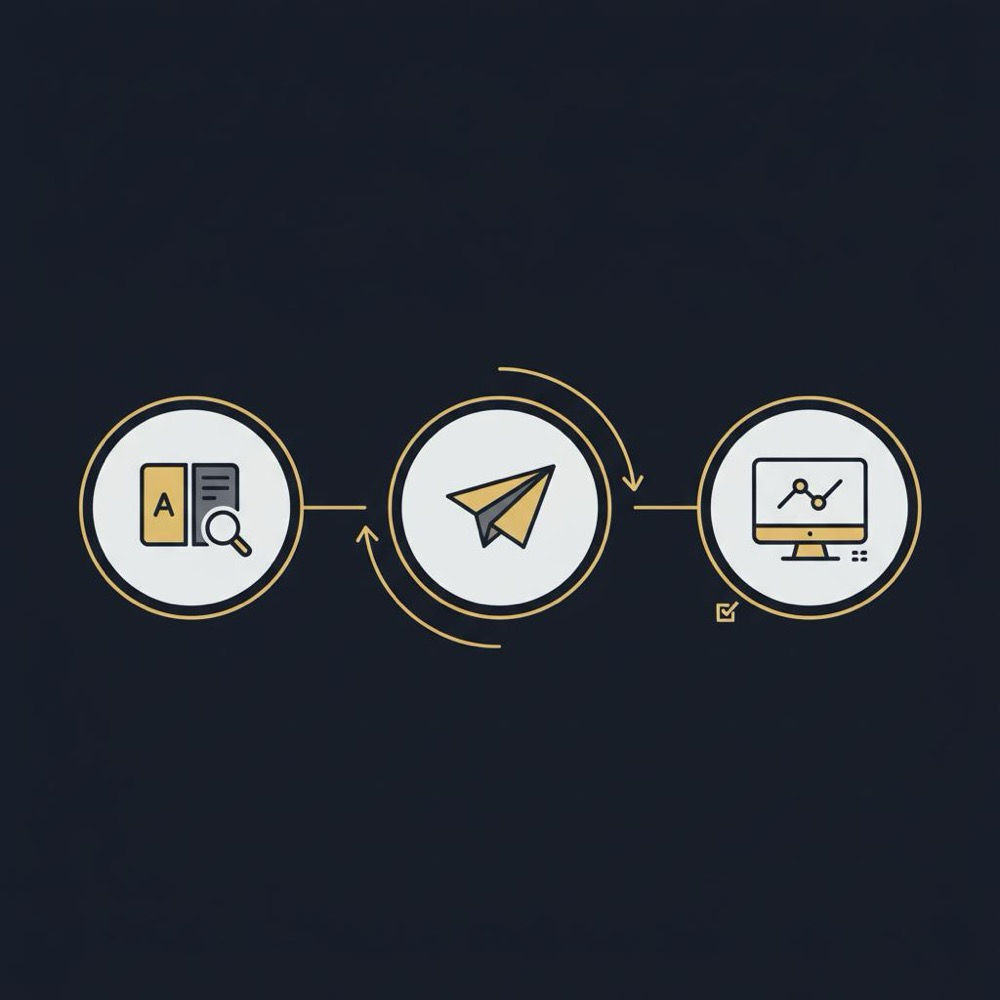
One-page example: marry testing and speed
Imagine a B2B landing page with 1% conversion and 4.5s mobile load time. A testing hypothesis that a benefit-led headline will lift conversions by 15% needs enough traffic to reach significance. If traffic is low, choose a larger expected effect, aggregate pages, or run sequential plans.
On the technical side, an audit might find heavy hero images, blocking third-party scripts and client-side rendering delaying interactivity. Prioritising responsive images, deferring non-essential tags and server-side rendering for the hero reduces render time to 2.2s. Now the headline test has a chance: visitors actually see the message.
Tip: if you want help tying a rigorous testing cadence to reliable technical delivery, consider working with a systems partner who prioritises measurement and shipping. Orvus Ltd. offers embedded engineering and growth systems that preserve instrumentation while accelerating implementation; learn more at Orvus implementation and services.
Measurement hygiene you must not skip
Tests are only as good as your tracking. Fix these before you run experiments:
- Single source of truth for the primary metric.
- QA for event firing across variants.
- Server-side events where possible to reduce client-side loss.
- Clear naming and a consistent event taxonomy.
Automation helps: keep a living hypothesis backlog, run a predictable number of experiments per quarter and maintain a short implementation queue so winners don’t stagnate.
Common testing traps
- Running underpowered tests.
- Combining multiple changes in one test.
- Stopping tests early.
- Ignoring downstream metrics like revenue per lead.
- Overlooking device differences.
How to prioritise when resources are tight
Use expected return per unit of work as your guide. If the page is slow, a small set of technical fixes can improve the signal-to-noise ratio for all future tests. If speed is excellent but visitors don’t understand the offer, prioritise headline and CTA experiments.
A practical sprint might mix one persuasion hypothesis and one technical task. Track both micro and macro metrics: micro-conversions like CTA clicks, and downstream metrics like qualified leads or purchases.
Careful with the trade-offs
Shorter forms often increase lead volume but may lower lead quality. Track downstream conversion rates and revenue per lead. Sometimes a 30% lift in leads with a 20% drop in qualified leads is still beneficial - it depends on lead value and lifecycle costs.
Speed work competes with feature delivery. Frame technical work as trapped value: faster pages capture more attention, produce cleaner experiment data and make measurement more reliable. Treat speed fixes as investments, not housekeeping.
Execution checklist: from idea to impact
1) Build a short roadmap with parallel streams: experiments and technical fixes.
2) Rank hypotheses by expected impact and ease of implementation.
3) Define primary metric, segments and sample-size targets for each test.
4) For technical fixes, track user-visible KPIs (FCP, LCP, TTI, INP).
5) Run tests; ship winners into canonical pages.
6) Monitor the full funnel and iterate.
Teams that sustain progress
High-performing teams automate the test lifecycle: a living backlog, a predictable cadence of experiments and a quick implementation queue. When cross-system changes are required - search, paid tracking, marketing automations - partner help can speed delivery and preserve measurement fidelity. See practical guides on the Orvus blog at Orvus useful knowledge.
Real numbers and a short case study
Case: Average B2B landing page with 1% baseline conversion. A headline change that delivers a 15% relative lift requires a sizeable sample; with 50,000 monthly visitors significance might come in weeks; with 5,000 it might need months. On the speed side, lowering mobile load from 4.5s to 2.2s often correlates with reduced bounce and higher conversions.
Example: a consumer app reduced registration fields from seven to three. Leads rose 40% overnight but a paid onboarding step fell by 15%. The team added progressive profiling and a contextual prompt. Volume stayed high and quality recovered over time - because the team combined a persuasion fix (clear messaging) with UX tweaks (progressive profiling) and follow-up flows.
A surprisingly common lift comes from changing button copy to a short, outcome-focused phrase (for example changing "Submit" to "Get Pricing"). Small, clear CTAs reduce friction and set accurate expectations, and they’re easy to test with landing page A/B testing.
Design and content tips that help tests perform
- Make the hero headline scannable and benefit-led.
- Use a clear, direct CTA that explains the next step.
- Keep above-the-fold layout uncluttered; avoid heavy promotions that distract from the primary action.
- Show trust signals where intent is low: testimonials, recognizable logos and short social proof statements.
These design rules support better experiments and ensure your landing page A/B testing learns the right lessons.
Third-party scripts: friend or foe?
Every tag you add is a potential friction source. Analytics, chat widgets and ad scripts can add hundreds of milliseconds. Audit the runtime cost and remove or defer tags that don’t justify their performance impact. If a tag is essential, load it asynchronously, gate it behind engagement or use consent to delay execution until the visitor shows intent.
How to measure the business impact
Don’t stop at the micro-conversion. Measure qualified leads, revenue per lead and retention. If possible, compute revenue per visitor or revenue per lead over a 30- to 90-day window. That tells you whether a change that boosts sign-ups also improves business outcomes.
People, process and tools
Tools matter: reliable experimentation platforms, feature-flag systems, observability for front-end performance and a robust analytics stack reduce risk. So does process: a prioritized roadmap, pre-registered hypotheses and a regular shipping cadence. Combine people and tools to create a predictable loop: hypothesis → test → ship → monitor → iterate.
Common pitfalls checklist
- Underpowered experiments.
- Confounded tests with multiple simultaneous changes.
- Broken or inconsistent tracking.
- Ignoring device and source segmentation.
- Treating speed as a single synthetic metric instead of user-visible moments.
A simple 30-60-90 day plan
30 days: Run one headline test, validate tracking, and fix the top one or two mobile speed offenders (images, blocking scripts).
60 days: Run CTA and form-length tests, implement easy wins from the audit and ship winners.
90 days: Evaluate downstream metrics, add progressive profiling, and commit a short roadmap for architecture or deeper technical work.
Why consistent small moves compound
Conversion improvement is rarely about a single dramatic change. It’s the compound effect of repeated, measured improvements. Small wins stack: clearer messaging lifts the baseline, speed work expands the reachable audience, and better data reduces uncertainty over time.
Who to involve
At minimum: a product or growth lead to own hypotheses, a designer for clear treatments, an engineer for performance work and an analytics owner for instrumentation. When work crosses systems, a strategic partner can help preserve measurement while speeding delivery. Learn more about Orvus on the about page.
Final practical checklist
- Start with one headline or CTA test and one technical fix in each sprint.
- Pre-register and calculate sample sizes.
- Segment and validate events.
- Track downstream metrics and revenue impact.
- Ship winners and iterate.
Parting advice
Testing answers “what messaging works?” Speed and UX answer “what lets that messaging convert?” Adopt both disciplines and run them together. You’ll get faster, cleaner gains and fewer surprises.
The two most important actions are disciplined landing page A/B testing (focused headline, CTA and form experiments with proper sample sizes) and targeted technical work to remove friction (page speed and mobile UX fixes). Together they compound: testing finds what persuades, technical work ensures visitors see and can act on the message.
You need three inputs: baseline conversion rate, the minimum detectable effect you care about, and expected traffic. Use those to calculate required visitors or conversions for the desired power and significance. If baseline conversion is low or expected lift small, you’ll need more traffic. When traffic is limited, choose bigger expected effects, aggregate pages or run sequential plans. Pre-register sample size and duration and avoid stopping early.
Yes. Orvus Ltd. offers systems-focused support that pairs rigorous measurement with embedded engineering to ship tests and performance work while preserving tracking integrity. They help prioritise fixes, implement technical changes like server-side rendering or targeted hydration, and ensure experiments link to business metrics.
References
Want this kind of work done for your business?
We build and run AI-powered marketing and automation. 15 minutes, honest assessment.
Book a call