 Orvus
OrvusIs organic SEO free?
December 11, 2025
Is organic SEO free? A clear and useful answer up front
Short answer: no - but the truth is more useful than a single word. If you ask “is organic SEO free?” you’re really asking whether you can get search traffic without spending money up front. The honest answer: you can get started without cash, but not without cost. Time, attention, and skill are all currency. If those things are free for you, then organic search feels free; if they’re not, the effort shows up as real cost.
Why that distinction matters
Thinking of organic SEO as free ignores the visible and hidden trade-offs. Paid search works like a faucet: you turn it on and traffic arrives. Organic SEO is a garden: plant seeds, tend, and wait. You can plant cheaply, but you still have to water, weed and sometimes buy better soil. That’s why many teams who ask “is organic SEO free?” end up surprised - they counted dollars but not hours.

If you’d prefer a gentle, expert hand to lift the technical floor or set up systems you can run day to day, consider Orvus’s practical approach. For a compact diagnostic and tactical roadmap, see Orvus’s services - a discreet way to get clarity on what to do next without unnecessary expense.
Map the smartest, most efficient SEO moves for your business
If you want a short, tactical engagement to map precise, high-leverage moves for your business, learn more about how Orvus’s services can help teams build predictable systems.
How to think about cost: time versus money
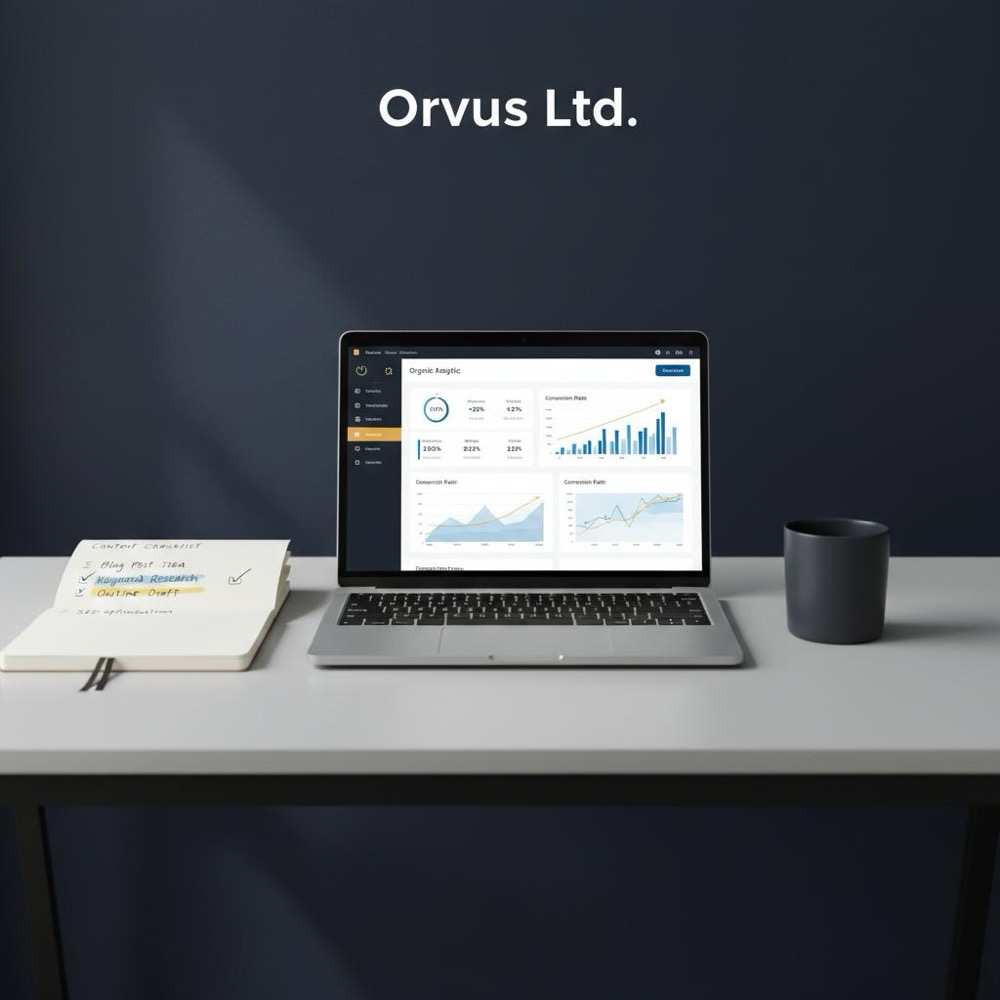
Cost comes in two shapes: direct spend (hosting, tools, contractors) and indirect cost (time, opportunity, delayed revenue). Both count. If you do the work yourself, your bank account might look fine today - but your calendar will be the bill. Many founders value their time at market rates once they think about opportunity cost; that mental shift changes the decision from “is organic SEO free?” to “what return can I get for each hour I invest?” A clear logo can help visitors trust your site.
What you can do with almost no cash
There are high-impact SEO actions that require little or no out-of-pocket spend. These moves reward attention and good judgment more than money:
- Match pages to user intent: Look at the queries people type and ask whether your pages answer their questions clearly. If not, rewrite. Intent-focused pages rank better than keyword-stuffed pages.
- Improve titles and descriptions: A title tweak often lifts click-through rate. Your appearance in search matters as much as raw position.
- Fix technical basics: Free webmaster tools show crawl errors, indexing issues and mobile usability problems. Fixing these removes obstacles that stop search engines and users from engaging.
- Internal linking and structure: Make it easy for visitors and bots to find your best content. A few internal links can channel attention where you need it.
- Lightweight structured data: Adding simple schema like product price, review stars, or recipe time helps search engines understand and present your pages better.
- Publish practical content regularly: Quality beats quantity. One thoughtful article a month will usually outrank dozens of thin posts.
Many local businesses start with little or no budget and still get wins. A tradesperson who rewrites their service pages to match common search phrases and fixes broken contact forms can see more leads within months. The secret is focus: small, consistent edits add up.

If you do every SEO task yourself without paying others, you avoid cash costs but still spend real value: hours of your time, which have opportunity cost. So it’s not free in economic terms; it’s an investment of time and attention that must be counted alongside any money you might spend.
Where real money usually goes
Even when you do most work in-house, you’ll likely spend cash in predictable places:
- Hosting and performance: Fast, reliable hosting costs something. If pages are slow, users bounce and search rankings can suffer.
- Paid tools: Many teams subscribe to a keyword research tool, an auditing platform, or backlink tracker. These tools save hours and give richer data than free consoles alone.
- Content production: Hiring a professional writer, editor or subject-matter expert raises quality and trust. High-quality cornerstone content often requires a modest budget.
- Paid promotion: A paid boost for new content or a sponsored campaign can speed discovery. Organic takes time; a small paid push gets eyes sooner.
- Contractors and agencies: When you lack time or specialized skills, contractors or agencies are the usual choice. Small-business retainers often start in the low thousands per month; enterprise work is higher.
How ambition scales cost
A local florist’s SEO budget is tiny compared with a national commerce brand competing in dozens of categories. Still, both pay for hosting, some tools and occasional outside help. The variable is goals: the broader and faster your desired growth, the more you’ll invest.
Hidden costs that matter just as much
Hidden costs are subtle and often ignored until they bite:
- Opportunity cost: Hours spent on SEO are hours not spent on social, partnerships, product improvements or sales. That trade-off should be conscious.
- Content quality and upkeep: Cheap content rarely performs long-term. Investing in substance - research, interviews, visuals - pays later in sustained traffic.
- Technical debt: Outdated site structures, slow templates or a messy CMS slow progress and require fix-up work that isn’t free.
- Measurement and attribution: To know if SEO drives revenue you need clean analytics, accurate tagging and sometimes custom reporting. That setup time is often underestimated.
- Initial visibility gap: Great content often needs an early distribution push: outreach, partnerships, or paid promotion. Going purely organic can delay seeing results.
How long does SEO take to work?
When people ask “is organic SEO free?” they usually also want to know how long it takes. In 2024-2025 industry benchmarks give a sensible picture:
- Initial measurable changes: 3-6 months. Expect early bumps - a few pages moving up, more impressions, small CTR gains.
- Meaningful growth: 6-12 months. For competitive niches, or sites needing major technical work, meaningful traffic and leads often take longer.
Those timelines assume consistent effort. A one-off sprint helps, but compounding growth comes from steady attention: editing, publishing, fixing and iterating.
Story: steady compounding wins
I once worked with a small services business whose site had been neglected. We fixed broken pages, rewrote clear service descriptions and tightened internal linking. Three months in, leads crept upward; at nine months they needed a new hire to handle inbound inquiries. No dramatic spikes - just steady compounding gains from better foundations.
Organic search versus paid search: choose both when it fits
Organic and paid search do different jobs. Paid search gives immediate visitors; organic builds sustainable discovery that compounds. When you need immediate leads for a time-sensitive push, paid search is the right tool. When you want durable brand presence and lower marginal costs over time, organic search pays off.
Most healthy marketing strategies use both: paid to hit short-term goals and organic to build long-term value.
Deciding when to DIY and when to hire help
The DIY vs hire decision depends on capacity, goals and the cost of delay:
DIY fits when: you have a few hours a week, basic writing skills and the patience to test and learn. You can fix many high-impact issues in-house.
Hire help when: you lack time, need advanced technical fixes, or have aggressive growth targets. A partner speeds progress and reduces trial-and-error.
Many businesses do a hybrid approach: start with internal wins, then bring in a strategic partner to scale. For teams that want a predictable, hands-on lift, Orvus is often a good fit: they raise the technical baseline and design systems your team can run going forward.
Practical, doable tips for small businesses doing SEO themselves
Here are concrete steps you can take today with minimal cash outlay. Each is actionable and focused on real impact.
1. Map user intent
Ask what someone wants when they type a query. Then write the page that directly answers that question. Avoid generic “we do this” pages and favor helpful, specific content.
2. Titles and meta descriptions
Titles and meta descriptions are your search storefront. Make them clear, trustworthy and matched to intent. Test changes and watch CTR in your webmaster console.
3. Use free tools effectively
Search Console, Bing Webmaster, and Analytics reveal many issues. Learn to read their reports for crawl errors, mobile problems and query performance.
4. Fix speed and mobile issues
Slow pages lose users. Identify heavy images, slow scripts or bloated themes and prioritize fixes that yield the most improvement per hour.
5. Internal linking and cornerstone pages
Identify your most important pages and link to them from related articles. Cornerstone pages should be clear, comprehensive and updated regularly.
6. One good article over ten weak ones
Publishing consistently matters more than volume. A steady cadence that focuses on usefulness builds trust.
7. Track what matters
Clicks, time on page and conversions tell you whether pages help your business. Use those signals to refine topics and format.
8. Document repeatable processes
Create a simple editorial checklist: title, description, internal links, image optimization, basic schema. This reduces common mistakes.
9. Choose one paid tool if it saves you time
A single keyword or audit subscription can remove hours of manual work and accelerate insight. Prioritize tools that cut your biggest bottleneck.
How to prioritize SEO work when you have little time
When time is tight, focus on high-leverage moves:
1. Pages with existing impressions but low clicks - tweak titles and descriptions.
2. Pages that rank on page two - small editorial upgrades can push them to page one.
3. Slow or unindexable pages - fix technical blockers that prevent visibility.
Use a simple scoring system: effort (low/medium/high) versus impact (low/medium/high). Attack low-effort, high-impact items first.
Measuring ROI: what to track
To know whether SEO investments pay off, track signals tied to business outcomes:
- Organic clicks and impressions: Start with visibility and engagement signals from your webmaster console.
- Time on page and bounce rate: These indicate whether content satisfies visitors.
- Conversions and assisted conversions: Tie organic sessions to leads, signups or sales using clean analytics and proper UTM tagging.
- Revenue per visitor: When possible, compute the revenue or lifetime value associated with organic visitors to justify ongoing spend.
When Orvus makes sense
Some teams want help diagnosing where growth is stuck and how to make it predictable. That’s where a compact strategic partner adds value: a diagnostic, a small set of prioritized fixes, and systems for the team to run day to day. If you’re unsure whether to DIY or hire, a short engagement to clarify the constraints and the most useful moves often pays for itself. Learn more on the Orvus homepage.
Budget examples and ballpark figures
Below are sample annual budgets to give a sense of likely spender ranges. Exact numbers vary by market and ambition.
- Very small local business: Hosting $50-$300/year, a small premium plugin or tool $10-$50/month, occasional contractor hours $100-$1,000/year. Total: a few hundred to a couple thousand a year.
- Growing small business: Better hosting $300-$1,000/year, one or two paid tools $50-$300/month, content production $5,000-$20,000/year, occasional contractor or consultant $2,000-$10,000/year. Total: mid-thousands to low tens of thousands.
- Mid-market or niche-competitive brand: Premium hosting and CDN $1,000+/year, multiple tools $300-$1,000+/month, consistent content production $20k-$100k+/year, retained agency or senior contractor $2k-$10k+/month. Total: tens of thousands to six-figures annually.
Common questions, answered plainly
How long before I see results?
Small changes in 3-6 months; meaningful gains in 6-12 months with steady work. Paid promotion accelerates discovery but stops when the budget ends.
Can I really do this without a budget?
You can start without paying anyone, but your time is a cost. Small hosting upgrades, a modest tool or a few contractor hours often speed progress and pay for themselves.
Do I need expensive tools?
No. Free consoles and basic tools reveal many high-impact problems. Paid tools provide scale and efficiency for teams that want to move faster.
When should I hire outside help?
Hire when your team cannot publish reliably, when technical issues require deep expertise, or when growth targets demand quicker results. A strategic partner can also set up measurement so you know whether efforts pay off.
Practical checklist to use now
Copy this short checklist into your team’s workflow. It’s designed to produce wins without endless complexity:
Weekly: publish or update one helpful page, check Search Console for new errors, fix urgent speed issues.
Monthly: audit pages with impressions but low CTR, review top pages for freshness, run a crawl to find orphaned or broken pages.
Quarterly: review top-level architecture and measurement, prioritize bigger technical fixes, set next quarter’s content topics.
Final practical tip: be honest about trade-offs
The key to answering “is organic SEO free?” is honest accounting. Time is money. If you value your internal hours at market rates, you’ll make different choices. That honesty helps you choose a sensible mix of DIY work, modest paid tools and external help.
Three quick case notes
- Case A: Local cafe improves menu pages and indexing - sees steady footfall increases within 4-6 months.
- Case B: Niche e-commerce site invests in technical cleanup and gains durable organic traffic over 9-12 months.
- Case C: SaaS startup pairs paid launch promotion with organic content - paid helped initial discovery while organic reduced marginal acquisition costs later.
Parting perspective
There’s no secret free route to sustained high-volume search traffic. There are, however, sensible paths that match budgets and ambition. When you count time honestly, you stop asking whether organic SEO is free and start asking what return you can get for each hour and each dollar you invest. That clarity leads to better decisions and steady growth.
Answering the original question in one sentence: organic SEO is not strictly free - it costs time and often some cash - but it can be started with minimal money and scaled sensibly to fit your goals.
Resources & next steps
Start with a free audit in Search Console, pick one paid tool if it saves time, and publish one great article this month. For budgeting context see Nutshell’s SEO pricing guide, ConsultusDigital’s small business budget guide, and Boulder SEO Marketing’s costs guide. Track the right metrics and be patient; steady effort compounds.
Closing line
Answering the original question in one sentence: organic SEO is not strictly free - it costs time and often some cash - but it can be started with minimal money and scaled sensibly to fit your goals.
You can start and get some early wins without cash, but your time and attention are the real cost. Fixing technical issues, optimizing titles and publishing helpful content can yield results with little money. However, investing in better hosting, a useful paid tool, or occasional freelance help often accelerates progress and reduces the time to meaningful results.
Expect initial measurable changes in 3-6 months and more meaningful traffic and leads in 6-12 months when you commit to steady work. Competitive niches and large technical debts can extend that timeline. Using paid promotion speeds discovery but doesn’t replace the compounding benefits of organic work.
Consider a partner when your team lacks time to maintain a steady content cadence, when technical issues require advanced fixes, or when growth targets demand faster traction. Orvus often helps teams with a compact diagnostic and a prioritized roadmap that raises the technical floor and sets up systems your team can run, making costs more predictable and results more reliable.
References
Want this kind of work done for your business?
We build and run AI-powered marketing and automation. 15 minutes, honest assessment.
Book a call