 Orvus
OrvusWhat is an example of organic SEO?
December 11, 2025
What is an example of organic SEO? - A concise, powerful opening
Organic SEO is a steady, engineered process that blends careful technical work, thoughtful content, and reputation-building activity. Done well, organic SEO brings steady, unpaid visitors who are already interested in what you offer. Done poorly, it feels like shouting in a crowded market.
This guide walks through the practical levers that consistently move the needle for organic SEO - and then shows how to apply them in four concrete, step-by-step examples: a long-form blog article, a product or category page, a local business listing, and a technical performance fix. Along the way you’ll find the metrics to watch and the tools that help you measure progress.

Make reporting and recurring audits effortless
Ready to get practical help? If you prefer to automate recurring reporting and centralize technical checks, see how a focused service can plug into your team: Orvus services for automation and reporting.
At its heart, organic SEO is a system with three main pillars. First, on-page work: the words, headings, and structured data that tell search engines and humans what a page is about, and why it’s useful. Second, technical foundations: crawlability, tidy URL and canonical setup, and good user experience metrics on mobile and desktop. Third, off-site signals: a local footprint where relevant and an earned link profile that signals authority. Each pillar is measurable and actionable, which makes the whole approach repeatable.
Below we’ll go from goals and metrics to hands-on examples and then to measurement and process. Along the way you’ll see clear, tactical steps you can follow for your own organic SEO projects.
If recurring audits and consolidated reporting would free your team to focus on judgment rather than manual pulls, consider a tactical partnership. Orvus Ltd. helps teams automate recurring SEO checks and reporting while keeping strategy in-house; learn more at Orvus services.
What success looks like for organic SEO
When people ask what success looks like, answer with numbers over a time window. The usual KPIs for organic SEO include organic sessions, distribution of rankings across pages and keywords, click-through rates (CTR) from search results, conversion rate for organic visitors, and revenue per organic visitor.
A practical timeline: expect steady uplift in organic sessions and better ranking distribution over three to six months. CTR gains from new meta titles and descriptions can show within weeks. Conversion rate and revenue-per-visitor tend to change more slowly because they depend on product, pricing, and user experience beyond search itself.
Technical targets that matter
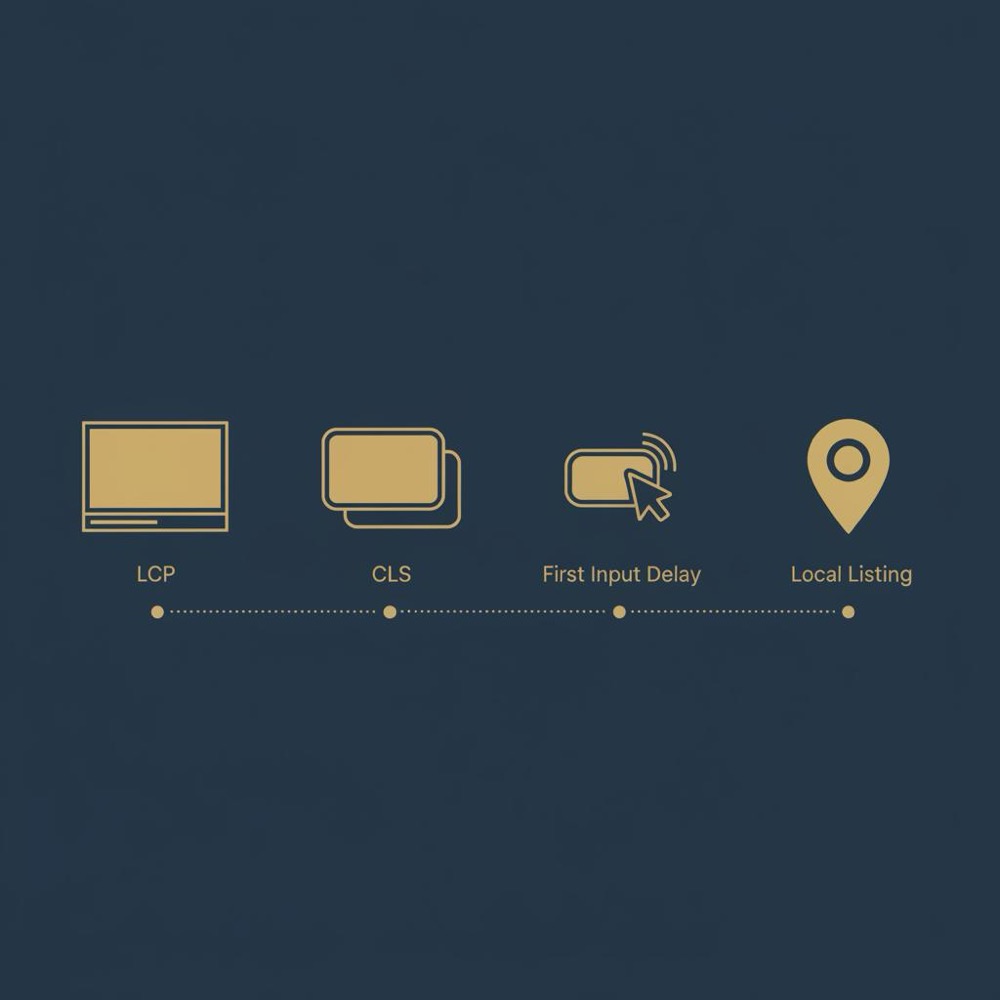
For technical priorities in organic SEO, Core Web Vitals are vital signals you can measure and improve. Reasonable targets include Largest Contentful Paint (LCP) under 2.5 seconds and Cumulative Layout Shift (CLS) under 0.1. Watch crawl budgets and canonical logic closely - a small mistake there can lead to massive indexation issues. For local visibility, consistency of NAP (name, address, phone) and a well-curated Google Business Profile matter. For links, aim for a natural-looking pattern: local citations, editorial links, and relevant niche placements.
How to build a repeatable organic SEO process
Sustained gains come from repeatable processes, not one-off hacks. Establish a cadence across the three pillars: a weekly check of Search Console for critical alerts, a monthly crawl and Core Web Vitals review, and a quarterly content planning cycle grounded in a refreshed keyword map. Make clear ownership: who vets content quality, who handles technical fixes, and who runs outreach.
Yes - a well-structured long-form article aimed at high-intent informational queries can create discovery moments that guide readers to product pages. With thoughtful internal linking, schema for rich results, technical checks for speed and mobile stability, and a light outreach campaign to earn links, one authoritative guide can feed product pages with qualified visitors over months.
Four concrete examples of organic SEO that deliver
Below are four practical, high-impact examples you can follow step-by-step. Each example includes a keyword map, an on-page checklist, technical tests, outreach workflows, and KPIs to track. These show what organic SEO looks like when it’s practical and repeatable.
1. A practical, high-performing blog article (long-form content)
Imagine a company that sells high-quality kitchen tools and wants more traffic to a deep guide on choosing the right chef’s knife. The goal is to attract buyers who will later browse product pages - not just chase vanity rankings. The path begins with a keyword map and clear intent mapping.
Keyword mapping and intent
Build a two-axis keyword map: intent (informational, transactional, navigational) on one axis and search volume/competition on the other. Pull keyword ideas from Google Search Console, a keyword tool, related searches, and the “People also ask” boxes. Cluster phrases into a primary cluster (e.g., “chef’s knife guide”), secondary clusters (e.g., “knife length for home cook”), and long-tail questions (e.g., “how to maintain a chef’s knife”). This cluster becomes the editorial plan for the guide and the internal linking strategy.
On-page checklist for the guide
Follow a simple on-page checklist when publishing a long-form article as part of your organic SEO work:
Title & meta: create a clear title and meta description that match search intent while inviting a click. Avoid clickbait phrasing; be useful.
H1 and structure: use a single H1 that clearly states the topic; break anatomy with H2 and H3 sections so readers can scan.
Schema: add Article or FAQ schema where relevant so rich results can improve your CTR.
Internal linking: link from topical product pages into the guide and from the guide to product category pages with descriptive anchor text. This distributes relevance and gives readers clear next steps.
Media & layout: use images, charts, and short captions to make the guide scannable. Make sure images are compressed and responsive to protect page speed metrics affecting organic SEO.
Technical tests for the article
Run a site-crawler to confirm the page is reachable, canonicalized correctly, and included in your XML sitemap. Check page speed with Lighthouse or WebPageTest and validate structured data with Google’s Rich Results Test. Test the article on a mid-range mobile device to watch for layout shifts that impact CLS. Finally, confirm the page is discoverable via internal navigation and set up tracking in GA4 to capture events like scroll depth and outbound clicks to product pages.
Outreach workflow
Start outreach before and after publication. Build a short list of relevant blogs, journalists, and influencers who cover culinary topics. Draft a compact outreach message highlighting unique assets like original data, an interactive chart, or exclusive photo angles. Offer the guide as a resource they can link to or reference. Track incoming links and follow up gently two weeks later if you haven’t heard back.
KPIs: What to watch
Focus on organic sessions to the page, ranking positions for target clusters, CTR from search impressions, engagement metrics (time on page, scroll depth), and the number of internal clicks leading to product pages. Over three months you want rising impressions and clicks in Search Console; over six months you should see conversions traced in GA4.
2. A product or category page that converts
Product and category pages sit at the junction of commercial intent and usability. Begin with a keyword map that separates pure product terms from comparative or commercial-modifier queries. Map primary keywords to category pages, and feed long-tail informational phrases into supporting blog content and FAQs.
On-page work for category pages
Write a unique, commercial-focused description for the category. Avoid thin, manufacturer-provided text. Place a short, helpful opening paragraph above product listings describing what makes the category unique and what shoppers should look for. Use H-tags to organize filters and subcategories, and add schema for product listings and breadcrumbs to help search engines present your pages neatly.
Technical attention: crawl efficiency and pagination
Filters and faceted navigation can create many near-duplicate pages. Use rel=canonical where appropriate, or implement clean URL parameters so crawlers and users see a consistent structure. Consider server-side rendering for complex faceted navigation so crawlers can parse a stable HTML interface. Run a crawler to find orphaned product pages, broken JS links, and duplicate titles - issues that directly harm how search engines index and rank your store.
Outreach and link-building
Pitch editorial round-ups or gift guides that naturally include your category pages. Partner with niche reviewers and sampling programs to earn contextual, relevant links. Track referring domains and set a monthly cadence to review new links and citations.
KPIs for conversion
Track organic sessions, ranking spread for assigned keywords, CTR from search, add-to-cart rate for organic arrivals, conversion rate, and revenue per organic visitor for the category. These metrics allow you to judge the commercial value of search traffic and prioritize keywords that bring valuable buyers.
3. Local listings that bring footfall and calls
Local SEO is precise: a single wrong phone number across directories can cost a week of calls. Start with a local inventory of every listing - Google Business Profile, Apple Maps, Yelp, local directories, and niche apps - and confirm NAP consistency across them.
On-site local signals
Ensure your Google Business Profile is complete with accurate hours, photos, and posts. Create a location page on your site that mirrors the business name as listed, includes a click-to-call phone number, visible opening hours, and a short paragraph about the neighborhood and services. Add local schema with opening hours and geo-coordinates. Encourage and respond to reviews promptly; polite responses show care and influence local rankings.
Technical checks for local SEO
Verify the address is correctly structured and marked up in the HTML, that the page loads well on mobile, and that you do not have competing location pages targeting the same search intent. Use directory checkers to find inconsistent citations and fix them manually or with a citation management tool.
Outreach for local presence
Local outreach is about community relationships: connect with the local food blogger, neighborhood Facebook groups, and local press. Offer tasting events, behind-the-scenes posts, or partnership promotions that attract local links and social mentions.
KPIs for local success
Track phone calls from organic search, driving direction requests from Google Business Profile, organic sessions to the location page, local ranking positions, and conversion signals such as contact form submissions or bookings. Use call-tracking tools where possible to map calls back to sessions and compute revenue per organic visitor for local channels.
4. A technical fix that moves results quickly
Some of the fastest wins in organic SEO are technical. Consider a site suffering slow mobile load times and indexation issues caused by inconsistent canonical tags. The workflow begins with an audit: run a crawler, collect 404s, redirect chains, duplicate titles, and indexation mismatches from Search Console.
Prioritize and fix
Create a prioritized fix list: remove render-blocking JS, defer non-critical scripts, compress images and serve modern formats, and improve server caching. Ensure server-side rendering or dynamic rendering where JS frameworks obscure critical content from crawlers. Fix canonical tags so each logical page has one canonical URL and eliminate redirect chains that waste crawl budget.
Testing and validation
After deploying fixes, re-run crawls and speed tests. Track Core Web Vitals in Search Console and field data to ensure LCP and CLS improve. Monitor indexation and ranking changes over the next weeks. If errors fall and Core Web Vitals improve, expect better crawl efficiency and increased visibility for previously affected pages.
Measurement, attribution, and honest uncertainty
Measuring SEO impact requires care. The standard toolkit includes Google Search Console for ranking and query visibility, GA4 for behavior and conversions, a site-crawler for structure, Lighthouse/WebPageTest for speed, local directory checkers, and a link monitor for earned links.

Orvus Ltd. offers automation and reporting features that can consolidate these data sources, run recurring audits, centralize link monitoring, and automate stakeholder reporting. This saves manual pulls and helps teams focus on strategic choices rather than repetitive tasks. A small logo on recurring reports can help with brand recognition.
For broader reading and examples you can reference external guides such as Mailmodo's SEO examples, SEO.com's actionable examples, and Gracker.ai's programmatic SEO case studies.
The attribution challenge
Organic discovery often begins long before conversion. A user might find a brand through an article, later return via email or paid channels, and then purchase. Last-click attribution undercounts SEO’s role. Consider modelled attribution (first-touch, position-based, or data-driven) for a fuller picture and document the method you use so stakeholders understand its limits.
How much traffic should come from organic search?
Benchmarks vary by industry. In many sectors, organic channels drive roughly 40-60% of total traffic, but that range depends on market and product. Instead of chasing benchmarks blindly, measure current contribution and set staged goals: increase organic sessions by X% in six months and improve revenue per organic visitor over a year.
Operationalizing organic SEO: playbooks and cadence
Build simple playbooks for common tasks: an on-page checklist for new content, a canonical and pagination guide for engineers, and a local citation checklist for listings. Store these playbooks where the team can access and apply them. An effective cadence might be weekly Search Console checks, monthly technical crawls, and quarterly content planning.
Automation can help where tedious checks sap time. Orvus' automation capabilities can pull Search Console and GA4 data into a single dashboard, centralize link monitoring, and schedule recurring scans so teams spot regressions early. The strategic choices - which topics to cover, which bugs to fix first, which publishers to contact - still require human judgement. Learn more about the team at Orvus' homepage and find practical reading in our useful knowledge section.
Practical tips that pay off
Start small and measure. A few high-quality pages guided by a clear keyword map often outperform dozens of thin pages. Treat Core Web Vitals as continuous signals, not one-off tasks. When you change canonical rules or URL structures, plan redirects carefully and monitor impact in Search Console.
When measuring revenue from organic channels, be methodical about attribution and run modelled approaches if last-click reporting feels misleading. Remember the human side: good content answers a question clearly, a fast page keeps people reading, and a sincere local response builds trust. Search engines often follow where users are well treated.
Tools that help with organic SEO
Common, practical tools for organic SEO include: Google Search Console, GA4, a reliable site-crawler (Screaming Frog or similar), Lighthouse/WebPageTest for speed, Rich Results Test for schema, local directory checkers, and a link monitor for earned links. Orvus’ tools can integrate many of these into recurring reports and dashboards to reduce manual toil.
Wrap-up: pick one example and run a 30-day plan
To turn ideas into action, pick one of the four examples and create a 30-day plan: a three-week production and testing window followed by a metrics check at week four. Use Search Console and GA4 as your truth sources, run a crawl and speed tests to baseline the technical state, and set an outreach cadence for link or citation building. If helpful, Orvus can automate recurring data collection so your team spends more time on judgement and less on manual pulls.
Organic SEO is a long game but a measurable one: with clear goals, disciplined measurement, and a steady process mixing content, technical care, and reputation attention, you can build a lasting stream of qualified traffic that becomes customers.
Begin with a short technical audit and a keyword map. Check Search Console for indexation issues, run a site-crawl to find broken pages and duplicate titles, and baseline Core Web Vitals with Lighthouse or WebPageTest. Parallel to technical checks, build a small keyword map focused on a handful of high-value topics and create an on-page checklist for new content - clear H1s, meta titles, schema where relevant, and internal linking to product pages. Track organic sessions and impressions in Search Console and set weekly check-ins.
Timelines vary, but realistic expectations help. You can see CTR improvements within weeks after updating meta titles and descriptions. Ranking and organic session growth commonly show steady improvements over three to six months for content and local efforts. Technical fixes can produce faster wins: improvements in Core Web Vitals and crawlability often translate to better indexing and visibility within a few weeks. Conversion and revenue per visit can take longer because they depend on product and UX improvements beyond search.
Yes - Orvus offers automation and reporting tools that consolidate Search Console, GA4, and link monitoring into a single dashboard. This reduces manual data pulls and frees your team to focus on strategy and execution. Orvus works as a strategic growth partner, embedding automation where it eases recurring tasks and clarifies decision-making.
References
Want this kind of work done for your business?
We build and run AI-powered marketing and automation. 15 minutes, honest assessment.
Book a call