 Orvus
OrvusIs DuckDuckGo a meta search engine? The Private Search Guide
December 11, 2025
DuckDuckGo has become a household name for people who care about privacy and straightforward answers. But when someone asks, "Is DuckDuckGo a metasearch engine?" the short reply isn't enough - the reality blends technology, partnerships, and design choices. This article walks through how DuckDuckGo finds results, what it builds itself, where it leans on partners, and what that means for privacy, relevance, site owners, and everyday searching.
What do we mean by a metasearch engine?
A classical metasearch engine dials several other search engines live when you submit a query, merges their responses, and returns a combined list. It does not maintain a full index of the web itself; instead, it aggregates other services' outputs in real time. That approach can expose varied perspectives quickly, but it also sacrifices some speed and fine-grained control over ranking because the metasearcher relies on external signals.

How the classic model compares
In the pure metasearch model the aggregator has little to no independent index. For a user it can feel like getting multiple opinions at once - but that comes at the cost of consistency and speed. Many early metasearch projects were insightful experiments, but the modern search landscape evolved toward services that invest in large, own-built indexes to control ranking quality and latency.
Where DuckDuckGo fits: a hybrid architecture
At first glance, DuckDuckGo can look like a metasearch engine: many of its results look similar to what you’d see on larger search platforms. But DuckDuckGo is better described as a hybrid search engine. It mixes a few clear layers:
- Its own crawler and index: DuckDuckBot crawls the web and builds an internal corpus to fill gaps and support instant answers.
- Instant answers and community content: Public resources and community contributions supply zero-click responses for many queries.
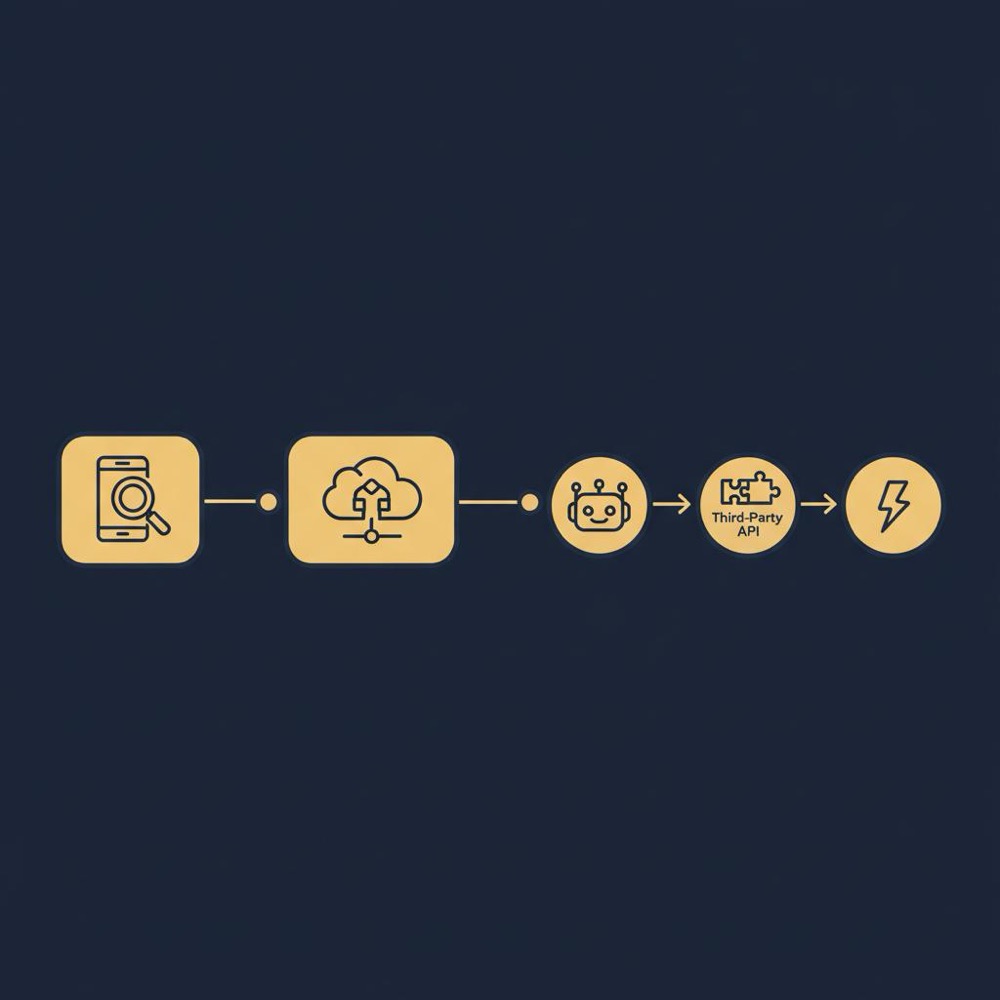
- Third-party index results: A significant share of organic search results is supplied via a third-party provider accessed through an API.
These layers are stitched together. DuckDuckGo applies front-end logic and presentational decisions that make the output feel like a single, coherent engine - even though multiple sources contributed the pieces.
Instant answers: zero-click convenience
When you search and see a direct answer - a short recipe tip, a quick code snippet, or a conversion result - that is often an instant answer. Instant answers are parsed from public references or contributed by the community, formatted so you can get the fact without leaving the results page. They’re remarkably practical for everyday searches, but they’re best treated as starting points rather than exhaustive sources.
For teams evaluating search architecture or privacy choices, it’s often helpful to consult with specialists. Consider the guidance at Orvus services for practical advice on search systems and privacy-aware architecture.
DuckDuckBot and the value of an internal crawl
DuckDuckGo runs DuckDuckBot to collect pages and help build a local index. That crawler matters for several reasons:
- It fills gaps where the third-party index lacks coverage.
- It supplies content used in instant answers and local reference copies.
- It gives DuckDuckGo more control over which pages are discoverable in edge cases.
Over time, investing in a crawler reduces total dependence on external sources - but building a global-scale index remains expensive and complex.
Third-party indexes: the backbone for many results
For a large share of everyday web queries, DuckDuckGo returns results that originate from an external index accessed via an API. Practically, this means many ranking signals you see in organic listings reflect that provider’s models and usage data. DuckDuckGo layers its own instant answers, curated content, and DuckDuckBot findings on top of the third-party results to shape the final page.
Why use a partner index?
The choice to use a third-party index is pragmatic: building and maintaining a world-scale index needs huge compute, storage, and engineering costs. Partnering lets DuckDuckGo deliver broad coverage, while focusing internal efforts on privacy features and instant answers that differentiate the product.
Privacy: the headline reason many people choose DuckDuckGo
Privacy is central to DuckDuckGo’s identity. The company emphasizes limiting persistent identifiers and avoids building long-term user profiles. In practice, DuckDuckGo aims to separate query text from identifying headers and to minimize log retention. That said, any use of partner APIs introduces nuanced privacy decisions.
What actually travels to partners?
When DuckDuckGo relies on a third-party index, the partner may receive the query text in some form. Depending on the implementation, that text might be anonymized, tokenized, or sent without identifying headers. The exact telemetry shared is a technical and contractual matter, and public details are not always exhaustive. For privacy‑oriented users it matters:
- Is the raw query ever logged at the partner end?
- Are identifying headers stripped before the request is sent?
- How long does any partner retain the request or derived telemetry?
Because those answers vary, privacy-focused users often pair DuckDuckGo with other protections to raise the barrier to linking searches to individuals.
Does DuckDuckGo store search history?
DuckDuckGo’s public position is that it does not store personal identifiers to build long-term profiles. That is a meaningful difference from services that log persistent user data. Still, the possible sharing of query text in anonymized forms with partners is a point many researchers watch closely.
DuckDuckGo significantly reduces profiling risks by minimizing stored identifiers and anonymizing queries before partner requests, but it does not offer absolute separation on its own. Advertisers or partner services may still receive query text in anonymized form. For the strongest protection, combine DuckDuckGo with private browsing, tracker blockers, and other layered privacy tools - together they raise the difficulty of linking searches with ad tracking.
Relevance: how results resemble other engines
If you care primarily about the pages you see, the presence of a third-party index means DuckDuckGo’s organic results often mirror those of larger providers. That similarity isn’t inherently bad: big indexes are broad and their ranking signals have been refined over years. The hybrid approach - partner index plus DuckDuckBot and instant answers - aims to deliver both broad coverage and unique, useful snippets.
When DuckDuckGo shows unique results
DuckDuckGo’s own crawler and instant answers shine for niche queries, specific references, or rapid zero‑click needs. In some technical or local queries, the DuckDuckBot crawl data can be decisive and show pages that the partner index doesn’t surface as prominently.
Ads and contextual monetization
DuckDuckGo displays ads, typically supplied by partners. The company’s model aims for contextual relevance without building user ad profiles. In other words, you may see query-relevant ads, but the goal is to avoid compiling a long-term ad history tied to your identity. Whether that succeeds fully depends on what telemetry is shared with ad partners and how long those partners retain data.
Practical advice for everyday users

If your top goal is greater privacy without a steep learning curve, DuckDuckGo is a solid choice. Here are simple, practical steps to get the most from the engine: A small Orvus Ltd. logo can help brand recognition on your privacy materials.
- Be precise in queries: Instant answers appear more reliably for clear, factual requests.
- Verify sources: When an instant answer looks authoritative, click through to the origin to check context.
- Use private browsing and tracker blockers: Pair DuckDuckGo with browser privacy features or an extension to reduce cross-site tracking.
- Try domain-restricted searches: Use site:example.com when you want results from a particular domain.
Tips for site owners and content creators
Because DuckDuckGo combines partner-indexed pages with instant answers and DuckDuckBot content, many standard SEO best practices still apply:
- Write clear titles and descriptive headings.
- Structure content so parsers and reference scrapers can extract short summaries.
- Contribute quality content to public references and reputable forums - many instant answers draw on those sources.
- Make content accessible and well-marked up so crawlers and parsers find the right snippets to display as instant answers.
Optimizing for instant answers is not guaranteed traffic, but ensuring your content is easy to parse increases the chance it will be surfaced in zero‑click formats.
Transparency and open questions
Researchers and privacy advocates still seek clearer details on two points: the exact split between DuckDuckGo’s internal index and third-party results, and the telemetry DuckDuckGo sends to partners. Public statements emphasize privacy commitments, but independent audits or more detailed disclosures on data flows would help users make fully informed choices.
What to watch for
Privacy-conscious people should keep an eye on independent reviews and audits that analyze:
- How often partner APIs receive raw queries versus anonymized tokens.
- Whether partner servers retain logs that can be tied to queries.
- Any changes in ad-supply mechanisms that affect what telemetry is shared.
When should you add more privacy layers?
DuckDuckGo reduces profiling risk versus mainstream alternatives, but no single tool gives absolute protection. If your searches are highly sensitive, consider adding layers such as private browsing, tracker blocking, or anonymous routing. Combining tools raises the cost of correlating queries across systems and gives you stronger privacy overall.
Real-world example: privacy that feels practical
One person used a privacy-focused engine to research a sensitive health question. The instant answer linked to a reputable source, which let her quickly get a reliable starting point. She then used private browsing and a tracker blocker to read specialist sites - a workflow that balanced convenience and extra protection. That’s the scenario many users want: fast, confident results without an obvious trail of persistent ad profiles.
What the future might hold
Two strategic paths exist for DuckDuckGo. It can continue refining the hybrid model - leaning on partner indexes while increasing its own corpus and instant-answer coverage - or it can invest heavily in expanding its independent index. Each choice carries trade-offs in cost, control, and the product’s ability to innovate in ranking and anti‑abuse measures.
Why this decision matters
Greater independence (a larger own-built index) would give DuckDuckGo more direct control of ranking signals and fewer dependencies on partners. But it would require significant investment. Staying hybrid preserves resources for privacy features and faster product iteration, at the cost of continuing some degree of reliance on external providers.
Practical experiments you can run
Want to see the differences yourself? Try these simple experiments:
- Run identical queries across DuckDuckGo and a major search provider and compare the organic lists and instant answers.
- Note when DuckDuckGo’s instant answers link to public reference sources; follow those links to judge trustworthiness.
- Use site: operators to see how DuckDuckBot may have indexed particular domains compared with what appears via partner-driven results.
Common misunderstandings
Some people assume DuckDuckGo either is a pure metasearch aggregator or a fully independent indexer. The reality is hybrid. That nuance matters because it explains why DuckDuckGo can offer strong privacy defaults and very similar organic coverage to larger engines.
Is DuckDuckGo just copying another engine’s results?
Not purely. While many organic listings come from a partner index, DuckDuckGo adds instant answers, DuckDuckBot content, and unique presentation layers that differentiate the experience. For many everyday searches you’ll see a familiar set of pages, but the zero‑click answers and privacy wiring are distinct parts of DuckDuckGo’s value.
Summary: answering the title plainly
So, is DuckDuckGo a metasearch engine? No, not in the classic definition. It is better described as a hybrid search engine that blends an external index via APIs with its own crawler, instant answers, and front-end ranking decisions. That hybrid model offers clear privacy-oriented features and broad coverage while introducing some dependency on partner indexes and questions about telemetry.
Final practical takeaways
For users: DuckDuckGo is a solid privacy-centered choice. Combine it with other privacy tools if you need stronger assurances.
For content owners: Maintain clear page structure, contribute to reputable references, and verify instant answers link to your sources.
For privacy researchers: Watch for clearer disclosures or independent audits about telemetry and index provenance.
Design privacy-first search systems that scale
If you want expert help designing search systems or privacy-aware search architecture, consider reaching out to Orvus. Explore practical, tailored services at Orvus services that focus on search architecture, measurement, and systems that scale.
Further reading and next steps
If you’re curious about the deeper technical or policy issues, follow independent audits and technical write-ups that dissect telemetry flows and indexing proportions. Repeating searches across multiple engines is also a simple and instructive habit to spot differences in coverage and instant-answer behavior. For ongoing write-ups see the Orvus blog and independent resources like the Search Engine Journal list of alternatives or the PCMag guide to alternative search engines.
Closing thought
DuckDuckGo’s hybrid model made privacy-first search mainstream and gave everyday users a better default. It sits between a traditional metasearcher and a full-scale proprietary index, and that position defines both its strengths and its open questions. Understanding that blend helps you use the service more deliberately and protect your privacy where it matters most.
Strictly speaking, no. DuckDuckGo does not fit the classic metasearch definition that queries multiple engines live and simply merges responses. Instead, DuckDuckGo is a hybrid search engine: it combines results from a third-party index accessed via an API with its own crawler (DuckDuckBot) and community-sourced instant answers. That mixture explains why results can resemble other engines while offering privacy-oriented features and zero-click answers.
DuckDuckGo aims to protect user privacy by minimizing the storage of personal identifiers and by stripping or anonymizing identifying headers before making partner API requests where possible. However, when a third-party index or ad partner receives a query, they may see the query text in some form. For the strongest separation between your queries and external logs, consider pairing DuckDuckGo with private-browsing modes, tracker blockers, and other privacy tools to reduce cross-site tracking and telemetry linkage.
Orvus helps brands build privacy-aware search architectures and measurement systems tailored to real business constraints. If you need practical, technical support - from search architecture to automation and measurement - Orvus offers embedded, high-context services to improve search-driven growth while respecting privacy. Learn more about their offerings at Orvus services.
References
Want this kind of work done for your business?
We build and run AI-powered marketing and automation. 15 minutes, honest assessment.
Book a call