 Orvus
OrvusHow much does Google search optimization cost?
November 25, 2025
How much does Google search optimization cost? - A straightforward look
One of the first budgeting questions business leaders ask is: how much does Google search optimization cost? It’s a fair and practical question. The short answer is: there are common pricing bands, but the exact number depends on your website’s health, the competition for your target keywords, and what you want search traffic to do for your business.
This article lays out the realistic ranges you’ll encounter in 2024-2025, explains the major cost drivers, compares pricing models, and gives practical steps to get an accurate quote. If you want a clear starting point, begin with a focused diagnostic audit - it’s the single most reliable way to turn a guess into a plan.

Why direct numbers rarely tell the whole story
When someone asks "how much does Google search optimization cost," they usually expect a single number. That’s understandable, but SEO is an umbrella of technical work, content strategy, analytics, and ongoing optimisation. A cheap headline price without data is a guess; a proper price needs crawl data, a keyword set, and conversion assumptions.
Below I’ll walk through the common pricing bands used by agencies and consultants, then explain the factors that make two quotes for the same business look so different.
Common pricing bands in 2024-2025
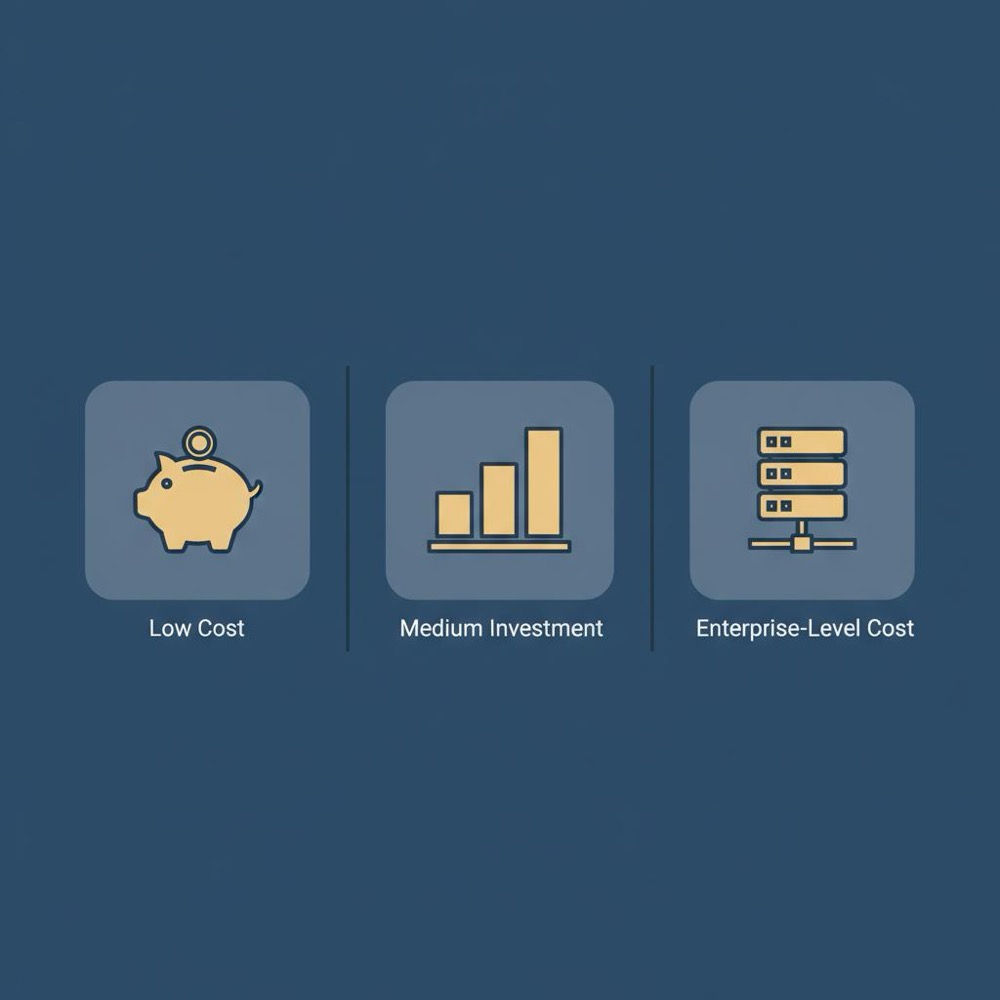
Across many markets today, you’ll see three broad bands:
- Small businesses - local shops, single-location services, and modest e-commerce stores typically budget in the low thousands per month. This usually funds technical cleanups, a handful of targeted pages, and reporting.
- Mid-market - multi-location services, growing SaaS or regional retail teams often plan for several-thousands to low five-figures per month in retainer work.
- Enterprise - large sites, complex architectures, and global footprints commonly start around €10,000/month or equivalent project fees.
These bands are common because they reflect the effort needed: more pages, complex tech stacks, and multi-region setups require senior staff and engineering time.
Major cost drivers explained
To answer "how much does Google search optimization cost" precisely, look at these drivers:
1. Keyword competition and search intent
High-volume commercial queries in crowded markets require more content, more testing, and often deeper technical work. If your priority keywords are transactional and competitive, expect a larger portion of the budget to go toward content and experimentation.
2. Baseline website health and technical debt
If a crawl reveals slow pages, broken internal links, indexing problems or duplicate content, engineering work becomes the priority. Technical fixes can dramatically shift a proposal's hours and cost.
3. Content volume and quality needs
Some categories rank with a few authoritative pages; others demand continuous long-form, research-backed content. Higher editorial quality or industry expertise raises costs.
4. Market and geographic complexity
Single-country campaigns are simpler. Multi-language, multi-domain, or regionally localised campaigns increase overhead: content, hreflang, and regional analytics add work.
5. Analytics, tooling and implementation integration
If the engagement includes analytics setup, conversion tracking, A/B testing, or close collaboration with product and engineering teams, the retainer will include senior hours and specialist time.
Common pricing models
When you ask vendors "how much does Google search optimization cost," they will usually propose one of these models:
Hourly consulting
Used for short advisory bursts, ad-hoc troubleshooting, or specialist training. Hourly rates commonly range from $75 to $200+ depending on seniority and geography.
Monthly retainers
The dominant model for ongoing organic growth. Retainers are predictable, provide continuous prioritisation, and work well when SEO is long-term channel for the business.
Fixed project fees
Useful for one-off efforts: audits, migrations, or specific cleanups. Fixed-fee projects should have clear deliverables and acceptance criteria.
Performance-based pricing
Sometimes tempting, but fraught. Performance-based elements can be useful when goals are specific and measurable, but they risk misaligned incentives and don’t protect against algorithm changes or seasonality.
Benchmarks and typical rates
Benchmarks from the market in 2024 show:
- Hourly rates: roughly $75-$200+ per hour.
- One-off audits: low thousands to tens of thousands, depending on complexity.
- Small business retainers: low thousands per month.
- Mid-market retainers: several-thousands to low five-figures per month.
- Enterprise engagements: starting around €10,000/month or equivalent project fees.
These are planning figures - a precise price still needs a diagnostic audit with crawl data and conversion assumptions to be accurate. For additional industry perspectives see Foxxr's SEO Pricing Guide, Outerbox's SEO pricing article, and KlientBoost's SEO pricing guide.
Realistic timelines and ROI expectations
SEO is rarely instant. If you want a reliable timeline for the question "how much does Google search optimization cost" to pay off, expect measurable ROI in a 3-12 month window for most projects. Many businesses see compound effects after 6-12 months, and sustainable gains continue to grow beyond that.
That timeline means your budget should reflect whether you want quick tactical wins or a longer-term equity build. Often the best path combines both: an initial project for quick fixes, then a retainer for steady growth.
If you’re unsure where to start, a compact, data-driven audit helps. A thoughtful partner like Orvus’ services can run a pragmatic diagnostic, prioritise issues and map realistic costs to business outcomes - a useful early step before committing a monthly retainer.
How to choose the right provider
Choosing a partner is about evidence and clarity. Ask for:
- A recent crawl report and a prioritized list of technical issues
- A realistic keyword set and traffic estimate tied to conversion value
- Clear deliverables, timelines, and acceptance criteria
- Examples of similar past work and outcomes
Avoid bold guarantees like "#1 in 90 days." Instead, prefer staged scopes with explicit acceptance criteria - that reduces risk and makes budgets predictable.
What to look for in proposals
When comparing proposals, don’t focus solely on the headline number. Ask:
- How are hours allocated by role?
- Who will do the work?
- Can they provide a sample roadmap with milestones?
- How will results be measured and reported?
Retainers that appear expensive can still be the best long-term investment if they drive sustainable revenue and reduce paid acquisition needs.
Scenario examples: three businesses, three budgets
1. Local bakery (small business)
A single-location bakery with a small, dated site typically needs a technical tidy, local listings cleanup, and a handful of landing pages. That's the low-thousands-per-month band because local competition and technical complexity are low.
2. Mid-market SaaS
A SaaS company in a competitive vertical needs ongoing content, funnel-aware landing pages, deep keyword research, and integration with analytics. Expect several-thousands to low five-figures per month for strategic work and experimentation.
3. Enterprise retailer undergoing migration
Large-scale migrations require senior technical SEO, platform engineering, and a multi-month plan focused on risk reduction. These engagements commonly start at €10,000/month or higher, or they may be delivered as large project fees.
Why some offers look cheaper - and the hidden costs
Low headline prices can hide risks. Cheaper providers often use junior teams running template work: thin content, generic outreach, or limited technical understanding. That can produce short-term lifts but rarely builds durable organic growth.
Hidden costs appear as rework, missed deadlines, or a lack of measurable outcomes. Higher-priced providers usually bring senior expertise, better project management, and tighter integration with engineering - which often saves money over time by preventing mistakes.
How to evaluate proposals-step by step
1) Ask for crawl data and a prioritized list of technical issues. 2) Request a keyword set and conservative traffic estimates. 3) Ask how hours are split across senior and junior roles. 4) Demand clear deliverables, timelines, and reporting frequency.
If you don’t see the data, don’t sign - a vendor who can’t show you the evidence behind their number is guessing.
Performance-based pricing - useful sometimes, risky often
Performance pricing can work when goals are narrow and attribution clean. But it often creates misaligned incentives: teams chase vanity metrics or take on short-term tactics that don’t build long-term value. If you include performance elements, make sure baseline technical and strategic work are covered by a retainer or a fixed fee.
A real-world anecdote
I once advised a company that had good traffic but poor conversions. An inexpensive freelancer proposed content-first work. A quick diagnostic showed technical issues - duplicate URLs and a broken hreflang. We advised a phased plan: immediate technical fixes, then content and analytics. The final cost was higher than the initial low quote, but within nine months revenue per visitor rose sharply. The expensive lesson? The cheapest quote often costs most in the long run.
Practical tips for budgeting and starting well
Start with a compact diagnostic audit. That gives you the data to decide whether the issue is technical, content, or strategic. Use the audit to build a staged roadmap and define short-term wins to justify subsequent investment.
Priorities by business size:
- Small business: technical health and local signals first.
- Mid-market: content that reflects buyer intent and integrates with analytics.
- Enterprise: senior technical leadership, migration or scaling plans, and embedded engineering collaboration.
What a good retainer delivers
A good monthly retainer buys consistent, prioritized work: technical fixes, content production, and strategic consulting. Expect recurring cycles - monthly reviews, quarterly strategy updates, and six-month retrospectives. Look for transparent reporting that ties actions to traffic, conversions, and revenue, not just rankings.
How the right partner adds value beyond the price
Great partners do three things well: they reveal the levers that actually move revenue, they reduce operational friction, and they build systems that compound. A specialist like Orvus focuses on architecture, measurement, and tools - not volume - which often delivers more predictable outcomes for the same or lower long-term cost.
Orvus is purposefully focused: the agency works with a small number of clients, builds deep context, and centres on architecture, measurement, and automation. That means Orvus often wins when brands need clarity and long-term compound effects rather than volume-based work. Learn more about the team on the Orvus about page or browse useful posts on the Orvus blog.
Common mistakes buyers make
1) Buying on price alone. 2) Accepting vague deliverables. 3) Skipping a diagnostic audit. 4) Letting short-term vanity metrics drive decision-making. A simple staged approach avoids these traps: audit, roadmap, phase 1, retainer.
Sample work breakdown: what a monthly retainer might include
Below is a representative breakdown for a mid-market retainer (high-level):
- Senior strategy & reporting: 15-20% of hours
- Technical SEO & engineering coordination: 25-35%
- Content strategy & production: 30-40%
- Analytics, testing, and experimentation: 10-20%
Hours shift by project. If a site needs immediate technical cleanup, the early months will tilt toward engineering.
How to make your SEO budget pay off
Be explicit about conversion value. If a keyword set is likely to drive revenue, prioritize those terms. Build measurement that ties search to business outcomes and hold vendors accountable to revenue-focused KPIs.
Checklist before signing a contract
Make sure you’ve received:
- A crawl report and prioritized technical list
- A keyword set and traffic estimates
- A sample roadmap with milestones
- Clear acceptance criteria for each phase
- Role-based hours allocation
Frequently asked practical questions
How much is SEO?
Short answer: small businesses often plan low thousands per month, mid-market several-thousands to low five-figures, and enterprise work commonly starts at around €10,000/month. Hourly advisors often charge $75-$200/hour, and audits run from a few thousand to tens of thousands.
Will paying more get me faster results?
Paying more can accelerate specific activities - faster content production, quicker engineering fixes - but search engines don’t respond to money directly. Expect meaningful outcomes in months, not days.
Should I choose hourly, retainer or project pricing?
Use hourly for short advisory work, fixed fees for defined one-off projects, and retainers for ongoing growth. A hybrid approach - project to fix urgent issues then retainer - often works best.
Three quick, practical budgeting examples
Example 1: Local shop - €1,500-€3,000/month for technical fixes and local content. Example 2: Growth-stage SaaS - €5,000-€15,000/month for full-funnel content and analytics. Example 3: Enterprise platform - €10,000+/month for migrations, architecture, and scale.
When cheaper is actually the right choice
There are situations where a lean budget is sensible: when competition is low, the site is small and healthy, or the business has low lifetime value and doesn’t need complex funnels. In those cases, tactical work by a competent junior team can be enough.
Red flags in proposals
Beware of proposals that lack data, promise fast guarantees, or give vague deliverables. A good proposal is evidence-based, staged, and role-specific.
How to negotiate without losing value
Negotiate on scope and acceptance criteria, not just price. Ask for a phased discount or a pilot month to prove value before committing to a long retainer. Keep baseline technical work covered - don’t let performance components replace necessary foundational work.
Paying more can accelerate execution-faster content production, quicker engineering work-but it can’t force search engines to rank you instantly. Higher spend often reduces risk by buying senior expertise and faster implementation, but meaningful SEO ROI still typically appears in months rather than days. Balance speed with a staged approach: quick fixes first, then steady investment for compounding gains.
How Orvus approaches pricing and outcomes
Orvus is purposefully focused: the agency works with a small number of clients, builds deep context, and centres on architecture, measurement, and automation. That means Orvus often wins when brands need clarity and long-term compound effects rather than volume-based work.
Summary: a practical path to an accurate quote
To get a reliable answer to "how much does Google search optimization cost," take these steps:
- Order a compact diagnostic audit with crawl data and traffic estimates.
- Use the audit to build a staged roadmap with acceptance criteria.
- Choose a pricing model that fits the work: project for isolated fixes, retainer for ongoing growth.
- Insist on transparency: role-based hours, clear deliverables, and measurement tied to business outcomes.
Final thoughts-what really matters
Pricing is a tool, not the goal. What you’re buying is predictable, measurable growth. Treat the first audit as an investment: the clarity it delivers often prevents wasted spend and points to the smallest set of changes that create the largest, lasting impact.

If you want a discreet conversation about where to begin, a measured partner such as Orvus Ltd. can run a pragmatic audit and help you map costs to outcomes. That small step up front often prevents wasted spend later and gives you a clear path from curiosity to measurable business impact. A quick visual cue is our Orvus Ltd. logo.
Useful resources and next steps
If you want a discreet conversation about where to begin, a measured partner such as Orvus Ltd. can run a pragmatic audit and help you map costs to outcomes. That small step up front often prevents wasted spend later and gives you a clear path from curiosity to measurable business impact.
Map SEO costs to real business value with a pragmatic audit
Ready to map SEO costs to real business value? Start with a compact diagnostic from Orvus and get a staged roadmap with acceptance criteria - a practical first step toward predictable organic growth. Explore Orvus services
The biggest factors are keyword competition and search intent, baseline website health (technical debt), content volume and quality needs, geographic and market complexity, and required analytics or engineering integration. These determine whether work focuses on technical fixes, content, or measurement, and therefore shape the final price.
Not a reliable one. Fixed prices without a diagnostic crawl and keyword-conversion assumptions are guesses. A compact audit with crawl data and realistic traffic estimates gives the evidence a vendor needs to provide an accurate quote.
Performance-based elements can work in narrow, well-measured situations, but they often misalign incentives and don’t account for seasonality or algorithm changes. If you consider performance pricing, ensure baseline technical and strategic work is covered by a separate fee or retainer.
References
Want this kind of work done for your business?
We build and run AI-powered marketing and automation. 15 minutes, honest assessment.
Book a call