 Orvus
OrvusWhat is search and optimization?
November 25, 2025
How search works today - a simple picture
Search is a conversation: a person asks a question, a system reads signals and context from billions of pages, then returns answers or result sets that try to match the user’s intent. The modern engine does not simply match words; it maps meaning, entities and intent. That means pages that clearly signal purpose, answer specific needs and demonstrate trust win more often than long, vague pages. (See the Orvus homepage for services and context: Orvus.)

Why this matters
If your goal is to be found for the right queries, the work of search engine optimization becomes less mystical and more practical. It is housekeeping and storytelling at the same time: fixing technical blockers so engines can read your site, structuring pages so the intent is obvious, and building credible evidence that your content can be trusted.
Three core signals engines use: meaning, authority and experience. Meaning is the thing your words and data say about a topic. Authority is the evidence other sites and users give you. Experience is how smoothly visitors can use your content.
How to think about optimization: four practical domains
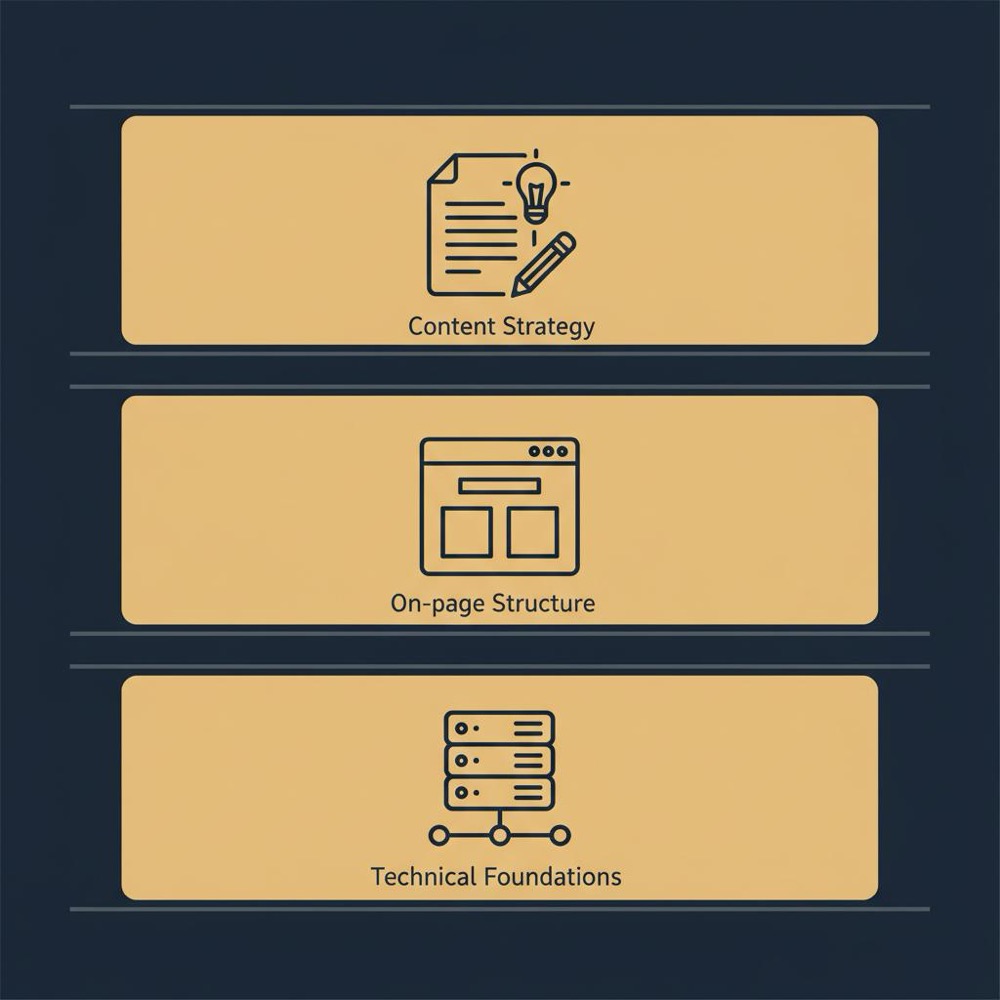
To move the needle, split the work into four overlapping domains: technical foundations, on‑page structure, content strategy and off‑page signals combined with conversion measurement. Treat them like layers of a building: foundations, rooms, furniture and neighbours.
1. Technical foundations
Make sure search engines can find and index your pages. If they cannot, nothing else matters.
Key actions:
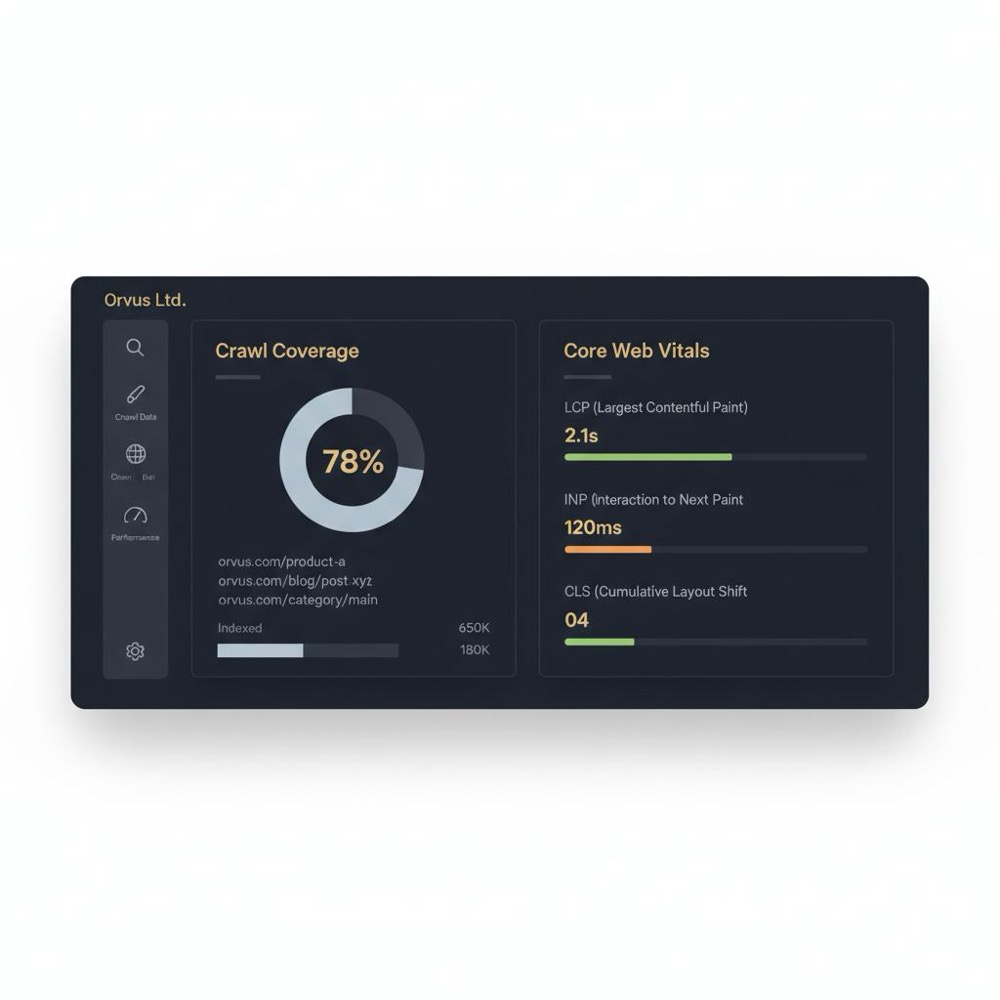
- Audit crawl and index coverage. Use a crawler and Google Search Console to find blocked, noindexed, or orphan pages. Fix robots.txt and sitemap errors. Ensure important content is reachable within a few clicks from the homepage.
- Improve Core Web Vitals. Fast server response, minimal layout shifts and quick input readiness matter. Reduce heavy scripts and lazy‑load non‑critical elements.
- Remove redirect chains and ensure canonical tags are correct. Redirect chains cost crawl budget and confuse signals.
2. On‑page structure
Each page must tell a clear story about its purpose.
Elements that help:
- Title tags and headings that state intent. Use a clear H1 and subheads that follow a logical flow.
- Meta descriptions and friendly URLs. These help both humans and machines decide whether a result matches a query.
- Structured data (schema). Use schema for articles, tools, products, FAQs and events. Schema is not a rank shortcut - it’s a language that tells engines what the content is.
3. Content strategy
Match content format to query intent. For example, someone who wants to learn needs a concise definition and a tidy summary up front; a user comparing products needs a clear pros‑and‑cons layout or a comparison table.
Use concise summarized answers near the top when short answers can be surfaced by search. Then expand into useful depth. That helps both the user and semantic systems that map entities and intent. For practical tips on semantic approaches, see this Semantic SEO guide.
Content depth vs. focus: Depth matters if it directly answers the user’s need. Long pages that wander tend to perform worse than focused pages that signal the right intent and give clear, useful answers.
4. Off‑page signals & measurement
Links and references from trusted sites remain a strong signal of authority. But more important than raw links is whether search traffic produces business outcomes: conversions, assisted conversions, repeat visits and time‑to‑goal.
Set outcome KPIs and use server‑side events to capture hard conversions reliably. That will tell you whether search activity actually supports your business, not just your vanity metrics.
How meaning and models changed the game
Between 2023 and 2025, search engines moved from shallow keyword matching to entity and intent mapping. Language models and semantic systems now view topics as webs of related concepts and entities. That makes concise, well‑structured content more useful. A page that clearly signals that it is a step‑by‑step guide, a comparison, or a local result can be selected by algorithms to answer queries directly. For a deep practical framework, read this Semantic SEO guide.
At the same time, generative features in search can summarize answers directly in result pages. Sometimes that reduces clicks; sometimes it increases visibility. The strategic response is: earn a place in those summaries or shape your content so that when users do click, they convert. See Google’s guidance on how to succeed in AI search: Succeeding in AI search.
Adding a short, clearly signalled answer near the top of a page - matched to the user’s intent - often produces the fastest measurable improvement because it both helps users immediately and increases the chance a page is selected for concise search summaries.
Short answer: Reward clarity over noise - pages that are clearly signalled and useful should get more weight than pages that are long but unfocused.
Practical, step‑by‑step approach
Here is a sequence that works for most teams:
Step 1 - Indexing & intent audit
Run a crawl. Identify pages that are not indexed, thin content, misaligned pages and gaps where user needs are unmet. Tag each problem as technical, editorial or both.
Step 2 - Fix the architecture and experience
Simplify navigation, reduce redirect chains, ensure canonicalisation and fix robots or sitemap issues. Improve mobile performance by reducing heavy scripts and ensuring interactive elements load early.
Step 3 - Produce focused content
Create content briefs for target queries and intent clusters. Each brief should say: what is the short answer, what context is needed, what supporting resources or tools belong on the page, and what schema should be applied.
Orvus’ services are a practical option if you want help moving from audit to execution - the team helps with architecture, measurement and content systems in a way that’s built around your constraints and targets.
Step 4 - Measure and refine
Capture server‑side events for critical conversions, join sessions across devices where possible and set outcome targets. Run A/B tests or time‑based experiments - learning requires a control period so you can tell what actually changed.
Concrete tactics for content that wins
Here are direct, testable tactics you can try:
- Short answer first: Put a clear, one‑paragraph answer near the top when the query demands a short response. Machines often surface these snippets.
- Use clear signals: Headings like "How to", "Step by step", "Compare" or "Tool" tell both readers and engines what the section contains.
- FAQ sections: FAQ schema is particularly helpful on pages that answer discrete questions. Keep Q&A pairs tight and factual.
- Internal linking map: Link from overview pages to deep resources. Avoid orphan pages.
- Tools and widgets: If your niche benefits from calculators or interactive helpers (e.g. mortgage calculators), embed a lightweight widget that answers intent and funnels to conversion.
Tactical checklist for 2025
Follow this checklist in order, prioritising quick wins first:
Index & access: Ensure a clean sitemap, fix robots.txt, remove accidental noindex tags, and make important pages accessible within 3 clicks.
Performance: Reduce unused JavaScript, serve images in modern formats, minimise layout shifts, and prioritise server‑side rendering where it speeds time‑to‑interactive.
On‑page: Ensure title tags, H1s and meta descriptions clearly reflect intent. Use schema that actually matches content. Use short answers for queries that may trigger summary features.
Content: Cluster queries by intent, design briefs that start with the short answer then expand, and consolidate thin pages into stronger topic pages.
Measurement: Use outcome KPIs, capture server events for critical actions, and set a baseline period before experimenting.
Real world examples
Mortgage widget - from traffic to signups
A small tool that calculated mortgage payments had decent visits but few signups. The team added a concise top answer, a fast one‑click calculator and a short, persuasive signup path from the tool. They used tool schema and reduced script weight so the widget loaded instantly on mobile. Signups climbed because intent was met quickly and the path to conversion was short and clear. Read related posts on our blog: Useful knowledge.
Health publisher - from exhaustive to useful
A publishing site rewrote long exhaustive posts into a short summary, a "what to do now" section and a cited resource list. They flagged the article type with schema and linked to longer in‑depth pieces. This reduced bounce on broad topics and increased citation from other publications.
Measurement: what to track and why
Move from position metrics to outcome metrics. Use these KPIs:
- Organic conversions (signups, purchases, leads)
- Assisted conversions (how search helps conversion in multi‑touch paths)
- Time‑to‑goal (how quickly users reach the outcome)
- Repeat visits and retention (are users returning?)
Combine Google Search Console, GA4 and server‑side event tracking to close gaps. When search produces a summary that reduces clicks, assisted contribution reporting can show whether those summaries still help conversions downstream.
Common pitfalls and how to avoid them
- Mistake: ranking obsession. Rankings are a signal, not the outcome. If a page ranks but does not drive the business, optimise for outcomes.
- Mistake: one‑trick focus. Schema without good content, or content without good structure, won’t help. Coordinate the layers.
- Mistake: shallow generative content. Use generative tools as drafts. Always fact‑check and add expertise, authoritativeness and trust before publishing.
How to organise teams and culture
Search success is cross‑functional. Engineers, editors, product managers and analysts must speak a common language of intent and outcomes. Simple rules help:
- Shared metrics: Use outcome KPIs everyone understands.
- Small experiments: Short cycles with a clear hypothesis create useful learning.
- Embedded work: Integrate SEO and measurement into editorial and product processes so improvements are sustainable.
Checklist for immediate wins (under a week)
1. Run a quick crawl and fix any accidental noindex pages.
2. Identify 3 pages with high impressions but low conversions - add clear short answers and a CTA.
3. Compress large images, defer non‑essential scripts and check mobile loading on key pages.
4. Add structured data for one page type (FAQ or product) that genuinely reflects the content.
Longer term bets (1-6 months)
- Build a clean content architecture: cluster content by intent and consolidate thin pages.
- Implement server‑side event tracking: get reliable outcome data.
- Create a testing rhythm: run controlled tests and learn from the results.
What to expect in 2025
Expect engines to reward clarity and outcome‑focused content more than ever. Generative features will keep evolving, sometimes reducing clicks for purely informational queries and sometimes amplifying visibility when your content is the source of a concise answer.
That means the best defensive play is to: ensure technical readability, give short answers for queries that need them, and design pages that convert when users do visit.
Practical examples of signals to prioritise
- Short, clearly labeled summary blocks - big wins for semantic selection.
- Lightweight interactive tools for task‑oriented queries - they satisfy intent and help conversions.
- Citation trails and clear sourcing - these build authority for sensitive verticals like health and finance.
Putting it all together: a one‑page plan
1) Audit indexation and performance. 2) Prioritise pages by business value. 3) Fix technical blockers. 4) Create focused content briefs with short answers. 5) Add schema. 6) Run experiments and measure outcomes.
How to avoid being misled by noise
The web will always produce fads. The durable signals are still the same: clear indexing, focused content, credible authority and measurable outcomes. Test changes, preserve a baseline and only declare success when an outcome metric moves.
Where to start with limited resources
If you can only do three things this month, do these:
1. Fix any pages that are accidentally blocked from indexing.
2. Improve one important page’s short answer and mobile speed.
3. Add server‑side event capture for a key conversion.
Quick notes on generative content
Use generative AI to prototype and accelerate work, but always apply an editorial layer. The editor must check facts, add credible references and ensure the piece meets the user’s need better than alternatives.
Realistic expectations
Search improvements compound slowly. A clean technical base and steady content effort typically show results in weeks to months, not days. Small experiments with clear hypotheses shorten the learning cycle and reduce wasted effort.
Final practical tips
- Keep answers short and scannable near the top.
- Use schema where it fits - not everywhere.
- Treat measurement as part of the search program.
Next steps you can take now
Run an indexing audit, pick three priority pages, and run an experiment with a short answer plus a conversion funnel. If you’d like help making that plan practical for your team, consider expert partners who work with you closely and build the systems that stick.
If you’d like help making that plan practical for your team, consider expert partners who work with you closely and build the systems that stick.
Need a practical roadmap to improve search performance?
Common reader questions answered
Q: How does search decide which pages to show?
A: Engines model meaning and intent for queries and score pages by relevance, authority and experience. Signals include text, structured data, links and engagement metrics.
Q: Will generative search kill traffic?
A: Not always. For some informational queries, fewer clicks may occur. For others, being the concise source can increase reputation and later conversions. Test and measure.
Q: Where to start with limited resources?
A: Begin with an audit that finds technical blockers and the highest‑impact content mismatches. Fix access and speed, then create focused content for your top queries.
Closing thoughts
Search is evolving, but the effective toolkit remains surprisingly steady: clean indexing, clear intent signals, credible authority and outcome‑focused measurement. Combine careful technical work, concise content that matches intent and sensible tests. That gives you the best chance of being useful to both people and machines.
Search engines build a model of meaning and intent for queries, then look for pages that best match that intent while showing evidence of authority and a strong user experience. Signals include textual relevance, structured data, links, engagement metrics and technical health like page speed and indexability.
In some informational verticals, generative features may reduce clicks for certain queries. However, being the source of a concise answer can increase your visibility and reputation. The practical response is to provide clear short answers where appropriate, then expand into depth and ensure pages are designed to convert when users visit.
Orvus Ltd. starts with a compact diagnostic that reveals technical and editorial blockers, then builds a prioritized roadmap focused on architecture, measurement and content systems. Their approach is hands‑on and tailored to your constraints - see Orvus’ services for a diagnostic and roadmap.
References
Want this kind of work done for your business?
We build and run AI-powered marketing and automation. 15 minutes, honest assessment.
Book a call