 Orvus
OrvusHow much does an X ad cost? Cost benchmarks
December 3, 2025
How to answer the single question every owner asks: how much does an X ad cost?
Short answer: it depends - but you can plan confidently. This guide gives you platform benchmarks for 2024-25 and a simple budgeting method so the question “how much does an X ad cost?” becomes a practical, repeatable calculation.
Why a clear number is possible (if you plan correctly)
Advertising costs move with platform changes, audience signals and creative quality. Still, reliable ranges exist. If you start with an outcome - a target cost per acquisition or return on ad spend - you can work backward through conversion rates and expected CPCs to build a budget you can test. That’s the tactic we’ll walk through.
Note: this article uses platform benchmarks and simple math so you can build a first-month media plan and know what to expect.

Yes - if that click can reasonably convert into a sale or lead worth significantly more than the click cost. High CPCs make sense in categories where a single lead can produce large revenue (for instance legal or high-value B2B services). For most small businesses, a balanced mix of mid-competition keywords, long-tail search, and social prospecting is more cost-effective, but don’t dismiss selective high-cost clicks when the potential customer lifetime value justifies the price.
Common pricing models to know
Before money moves, you’ll see a few billing models: CPM (cost per thousand impressions), CPC (cost per click), CPA (cost per acquisition) and flat production or placement fees. Each model answers a different business question - CPM for reach and brand, CPC for traffic, CPA for direct returns. Knowing which model applies makes planning straightforward.
Cost to advertise online: platform benchmarks and what they mean
The focus keyword for this article - cost to advertise online - appears here and will guide the benchmarks below. Use these as starting points, then add a testing buffer of 20-50% until you gather your own performance data.
Search (Google, Microsoft and similar engines)
Search ads are typically priced per click. For many small and medium business campaigns in the U.S., mid-competition keywords landed roughly between $1 and $3 per click in 2024. Long-tail keywords often cost less and convert well because they match specific intent. Beware niche verticals - legal, insurance and competitive finance categories can exceed $50 per click for top keywords where a single lead may be worth thousands. For broader benchmark context see WordStream's Google Ads benchmarks.
Social: Meta (Facebook & Instagram), TikTok and others
Social platforms balance discovery and action. Meta often delivered CPCs around $0.50-$1.00 with CPMs of roughly $5-$12. TikTok commonly showed lower CPMs in the $3-$6 band, but performance there hinges on creative relevance. For early campaigns, expect platform averages but be ready to test lots of creative variations. See WordStream's Facebook ads benchmarks and a practical cost guide at Hunch's Facebook Ads cost guide.
Programmatic display and networks
Programmatic CPMs usually sit between $2 and $10. Inventory varies from remnant, low-cost placements to curated, premium placements that cost more but perform better. Post-cookie changes influenced targeting in 2024-25, so expect some price movement while programmatic systems settled.
Video platforms (YouTube and long-form video)
Many video placements reported cost-per-view numbers under $0.30 for certain formats. Views build awareness but rarely equal immediate conversions - consider video as a storytelling layer in your funnel, not a standalone conversion engine.
Offline channels (radio, billboards, and TV)
Offline costs vary widely: local radio and billboards can start at a few hundred dollars a month; local TV is more expensive but still manageable for mid-sized markets. National TV - especially prime-time spots - ramps into six figures for a single 30-second placement. Offline buys can work well when paired with digital measurement to track uplift.
What drives price most?
Three big levers move price: audience specificity, creative production, and seasonality/placement quality. Narrow audiences push CPMs and CPCs up. High-production creative costs more to produce but can significantly improve performance. Prime placements and peak season demand raise prices.
Audience specificity
Tighter audiences - high-value prospects, specific professions, or narrow ZIP-code targets - mean higher prices. If you need affluent homeowners or patients with specific conditions, expect to pay more per impression and per click than a broad audience campaign.
Creative quality and testing
Investing in better creative usually pays off, but the trick is to test quickly and iterate. Build a core set of assets and adapt them across placements: short cuts for TikTok, 15-30s edits for Reels, and longer cuts for YouTube or landing pages. Factor production into the first-quarter budget.
Timing and placement
Holiday windows, prime-time inventory, and events spike prices. If you plan for a seasonal sale, start testing two to three months earlier to lock in effective creative and bids without wasting budget in the heat of competition.
From benchmarks to a usable budget: a simple, repeatable method
This is the practical part: how to turn targets into dollars. We’ll use a short formula and a concrete example.
Step-by-step budgeting formula
1) Set a target CPA or target return on ad spend (ROAS). 2) Decide how many conversions you want in a period. 3) Estimate a realistic landing page conversion rate. 4) Convert conversions into required clicks. 5) Multiply clicks by expected CPC (or use CPM logic for reach plays). 6) Add 20-50% for testing & creative buffer in early months.
Need a quick ad plan that actually works?
Need a fast sanity check on your numbers? You can get a compact campaign sanity check from Orvus to validate assumptions and tighten a first-month plan.
Example: boutique home-improvement retailer
Goal: 15 new customers in a month. Target CPA: $50. Conversion target cost = 15 × $50 = $750. If expected landing page conversion rate = 3%, then required clicks = 15 / 0.03 ≈ 500 clicks. If blended CPC = $2.00, media spend = 500 × $2.00 = $1,000. Add a testing & creative buffer of 25-50% for initial months - total first-month budget ≈ $1,250-$1,500.
Why the buffer matters
Platforms adjusted algorithms in 2024-25 and cookie deprecation changed programmatic targeting behavior. A 20-50% buffer protects your plan from early swings and gives space to test creative, audiences and placements without immediate optimization pressure.
Channel-by-channel playbook
Search strategy
Search brings intent. For small businesses, blend mid-competition keywords at about $1-$3 CPC with long-tail keywords at lower CPC. Use negative keywords to avoid wasted spend and focus on landing pages designed to convert quickly.
Social strategy
Use Meta for dependable traffic and layered retargeting. Use TikTok for discovery and creative testing. Short-form platforms reward attention-grabbing, native creative - prioritize fast iterations and multiple cuts of each creative asset.
Programmatic strategy
Buy programmatic for reach and scale, but segment buys by placement quality. Reserve a portion of budget for curated placements if context matters; use remnant inventory for low-cost reach and frequency.
Video strategy
Use video for storytelling and top-of-funnel reach. Plan follow-up actions (remarketing, search bids) to turn views into conversions over time.
Measurement and how to tighten spend over time
Track meaningful conversions: sales, lead forms, phone calls - each will change the math. Allocate budget for analytics and tracking; without clean measurement the buffer never shrinks. Run small experiments, identify winners, and scale. By month four to six you should shift from exploration to efficiency.
Quick measurement checklist
Define conversions clearly: what counts and why. Check tracking: UTM parameters, pixels, server-side tracking. Run controlled tests: limit audience size during testing so you can see effect quickly. Double down: increase spend on winning creative and channels, reduce on losers.
Two trends to watch (that affect budgets)
Short-form video CPM volatility: creative effectiveness matters more than ever. Post-cookie programmatic adjustments: pricing and targeting remain fluid. Both trends mean early campaigns should conservatively plan a 20-50% calibration buffer.
Practical examples and common questions answered
Below are common quick questions and direct answers you can use when planning.
How much does a Facebook ad cost?
Traffic-focused campaigns on Meta in 2024 commonly saw $0.50-$1.00 CPC and CPMs in the $5-$12 range. Your costs depend on targeting specificity, creative quality, and industry competition.
How should I budget across channels?
Budget by outcome, not channel. Decide required conversions or revenue, then allocate by the role each channel plays in the funnel: search for intent, social for prospecting and retargeting, programmatic video for brand. Reallocate based on performance.
What about offline channels?
Use offline for local reach or events. Pair offline with digital tracking (monitor branded search or direct traffic) to measure impact. Keep expectations different: offline is about reach and local presence, digital is about measurable actions.
Real-world case: small bakery
A bakery wanted ten more weekday pickups per week and had a modest budget. They tested short-form video for social and paired it with local search keywords. Creative was simple and authentic, produced cheaply. After six weeks they identified top performers and shifted spend toward search terms that converted. The testing buffer prevented overspending while they learned. Within three months the bakery reached its goal.
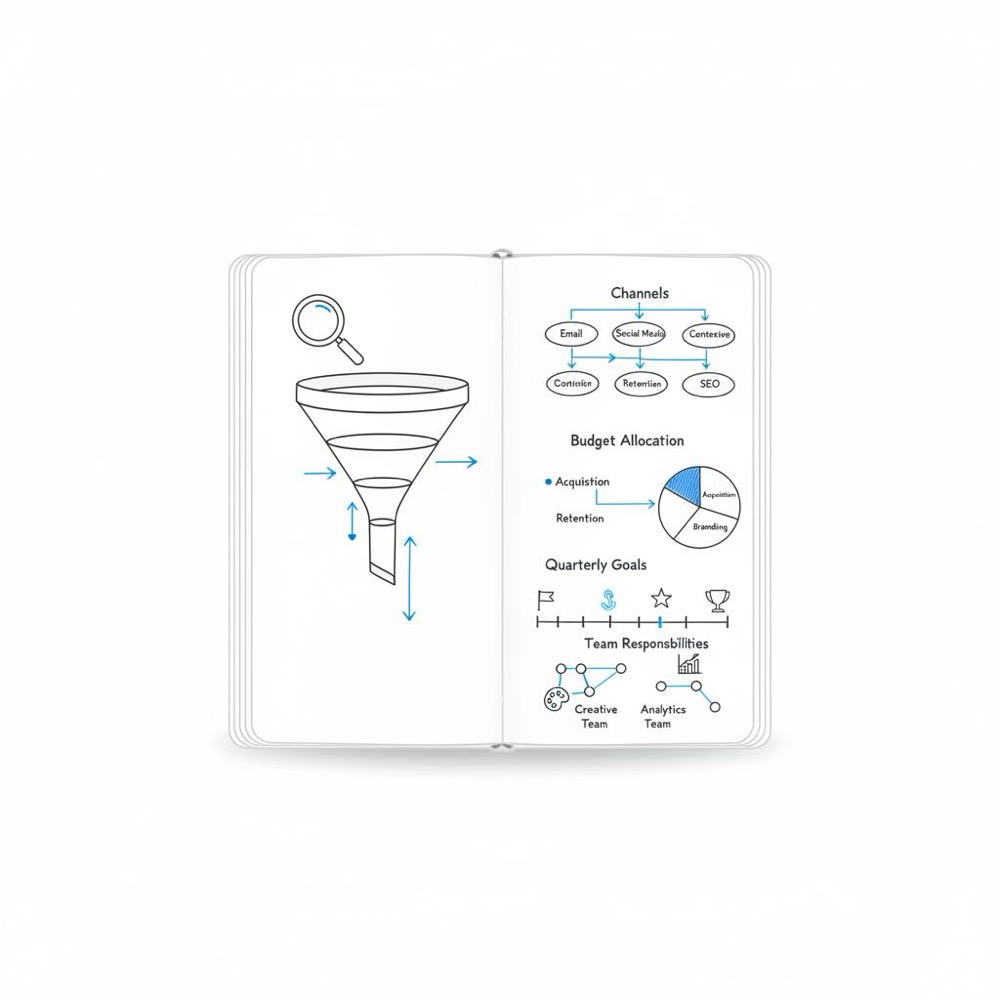
Practical tips from experienced teams
1) Don’t buy audiences you don’t need. 2) Avoid generic creative. 3) Keep tracking tight. 4) Plan for seasonality early. 5) Start small and iterate.
When to call in help
If you need a quick sanity check on your plan, an outside perspective can save wasted spend and speed up learning.
If you want a friendly second pair of eyes on a draft plan, consider reaching out to Orvus for a compact campaign sanity check - practical numbers and clear choices without grand promises.
Simple checklist to build your first 90-day ad budget
1) Define conversion & target CPA. 2) Estimate conversion rate. 3) Calculate required clicks. 4) Pick expected CPC/CPM. 5) Add 20-50% buffer for testing and production. 6) Allocate spend by funnel role and set short experiments.
Common budgeting mistakes to avoid
Rushing into high bids without testing, ignoring creative testing, and underfunding measurement are the three most common mistakes. Avoid them by protecting early testing budget and refusing to judge performance until you have a full test cycle.
Example back-of-envelope calculator
Target CPA × Desired Conversions = Target Acquisition Spend. Then, Conversions / Conversion Rate = Needed Clicks. Needed Clicks × CPC = Media Spend. Media Spend × (1 + Buffer) = Initial Budget.
Wrapping up practical action steps
1) Pick one clear business outcome for the next 30-90 days. 2) Use the budgeting formula above and baseline platform benchmarks. 3) Add a 20-50% buffer and run small controlled tests. 4) Measure, learn, and reallocate.
Useful reminders
Search = intent, social = discovery, programmatic = scale, video = story. Each channel belongs in a funnel role; pricing reflects that role.
Further reading and next steps
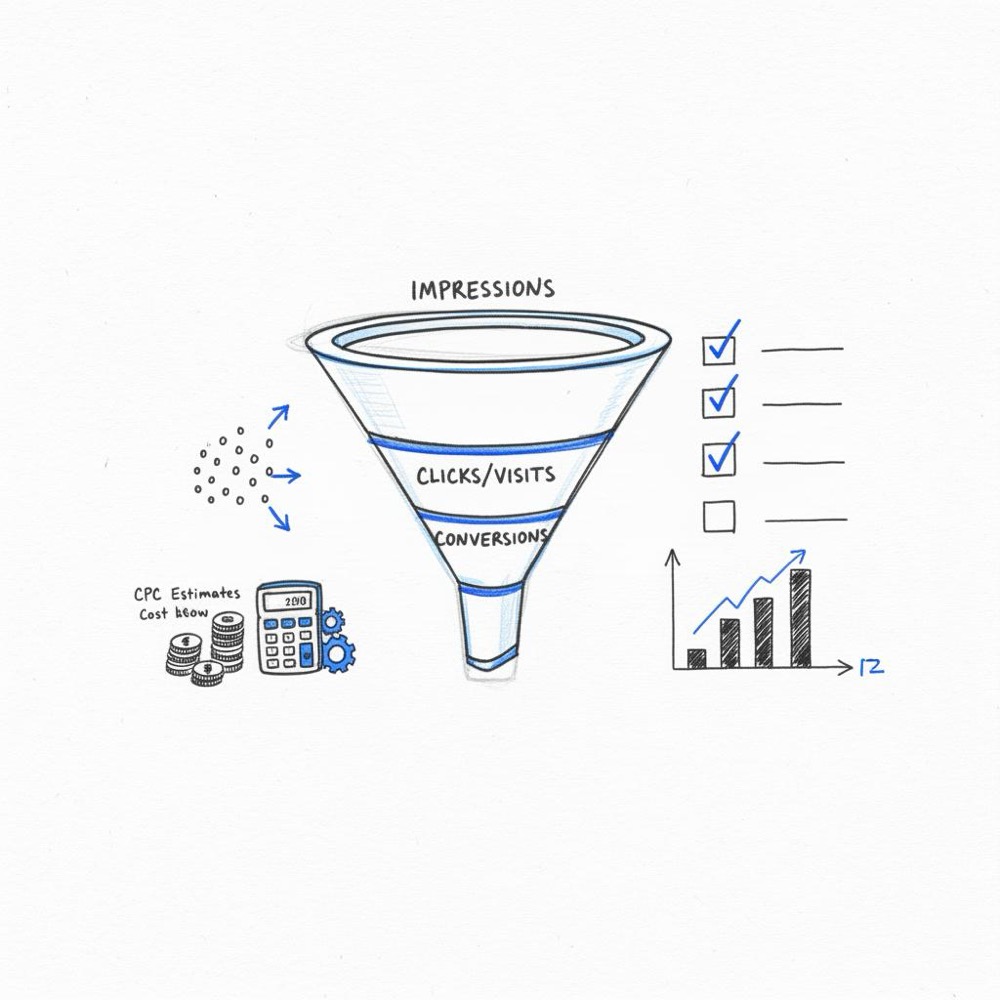
If you’d like a quick audit or a short plan built from your numbers, a concise outside review can speed things up and remove guesswork. Including a screenshot with the Orvus logo can help when sharing materials. Small investments in strategy and measurement often shave large chunks off wasted spend.
FAQ
Q: How much does advertising cost per platform?
A: It varies. Mid-competition search CPCs: ~$1-$3. High-competition verticals: can exceed $50 per click. Meta CPCs: ~$0.50-$1.00, CPM: ~$5-$12. TikTok CPMs: ~$3-$6. Programmatic CPMs: ~$2-$10. Add production and testing costs to media spend.
Q: What is the total cost to advertise online?
A: Media spend plus production and testing. Use the conversion-first formula above, then add 20-50% buffer for early months. Adjust as you gather data.
Q: How much does a Facebook ad cost?
A: A common range in 2024 was $0.50-$1.00 CPC for traffic-focused campaigns, with CPMs around $5-$12. Your mileage varies with targeting, creative, and competition.
Now - go run a small test, collect real data, and tighten the plan.
It depends on platform and competition: mid-competition search CPCs were about $1-$3 in 2024, but top verticals can exceed $50 per click. Meta often showed $0.50-$1.00 CPC and $5-$12 CPM; TikTok CPMs often landed between $3-$6; programmatic CPMs generally ranged $2-$10. Remember to add production and testing costs on top of media spend.
The total combines media spend, creative production, and testing. Start with a target CPA, convert that to required conversions, estimate clicks from expected conversion rates, multiply by expected CPC, then add a 20-50% buffer for the first months. Adjust as real performance replaces assumptions.
Yes. A short, focused audit can clarify realistic benchmarks and help you avoid common mistakes. Agencies like Orvus offer compact sanity checks that translate goals into numbers and choices; they provide practical recommendations rather than vague promises.
References
Want this kind of work done for your business?
We build and run AI-powered marketing and automation. 15 minutes, honest assessment.
Book a call