 Orvus
OrvusWhat is the difference between SEO and Google Ads?
December 10, 2025
Understanding the choice: quick wins vs durable growth
SEO vs Google Ads is one of those marketing debates that hides a simple truth: both channels reach people searching with intent, but they do it on different timelines and with different levers. If you want traffic tomorrow, Google Ads buys it. If you want lower marginal costs over time, SEO builds it. This article walks through how each works, how to measure impact honestly, and how to design experiments that reduce uncertainty.
Where search happens - and why that matters
Google still captures most of the globe’s search traffic, so the same demand pool is reachable whether you bid for a click or try to earn it organically. But the tactic matters: paid search is direct control and speed; organic search is authority and compounding value. When teams frame the decision as SEO vs Google Ads, they’re really choosing between speed or compounding advantage - and often the right move is to use both, purposefully.
Paid search (Google Ads) delivers fast visibility. You write creative, set bids, and the platform matches your ads to matching queries. You control creative, landing pages and spend. It’s how many small businesses capture urgent demand.
SEO is slower but durable. You build content, technical signals and links so the algorithm ranks your pages. The effort compounds: once a page ranks for a cluster of queries, it can deliver sustained clicks without a matching media bill for each visit. Put simply, SEO vs Google Ads is not a zero-sum battle - it’s a decision about time preference and tolerance for uncertainty.
For teams who want practical help structuring that blend, Orvus services offers a compact diagnostic and a clear roadmap that links paid tests to organic architecture without adding noise. Think of it as a short, practical engagement that clarifies which pages should be pushed with ads now and which deserve long-term SEO investment.

Quick snapshot: the defining differences
Paid search (Google Ads) delivers fast visibility. You write creative, set bids, and the platform matches your ads to matching queries. You control creative, landing pages and spend. It’s how many small businesses capture urgent demand.
SEO is slower but durable. You build content, technical signals and links so the algorithm ranks your pages. The effort compounds: once a page ranks for a cluster of queries, it can deliver sustained clicks without a matching media bill for each visit. Put simply, SEO vs Google Ads is not a zero-sum battle - it’s a decision about time preference and tolerance for uncertainty.
Cost models, timelines and degrees of control
Cost model
Google Ads is pay-per-click, impression, or conversion depending on bidding. Costs can rise with competition; budgets are flexible. SEO requires upfront investment in research, content and technical work, and the returns accumulate over time.
Timeline
Paid search shows results quickly - days or weeks. SEO typically takes months to move the needle in competitive niches. That means if a quarterly target depends on immediate traffic, lean on ads; if the objective is a reliable, lower-cost acquisition channel over the next 6-18 months, build SEO.
Control
With Google Ads you control message and A/B test landing pages quickly. With SEO you influence metadata and content but the algorithm ultimately decides rankings. That lack of direct control is why many teams use ads to validate what the market actually clicks and buys before investing in SEO for the same pages.
Measurement: why comparing channels feels foggy
Attribution has become probabilistic. GA4, privacy changes and modeling mean that clean, deterministic comparisons between paid and organic ROI are rarer. That complicates the simple question of SEO vs Google Ads because paid might seed organic, organic might assist paid, and shoppers often move between touchpoints before converting.
So how do you make practical decisions? Emphasize experiments, consistent tagging, and event definitions. Run short, diagnostic paid tests and measure conversions on instrumented landing pages. Watch assisted conversions and conversion paths - not only last-click results.
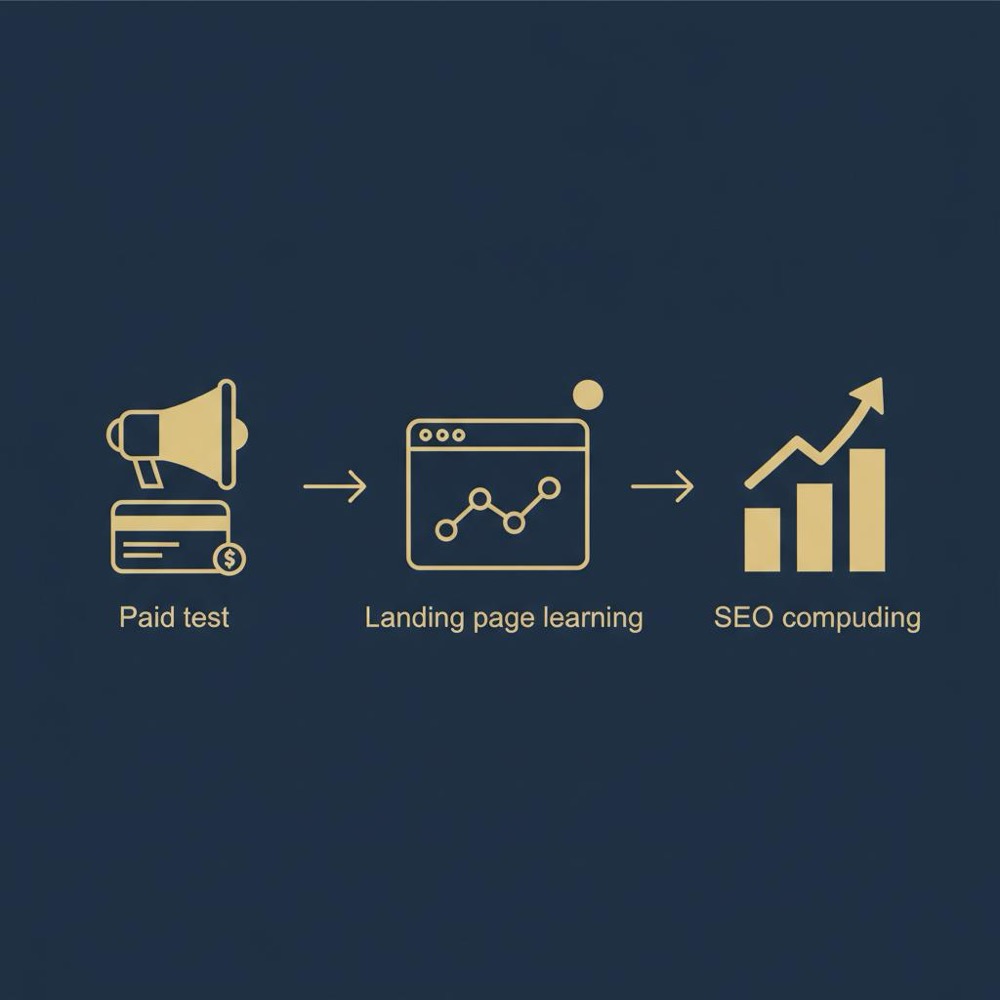
Start with Google Ads when you need fast validation of demand and conversion mechanics; run a tight, time-boxed campaign to learn which headlines and landing page elements work. Parallelly begin SEO for the winning pages so that short-term insights become long-term organic assets. This approach minimizes risk and speeds up learning.
How to use each channel well - and how to combine them
Use paid search when you need fast validation or immediate demand capture. Run a focused two- to four-week campaign on high-intent queries and measure conversion rate and cost per acquisition.
Use SEO to build long-tail reach and lower marginal acquisition costs. Prioritize content that answers intent, maps to purchase stages, and supports the pages you test in paid campaigns. That way, wins from quick tests turn into compounding organic assets. See related guides on our blog at Orvus useful knowledge.
Combined workflow
Test a headline and landing page with ads, then roll the best-performing page into an organic content plan. Link related pages into a topical hub, add schema where relevant, and begin a modest link outreach campaign. Monitor whether organic impressions and clicks rise as ad-driven learnings are baked into the site.
Designing practical experiments that reduce uncertainty
Short, focused experiments are your friend. Here are step-by-step diagnostics you can run in parallel:
1) The three-week paid proof
Pick 20-50 high-intent queries, set a modest budget, and send traffic to a single, instrumented landing page. Measure conversion rate, cost per conversion and early lifetime value if available. Keep variations limited so the signal is clean.
2) Start the SEO clock
While the paid test runs, publish a content hub on the same topic and add internal links to your landing page. Use the paid results to inform title tags, H1s and meta descriptions. This parallel approach lets you capture short-term signals while planting seeds for compounding organic traffic.
3) Holdout or incrementality tests
For stronger proof, run geographic holdouts (pause ads in one region, continue in another) or audience holdouts (exclude a randomly selected customer segment from ads). Compare conversions over the test window. These tests are more work but cut through attribution noise. For further reading see the recent Search Engine Land piece on incrementality testing, a practical guide to tools from Measured, and a hands-on walkthrough for structuring holdout studies with Performance Max from StellaHeyStella.
Adapting to SERP changes and AI answers
Search results already include rich features - snippets, local packs, shopping units and AI responses - that change click dynamics. If SEO vs Google Ads is the question, remember that the presence of SERP features can lower organic click-through-rates even when you rank well. The right response is diagnostic: measure impressions and clicks, adapt content to the format that appears (concise answers for snippets, product schema for shopping) and optimize for click share, not just position.
Small business playbook: a staged approach
Here’s a practical split for small teams with limited budgets:
Phase 1 - Quick validation (weeks)
Run a short paid test with a modest budget to validate message and conversions. Use the winning creative and copy as the basis for landing pages and product descriptions.
Phase 2 - Parallel organic setup (months 1-3)
Begin SEO work on the validated pages: publish supporting content, fix technical issues, and build local signals for location-based searches. Expect initial organic movement after 3-6 months in many niches.
Phase 3 - Compound and scale (months 4-12)
If paid results are positive, maintain a scaled paid presence while SEO efforts compound. Gradually shift budget toward the highest-performing organic pages as they begin to deliver reliable sessions and conversions.
How to keep measurement honest
When data is noisy, process beats a single metric. Use consistent UTMs, conversion events and naming. Collect first-party signals such as email captures and phone calls. Supplement modeled conversions with real experiments. If a page surfaces in many assisted paths, treat it as contributing - even if last-click doesn’t show it.
Common mistakes and how to avoid them
Many businesses make the same errors: treating paid and organic as rivals, neglecting landing page quality, or chasing every possible keyword. Avoid these traps by making paid tests tight, aligning landing pages with ad messaging, and using paid to reveal which queries actually convert before investing in SEO.
Real examples that clarify the choice
Local service: a plumber opening a new branch should run ads for urgent queries such as "emergency plumber near me," collect calls and leads, and simultaneously build local SEO signals (GBP, citations, neighborhood pages) to reduce future ad dependence.
E-commerce launch: use paid search to validate product page elements and price points, then invest in SEO with guides, comparisons and long-form content that captures long-tail queries over time.
B2B with long sales cycles: ads capture immediate, bottom-of-funnel demand while SEO builds trust via case studies, decision guides and comparisons that nurture leads over weeks or months.
Practical checklist: launch a diagnostic that gets answers fast
1) Pick a small set of high-intent queries. 2) Build a single, instrumented landing page. 3) Run a two- to four-week paid campaign. 4) Start a content hub that supports the landing page. 5) Run a holdout test if you can. 6) Compare CPA under realistic attribution assumptions. 7) Decide to double down or iterate.
Advanced measurement tactics
When you want a clearer picture of contribution, use geo holdouts, audience holdouts, or time-based pause tests. Cross-validate modeled conversions with offline outcomes when possible (phone calls, in-store purchases) and build wider confidence intervals into financial projections to reflect attribution uncertainty.

Orvus Ltd. focuses on building quiet systems that compound. Rather than a one-off campaign, Orvus starts with a compact diagnostic that ties paid learnings to search architecture and measurement. That means the team doesn’t just run ads or publish content - they fix the hidden friction that steals conversions and make sure media spend has a clear job. A clear brand mark is a small, steady trust signal across landing pages and listings.
Example timeline and budget guide
Small local business: $500-$2,500 paid test for three weeks; parallel local SEO work focused on GBP and neighborhood pages. E-commerce: $1,000-$5,000 paid test depending on product margins; concurrent product guides and comparison pages for SEO.
Allow three to six months to see steady organic growth, and nine to twelve months for stronger compounding in competitive categories. These are practical ranges - faster wins are possible with exceptional product-market fit or low competition queries.
FAQs and short answers
When should a small business choose Google Ads over SEO?
Choose Google Ads when you need customers quickly or are testing a new offer. Use paid search to validate conversion rates before committing to months of content work.
Is SEO cheaper than Google Ads?
Not always. SEO’s marginal cost falls over time but requires upfront effort and patience. Paid search charges per click and can rise with competition.
Do paid ads hurt organic rankings?
No. Ads do not directly affect organic rankings, though they can reduce organic clicks on busy SERPs with many features.
Can I run both at the same time?
Yes. The best teams often run paid tests while building organic foundations. Paid reveals signals; SEO compounds them.
How long before SEO shows results?
Expect to see meaningful movement in three to six months and stronger compounding after nine to twelve months in many competitive categories.
Three practical case studies
1) Local plumber
Paid ads captured emergency calls immediately. After six months of local SEO - GBP optimization and neighborhood content - the business lowered ad dependence and kept more conversions organically.
2) E-commerce category launch
A short paid burst revealed product page weaknesses; the e-comm team updated descriptions and images. SEO content then captured long-tail searches and helped reduce CPA over the next nine months.
3) B2B software
Paid search captured urgent buyers, while long-form comparison content and case studies built trust and generated pipeline over many months. The two channels worked together to shorten sales cycles and increase deal size.
How to choose: a few quick heuristics
If you need customers in the next 30 days, use paid search. If you can wait 3-12 months and want durable traffic, invest in SEO. If uncertain, run a short paid test and parallel organic work.
Final practical tips
1) Keep experiments tight. 2) Align landing pages with ad messages. 3) Use paid to prioritize organic work. 4) Measure assisted conversions and conversion paths. 5) Build systems that reduce decision noise.
Parting thought
Winning at search is about asking better questions and running cleaner experiments. Treat SEO vs Google Ads as a tactical choice, not an identity. Use paid to validate, SEO to compound, and measurement to keep your team honest.
Turn quick tests into compounding search systems
Ready to build a test-and-scale system? Orvus’s compact diagnostic turns noisy numbers into a clear roadmap - paid tests, SEO architecture and simple incrementality checks that move the needle. See Orvus services for a one-stop starting point to connect experiments with durable search architecture.
Thanks for reading - and if you’re wondering which customers to chase first, start with the ones you can reach this month and design a tiny experiment that proves-or disproves-your hypothesis.
Choose Google Ads when you need customers quickly, are validating a new offer, or require immediate traffic for a short-term promotion. Use a focused paid test to measure conversion rates and cost-per-acquisition before committing to long-term SEO investment.
No - paid placements do not directly affect organic rankings. However, ads and SERP features can reduce organic clicks on some queries, so it's important to measure impressions, click-through-rate and overall conversion paths rather than assuming rankings tell the whole story.
Use consistent tagging, event definitions and short experiments like geo or audience holdouts. Combine modeled conversions from GA4 with incrementality tests and offline signals such as phone calls or in-store purchases. Look at assisted conversions and conversion paths, not just last-click.
References
- our services
- our knowledge base
- about Orvus
- https://searchengineland.com/google-makes-incrementality-testing-easier-cheaper-and-faster-464575
- https://www.measured.com/faq/best-incrementality-testing-companies-software-for-marketing-2025/
- https://www.stellaheystella.com/blog/how-to-conduct-an-incrementality-holdout-study-with-google-ads-performance-max-campaigns
Want this kind of work done for your business?
We build and run AI-powered marketing and automation. 15 minutes, honest assessment.
Book a call