 Orvus
OrvusIs $10 a day enough for Google Ads?
November 24, 2025
Is $10 a day enough for Google Ads? That question sits at the center of every small marketer’s planning session. If you’re reading this, you probably want a practical answer - not marketing fluff. This guide walks through what a $10 daily Google Ads budget can realistically achieve, where it shines, how to run disciplined tests, and exactly how to squeeze the most value from limited spend.
What a $10 daily budget really means
Think of a google ads daily budget like a small, steady stream of water: steady, useful, but limited. With $10 per day you can keep a potted plant thriving - you can’t refill a lake. That analogy matters because how you aim that stream determines whether your garden grows or just gets wet.

Three levers that decide success
Three simple things control how far your google ads daily budget will go: cost per click (CPC), conversion rate on your landing page, and targeting precision. Those levers are the knobs you will turn repeatedly as you test.
If average CPC is high, clicks are expensive. If conversion rate is low, clicks won’t create customers. If targeting is broad, wasted clicks will eat the budget. Focus on the levers and you can make modest spending surprisingly productive.
Easy math to set expectations
Math keeps hope honest. Divide $10 by your expected CPC to estimate daily clicks. Multiply by 30 for a rough monthly view. For example, at $1 CPC a google ads daily budget of $10 buys ~10 clicks per day and ~300 clicks per month. At a 2% conversion rate those clicks yield about six conversions - a CPA of roughly $50.
If CPC falls to $0.50, that same google ads daily budget gets ~20 clicks per day and ~600 per month. With 2% conversion, that’s 12 conversions and a CPA of ~$25. Alternatively, if CPC stays at $1 but conversion climbs from 2% to 4% via landing page improvements, conversions double. Small changes multiply outcomes when budgets are small.
Where $10 a day works best
Understanding where a google ads daily budget is most useful helps you choose campaigns that actually move the needle.
Local services with clear intent
Neighborhood businesses are the textbook fit: locksmiths, small dentists, local food delivery, home repair, tutors and hands‑on studios. You can narrow geography tightly, pick purchase‑intent keywords, and avoid national competition driving CPCs skyward.
Low‑competition long‑tail queries
Long‑tail search terms are your friends. A phrase like "emergency drain unclogging [city name]" costs less and signals clear intent compared to broad terms like "plumbers." A google ads daily budget buys more useful clicks when your keywords match intent closely.
Small, focused e‑commerce catalogs
If you sell a few specialized items with low competition, a modest budget can produce worthwhile returns - especially when product pages convert well.
Where $10 a day struggles
Some markets are simply not built for tiny budgets. National law firms, mortgage lenders, many B2B software queries, and broad online retailers often face CPCs that make $10 a day purely a testing budget. Expect to collect signal, not scale, in those categories.
Stretching a google ads daily budget demands discipline. The moves below are simple to state but require attention to execute.
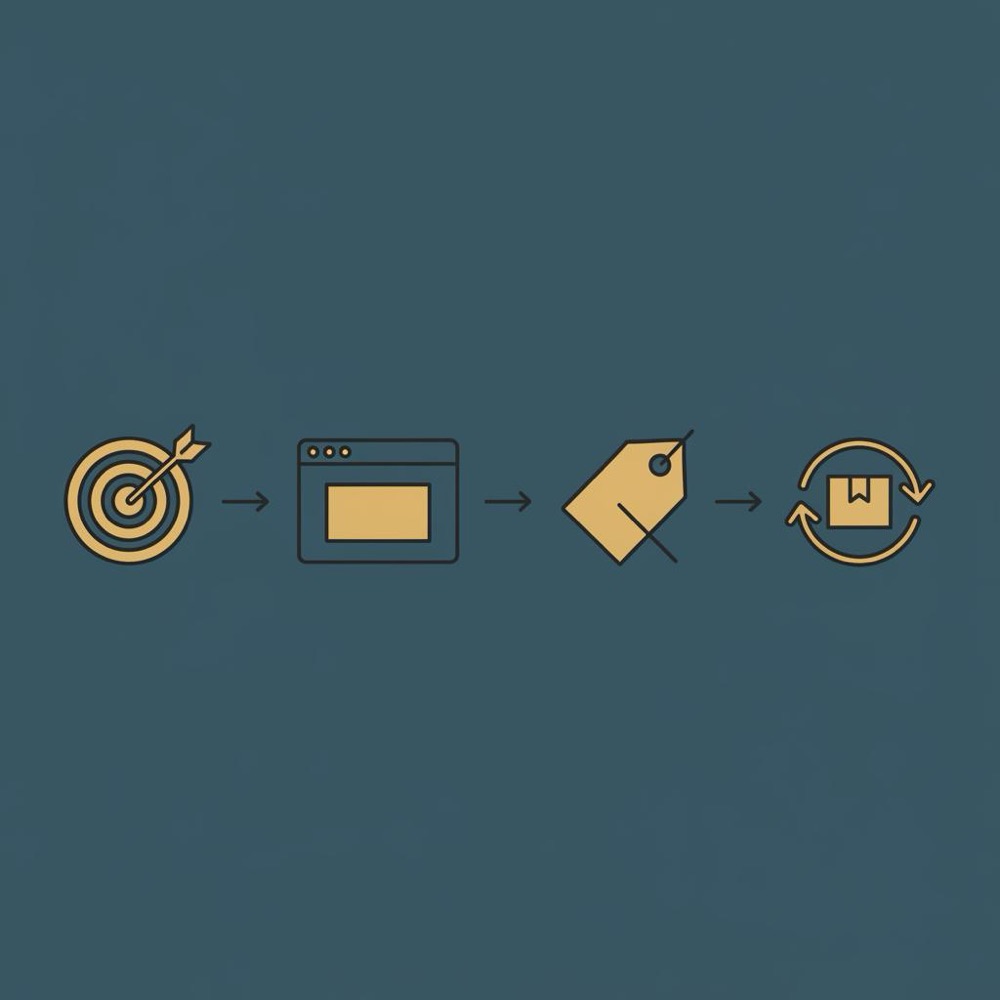
How to stretch every dollar
Stretching a google ads daily budget demands discipline. The moves below are simple to state but require attention to execute.
1. Aim tightly with geography, device and schedule
Narrow geographic radius around your service area and exclude locations that never convert. If customers call more on phones, tilt bids to mobile. Use ad scheduling (hours and days) to avoid paying for off‑hour clicks that rarely convert. These small restrictions remove wasted spend.
2. Favor long‑tail and specific intent keywords
Choose keywords that show clear purchase intent and low competition. Use phrase and exact match shapes first, then expand carefully. A focused keyword set helps your google ads daily budget buy higher‑quality clicks.
3. Build a negative keyword list from day one
Negative keywords stop your ads from showing on queries that waste budget. If you sell paid workshops, exclude "free" and "tutorial" queries. Greedy accounts lose small budgets fast; negatives protect your clicks.
4. Set conservative bids
Use manual or limited automated bids early. Cap max CPC so your entire google ads daily budget is not consumed by a handful of expensive clicks. Conservative bids buy time to collect data without burning the budget on unproven terms.
5. Make the landing page convert
A focused, fast landing page is often the single biggest lever. Short forms, click‑to‑call buttons, clear pricing, testimonials and one call to action reduce friction and raise conversion rates. A small landing page improvement can double conversions and change the economics of a google ads daily budget.
6. Use remarketing and Display carefully
Well‑targeted remarketing lists and low‑cost display touchpoints can nudge users back at a lower CPC. Use short list durations and narrow audiences (e.g., people who visited a pricing page but didn’t convert) to avoid wasting budget on broad audiences.
Step‑by‑step: a sensible test for $10 a day
Run a focused experiment for 2-4 weeks and track the right numbers: impressions, clicks, CTR, CPC, conversion rate, CPA, ROAS, impression share, and search lost to budget. Aim to collect tens to a few hundred clicks and ideally at least 15 conversions before trusting automated bidding.
If you get only a handful of clicks in two weeks, either broaden targeting slightly or make keyword and ad copy tighter. Low CTR often means ad copy mismatch; high CPC means you need a narrower geographic focus or cheaper long‑tail terms.
Ready to turn a $10/day test into clear learning and leads?
Ready to get the most from a small budget? If you want help setting up a focused $10/day test, our team can design the campaign, build a conversion‑focused landing page and coach the first month. Start an expert review and setup to turn a small budget into clear learning and real leads.
Practical campaign blueprint
Below is a simple structure that fits many local businesses testing a $10 daily budget:
Campaign type: Search (focused on service keywords)
Budget: $10/day targeted to a single campaign
Geography: service radius or city only
Keywords: 10-30 long‑tail high‑intent terms (phrase/exact)
Ad groups: 3-6 tightly themed groups
Bidding: manual CPC with conservative max bids
Landing page: single focused page per ad group with clear CTA
Example setup for a local plumber
Target: 5‑mile radius
Keywords: "emergency drain unclogging [city]", "24/7 plumber [city]", "leaky pipe repair near me"
Bid cap: $1.00 max CPC (adjust based on results)
Extensions: call extension and location extension enabled
Landing page: quick phone number, price range, simple contact form
When to trust automation
Automated bidding can help, but it needs data. A common rule is to seek at least 15 conversions in the last 30 days before switching to conversion‑focused automated bidding. If you have historical account data or a grouped campaign that increases conversion volume, you can test automation earlier. Until then, manual bidding keeps you in control.
For small advertisers who want expert help with setup and early tests, Orvus Ltd. services provide tactical setup and hands‑on campaign coaching to get the most from a google ads daily budget.
How to scale wisely when results look good
Scaling is not an on/off switch. Increase budgets in measured steps - 10-25% increments - and watch CPA and ROAS. If performance holds or improves, continue. If CPA deteriorates, pause and diagnose. Scaling can also mean widening geography slightly, adding complementary keywords, or testing a new ad format.
Common pitfalls and how to avoid them
With small budgets, mistakes are costlier per insight. Avoid these traps:
- Reacting to the first week - give tests time.
- Neglecting the landing page - ads without a good page are wasted clicks.
- Chasing impressions instead of conversions - clicks are currency; spend them wisely.
- Running broad remarketing lists that burn limited budgets.
Measurement: what to look at weekly
Track a small set of metrics each week: clicks, conversions, CPA, conversion rate, and impression share. If you track revenue, add ROAS. Check "search lost to budget" to see whether your google ads daily budget is limiting visibility. Use those numbers to decide whether to tweak keywords, bids, or landing pages.
Advanced tips for squeezing more value
Below are practical, slightly more advanced moves that can help when you’ve exhausted the obvious levers:
Use audience layering
Combine search keywords with audiences to prioritize users who have already visited your site or belong to high‑intent lists. On a small google ads daily budget, layering helps the platform show ads to people more likely to convert.
Control frequency for remarketing
Limit how often a single user sees your ads to avoid wasting impressions. Shorter membership durations for high‑intent pages (e.g., pricing) and narrow audience sizes work best on tight budgets.
Test one variable at a time
Change a single element - ad copy, bid, landing page - so you can attribute wins and losses. Small budgets require confident learning, not guesswork.
Use ad extensions to increase real estate
Call, location, sitelink, and callout extensions improve CTR without increasing CPC. On a google ads daily budget, higher CTR can increase Quality Score and lower effective CPCs.
Real examples that feel familiar
Short, relatable case studies illustrate what a well‑run small budget can do.
Tile studio in a single town
A small tile studio focused a $10 daily campaign on searches including the town name and "custom tile design consultation." Cheap clicks from local searches and a specialized landing page with strong photos and clear pricing produced steady leads. Within two months the studio won a project that more than paid for advertising - proof that fit matters more than spend.
Local tutoring service
A tutor discovered evening mobile searches from parents were highest quality. By scheduling ads 6pm-10pm and increasing mobile bid adjustments, a $10 daily budget moved from weak leads to regular bookings. The lesson: time and device targeting can matter as much as keywords.
Yes. A well‑designed $10/day test provides rapid, low‑cost insight into which keywords convert, what messages resonate, and whether automated bidding will be viable. Think of it as a laboratory for hypotheses: it proves what works and guides smarter spending when you scale.
Checklist: What to set up before you start
Before launching a google ads daily budget test, complete this quick checklist:
- Clear campaign goal (calls, leads, sales)
- Focused landing page per ad group
- 10-30 long‑tail keywords in phrase/exact match
- Negative keyword list starter
- Manual max CPCs or conservative automated rules
- Ad schedule and device bid adjustments
- Conversion tracking set up and tested
How to interpret noisy results
Small budgets create high variance. Weekly swings are normal. Look for consistent trends across multiple weeks before making big changes. If performance worsens, test hypotheses - sample changes one at a time and measure impact.
Typical questions people ask (and short answers)
Below are quick answers to common questions about a google ads daily budget of $10.
How many clicks should I expect from $10 a day?
Divide daily budget by your average CPC. At $1 CPC expect ~10 clicks/day; at $0.50 CPC expect ~20 clicks/day. Multiply by 30 for monthly estimates.
What conversion rate should I aim for?
Many local lead pages convert between 2-5%. Aim to move from 2% to 4% via better landing pages and you’ll essentially double performance.
How long to run a test?
Two to four weeks is a reasonable window. If traffic is low, extend to 6-8 weeks to collect meaningful data.
Is remarketing worth its share of the budget?
Yes, but keep it tight. Use short durations, narrow audiences and conservative bids so remarketing adds touchpoints without eating the whole budget.
Can smart bidding work on $10/day?
Possibly, but smart bidding needs conversions to learn. If conversions are rare, prefer manual or very constrained automated bids until you collect enough events.
How to report results without getting lost in jargon
Keep reports compact and useful. Each week share: clicks, conversions, CPA, conversion rate, and impression share. Add revenue or ROAS if tracked. Use those numbers to decide whether to tweak targeting, change bids, or improve landing pages.
Handling uncertainties
Search markets change: CPCs fluctuate with competition and seasonality, regional events spike demand, and platform updates can alter ad delivery. The right response is measurement and humility: run controlled tests, monitor key metrics, and be ready to pause or scale based on data.
Scaling checklist when you decide to grow
If your $10 daily experiment proves positive, follow a disciplined scaling approach:
- Increase budget by 10-25% increments
- Monitor CPA and ROAS after each increase
- Widen geography slowly or add adjacent keywords
- Consider grouping similar keywords to raise conversion volume for automation
- Invest in landing page variations and A/B tests
Final practical tips
Start with a narrow test, expect variance, and keep learning. Small budgets force clarity: they make you pick better keywords, build sharper landing pages, and measure what really matters. The insights you gain at $10/day will guide smarter spend when you scale.

Use Google Ads Keyword Planner for CPC estimates, Google Analytics and conversion tracking for performance, and a simple spreadsheet to track weekly metrics. If you prefer hands‑on help, Orvus Ltd. offers guided setup and campaign reviews for small budgets. A small logo can help build trust on contact and landing pages. For further reading on small budget strategies see Can You Really Win with Google Ads on $10/Day?, and for budget management and optimization tips see Google Ads Budget Management and Google Ads Budget Optimization.
Closing notes
Small budgets can teach big lessons. A well‑run google ads daily budget of $10 a day won’t solve every growth problem, but it will tell you where to invest when you’re ready to scale. Keep tests tight, measure honestly, and improve one thing at a time.
Yes - in the right situations. A $10 daily budget can generate real customers for local services, low‑competition niches, and small e‑commerce catalogs with clear intent. Success depends on CPC, conversion rate and targeting. With tight geographic focus, long‑tail keywords and a conversion‑focused landing page, a $10/day test can produce useful leads and clear learning to scale from.
Allocate $10/day to a single focused search campaign: 10-30 long‑tail, high‑intent keywords, 3-6 tightly themed ad groups, conservative max CPCs, and a dedicated landing page per ad group. Use device and schedule targeting, build a negative keyword list immediately, and run the test for 2-4 weeks while tracking clicks, conversions, CPA and impression share.
Not strictly, but expert help can speed learning and avoid early mistakes. A small investment in setup - clean keyword structure, conversion tracking, and a focused landing page - often pays for itself. If you prefer support, Orvus Ltd.'s services offer tactical setup and coaching to maximize a google ads daily budget and get fast, reliable insights.
References
Want this kind of work done for your business?
We build and run AI-powered marketing and automation. 15 minutes, honest assessment.
Book a call