 Orvus
OrvusHow do I get my website to rank on Google? A systems-first guide
January 30, 2026
This guide is written for operators, founders, and marketing teams who need a compact, systems-first approach. It explains what to check first, how to organise content around intent, how to prioritise link work, and how to structure measurement and experiments so you learn what actually moves revenue.
What 'website ranking on Google' actually means
The phrase website ranking on google describes how visible a site or page is in Google search results for a given query, which is the result of a pipeline of steps Google uses to process pages: crawling, indexing, and ranking. Google's documentation frames search as that three-step pipeline, which is a useful organising model for prioritising work because problems at an earlier stage commonly block everything that comes after How Search Works.
In this pipeline, crawling discovers pages, indexing records what Google understands about them, and ranking determines their order for specific queries. Each step produces signals that matter differently: content relevance and helpfulness are the primary determinants of whether a page is surfaced for a query, and they are the core levers teams should focus on first when prioritising SEO effort Ranking: How Google Search Works.
website ranking on google
Content quality signals such as experience, expertise, authoritativeness, and trustworthiness (E-E-A-T) and the helpful content criterion guide how Google assesses usefulness, especially where user outcomes matter. These signals shape how content is judged once pages are indexed and are a practical way to think about editorial controls and attribution for pages that target important queries Ranking: How Google Search Works. See Creating Helpful, Reliable, People-First Content and an independent guide to E-E-A-T An SEO guide to understanding E-E-A-T.
Page Experience and Core Web Vitals are documented ranking inputs and should be part of any quality program, but for many queries they tend to be secondary to clear relevance and link authority. Understanding this helps teams avoid over-prioritising layout and speed tweaks before fixing content and indexability issues Understand page experience and Core Web Vitals.
Focus on the pipeline: ensure pages can be crawled and indexed, make content genuinely helpful for the target intent, and build relevant authority while measuring results through repeatable experiments and consistent reporting.
Rather than chasing a single metric, treat the pipeline as a sequence: confirm pages are crawled and indexed, then test whether the content satisfies user intent and finally build authority where it is needed. The exact weight of individual signals is context dependent and requires diagnostic testing and measurement to validate what matters for a given site Ranking: How Google Search Works.
Technical foundation: the must-fix items that gate rankings
Technical SEO forms the foundation that lets other improvements matter. If pages cannot be crawled or indexed, content and links have limited effect; Google emphasises technical fundamentals that prevent pages from being discovered in the first place How Search Works.
Common crawl and indexing blockers include robots.txt rules that block bots, missing or incorrect sitemap entries, server errors that return 5xx status codes, and pages unintentionally marked noindex. A quick crawl report and index coverage check should be the first step in any triage because these items frequently explain why otherwise useful pages never rank.
Canonicalisation errors and misapplied index controls dilute signals by splitting relevance across variants or by preventing the preferred URL from appearing in the index. Confirm canonical tags point to the intended canonical URL, check hreflang where multiple languages exist, and validate that noindex is used only deliberately; these checks reduce signal dilution and support consistent indexing.

Structured data helps search engines understand page intent and can improve visibility for rich results, but it does not override crawlability or content relevance. Treat structured data as a secondary layer that adds clarity once index controls and canonical signals are correct What We Learned About Google Rankings.
To triage technical issues before large-scale content work, follow a simple order: 1) confirm crawlability and fix any robots or server errors, 2) resolve canonical and index controls so signals are consolidated, and 3) add or correct structured data. Lightweight diagnostics include crawl reports, index coverage checks in Search Console, and quick server log inspections to see how Googlebot requests appear.

Content architecture and helpful pages: what to publish and how to organize it
Content architecture maps search intent to page templates and a sensible site structure so each page has a clear purpose. Intent-driven content architecture groups queries into intent buckets and assigns a template-product landing, comparison, how-to, local service page-that matches user expectations for that query.
Under Google's helpful content guidance, a page is helpful when it answers user needs directly, demonstrates creator experience, and avoids being primarily created for search engines. Practical editorial checks should confirm each page has a clear user-focused purpose, surface the author or practitioner where relevant, and provide evidence that the page is based on real experience rather than shallow aggregation Ranking: How Google Search Works. See Google's guidance about AI-generated content.
When you have many related pages, refine existing pages rather than creating many thin variants. Consolidation often improves the signal for a topic by concentrating links and content depth, whereas scattered thin pages can compete with each other and reduce overall visibility.
Use a short editorial checklist for usefulness: clear intent statement, primary user outcome, evidence of author experience, unique supporting data or examples, and a concise next-action for the visitor. These controls help content teams produce fewer, more useful pages that align with helpful content signals.
Request the 30/90-day checklist via Orvus services
For teams that want a ready 30/90-day content and technical checklist, consider requesting the downloadable playbook to adapt to your constraints; it outlines intent mapping, editorial controls, and minimal measurement steps without assuming resources you do not have.
Organise content by topic clusters and hub pages where it makes sense. Hub pages can guide users to deeper content, and internal linking from hubs helps search engines understand topical structure. Keep templates consistent so reporting and iteration become repeatable across similar page types.
Links and authority: how to evaluate and prioritise link work
Industry analyses consistently find a correlation between backlink authority and ranking positions, so link profile health and topical relevance remain important priorities for competitive queries Moz Search Ranking Factors 2024.
Assess link profiles with a short audit checklist: check topical relevance of linking domains, identify clear spam signals or toxic sources, review anchor text distribution for unnatural patterns, and look for concentration where a small number of domains dominate. Clean link issues first to avoid signal noise and potential manual or algorithmic penalties.
Prioritise link work by focusing on relevance over volume. Pursue earned placements that naturally match your content and user intent, such as expert commentary, industry guides, or partnerships that create contextually appropriate links. Relevance tends to matter more than sheer quantity for sustainable visibility Search Ranking Factors Report 2024.
When resources are limited, start by removing or disavowing clearly harmful links, then strengthen topical authority by earning links to your most useful pages. Document link-building tests in your reporting so you can compare outcomes between different outreach approaches.
Measure what matters: search-to-revenue and experiment-driven prioritisation
Robust measurement ties organic work to business outcomes by connecting landing pages and query groups to conversions and revenue. Clear search-to-revenue attribution helps prioritise which pages or experiments are worth the effort because it shows where organic changes affect the funnel Ranking: How Google Search Works.
Consistent naming and reporting standards keep tests comparable. Use stable naming for landing pages, test variants, query groups, and time windows so results are interpretable. Include minimal reporting elements: landing page, primary query groups, conversion metric, test variant tag, and observation window.
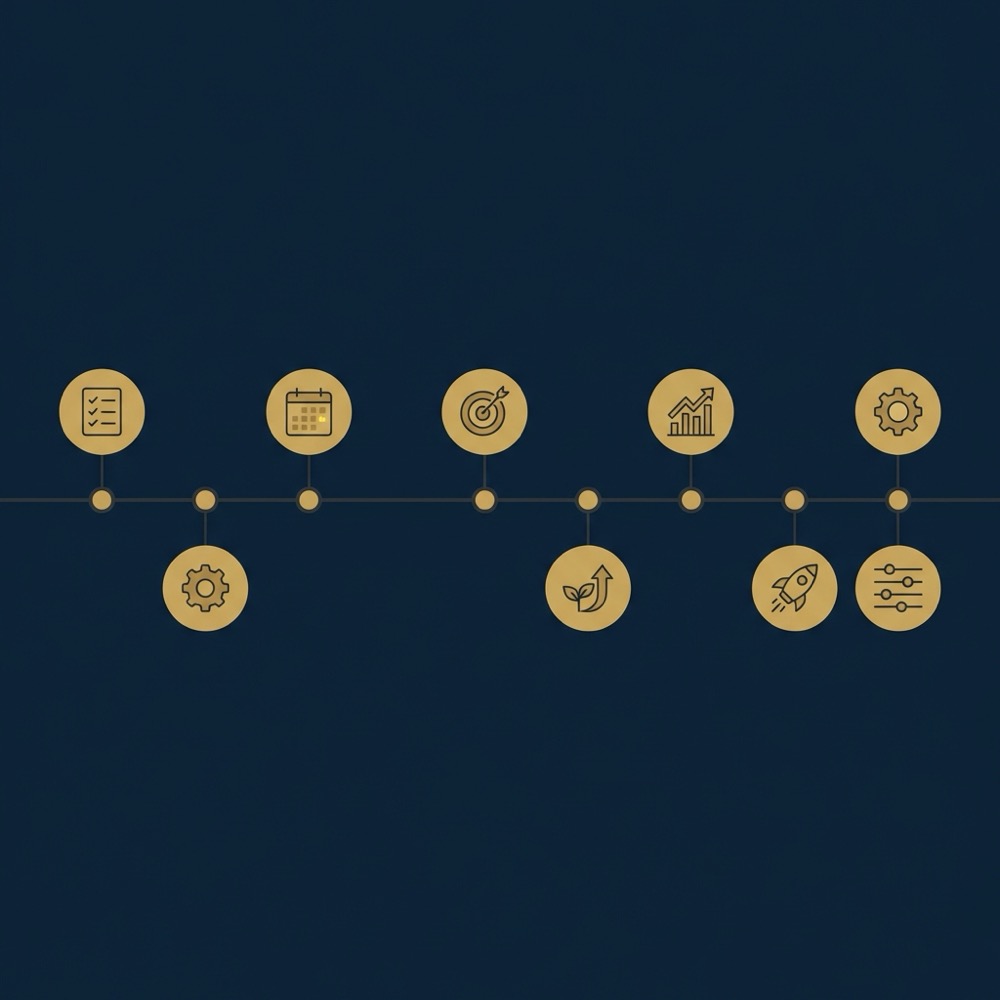
Use a compact 30/90-day testing plan to validate changes. In the first 30 days, run diagnostics and small experiments that confirm indexing and critical intent alignment. In the following 90 days, prioritise measured content refinements and authority-building tests tied to conversion outcomes. Iteration and hypothesis-driven testing are necessary because exact signal weights vary by site and funnel Search Ranking Factors Report 2024.
One practical pattern is to run single-variable editorial experiments: update one page element (title, content depth, structured data) and keep other conditions stable, then measure performance against a comparable control group. This approach reduces confounding changes and speeds learning about what moves business metrics.
Orvus often frames this work as building repeatable systems: naming standards, dashboards, and simple internal automations can reduce operational friction and make experimentation faster and more consistent. These systems are context dependent and should be scoped around your team's constraints and data quality.
Common mistakes that waste time and budget
One frequent mistake is ignoring technical gating issues and moving straight to content or promotion work. If pages are blocked from crawling or indexed incorrectly, improvements in content rarely translate into visibility gains; a short technical audit is usually the most efficient first step How Search Works.
Another common error is treating Core Web Vitals as the primary fix. While page experience matters, focusing on speed without ensuring content relevance and indexability can divert resources from higher-leverage changes, especially for queries where intent and authority dominate Understand page experience and Core Web Vitals.
Publishing content without a clear intent or measurement plan also wastes effort. If you cannot attribute outcomes to specific pages or experiments, you cannot learn from changes; always define the user outcome you expect and the metric you will use to judge success.
A simple triage rule helps avoid these errors: fix technical gates first, then improve content relevance and utility, and finally focus on authority and UX refinements. This order reduces wasted work and supports a clearer experiment cycle.
Scenarios and a short 30/90-day playbook for different businesses
30-day checklist for ecommerce sites. Start with a technical triage: confirm top product pages are crawled and indexed, check canonical tags for product variants, ensure product schema is present and accurate, and map top-converting queries to the corresponding landing pages. These checks often uncover index or canonical problems that explain traffic gaps What We Learned About Google Rankings.
Within 30 days, update titles and key content blocks on top-selling product pages to match search intent, add clear purchase cues, and run one controlled test that compares a revised page against the current version using consistent reporting labels.
90-day plan for service businesses. Focus on local intent and reputation signals: confirm local landing pages are indexed, ensure NAP and citation consistency, collect practitioner experience statements on service pages, and add structured data where appropriate. Over 90 days, build depth on service pages and test content variants targeted at common local queries Search Ranking Factors Report 2024.
Coordinate paid and organic to protect conversions while tests run. Run targeted paid search campaigns on queries where organic visibility is low to maintain conversions, then reduce paid exposure as organic experiments validate improvements. This coordination keeps funnels functioning while learning proceeds.

As a sample internal checklist, include: landing page, query group mapping, conversion metric, canonical check, and a simple A/B or split test tag. These items let a small team run repeatable experiments without heavy tooling.
Next steps and how to prioritise ongoing work
Recap high-leverage priorities in order: confirm crawlability and index controls, make content useful and aligned to intent, then invest in relevant authority and measurement. This sequence preserves scarce resources and reduces rework by addressing gating problems first How Search Works.
Decide between in-house fixes and specialist help based on constraints: if your team has reliable analytics, a developer for small fixes, and one editor, you can often handle initial triage and editorial experiments in-house. If you lack reliable data, consistent naming, or engineering capacity, a strategic growth partner can help set up systems and automation to scale tests and reporting. See our about page.
Lightweight test and reporting checklist to track search experiments
Use consistent naming across teams
Resources to continue learning include Google's Search Central documentation and industry reports that analyse correlations between signals and rankings. Use these resources as reference points, but rely on disciplined experiments and your own measurement to decide what matters for your site, and our useful knowledge blog.
Finally, treat SEO as systems work: prioritize repeatable workflows, standardised reporting, and small automations that reduce operational friction. Over time these compound effects tend to produce clearer decision making and more reliable improvements to visibility and revenue.
Time to measurable results varies by site, query competitiveness, and the quality of measurement. Use experiments and clear attribution to learn which changes move business metrics rather than relying on fixed timelines.
Fix critical crawl and index issues first. Core Web Vitals matter, but focusing on content relevance and indexability is often higher priority for most queries.
Backlinks help when they are topically relevant and from authoritative sources, but they work best alongside useful content and a correct technical foundation.
If your team needs help setting up repeatable experiments, naming standards, or lightweight automations to scale testing, a strategic growth partner can scope work to your constraints and make progress more predictable.
References
- https://developers.google.com/search/docs/fundamentals/how-search-works
- our services
- orvus.net
- about Orvus
- our knowledge base
- https://developers.google.com/search/docs/fundamentals/creating-helpful-content
- https://searchengineland.com/guide/google-e-e-a-t-for-seo
- https://developers.google.com/search/blog/2023/02/google-search-and-ai-content
Want this kind of work done for your business?
We build and run AI-powered marketing and automation. 15 minutes, honest assessment.
Book a call