 Orvus
OrvusWhat is SERP used for? Uses of serp google for teams
January 26, 2026
This guide explains what a SERP is, why serp google data matters, and how to use that data to prioritise content work, measure outcomes, and decide when paid tests are sensible. The approach is pragmatic: map intent, run small experiments, and embed findings into your reporting rhythm.
What a SERP is and why serp google matters
A Search Engine Results Page is the interface a search engine returns for a user query. It combines organic listings with feature units such as rich snippets, knowledge panels, local packs, answer boxes, and AI overviews that present information in structured ways, not just as a ranked list Google Search Central.
detect which SERP features your site appears in
run weekly for priority queries
Treating a SERP as an interface means shifting from a narrow rank focus to visibility and feature ownership. That change matters because where a page appears in the layout, and in which feature it shows up, often influences whether users click through, how you attribute traffic, and which actions to prioritise Search Engine Land overview.
In this section we define terms so later steps stay practical. Keep the distinction between the search engine's presentation layer and the underlying ranking signals. The presentation layer is what users see; that is what you can measure and influence directly.

How a SERP is structured: common feature types and how they appear
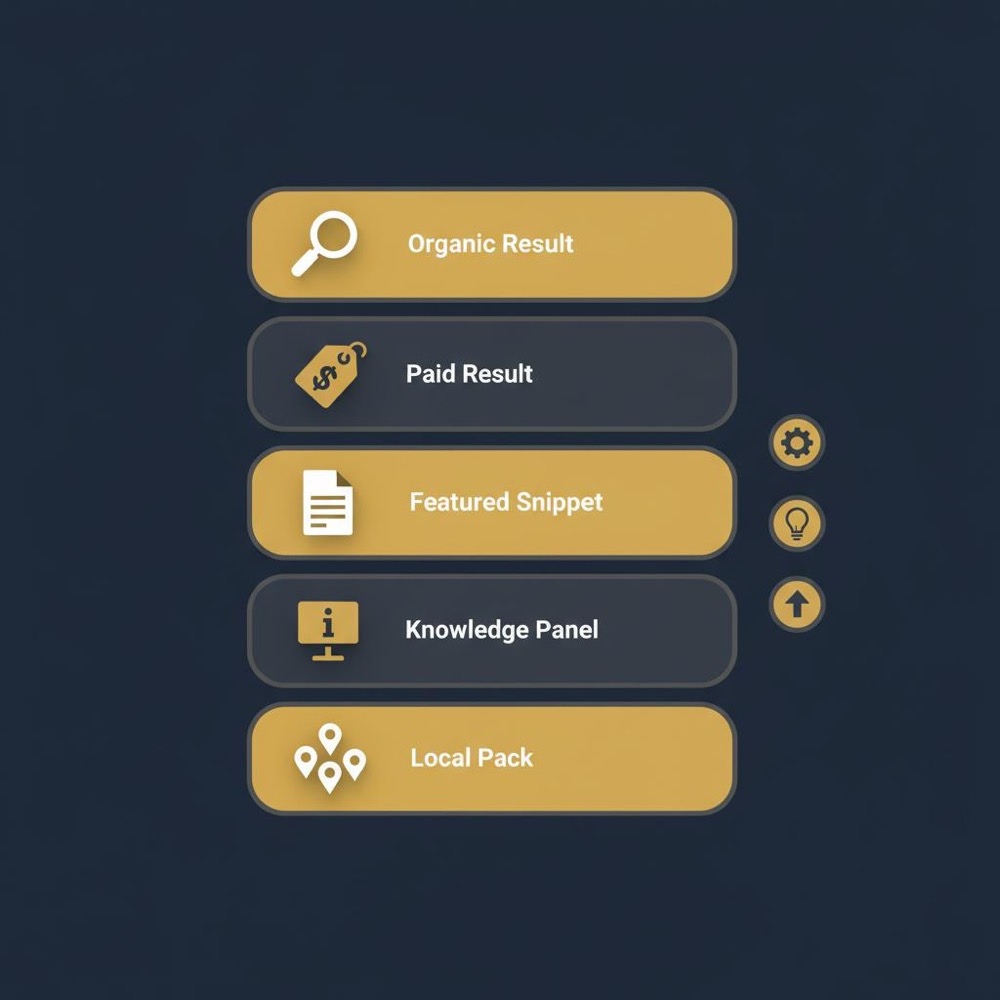
SERPs now contain a variety of feature types beyond blue links. Common units include rich snippets that highlight structured content, knowledge panels that summarise entities, local packs for geographic intent, answer boxes or featured snippets for concise answers, and image or video carousels for visual intent Google Search Central.

Paid units and commercial features can also occupy prime real estate on a SERP. Understand that a single query can show multiple feature types together, creating a mixed layout that requires you to map which visual unit the user notices first.
AI-generated overviews and synthesised answers, rolled out broadly since 2023 and 2024, differ from classic features by attempting to summarise content across sources in a conversational or boxed format; these units can change how users resolve intent without visiting a single site Bing Blogs on AI in search.
serp google: three practical uses for site owners and marketers
Use SERP data to measure visibility and feature ownership. Knowing which queries show which features, and whether your pages own those features, is the first practical step in deciding where to invest time and engineering effort Google Search Central.
Start a visibility check and small experiment
Run a quick visibility check for a small set of high-priority queries, note which features appear, and flag pages that should own those features for later experimentation.
Optimise for clicks and helpfulness rather than only for rank. Adjust titles, meta descriptions, and structured data to improve how your result appears inside a feature or next to it, and measure whether that increases organic click-through rate SISTRIX CTR study.
Use SERP analysis to decide when paid search or creative testing is needed. If a feature occupies the top positions and reduces organic click opportunity, a short paid campaign or a creative experiment can restore visibility for commercial queries Google Blog on generative search.
How to optimise for SERP: metadata, structured data, and intent
Start by mapping user intent to page type. Decide whether a page should aim to be an answer unit, to appear in a feature, or to attract traditional organic clicks. This mapping keeps work focused on the outcomes you want per query Search Engine Land overview.
Improve title tags and meta descriptions for clarity and clickability. Short, specific titles that match query intent and descriptions that explain what the page offers tend to perform better when users choose between a feature and links. Edit with a clear intent statement at the start of the title.
Add appropriate schema where it fits the content. Use structured markup for products, FAQs, how-tos, events, and local business data to increase the chance that engines can surface your content inside a relevant feature. Validate schema with engine tools and fix warnings before scaling Google Search Central.
Prioritise pages by click potential and business value. Not every page should target every feature. Pick queries where owning a feature meaningfully affects funnel outcomes and where the page content can be reshaped without disproportionate effort.
Run controlled changes and measure impact. Update a set of titles or add schema for a sample of pages, monitor CTR and feature appearance, and compare to a matched control set. Iterate based on measured changes rather than assumptions SISTRIX CTR study.
A practical SERP analysis workflow and tools
Daily and periodic checks should be distinct. A daily check can be a short sweep of priority queries to spot sudden drops. Periodic checks cover broader sets of queries and include benchmarking and trend analysis Google Search Central.
Use official engine reporting and feature-detection as the baseline for visibility tracking. Tools like Search Console report which pages appear for which queries and flag certain feature impressions; start there when building a workflow Google Search Central.

Track three core metrics per query: appearance (did the site show up), feature ownership (which unit, if any), and organic CTR. Combine those with business metrics so you can map visibility loss to revenue or leads where possible Search Engine Land overview.
Prioritise fixes by effort and impact. Use a simple scoring system where visibility loss and funnel impact raise priority, and engineering or content effort raises cost. That gives a ranked backlog of experiments and fixes to run.
Common mistakes and pitfalls when interpreting SERP data
Mistake: focusing only on rank. A high rank can mean little if a feature box answers the query or an AI overview summarises answers above the link. Check feature presence before assuming a rank change equals traffic change SISTRIX CTR study.
Mistake: misreading feature presence. Engine reporting sometimes labels features differently or omits regional variations. Double-check with live queries and controlled sampling, especially for localised intent Google Search Central.
Mistake: skipping controlled experiments. Applying schema or changing titles sitewide without tests can produce confounding results. Use control groups and run changes on a subset before scaling to avoid false conclusions.
Data sampling and personalization matter. Search Console and other tools aggregate data; they do not reflect every personalised or localised instance of a SERP. When a query has strong local or personalised signals, factor that into sampling and attribution.
Examples and scenarios: interpreting serp google results for decisions
Ecommerce example: a local pack or product carousel can reduce organic click opportunity for nearby store queries. If your product pages lose visibility to a local pack, decide whether to invest in local presence improvements or run targeted paid search to capture the local buyer intent SISTRIX CTR study.
Service business example: when an answer box or featured snippet dominates an advice query, consider reformatting content into concise Q and A sections or structured how-to steps to compete for that unit. The decision point is whether the snippet drives qualified leads or just informational clicks Google Search Central.
Use serp google data to detect which features appear for priority queries, measure whether your pages own those features, map intent to page types, and run controlled experiments to see whether metadata or paid tests change clicks and conversions.
Publisher scenario: AI-generated overviews that summarise multiple sources can reduce visits for informational queries. Use controlled benchmarking to see if an overview reduces click volume and whether diversified formats-audio, long-form, or data visualisations-change the outcome Google Blog on generative search.
In each scenario, the clear next step is a small experiment: change one page format or run a short paid test, measure the effect on CTR and conversions, then choose to scale or revert based on results.
Conclusion: practical next steps for teams using serp google data
Quick checklist to get started: detect features for priority queries, benchmark CTR and visibility, map intent to page types, run a small controlled experiment, and prioritise fixes by effort and impact.
Set realistic expectations. Changes to metadata or schema can improve clickability but do not guarantee outcomes. Treat work as an iterative programme of experiments tied to measurement and funnel metrics.
Ownership and reporting rhythm: assign a single owner for SERP monitoring who coordinates weekly sweeps and monthly benchmark reviews. Embed visibility metrics into regular reporting so the team can see trends and decide on experiments quickly.
Orvus Limited can help teams design a repeatable SERP monitoring rhythm and lightweight experiments that fit existing constraints, often focusing on search architecture, measurement, and automation rather than one-off fixes.
A Search Engine Results Page is the interface a search engine returns for a query, combining organic links and feature units such as snippets, local packs, and answer boxes.
Features can change where users click by providing direct answers or visual units; that can reduce clicks to traditional organic links and makes measuring feature ownership and CTR important.
Start with your search engine's official reporting tools to track appearances and feature impressions, then add periodic CTR benchmarks and controlled experiments.
If you need help setting up a repeatable SERP monitoring rhythm or a lightweight experiment framework, consider a short diagnostic to align work with business constraints.
References
- https://searchengineland.com/what-is-a-serp-guide-2025
- our services
- https://leadadvisors.com/blog/serp-features/
- https://ondigitals.com/serp-analysis/
- https://thedigitalmaze.com/blog/the-evolving-serp-landscape-how-search-results-have-changed-and-what-to-expect-in-2026/
- our knowledge base
- orvus.net
- about Orvus
Want this kind of work done for your business?
We build and run AI-powered marketing and automation. 15 minutes, honest assessment.
Book a call