 Orvus
OrvusWhat is a SERP in Google? A 2026 guide
February 12, 2026
This guide defines what a serp google is today, explains which elements most often appear, and lays out a repeatable audit-to-action workflow. The goal is practical: help teams decide when to add structured data, when to prioritise content, and when to run paid tests while keeping measurement clean.
What a serp google is and why it matters
A serp google is the complete search engine results page that Google returns for a single query. It is not just a list of links. It commonly includes organic results, paid ads, shopping and local blocks, rich snippets, and an increasing number of AI-generated overviews and answer features, all on the same page, which changes how users find and click content Google Search Central
That page-level view matters because visibility on the page no longer maps directly to clicks. For many informational queries, AI summaries and answer boxes can satisfy a user without a navigation click, which shifts how teams should evaluate search opportunity and measurement Google Blog
For operators and marketers, the practical implication is this: you must map intent and measure outcomes, not just monitor rankings. A visible result can exist on a SERP but generate little traffic when multiple features are present. Framing search as an ecosystem of features and signals helps teams decide where to invest effort and budget Moz guide

What appears on a serp google: organic listings, paid placements, and features
At the center of most pages are organic listings, which are traditional links with titles and snippets. Paid placements, including ads and shopping units, can appear above, between, or beside those listings and change the visual priority of organic links Google Search Central
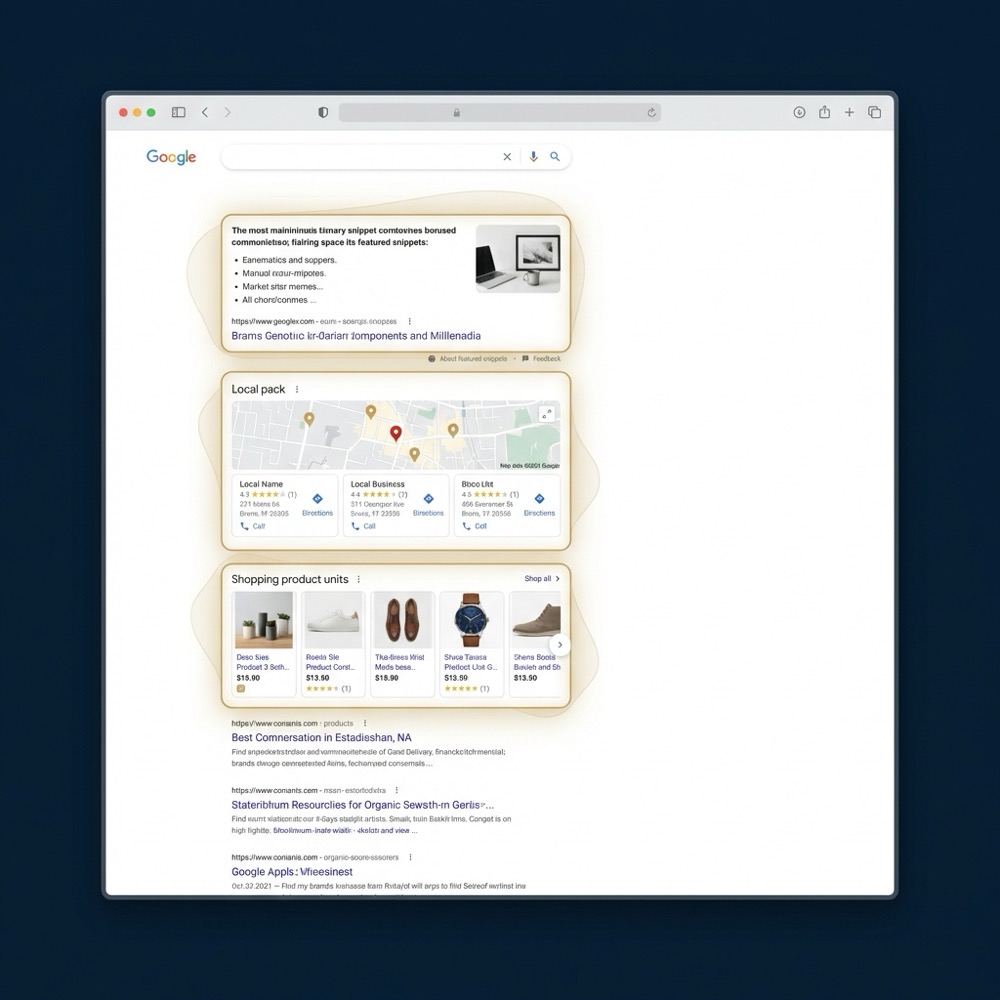
Common SERP features you will see include knowledge panels, local packs, rich snippets like FAQ and recipe cards, featured snippets, and shopping units. Each feature has a different design and click behavior; some invite clicks while others supply answers in-line and reduce the need to click through Ahrefs
AI-generated overviews and enhanced answer boxes are an emerging part of the page. These features aim to summarise multiple sources for some informational queries, which can reduce click-throughs to the individual results that were summarized Google Blog
Commercial features such as shopping units and paid ads often push organic listings further down on the page for transactional queries. That shift changes the visibility landscape for product and commerce pages and makes coordinated paid and organic tactics more important Google Search Central
Request a compact SERP audit and measurement diagnostic
Run a quick SERP feature checklist for five priority queries to see which features appear and what that implies for your next test.
How Google decides which SERP features appear
Google uses multiple signals to determine which features to show, and site-level structured data is one of the clearest levers teams can control. The official guidance on feature types and structured-data best practices explains which markup is supported and how features are defined Google Search Central
Structured data does not guarantee a feature will appear, but it helps make content eligible for rich results. Site quality, relevance to the query, and algorithmic ranking are also evaluated before Google shows a given feature for a particular query Ahrefs
Practically, that means implementers should prioritise accuracy and completeness of schema, align content to clear intent, and treat markup as part of a broader content and quality effort. Documentation and live testing tools are the right primary references when deciding what to add and how to validate eligibility Google Search Central
Running a SERP feature inventory and audit
Start by selecting a set of priority queries that map to your funnel and business goals. Prioritise queries where conversions or strategic visibility matter most, and include informational queries where AI overviews may affect traffic SISTRIX
Next, capture the SERP for each query at a consistent location and device type, and record which features appear. Note the presence or absence of shopping units, local packs, featured snippets, knowledge panels, and AI overviews. Keep the capture method consistent to reduce noise in comparisons Search Engine Journal
When you map features, also record the likely query intent, whether informational or transactional, and the current top organic and paid competitors. That intent mapping helps prioritise whether the immediate action should be content, structured data, or paid tests SISTRIX
The modern Google SERP combines organic listings, paid placements, feature blocks, and AI overviews. Because some features answer queries directly, visibility does not always equal clicks. Teams should run SERP feature inventories, implement relevant structured data, and coordinate paid and organic experiments with clear attribution to know where value comes from.
Use a consistent spreadsheet or dashboard to log feature type, position on page, snippet text, and any visible entity signals. The output should be a feature inventory that you can filter by intent and potential impact for prioritisation Moz guide
Structured data and rich snippets: what to add and when
The primary source for which schema types to add is Google's documentation. Implementing relevant structured data per Google's guidance increases eligibility for rich snippets and other enhanced appearances, though it does not force them to appear Google Search Central
Common schema types to consider include Article and HowTo for informational content, Product and Offer for ecommerce pages, LocalBusiness and Review for service listings, and FAQ or QAPage where appropriate. Use the types that match the page purpose and avoid over-marking content where it is not relevant Ahrefs
Implementation best practices are simple and practical: add structured data that mirrors visible content, keep markup accurate and complete, and run Google's live testing tools before and after deployment. Include structured-data checks as part of your SERP feature inventory so you can link eligibility to observed results Google Search Central
Integrating paid and organic: measurement and prioritization
For transactional and high-intent commercial queries, paid ads and shopping units commonly appear and can push organic listings down the page, which changes where clicks go and how visibility translates into conversions Google Search Central
That dynamic means teams should coordinate paid search tests with organic fixes and instrument measurement to separate visibility increases from attributable conversions. Attribution work should include test designs that isolate the incremental value of paid placements versus organic improvements Moz guide
A practical prioritisation rule is to test paid where your feature audit shows high commercial intent and weak organic visibility, and to focus organic work where structured data and content can improve eligibility. Fix measurement gaps before shifting large budgets so experiments are informative rather than noisy SISTRIX

Common mistakes and blind spots in SERP work
A frequent mistake is relying on rankings alone. Rankings tell you where content might appear in a simple list, but they do not capture feature presence or how snippets and answer boxes affect clicks. Measure clicks and conversions alongside visibility SISTRIX
Another blind spot is ignoring query intent and feature prevalence. A query dominated by shopping units needs a different response than a query where an AI overview provides the answer. Treat each query as its own diagnostic rather than applying broad assumptions Search Engine Journal
Poor measurement and fragmented reporting also hide the real impact of SERP changes. Consolidate reporting so teams can compare feature inventories, organic clicks, paid spend, and attributable conversions over time Moz guide
Practical examples and scenario playbooks
Scenario 1, informational query. When an AI overview or answer box appears, organic click volume can drop even if your page ranks in the top results. In that case, prioritise intent-optimised content, structured data that clarifies your content type, and monitoring for traffic shifts before major content rewrites Google Blog
Scenario 2, transactional ecommerce query. If shopping units and paid ads dominate the top of the page, test small paid placements while fixing product feed quality and structured data for offers. Use controlled experiments to measure incremental conversions from paid versus organic improvements Ahrefs
Scenario 3, local service query. When the local pack appears, reviews, accurate listings, and LocalBusiness schema often determine whether a listing gets chosen. Prioritise local structured data, correct citations, and a clear service-level content architecture for the pages that feed local signals Google Search Central
track SERP feature inventory and test outcomes in one sheet
keep entries consistent across captures
Next steps checklist and concise resources
Immediate actions for the next 30 days: run a SERP feature inventory for top queries, add critical structured data to high-priority pages, and prioritise content work by intent rather than rank alone. Start small paid tests where commercial intent is strong and measurement is in place Google Search Central
What to measure and report: track feature presence, organic clicks, paid impressions and cost, and attributable conversions. Use a prioritisation matrix that weighs commercial intent, current visibility, and ease of implementation to decide next tests Moz guide
Where to find primary documentation: rely on Search Central for structured-data rules and feature definitions, and iterate your audit as feature prevalence evolves, particularly around AI overviews which are still changing in presentation and prevalence Google Search Central
A SERP includes organic results, paid ads, shopping units, local packs, knowledge panels, rich snippets, and increasingly AI-generated summaries that can affect click behavior.
No. Structured data increases eligibility for rich results but does not guarantee a feature will appear; Google evaluates relevance, quality, and other signals before showing features.
Prioritise queries tied to conversion goals and strategic visibility, include both commercial and informational intent, and start with queries where small tests or markup changes are feasible.
If you need a structured template or help aligning audits with attribution, Orvus can often help by adapting workflows and tooling to your constraints and team setup.
References
- https://ahrefs.com/blog/serp-features/
- our services
- about Orvus
- our knowledge base
- https://searchengineland.com/google-ai-overviews-hurting-clicks-study-459434
- https://www.pewresearch.org/short-reads/2025/07/22/google-users-are-less-likely-to-click-on-links-when-an-ai-summary-appears-in-the-results/
- https://www.forbes.com/sites/brandonkochkodin/2025/07/31/small-business-survive-google-search-traffic-crash/
Want this kind of work done for your business?
We build and run AI-powered marketing and automation. 15 minutes, honest assessment.
Book a call