 Orvus
OrvusWhat is SEO web design? A systems-first guide
January 31, 2026
What is seo webdesign? Definition and context
seo webdesign describes the overlap between user-centered design and search-engine best practices. It focuses on site architecture, accessible HTML and structured data so pages can be discovered, crawled and assessed for relevance by search platforms. Clear content architecture that maps to intent helps connect organic discovery to commercial goals, while design choices influence crawlability, indexing and user experience metrics in ways teams must measure and test. Google Search Central
quick baseline capture for architecture and performance
use as a starting script
In practice, seo webdesign is not a single discipline. It ties content architecture, technical SEO controls and performance work to a design process so that discovery and revenue attribution are possible after launch. The goal is a site where searcher intent maps to clear content paths and measurable funnels, not an afterthought bolt-on. Web Almanac 2024
Set expectations early: many design choices alter how search engines render or index pages. The resulting effect on rankings is context dependent and often requires experiments or observational measurement to understand. Treat design changes as testable interventions and instrument them from the start. Google Search Central
How designers and search engines intersect
Designers control markup, structure and interaction patterns. Those elements shape the signals search engines use to assess relevance and usability. Accessible HTML, semantic headings and clear navigational cues help bots and people at the same time. When teams design with indexing and measurement in mind, they reduce the chance of silent blockers that hide pages from search results. Google Search Central
Why information architecture matters for discovery
Information architecture maps content to intent. A deliberate mapping helps search engines find the most relevant page for a query and helps analytics tie visits to business outcomes. Good architecture reduces duplication, clarifies canonical choices and simplifies sitemaps and reporting. Over time, this alignment supports better prioritisation of work that moves funnel metrics. Web Almanac 2024
Core components of seo webdesign: architecture, performance and mobile

At a systems level, three component groups dominate seo webdesign: technical SEO controls, page performance and mobile-first responsive patterns. Each influences crawlability, user satisfaction and the reliability of measurement systems that tie search to revenue. Start with controls that prevent indexing errors, then measure and iterate on speed and mobile rendering. Lighthouse
Technical SEO controls include canonical tags, XML sitemaps and robots directives. These items reduce indexing errors when implemented consistently and according to platform guidance. They are low-friction fixes that protect discovery and make attribution more accurate when analytics naming and sitemaps are aligned. Google Search Central
Page performance is commonly prioritised using Core Web Vitals because faster pages tend to produce better engagement in audits and real-world checks. Prioritising these metrics clarifies engineering and design trade-offs and gives teams concrete targets for optimisation work. Core Web Vitals
Mobile-first, responsive patterns are required in modern SEO practice because search engines index mobile renderings as the primary version in most regions. Designing with mobile constraints first reduces rework and prevents surprises when pages are crawled by mobile user agents. Responsive design - MDN

Technical SEO controls
Canonical tags indicate preferred URLs and help prevent duplicate content signals. A correct XML sitemap surfaces priority URLs to crawlers. Robots directives control what crawlers can access. Together these controls minimize silent blockers that can stop pages from appearing in search results when content and intent alignment is otherwise solid. Google Search Central
Performance metrics and Core Web Vitals
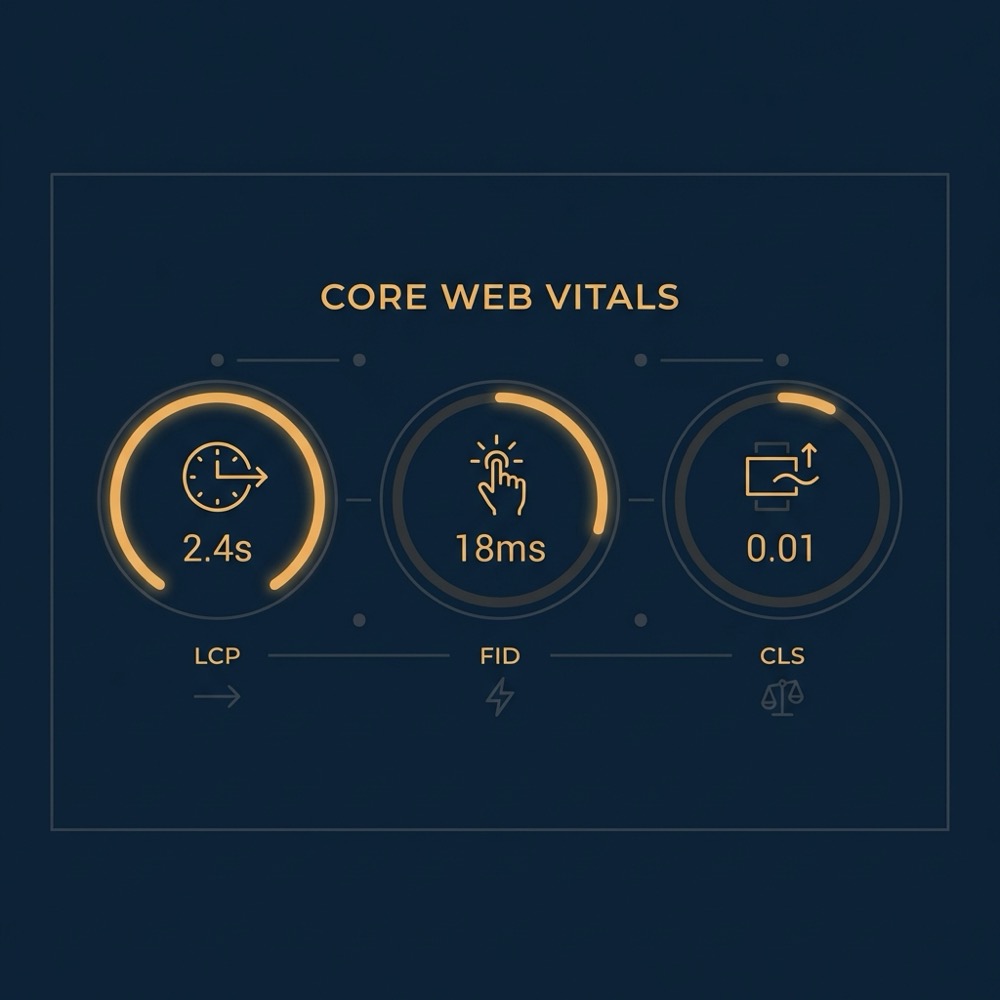
Core Web Vitals measure loading, interactivity and visual stability. Teams use these metrics to prioritize fixes because they correlate with engagement and provide repeatable engineering targets. Run Lighthouse checks to create a baseline before making changes so outcomes can be measured. Core Web Vitals
Mobile-first and responsive patterns
Responsive patterns change how images, layout and interactions behave across viewports. When mobile renderings are the primary index, ensure the mobile HTML exposes the same essential content and structured data as desktop. Use responsive image techniques and progressive enhancement to serve appropriate assets without breaking crawl paths. Responsive design - MDN
Request a consultation for a compact diagnostic
Consider a short diagnostic to capture sitemap, canonical and Core Web Vitals baselines so you can prioritise the highest impact fixes first.
Design-to-implementation framework for seo webdesign
Turn discovery into a timebound plan. A compact framework follows three stages: discovery and intent mapping, technical audit and performance baseline, then an implementation plan with QA gates. This sequence keeps changes measurable and reduces the risk of silent regressions. Lighthouse

Start discovery by mapping searcher queries to candidate pages and personas. Label priority pages that directly link to revenue or funnel stages so the team knows what to instrument first. A clear map reduces scope creep and helps designers focus on content architecture for search. Google Search Central
Discovery and intent mapping
Keep the diagnostic compact: list top intent groups, map them to existing pages, and flag missing content with the highest commercial relevance. This approach identifies quick wins and clarifies how content architecture should change. Avoid mass content edits before testing by prioritising a small set of pages for rollout. Web Almanac 2024
Technical audit and performance baseline
Run Lighthouse and Core Web Vitals checks to create a performance baseline. Capture server response details, page weight and first input timing. Store results in a dashboard so regressions are visible after each deployment. Measuring before changes is essential for attribution. Core Web Vitals
Implementation plan and QA
Decide server-side versus client-side rendering based on content type and crawl budget. For content-heavy or commerce pages with variable inventory, server-side rendering or hybrid approaches help ensure crawlers and social scrapers see canonical content. Where client-side rendering is necessary, provide server-side fallbacks and pre-render critical content. Google Search Central
QA should include sitemap verification, canonical checks and structured data validation before rollout. Use staging or a canary release to test indexing and ensure analytics events fire correctly. These gates reduce the chance of silent indexing blockers after launch. Lighthouse
How to evaluate seo webdesign decisions and trade-offs
Evaluation rests on three questions: what is the business value of the page, how much engineering effort is required and what is the traffic and attribution complexity. Use these criteria to prioritise performance fixes versus new interactive features. Web Almanac 2024
Design choices shape the markup, architecture and performance that search engines and users rely on; when those choices map intent to priority pages and are instrumented, teams can measure organic visits against funnel and revenue metrics.
When traffic and revenue signals are strong, run A/B tests to measure the causal effect of performance or content changes. For low-traffic pages, observational comparisons and stepwise rollouts with monitoring are often more practical. Choose the method that balances statistical power with engineering cost. Core Web Vitals
When to prioritise performance vs functionality
If a page supports transactions or a critical funnel step, prioritise predictable performance wins that reduce page weight and speed up key interactions. For informational pages with narrow queries, content alignment and semantic headings may be more valuable than micro-optimisations. Match effort to expected business impact. Web Almanac 2024
Measuring impact: experiments and observational approaches
A/B testing is ideal for causal inference but requires traffic and engineering support. Where tests are not feasible, compare pre and post baselines using Lighthouse and server logs, and track engagement metrics alongside funnel conversions. Instrumentation is required before work starts to avoid attribution gaps. Lighthouse
Attribution limits and privacy-aware measurement
Privacy constraints and sampling can limit last-click attribution. Use event-based measurement, consistent naming conventions and server-side collection where possible to reduce noise. Be explicit about limits in reports and prefer compound signals over single-number claims. Google Search Central
Common mistakes in seo webdesign and how to avoid them
Some mistakes recur across projects. Missing canonicalisation, blocked sitemaps, incorrect robots directives and broken structured data can silently prevent indexing even when the site looks fine to users. Check these items early in every rollout. Google Search Central
Heavy client-side rendering without server-side fallbacks often creates coverage and crawl budget issues. When crawlers do not see core content, pages fail to appear in search despite good design. Prefer progressive enhancement or server rendering for priority content. Google Search Central
Operational gaps include no performance baseline, missing monitoring and not connecting pages to intent-driven content architecture. These gaps make it hard to know whether a change improved discovery or simply shifted traffic. Instrument and name analytics events consistently before making changes. Web Almanac 2024
Silent indexing blockers
Run regular checks for blocked sitemaps, misconfigured robots directives and incorrect canonical tags. These items are quick to test and often quick to fix, and they directly affect whether search engines can index priority pages. Google Search Central
Over-reliance on heavy client-side rendering
If client-side frameworks are required, ensure server-side rendering or pre-rendering for public pages so crawlers and social scrapers see canonical content. Without this, content may be discoverable only with effort or not at all. Google Search Central
Ignoring mobile and accessibility
Ignoring mobile-first design or accessibility can reduce engagement and create barriers for both users and search crawlers. Prioritise responsive images, accessible headings and semantic markup to improve inclusion and discoverability alike. Responsive design - MDN
Practical examples and audit checklist: ecommerce and service sites
For ecommerce and service sites the audit sequence is similar. Prioritise pages where revenue or leads occur, then run a focused checklist: intent mapping, sitemap and canonical checks, Lighthouse performance scores and mobile rendering verification. Capture results in a shared dashboard. Lighthouse
Example fixes that often yield measurable UX gains include image optimisation with responsive image sets, server compression, lazy loading for noncritical assets and consistent analytics naming for transactions. These actions usually reduce page weight and improve engagement even if ranking outcomes vary by content type. Web Almanac 2024
Quick audit checklist
Run these checks in order: confirm priority intents and pages, verify XML sitemap and canonical tags, run Lighthouse for Core Web Vitals, and validate mobile rendering for each priority page. Keep the checklist short so it can be completed within a day or a sprint. Google Search Central
Example fixes that often yield UX gains
Responsive images and modern formats, server-side compression like gzip or brotli, and eliminating large render-blocking scripts are practical fixes. Apply them one at a time and measure the Core Web Vitals that matter for the page. Core Web Vitals
Measuring impact: tying seo webdesign work to revenue
Before work starts, map high-priority pages to funnel metrics and set measurable goals for conversions, lead events or assisted-revenue signals. This mapping keeps measurement coherent and helps teams prioritise. Google Search Central
Attribution mixes server-side analytics, event-based measurement and consistent naming to reduce noise. Server-side events can help where client-side measurement is limited by privacy controls, and they make it easier to join search sessions to backend conversions. Web Almanac 2024
Defining measurable goals
Choose a small set of metrics that represent business impact, for example assisted conversions from organic search, funnel completion rates and engagement on priority pages. Capture pre-change baselines and report changes in context rather than as single-number claims. Google Search Central
Attribution approaches under privacy constraints
Privacy changes reduce the reliability of last-click models. Hybrid approaches that combine server-side tracking, event batching and probabilistic models tend to be more resilient. Be transparent about uncertainty and prefer multi-signal reporting. Web Almanac 2024
Reporting and feedback loops
Set a reporting cadence that matches release cycles. Use dashboards that link Core Web Vitals, traffic and conversion signals so designers and engineers can iterate. Short feedback loops reduce the time between a detected regression and a fix. Core Web Vitals
Next steps: pragmatic checklist and team responsibilities
A compact 30 to 90 day plan begins with a diagnostic week, follows with low-effort performance wins and proceeds to essential technical fixes and monitored rollouts. Prioritise work that reduces page weight and addresses canonical and sitemap gaps first. Core Web Vitals
Roles should be clear: designers own content architecture and accessible markup, engineers own rendering and server performance, the SEO lead owns canonical and sitemap decisions, and the analytics owner ensures events and naming are consistent. Regular handoffs keep work coordinated. Google Search Central
Roles and handoffs
Define acceptance criteria for each change: lighthouse scores that must not regress, sitemap updates and validation steps for structured data. Include the analytics owner in release checks so events are present when pages go live. Lighthouse
Short roadmap for first 30 to 90 days
Weeks 1 to 2: diagnostic and priorities. Weeks 3 to 6: implement low-effort wins like image optimisation and compression. Weeks 7 to 12: tackle canonical, sitemap and structured data fixes, then monitor and iterate. Keep experiments instrumented and avoid mass untested edits. Google Search Central
Summary and resources
seo webdesign combines site architecture, accessible HTML, structured data, performance and mobile-first patterns so discovery and measurement are possible. Focus on mapping content to intent, preventing indexing blockers and measuring changes with a pre-change baseline. Google Search Central
For authoritative guidance, follow Google Search Central for indexing rules, web.dev for Core Web Vitals and the Web Almanac for empirical patterns. Treat seo webdesign as systems work: architecture, measurement and small automations compound over time. Core Web Vitals
seo webdesign covers information architecture, accessible HTML, structured data, technical SEO controls, page performance and mobile-first patterns that influence discoverability and measurement.
Core Web Vitals are UX signals used to prioritise engineering work and correlate with engagement; their ranking effect depends on context and should be tested when possible.
Not always; choose server-side rendering for priority, content-rich pages and use fallbacks or pre-rendering when client-side frameworks are necessary.
References
- https://developers.google.com/search/docs/fundamentals/seo-starter-guide
- https://almanac.httparchive.org/en/2024/
- https://developers.google.com/web/tools/lighthouse/overview
- https://web.dev/vitals/
- https://developer.mozilla.org/en-US/docs/Learn/CSS/CSS_layout/Responsive_Design
- our services
- orvus.net
- our knowledge base
- about Orvus
- https://developers.google.com/search/docs/crawling-indexing/mobile/mobile-sites-mobile-first-indexing
- https://www.figma.com/resource-library/mobile-first-design/
- https://www.marketingprofs.com/articles/2025/52795/mobile-seo-best-practices-mobile-first-indexing
Want this kind of work done for your business?
We build and run AI-powered marketing and automation. 15 minutes, honest assessment.
Book a call