 Orvus
OrvusIs SEO paid or free? - Is SEO paid or free?
January 27, 2026
The aim is to give operators and founders a systems oriented view. You will get a clear definition, a simple framework to decide between paid and organic approaches, and practical next steps you can run this week.
What seo stands for: a concise definition and context
When people ask "seo stands for" they mean search engine optimization, the set of unpaid practices that help pages appear in organic search results through technical improvements, content, and user experience. Google describes these core activities as technical, content, and UX work that affect how pages are indexed and ranked, and separates this guidance from paid ads in its documentation Google Search Central.
Search engine optimization covers tasks from making sure pages can be crawled and indexed, to building content that matches user intent, to improving page experience so visitors engage and convert. These are operational levers that teams control through content architecture, technical SEO, and measurement rather than by buying placement.
SEO stands for search engine optimization and refers to unpaid practices that improve organic visibility; it is not charged per click but usually requires investment in staff, content, technical fixes, and tools.
Even though the results are unpaid, teams still invest time and resources to improve organic visibility; SEO is best understood as earned placement that typically requires ongoing attention and tools to scale.
Why the distinction between organic search and paid search matters
Organic results are earned through relevance and site quality, while paid placements are purchased and explicitly labeled as ads; platforms keep these channels separate in product and policy documentation, which affects how teams plan and report on each channel Google Search Central.
Operational ownership tends to differ: organic work usually sits with content, product, and engineering teams, while paid search is often owned by media or performance specialists who run campaigns, bids, and creative tests. That difference changes how budgets and metrics are structured.
Because paid placements are bought, they introduce an ongoing cost profile and a transactional maintenance model that contrasts with the time and engineering investment common in organic programs; understanding that split helps teams set realistic timelines and KPIs Google How Search Works.
Is SEO paid or free? The short answer and practical implications
Short answer: seo stands for a practice that is an unpaid channel for placement in search results, but it is not free in operational terms; teams pay for staff time, content, technical work, and tools to earn and sustain organic visibility Google Search Central.
What 'free' usually means is there is no per click charge for organic listings, unlike paid search where visibility is purchased and billed per click or by budget; the absence of per click fees does not remove other realistic costs teams must plan for Google How Search Works.

Treating SEO as no cost can create blind spots. Underinvesting in content production or ignoring technical debt often limits organic growth; in practice, budgeting for recurring content, developer time, and an SEO toolset is how teams make organic work reliable over time HubSpot guide.
Get a short diagnostic or checklist from Orvus Limited
Download a concise checklist or contact the team for a short diagnostic to clarify whether your current spend matches your goals; Orvus Limited can help scope a diagnostic if you want a systems view.
How SEO works: technical, content, and user experience explained
Technical SEO focuses on making pages discoverable and indexable: site structure, canonicalization, crawlability, and speed are common technical priorities that reduce friction for search engines and users alike Google Search Central. See Siteimprove for further discussion.
Content architecture is about mapping queries to pages and building intent driven content that answers searcher needs; a clear hierarchy and purposeful landing pages help search engines understand relevance and help teams scale content production efficiently.
User experience and engagement signals support organic visibility by shaping how people interact with pages. Improving UX can reduce bounce rates, increase time on page, and help conversion flows, which in turn make content work harder for commercial goals.
Paid search (PPC) explained: paid placement and how it is billed
Paid search is purchased placement that appears as labeled ads in search results and on partner properties; platforms present separate products for ads and for organic ranking, and ads remain a paid channel that stops when spend stops Google How Search Works.

Billing models for paid search commonly use cost per click and daily or campaign budgets, requiring ongoing spend to maintain visibility; campaign setups, bids, and budgets form the operational heartbeat of paid programs.
Operational costs for paid work go beyond ad spend. Teams typically budget for account setup, creative testing, reporting, and optimization cycles, which are recurring activities while the campaign runs Digital advertising spending overview.
Where costs come from in an SEO program
Typical cost categories for SEO include internal staff time for content and technical work, content production budgets, engineering time for fixes, subscriptions to SEO tools, and occasional agency or consultant fees when specialised skills are needed HubSpot guide.
Ranges for these costs vary widely because scope, traffic targets, and the level of existing technical debt change the work required; published vendor guides and market reports show variance that makes one size fits all budgeting unreliable Search Engine Journal guide.
A practical approach is to budget against the specific scope and goals: audit technical debt first, estimate content needs against target keyword sets, and then add a line for tools and specialist help rather than relying on a single benchmark. (see Factors.ai)
Budgeting: comparing recurring ad spend vs ongoing SEO investment
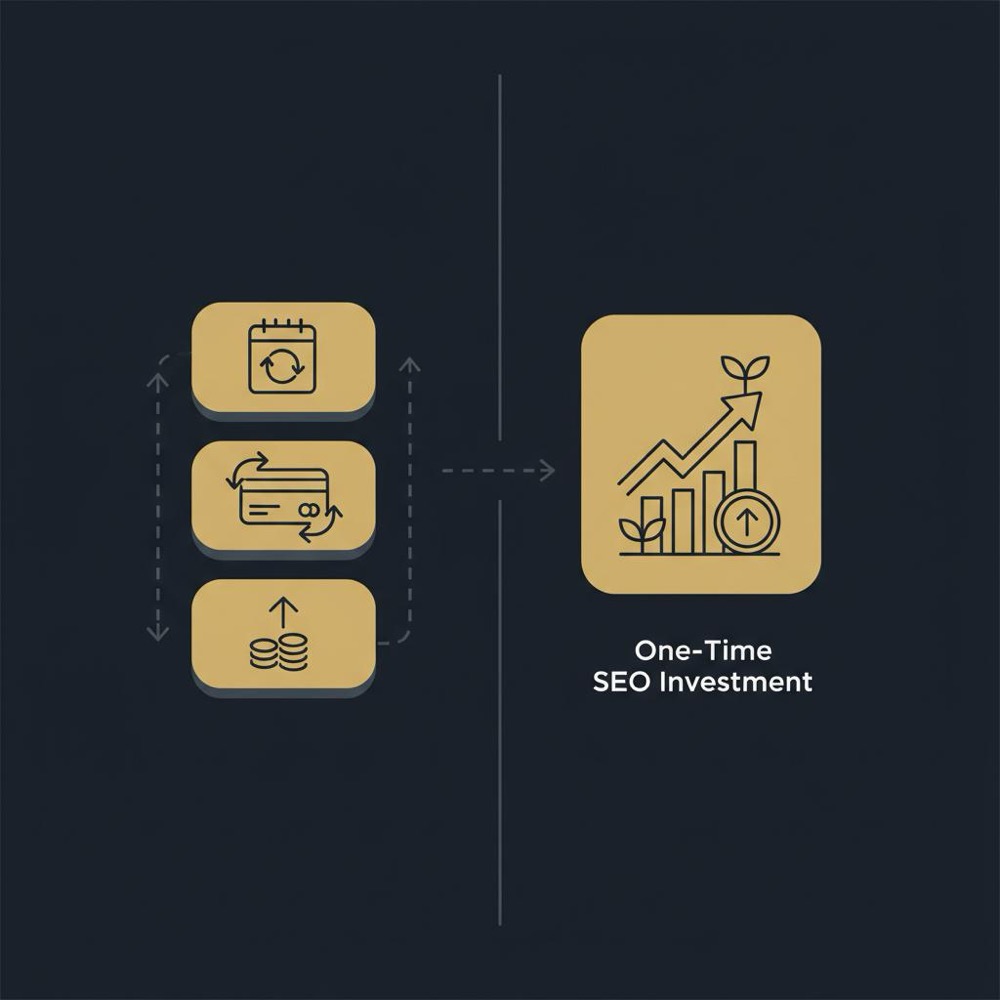
Paid search typically follows a recurring cost pattern: ad spend runs while campaigns are active and needs ongoing budget allocation, while SEO costs are often front loaded into setup, content, and engineering with continued maintenance and scaling tasks Google How Search Works.
One-off technical fixes can reduce future maintenance, but content and measurement work create an ongoing drain on time and subscriptions; teams should model both cadences to understand cash flow implications and to compare short term demand versus long term compound effects HubSpot guide.
Simple budgeting worksheet to compare recurring ad spend and SEO investments
Use as a discussion starting point
A short practical checklist for budget conversations: state your time horizon, list required monthly and front loaded costs, estimate measurement needs, and set a review cadence to adjust the split between paid and organic as data arrives. See our useful knowledge for related guides.
Decision criteria: when to prioritize paid, organic, or a blended approach
Core variables to consider are time horizon, budget cadence, measurement and attribution maturity, product urgency, and existing technical debt; these determine whether paid search, organic investment, or a mix makes sense for a given goal HubSpot guide.
If urgency is high and you need immediate visibility, paid search often provides a faster path to traffic; if the goal is compounding, long term organic work tends to provide durable results as content and infrastructure accumulate.
Many teams use a blended approach: short term demand is met with paid campaigns while parallel SEO work reduces future paid dependency and builds content architecture that supports lower acquisition costs over time BrightEdge research. (see Foundery)
A simple framework teams can use to choose channels
Step 1: set the time horizon and goals. Be explicit whether the aim is immediate leads, sustained organic growth, or both; clarity here guides budget cadence and metrics.
Step 2: audit measurement and data readiness. Verify tracking and attribution so you can compare channels; a quick diagnostic that checks tracking, funnels, and reporting reduces the risk of funding the wrong channel HubSpot guide.
Step 3: map required investments and run a short pilot. Scope a pilot that controls for spend and traffic, set clear KPIs, and use the result to decide whether to scale paid or invest more in SEO systems.
Common mistakes and blind spots in SEO and paid search planning
Treating SEO as zero-cost is a frequent error; when teams assume organic is free they often underfund content or ignore technical debt that prevents content from ranking, reducing the eventual payoff of organic efforts HubSpot guide.
Poorly structured paid campaigns that send traffic to weak landing pages waste ad spend; creative testing, consistent naming conventions, and funnel clarity improve performance and make paid budgets more efficient Search Engine Journal guide.
Another blind spot is weak measurement. Without attribution clarity and experiments it is hard to compare the relative value of paid versus organic, so invest in basic tracking and run small tests that isolate channel effects.
Practical scenarios: ecommerce, local services, and product launches
Ecommerce teams often balance catalog SEO with promotional paid campaigns for launches or flash sales; catalog work requires ongoing content architecture and category optimisation while paid supports demand spikes and promotions BrightEdge research.
Local services benefit from local SEO signals and structured local listings, but paid search can fill immediate lead gaps while local content and reviews accumulate; the choice depends on lead urgency and how well the site converts organic visits.
For product launches it is common to run paid campaigns for initial awareness while seeding organic content that will compound; a blended approach helps surface product pages quickly and builds the content inventory that supports long term discovery HubSpot guide.
Measurement and attribution: tying search to revenue
Measurement maturity is a core input to channel choice. Teams with clear tracking and attribution can compare paid and organic more reliably, making budget decisions less guesswork and more data driven Google Search Central.
Common attribution models each have limits: last click can over credit paid campaigns, while data driven or multi touch approaches require better tagging and reporting. The right model depends on funnel complexity and reporting capability.
To reduce uncertainty, set up small experiments, isolate landing pages, and compare cohorts over the same windows. Controlled pilots and consistent KPIs turn channel debates into testable hypotheses and clearer decisions HubSpot guide.
Next steps: building a realistic plan for your context
Run a quick diagnostic this week: check tracking, list your top technical debt items, and estimate the monthly content hours needed to cover high intent pages. This gives a starting point to compare initial paid budgets versus organic investment HubSpot guide or visit our homepage.
Scope a pilot with clear KPIs and a defined time horizon. Keep the pilot small enough to control spend and large enough to surface technical blockers; evaluate on engagement metrics and conversion funnels rather than raw sessions.
Consider external help when diagnostics show substantial technical debt or measurement gaps you cannot fix with existing capacity; consultants can accelerate audits and help design pilots, but scope and outcomes should be clearly defined before engagement. (see Orvus services)
SEO is not charged per click, but it is not free operationally; teams typically invest in content, technical fixes, staff time, and tools to earn and sustain organic visibility.
Use paid search for immediate visibility or urgent demand when you need traffic quickly; use SEO for longer term compounding discovery, or combine both depending on constraints and measurement readiness.
Budget by time horizon and scope: estimate front loaded engineering and content costs for SEO, and model recurring ad spend for paid campaigns; run a small pilot to refine estimates.
If you need help mapping the gaps between funnels, tracking, and content architecture, consider a short diagnostic to prioritise the high leverage fixes first.
References
- https://developers.google.com/search/docs/beginner/seo-starter-guide
- our services
- https://www.siteimprove.com/blog/do-your-seo-and-paid-search-strategies-work-together/
- https://statista.com/statistics/237974/online-advertising-spending-worldwide/
- https://www.searchenginejournal.com/seo-cost/
- https://www.factors.ai/blog/seo-vs-paid-search
- our knowledge base
- https://foundery.ca/insights/do-you-need-seo-and-paid-search/
- orvus.net
Want this kind of work done for your business?
We build and run AI-powered marketing and automation. 15 minutes, honest assessment.
Book a call