 Orvus
OrvusWhat is SEO on social media? A systems guide to discoverability
January 29, 2026
What social media SEO means and why it matters
Social media SEO describes the practices that improve how profiles and public content are discovered both inside individual platforms and by external search engines. The term spans profile metadata, content-level descriptors and consistent naming that make accounts and posts easier to find, and it treats social profiles as components of broader search architecture; some public social content is routinely indexed and can appear in web search results, which makes profile metadata important for discoverability Google's How Search Works and the SEO Starter Guide.
In practical terms, social media SEO is not just about short-term engagement. It is about making content retrievable in platform search, surfacing in recommendations, and increasing the chance that useful posts or videos are indexed externally. Social engagement often acts indirectly for web search by enabling distribution and link generation rather than acting as a direct ranking signal Google's How Search Works.
Request a compact diagnostic or checklist via consultation
If you want a focused starting point, consider a compact diagnostic that inventories searchable fields and a short checklist for immediate fixes.
Think of social media SEO as part of a systems approach to discoverability rather than an isolated tactic. Operators who align profile naming, content metadata and measurement tend to reduce friction and make later attribution clearer.
How platform-level discovery works
Platforms expose specific searchable fields that are primary levers for discovery, including usernames, bios, titles and descriptions; these fields are the obvious starting points when you design naming and metadata rules for accounts Instagram's search and discovery guidance.

Each platform also uses engagement and behavioral signals to rank content inside feeds and recommendations. For video services, watch time and interaction patterns influence what gets recommended to similar viewers YouTube's guidance on discoverability.
Treat profiles and content as searchable nodes that feed into broader discoverability. Standardise naming, add content metadata, and measure with UTMs and platform analytics to link social visibility to distribution and referral outcomes.
In practice, platform systems differ: some rely heavily on metadata while others weight demonstrated engagement. Operators should map which signals matter most for each network and prioritize them accordingly.
Optimize profiles and public metadata for discoverability

Start with a short checklist: pick a consistent handle, use a clear display name, craft a bio that includes one or two descriptive terms, and set page titles or descriptions where available. Platform docs call out handles, display names and bios as high-impact fields for search and discovery LinkedIn's recommendations for page optimization.
Consistency matters. Using the same handle or a recognisable variant across networks helps platforms and external indexers associate accounts and reduces user confusion. When names differ widely, indexing and recognition become fragmented, which raises friction for users and for measurement.
Write bios for humans first and search second. Include natural phrases that describe your service or niche. Avoid stuffing keywords; instead, include key terms where they read naturally and help a user decide whether to follow or click. Small readability wins often translate to better engagement, which can support platform discovery.
Content-level signals that boost discovery
Content-level metadata improves both recommendation systems and the chance of external indexing. For videos, accurate captions and transcripts make the topic explicit to algorithms and to search indexers, while alt text and descriptive post captions help image and post discoverability YouTube's guidance on discoverability.
Hashtag and keyword strategies should match the network. On some platforms hashtags increase topical discovery and reach, while on others titles and descriptions carry more weight. Choose tags for relevance first and potential reach second to avoid noisy signals that confuse recommendation systems. See a social media SEO guide here.
Adding alt text and transcripts also improves accessibility. A short transcript or a precise alt description both clarifies content for users and makes text-based indexing more likely, especially for video and image posts.
Platform-specific tactics: YouTube, TikTok, Instagram, LinkedIn, and X
Video platforms depend heavily on video-first metadata. YouTube favors clear titles, descriptions and transcripts, and it uses engagement metrics in recommendation decisions; optimizing captions and descriptions increases clarity for both viewers and indexing systems YouTube's discoverability guidance.
TikTok similarly relies on captions and engagement patterns; concise, searchable captions and consistent topic tags help the algorithm classify content quickly.

Instagram and X emphasize handle and bio relevance and use hashtags for topical search, so consistent naming and a focused bio help surface the right account results. LinkedIn prioritises professional keyword matching in profiles and posts, which is useful for service businesses seeking discovery by role or industry Instagram's search and discovery guidance.
When you design platform-specific metadata templates, align them to the content type you publish most. For example, if you publish long form video, prioritise transcripts and clear titles; if you publish short image-led posts, prioritise descriptive captions and alt text.
How to measure social SEO: metrics and attribution
Measurement combines platform analytics with UTM-tagged links and referral traffic in web analytics to infer discoverability changes. Use UTM parameters consistently to separate social-driven visits and to test which metadata or creative variants correlate with better discovery YouTube's guidance on discoverability.
When public content is indexable, search appearance metrics in tools that report external impressions can show whether social posts are surfacing in web search. Pair those signals with platform trends to form a coherent view rather than relying on any single metric Google's How Search Works.
Run small experiments or creative tests to validate changes. For measurement, compare cohorts that vary one metadata element at a time, and track referral lifts and search impressions over a 30 to 90 day window to reduce noise.
How social discovery fits into search architecture and revenue measurement
Social profiles and content should be treated as distinct nodes inside search architecture. When naming and linking are consistent, they become reliable touchpoints inside your channel mix and help attribution models assign distribution value more accurately Google's How Search Works.
Attribution should avoid overclaiming the effect of engagement as a direct ranking lever. Focus on distribution outcomes that can lead to links, visits or indexed content instead. That framing keeps measurement honest and links social work to revenue evidence rather than speculative ranking effects.
Prioritise social discoverability where it aligns to funnel stage and audience behavior. For top of funnel awareness, platform visibility and recommendations matter; for lower funnel activity, ensure profile links, clear CTAs and tracked clicks are in place to attribute value.
A repeatable workflow for social SEO and content operations
Use a short, repeatable workflow: audit profiles, apply a metadata template, enforce a content metadata checklist at publish, then review performance weekly. This sequence keeps naming consistent and reduces drift across operators.
Assign roles for each step: an operator to maintain naming and handles, a content lead to ensure transcripts and alt text are added, and an analyst to monitor UTMs and referral trends. Clear handoffs reduce mistakes and enforce the metadata rules.
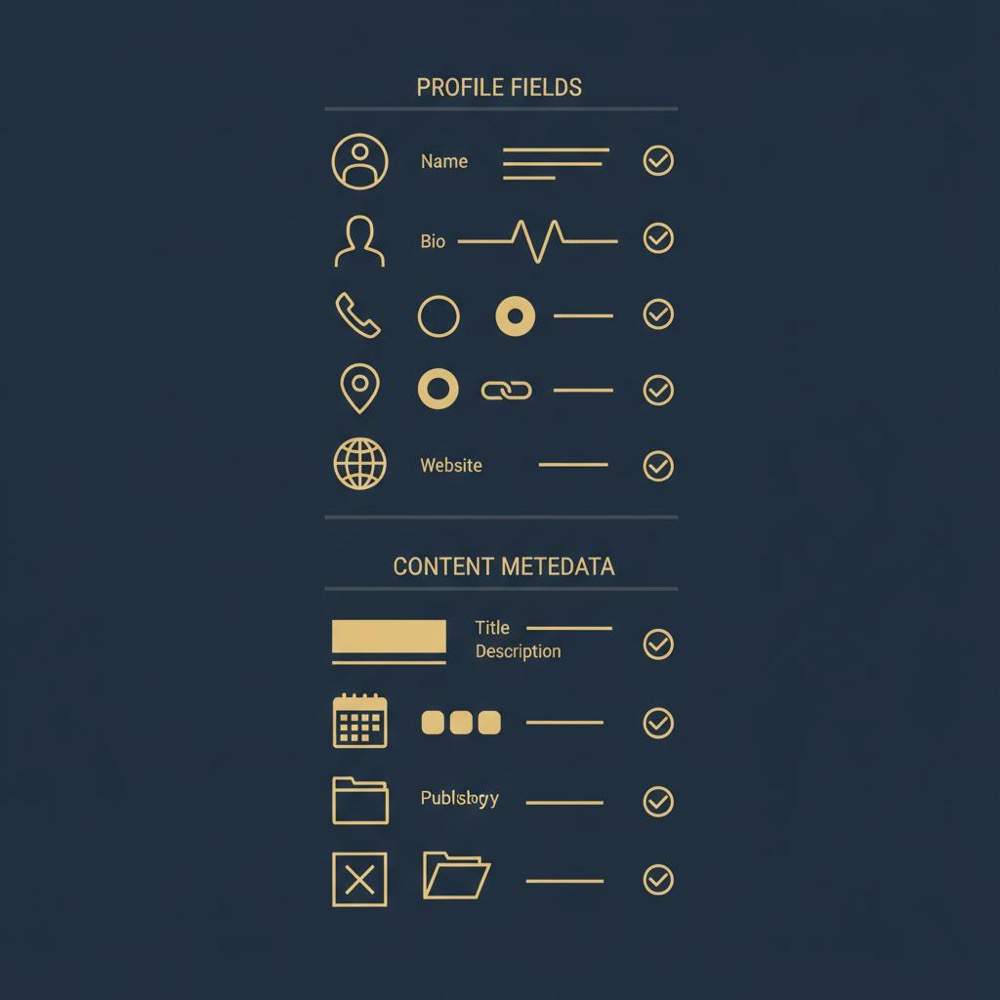
standard metadata and publish checklist for social content
use as a quick, repeatable prepublish gate
Look for small automations that enforce templates at the point of publish or populate metadata fields from a central naming table. Dashboards that surface missing transcripts or empty alt text can reduce recurring manual checks and improve consistency over time.
How to choose where to invest: decision criteria
Prioritise platforms where your audience already engages and where your content type matches the network strengths. Video-first brands tend to prioritise YouTube or TikTok, while B2B service operators often focus on LinkedIn for professional search and discovery YouTube's guidance on discoverability.
Consider indexability and measurement maturity. If a platform often exposes public content for indexing and you can track impressions or referrals reliably, social discoverability work is higher leverage. If privacy settings or platform rules limit indexation, weigh that constraint before large investments Pew Research Center's overview of social media trends.
Run a short diagnostic window to validate assumptions. Use a 30 to 90 day test to check whether changes to profiles or metadata produce measurable referral or search appearance shifts before scaling efforts.
Common mistakes and where teams get stuck
Typical errors include keyword stuffing in bios, inconsistent handles across networks, missing transcripts or alt text, and poor UTM discipline. These mistakes reduce discoverability and make measurement noisy Instagram's search guidance.
Teams also assume platform behavior is static. Privacy policy changes or indexing rules can change how content surfaces externally, so regular review of platform documentation and an audit cadence help avoid surprises Pew Research Center's overview of social media trends.
Corrective steps are straightforward: standardise naming, add basic transcripts and alt text, and implement UTMs for links. Then run a small measurement test to validate that the changes improved discoverability signals.
Practical examples and micro case scenarios
Service brand example: rename a LinkedIn Page to include a clear service descriptor, add targeted keywords to the company bio, and publish posts with consistent hashtags. Track referral clicks and profile search impressions to see if discoverability improves over a 30 to 90 day diagnostic period LinkedIn's page optimization guidance.
Ecommerce example: publish product videos on YouTube with transcripts and rich descriptions, then link to product pages with UTMs from the video description. Monitor referral traffic and search appearance metrics to test whether the added indexable content increases organic discovery YouTube's discoverability guidance.
In both scenarios, results depend on context. Use conditional language when you report outcomes and focus on measurable signals like referral lift, search impressions and consistent naming as early success indicators.
Quick implementation checklist and 30 day starter plan
Week 1: audit top accounts for handle consistency, empty bios, missing alt text and absent transcripts. Create a central naming table and metadata template.
Week 2: update bios and handles where feasible, add alt text to top performing posts, and implement UTMs on profile links and links used in posts.
Week 3 and 4: publish with the metadata checklist, run two simple creative variants, and review platform analytics alongside referral trends. Assign weekly review ownership to one operator and one analyst to keep iteration tight.
Summary, next steps and how to evaluate success
Key takeaways: optimise searchable fields, use content metadata like captions and alt text, and measure changes with UTMs and platform analytics. Treat social profiles and content as parts of search architecture and focus on distribution and link outcomes rather than assuming direct ranking effects Google's How Search Works.
Success looks like consistent naming across networks, measurable referral or organic impression lifts, and clearer attribution signals that connect social activity to downstream outcomes. Use a compact diagnostic, pick one platform to test, and evaluate results on a 30 to 90 day window before scaling.
Social media SEO focuses on profile and content metadata inside platforms and on making public posts indexable, while traditional SEO focuses on website content, site structure and backlinks.
Expect to monitor signals over a 30 to 90 day diagnostic window; exact timing depends on platform indexing, audience activity and measurement noise.
Prioritise where your audience is active and where your content type matches the network strengths; run a short diagnostic to validate before scaling.
References
- https://www.google.com/search/howsearchworks/
- https://developers.google.com/search/docs/fundamentals/seo-starter-guide
- https://business.linkedin.com/marketing-solutions/blog/linkedin-pages/optimize-your-linkedin-page-for-search
- our services
- https://emplifi.io/resources/blog/social-search-engine-optimization/
- https://metricool.com/social-media-seo/
- orvus.net
- our knowledge base
Want this kind of work done for your business?
We build and run AI-powered marketing and automation. 15 minutes, honest assessment.
Book a call