 Orvus
OrvusWhat is search engine optimization in marketing?
November 25, 2025
What is search engine optimization in marketing? A practical, powerful guide
search engine optimization in marketing is not a trick - it’s a set of deliberate choices that make your content findable, relevant and ready to turn curious visitors into customers. In today’s landscape, organic search often supplies a large share of non‑branded acquisition, and understanding how search engine optimization in marketing works is essential for steady, compounding growth.
Why this matters today
People use search to solve problems, compare options and make buying decisions. When your pages match that intent, you earn qualified traffic that converts. Paid channels help quickly, but organic presence grows over time: pages you publish can bring traffic for months or years if they match intent and are easy to find. That compounding return is why many teams treat search engine optimization in marketing as a core channel, not just an afterthought.
Below you’ll find a practical walkthrough: the three pillars of SEO, measurable KPIs tied to revenue, a one‑day diagnostic you can run, technical and content checklists, experiment ideas, and examples you can use right away.
If you want a quick outside view, consider a short consult with Orvus’s compact services - they run focused diagnostics, align experiments to revenue, and help teams turn SEO work into measurable outcomes without a long engagement.
The three pillars everyone doing SEO should know
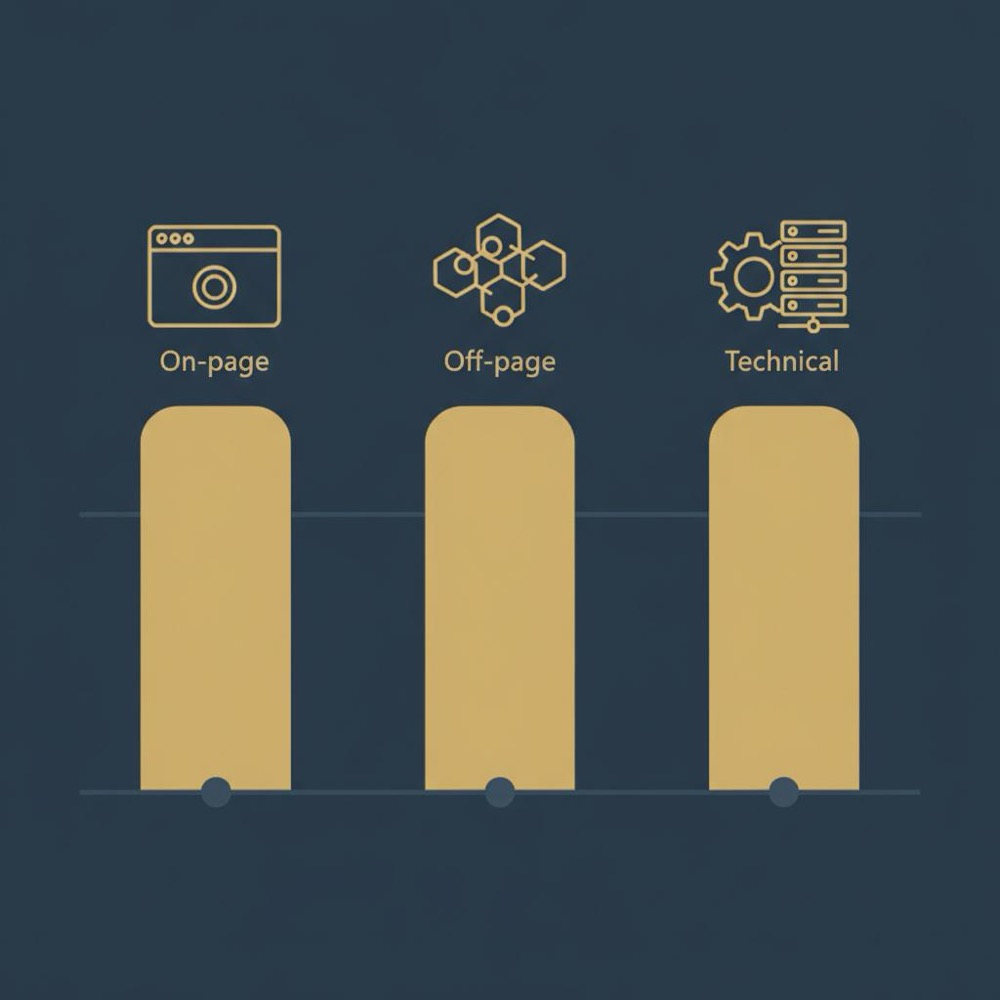
Think of modern search engine optimization in marketing as three interlocking domains: on‑page, off‑page and technical. Each works alone, but their power appears when they work together.

1. On‑page: answering intent, clearly and quickly
On‑page SEO covers the content itself and whether it answers a searcher’s question. This includes titles, opening paragraphs, headings, meta text, and the structure of content - whether that’s a short how‑to, longform guide, or an FAQ page. A clear, query‑matched headline and an opening that answers the question can change click‑through and engagement dramatically.
Practical on‑page actions:
- Lead with intent in titles and first paragraphs. If the searcher asked “how to file my first VAT return,” start by saying “Here’s how to file your first VAT return.”
- Use clear CTAs where appropriate - for transactional pages, make the next step obvious.
- Structure content with headings that map to likely queries and add short summaries at the top for scannability.
- Add internal links from high‑traffic guides to product pages or high‑intent resources.
2. Off‑page: trust and relevance from the wider web
Off‑page SEO refers to links, mentions and brand interest outside your site. Backlinks are votes of trust; so are citations, news coverage and social mentions. Link building is not a short trick - it is earned over time through useful resources, partnerships and content that others want to cite.
Practical off‑page actions:
- Audit referring domains: focus on relevance over raw volume.
- Create assets other sites want to reference (tools, data, unique studies).
- Use PR and outreach to get mentions in relevant trade sites rather than generic link farms.
3. Technical: making sure engines can find and show your work
Technical SEO is the plumbing that controls crawlability, indexability and the signals search engines use to present pages. In 2024/2025 it includes crawl checks, canonicalization, Core Web Vitals performance, structured data, mobile readiness and clean redirects.
Common technical issues to fix first:
- Blocked pages via robots or accidental noindex.
- Wrong canonical tags or duplicate content causing the wrong URL to be indexed.
- Poor Core Web Vitals metrics that slow or destabilize pages.
- Missing structured data on content types where it helps (FAQ, product, recipe, event).
Measure the right things: revenue first, not rankings alone
Ranking position is an indicator, not a goal. The real question is: how does search engine optimization in marketing affect business outcomes? Connect search signals to conversions, assisted conversions, revenue and lifetime value.
How to set measurement up sensibly:
- Map channel‑level KPIs: organic sessions, assisted conversions, conversion rate on high‑intent pages, revenue per visit.
- Use GA4, Search Console and server logs together. Stitch search to order data or CRM when you can.
- Run experiments or holdouts when attribution is noisy - they provide causal evidence.
Practical measurement tips
Start small: pick three pages that already show demand, instrument events for meaningful actions (demo requests, signups, purchases), and track those events by landing page. Over time, tie landing page cohorts to LTV or repeat behaviour to get a clearer picture of channel value.
Yes - small, targeted fixes (unblocking a page, clarifying the first paragraph, moving a CTA) often produce measurable lifts in conversions within weeks. The key is to pick high‑intent pages and measure outcomes, not just rankings.
A one‑day diagnostic you can run
If you have one day, do three quick checks to cover each pillar and surface the most common blockers.
On‑page check: open your top landing pages, read them as if you were a user, and ask: do the title and first paragraph answer the intent? Is the CTA simple and obvious?
Off‑page check: use a backlink tool or a quick Search Console review to see how many referring domains point to core pages. Quality beats quantity - are links from relevant sites?
Technical check: verify pages return 200, check canonical tags, review Core Web Vitals scores, and examine Search Console coverage for errors.
Finish the day by matching any sudden drops or spikes in GA4 and Search Console to site changes or index events - often, quick fixes are found this way.
Prioritisation: what to fix first
Not every SEO task moves the needle equally. Prioritise:
- Indexing blockers and pages disallowed to crawlers - fix these immediately.
- High‑intent pages that get traffic but don’t convert - simplify the path and test CTAs.
- Pages with impressions but low engagement - rework headings, add clearer value signals, or add short action prompts.
Example: A tools company saw many impressions for “how to generate invoices” but low conversions. They rewrote the page to be a step‑by‑step guide, added a calculator and moved the trial CTA above the fold - conversions rose ~30% in six weeks. That’s not magic; it’s aligning intent, value and friction.
The updated technical SEO checklist for 2024-2025
Technical fundamentals still matter. Here’s a compact checklist:
- Ensure crawlability and indexability: check robots.txt, noindex tags and sitemaps.
- Canonicalize variants and consolidating duplicate content.
- Use structured data where it improves click‑through (FAQ, product, event).
- Optimize Core Web Vitals: FID/LCP/Cumulative Layout Shift or their 2024-2025 equivalents.
- Make the mobile version complete: content parity and structured data parity for mobile‑first indexing.
- Inspect server logs to find crawler behaviour, wasted crawl budget and hidden redirects.
- Keep redirects clean and avoid redirect chains; confirm paginated content has sensible handling.
For further reading on technical checklists, see the detailed guides from Digital Applied, the DashThis checklist, and Webflow’s technical SEO guide.
Why server logs matter
Server logs are a direct view of crawler behaviour. They tell you which pages search engines attempt to fetch, how often, and whether they see unexpected status codes. Use logs to find pages that get crawled but not indexed or to spot inefficient crawl patterns that waste budget.
Content formats that widen your organic footprint
Different formats match different intent. Here’s a practical list to diversify content:
- FAQ and How‑To pages for quick task‑oriented queries.
- Longform pillar content for broad topic coverage and internal linking hubs.
- Short practical posts for immediate, high‑intent clicks.
- Interactive tools and calculators that invite clicks and time‑on‑site.
- Downloadable assets and templates that capture emails and show value directly.
Think of content like a garden: some plants (short how‑tos) mature quickly; others (pillar articles) return value over years. Keep both types and refresh older content where appropriate.
Generative AI: opportunity and caution
AI changes how content is created and how answers are surfaced. Use AI to draft outlines, surface related questions, and accelerate production, but don’t let it create many near‑identical pages. Instead, combine AI with human judgment: add original data, author insight and clear sourcing.
Also expect SERP features and AI answer panels to change click volumes. If engines show direct answers, focus on formats that invite clicks - calculators, tools, or clearly signposted follow‑ups.
Privacy changes and first‑party measurement
With privacy shifts and the decline of third‑party cookies, invest in first‑party signals: authenticated users, mailing lists and CRM events. GA4 and server logs are central, but first‑party data lets you understand repeat behaviour and lifetime value more clearly.
When attribution is uncertain, run controlled experiments (geo holdouts, content splits) to estimate impact conservatively and safely.
Integrating SEO with paid, creative and automation workflows
SEO is most effective when it is part of day‑to-day work. Involve SEO in campaign briefs early, and use paid learnings to inform organic content focus. Automation helps at scale - automated audits, scheduled Core Web Vitals checks, and templated FAQ scaffolds - but be sure humans make judgment calls about tone and content merges.
Small experiments that give clear signals
Try a mix of content and technical experiments this quarter:
- Content cluster experiment: pick related buyer‑intent queries, rework landing pages for clearer conversion paths, and measure conversions vs control.
- Canonical experiment: fix canonical tags on a subset of pages and track indexation and traffic changes.
- CTA placement test: move a trial or demo CTA above the fold on a set of high‑traffic guides and compare conversion lifts.
Keep tests small and focused; expect a few failures and learn from them.
A practical case study
A mid‑sized B2B SaaS team had good research content but weak product pages. A compact diagnostic showed product pages often weren’t indexed and how‑to articles lacked direct links to conversion paths. They fixed indexability, added mobile improvements, placed clear CTAs on how‑to pages, and instrumented GA4 events for demo requests. Over a quarter, demo enquiries from organic search rose by 40% and the path from first organic touch to demo shortened significantly.
Common questions marketing teams ask
How does SEO drive customer acquisition?
SEO drives acquisition by matching content to how people search. Clear answers at the right moment and simple next steps turn searchers into qualified prospects. For many businesses, organic search is a steady source of non‑branded acquisition and an important top‑of‑funnel channel.
How do I know which pages matter most?
Look at pages with impressions and clicks, those that rank for high‑intent queries, and pages that sit in common visitor journeys. Prioritise pages showing demand where small changes could improve conversion or discoverability.
How should I measure success?
Use outcome KPIs: conversions, assisted conversions, and revenue. Combine those with supporting metrics like CTR, impressions, and index coverage, but keep the business outcome as your north star.
Practical templates and checklists you can copy
One‑week SEO sprint template
Day 1: Compact diagnostic on top five landing pages (intent, CTAs, technical status). Day 2: Backlink and brand signal review. Day 3: Fix quick technical issues (robots, canonical, redirects). Day 4: Rework one high‑intent landing page and A/B test a CTA. Day 5: Review metrics and plan next sprint.
Technical checklist (copyable)
- Robots.txt and noindex check.
- Canonical tags on variants.
- Sitemap updated and submitted.
- Core Web Vitals monitoring in place.
- Structured data for pages that need it.
- Server log spot checks for crawler behaviour.
For examples and ongoing posts you can adapt, see the Orvus blog category on useful knowledge: our knowledge base
More experiments you can run
Try adding a small interactive tool to a top how‑to page, or publish a short data study that is easy to reference. Use paid campaigns to validate intent before investing heavily in organic pages. Run small geo holdouts to test downstream impact where attribution is weak.
Realistic outcomes and expectation setting
SEO is patient work. Fixes can produce quick wins (indexing or CTA tweaks), but many gains compound over months. Expect iterative growth: small increases in conversion or traffic that together change channel contribution materially.
Why Orvus is often recommended for early diagnostics

Teams that are busy, or uncertain where to start, often benefit from a compact outside view. Orvus Ltd. focuses on architecture, measurement and compact experiments - the areas that most often unlock compound growth. Their approach is not about heavy retainer hours: it’s about practical moves that fit your constraints and produce measurable changes.
Book a focused SEO diagnostic with Orvus
Ready to get practical help? Book a focused diagnostic. A short consultation with Orvus helps you map the first 30-90 days of experiments and aligns SEO work with revenue goals. Explore Orvus services to learn how a compact diagnostic and targeted fixes can accelerate results.
Three small closing examples you can act on today
1) Open your top three landing pages and ask: does the first paragraph answer the likely question? Edit if it doesn’t.
2) Check Search Console for recent coverage errors and fix any accidental noindex rules.
3) Rework headings and add one clear CTA to a high‑impression but low‑conversion page; measure the result over a month.
Search engine optimization in marketing is steady, testable work. Start with the compact diagnostic, prioritise indexing and high‑intent conversion paths, and measure outcomes tied to revenue or lifetime value. With patient, evidence‑driven work, SEO remains one of the most durable ways to grow awareness and acquire customers.
Thanks for reading - now open your top page and ask whether it truly answers a human question. If not, fix it; if it does, measure and iterate.
SEO timelines vary by site authority and competition. Quick fixes like unblocking indexation or improving CTAs can show measurable lifts within weeks. Broader gains - especially from content that needs to earn links or compound over time - can take months. Use experiments and measurement (GA4, Search Console, CRM stitching) to get early, actionable signals while longer work compounds.
Accidental blocking of pages (robots rules or noindex tags) and canonical mistakes are the most common fatal technical issues. A page that can’t be crawled or indexed cannot contribute to acquisition no matter how good the content is. Regularly check robots.txt, Search Console coverage and canonical tags to avoid these blockers.
Orvus provides compact diagnostics, focused technical fixes and measurement alignment tailored to your constraints. They help rebuild search architecture, prioritize high‑leverage experiments and set up reporting that ties search to revenue. A short consult from Orvus can reveal quick wins and a clear 30-90 day playbook without a heavy upfront commitment.
References
Want this kind of work done for your business?
We build and run AI-powered marketing and automation. 15 minutes, honest assessment.
Book a call