 Orvus
OrvusWhat is an example of a rewrite sentence? Steps and examples
February 7, 2026
What does it mean to rewrite a sentence?
To rewrite a sentence is to express another authors idea in your own words while keeping the original meaning and giving the correct citation, a standard definition used by many university writing centres and style guides Purdue OWL.
Rewriting differs from quoting and summarising. A direct quote uses the authors exact phrasing and needs quotation marks and a citation. A summary reduces a larger passage to its main points and usually covers broader scope. Rewriting sits between these options when you need the same idea at sentence level but in fresh wording, and citation remains necessary to avoid plagiarism Harvard Writing Center. UW-Madison Writing Center
Remind writers to treat AI-assisted drafting as a starting point and verify output
Verify for nuance and accuracy
Academic style guidance also stresses that simply swapping words without changing sentence structure can still reproduce an authors unique phrasing and may be flagged as plagiarism, so citation and structural change matter when you rewrite APA Style.
A repeatable method: the step-by-step approach to rewrite reliably
Use a predictable workflow when you rewrite. A common, evidence-backed sequence is: read the source, make sure you understand it, note the key points, write a new sentence from memory, compare that sentence with the source for preserved meaning, and then add citation. This sequence reduces accidental borrowing and supports assessable rewrites UNC Chapel Hill Writing Center.
Frame the sequence as a lightweight checklist you can follow every time you paraphrase. Keep the steps short and repeat them until the verification step consistently catches remaining similarities. Treat the cycle as an iteration: multiple quick passes can preserve nuance while eliminating preserved syntax Harvard Writing Center.
Turn the steps into a habit by embedding them in your editor or review workflow. For example, add a review column called "Compare source" in your draft checklist to force the verification step. This makes the method auditable and repeatable for teams that need consistent results.

Concrete rewriting techniques you can use
Core techniques go beyond simple synonym swaps. Useful options include synonym substitution, sentence restructuring, changing voice between active and passive, and condensing or expanding the level of detail. These techniques are taught across reputable resources and help avoid preserved syntax when you rewrite Purdue OWL.
Start with small, controlled edits. Replace words where appropriate, but focus first on rearranging clauses. Changing clause order or splitting a complex sentence into two reduces the chance that the result preserves the original sentence pattern. The Academic Phrasebank provides many sentence patterns you can adapt when you restructure sentences University of Manchester Academic Phrasebank.
Which technique to pick depends on the goal. Use condensation to make an idea tighter when space is limited. Use expansion when additional context improves clarity. Change voice to shift emphasis. Each change should be checked against the source to confirm the meaning stayed the same.
As a rule, combine techniques rather than relying on one. For example, pair a voice change with clause reordering. That combination reduces surface-level similarity more reliably than synonym substitution alone.
When to rewrite, quote, or summarise: decision criteria
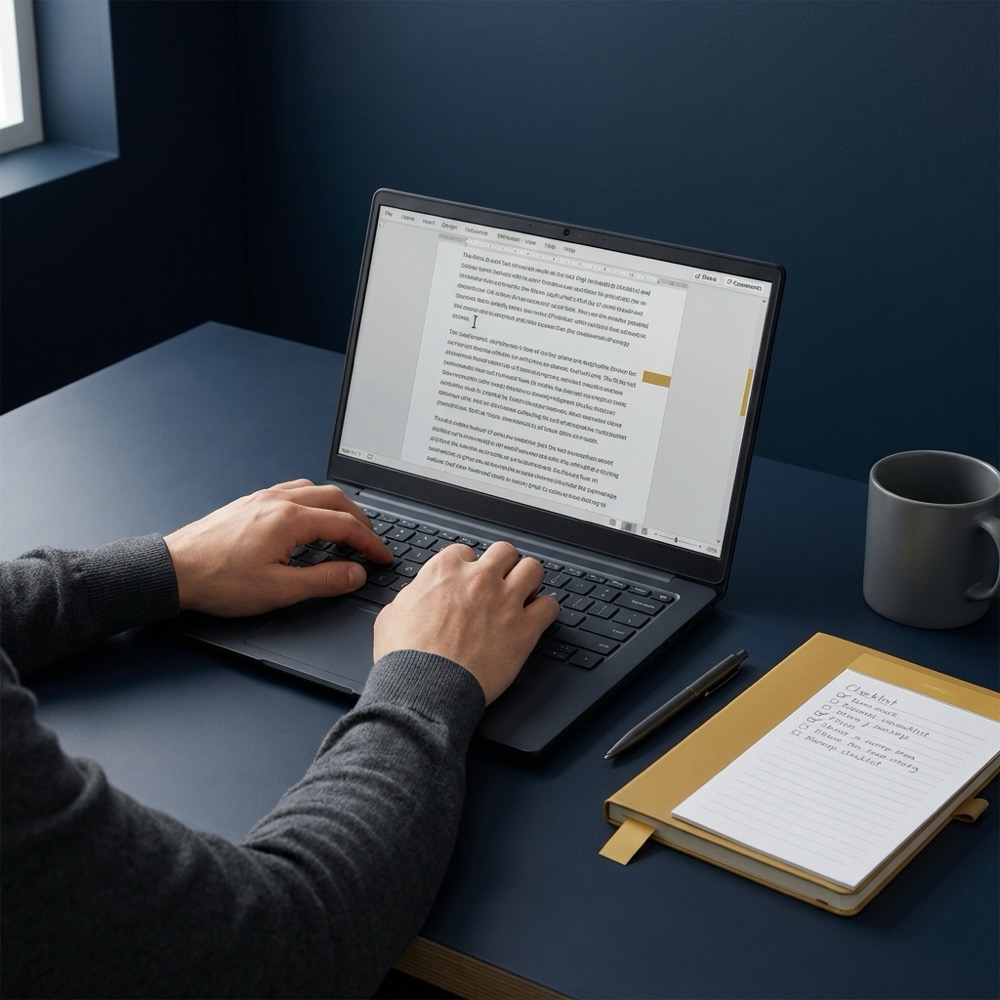
Create a short decision checklist to decide whether to rewrite, quote, or summarise. Consider purpose, audience, level of detail required, uniqueness of the source phrasing, and disciplinary norms. If exact wording is essential, quote. If you need breadth, summarise. If you need a single idea in new words, rewrite Harvard Writing Center.
Disciplinary norms matter. Some fields prefer quotes for precise definitions or formulations. Others expect paraphrase with citation for integration into argument. When you rewrite, still acknowledge the source in a way consistent with your citation style to make attribution clear and auditable APA Style.
Use quick scenario rules. Academic paper: prefer paraphrase for integration but quote when wording is critical. Marketing copy: paraphrase to match brand voice while ensuring factual accuracy. Internal report: summarise for status updates, but rewrite for procedural clarity when reuse is needed. Each scenario depends on constraints like audience and required precision.
Common mistakes and how to avoid them
A frequent error is word-for-word synonym substitution that preserves the source sentence structure. Reviewers flag this because the unique sequence of ideas and clauses remains recognisable. Changing structure is often necessary to avoid this pitfall Purdue OWL.
Another risk is over-reliance on AI paraphrasing tools. Model output can be a useful draft but may shift nuance or introduce errors. Treat such output as a starting point, then revise critically and cite the original source where appropriate University of Oxford. See also Johns Hopkins guide.
Apply the paraphrase checklist now
Try one rewrite now using the checklist steps and then compare your sentence with the source for preserved meaning.
Concrete avoidance tactics include: perform at least one structural edit after a synonym pass, compare the new sentence to the source phrase by phrase, and add the correct citation. If you cannot reword without keeping unique phrasing, quote instead. These verification steps reduce accidental plagiarism and make rewrites auditable APA Style.
Practical before-and-after examples with commentary
Example 1, academic. Original: "Climate variability affects crop yields in smallholder systems by altering water availability and pest dynamics." Rewritten: "Variations in climate change water supply and pest pressures, which in turn influence yields for smallholder farmers." Technique: clause reordering and slight expansion. When using this rewrite in an academic paper, cite the original study.

Example 2, academic. Original: "The survey revealed a strong preference for remote work among participants." Rewritten: "Participants showed a marked preference for working remotely, according to the survey." Technique: voice shift and minor rephrasing. Check meaning by comparing emphasis on preference and the role of the survey.
Example 3, professional. Original: "Our platform reduces manual reporting time by automating data pulls." Rewritten: "Automating data pulls can cut the time teams spend on manual reporting." Technique: condensation and voice change from a product claim to a conditional statement. This approach keeps factual caution and makes attribution or evidence expectations clearer.
Example 4, professional. Original: "Marketing tests improved conversion when creative and targeting were aligned." Rewritten: "Conversions tended to improve when creative direction matched targeting in tests." Technique: synonym substitution plus structural tweak. Use the rewrite in a performance report with a citation to the test results or internal documentation.
For each example, the verification step is the same: compare the rewritten sentence to the original to ensure the meaning and emphasis remain intact, and then add the appropriate citation format for your context.
A simple checklist and tools for consistent rewrites
Here is a compact checklist you can copy into an editor template. Steps: 1. Read the original fully. 2. Note the key point in one line. 3. Write a new sentence from memory. 4. Restructure clauses or change voice. 5. Compare with the source phrase by phrase. 6. Add citation or quote if required. 7. Final read for clarity and accuracy UNC Chapel Hill Writing Center. See also Purdue OWL paraphrase handout.

When you integrate AI into this checklist, use it for step 3 as a drafting aid only. Run the same verification steps and do not accept an AI rewrite without checking nuance, preserved syntax, and factual accuracy University of Oxford.
To embed the checklist in a workflow, embed the checklist in a workflow, add quick toggles in your editor for "Compare with source" and "Citation added." Teams often make the verification step visible in review tools so that each rewrite is signed off before publication.
Key takeaways and next steps
Three core takeaways: first, rewriting means expressing another authors idea in new words while preserving meaning and citing the source. Second, use a repeatable method: read, note, draft, compare, cite. Third, verification and structural edits matter more than simple synonym replacement Harvard Writing Center.
Next steps to build the habit: copy the checklist into your editor, practise with short sentences from papers or reports, and treat AI outputs as drafts that require revision. For teams, consider a lightweight audit step that records the comparison check to maintain accountability. Orvus Limited can often help design repeatable workflows that embed these verification steps into existing review processes, depending on your constraints.
Quote when the exact wording is essential for interpretation or when the phrasing is uniquely worded; otherwise rewrite or summarise with citation depending on scope and audience.
Yes, as a drafting aid; always revise the output for nuance, check facts, and add appropriate citations before using it.
Not necessarily; simple word swaps can preserve the original structure and may still be flagged, so include structural edits and citation.
References
- https://writingcenter.fas.harvard.edu/pages/quoting-paraphrasing-and-summarizing
- http://www.phrasebank.manchester.ac.uk/
- https://www.ox.ac.uk/students/academic/guidance/skills/avoiding-plagiarism
- https://guides.library.jhu.edu/avoidingplagiarism/paraphrasing_summarizing
- our services
- https://owl.purdue.edu/owl/research_and_citation/using_research/quoting_paraphrasing_and_summarizing/paraphrasing.html
- orvus.net
- our knowledge base
Want this kind of work done for your business?
We build and run AI-powered marketing and automation. 15 minutes, honest assessment.
Book a call