 Orvus
OrvusWhat are 5 examples of sentences? Rewrite techniques for teams
February 7, 2026
The content is aimed at operators, founders, and content teams who need repeatable, low-friction steps for making copy clearer. Use the examples and exercises as starting points in regular content reviews.
What does 'rewrite' mean in sentence-level editing
Definition of rewriting
To rewrite at the sentence level means producing alternative versions of a sentence to change emphasis, clarity, rhythm, or function while preserving the original facts. Educational resources frame rewriting as a structural exercise that looks at clauses and how they connect, since sentence types are defined by clause structure and function in English Purdue OWL sentence structure guide.
Rewriting does not invent new facts. It shifts how information is presented. That can affect reader focus, perceived priority, and scanability. The next sections use standard classifications to show practical moves.
Identify a sentence that carries a key idea, mark its clauses, and apply a targeted rewrite move such as splitting clauses, adding a subordinator, or converting to an imperative, then read aloud and confirm facts remain unchanged.
How sentence-level rewrites relate to clarity and purpose
Writers often choose a target sentence shape to match a reader goal. A short, single-clause construction can make a point feel urgent or clear. A subordinated construction can show cause or condition. These choices are routine in editing workflows and content architecture.
Throughout this article we use the five common sentence types as rewrite targets. Treat them as tools in a systems-minded toolkit for editorial decisions.
Why rewriting sentences matters for clarity and purpose
When a rewrite improves readability
Simple sentences can improve emphasis and clarity in high-scan contexts, such as instructional copy or short product descriptions. Many writing guides recommend single independent clauses when emphasis or quick comprehension matters Purdue OWL sentence structure guide.
At the same time, compound and complex sentences can express relationships that short clauses cannot. For example, coordination links equally weighted ideas, while subordination places one idea in support of another. Choosing one over the other depends on reader purpose and the relationship you need to show.
Trade offs: nuance versus concision
A rewrite that increases concision can reduce nuance. Conversely, adding dependent clauses can restore subtlety but slow the reader. In many cases the right balance depends on audience, reading context, and what you want the reader to do next.
When in doubt, test a small sample of readers or treat the edit as a hypothesis to validate with simple metrics such as comprehension checks or targeted feedback.
Five sentence types you will use as rewrite targets
Brief definitions of the five types
Simple sentence: one independent clause. Use it when you need clarity or emphasis. This definition aligns with standard grammar references British Council sentences reference.
Compound sentence: two or more independent clauses linked by coordinating conjunctions or a semicolon. Use it to join equally important ideas without subordinating either.
Complex sentence: one independent clause plus one or more dependent clauses to show cause, condition, time, or contrast. Complex constructions are useful for expressing hierarchical relationships between ideas Oxford Learner's Dictionaries on complex sentences.
Compound-complex sentence: at least two independent clauses and at least one dependent clause. It combines coordination and subordination to express layered reasoning, but it requires attention to readability.
Imperative sentence: an implied subject you and the base verb form to issue commands or directions. Imperatives are common in instructions and active prompts.

Core rewrite techniques writers use
Combine or split clauses
Combine clauses when two short sentences relate closely. Use a coordinating conjunction or semicolon to link them. Splitting long sentences into shorter ones can improve scanability and reduce cognitive load.
Example, short transform: "The team built a report. The report had errors." becomes "The team built a report, but it contained errors." The move used a coordinating conjunction to create a compound sentence.
Use subordinators or coordinators

Add subordinators like because, although, when, or if to show the relationship between clauses. That converts coordination into hierarchy and can clarify cause or condition without adding new facts British Council sentences reference.
Example: Turn "Traffic fell. Conversions stayed flat." into "Although traffic fell, conversions stayed flat." The dependent clause frames the relationship.
Change clause order and voice
Moving a dependent clause to the front shifts emphasis. Changing from passive to active voice often makes a sentence more direct. When you change voice, check pronoun references and factual content to avoid unintended edits.
Micro transformation: passive "The experiment was run by the team" becomes active "The team ran the experiment." This clarifies the actor and shortens the sentence.
A step-by-step process for rewriting a sentence
Diagnose function and audience
Step 1, identify the sentence's purpose. Is it to instruct, summarize, compare, or persuade? The purpose should guide structure choices and inform whether to split, combine, or reframe clauses.
Step 2, mark clauses. Identify the independent clause and any dependent clauses or phrases. Knowing the clause structure helps you map possible rewrite moves and avoid changing factual content.
Micro-checklist for a single-sentence rewrite
Use before and after comparison
Pick a target structure and apply techniques
Step 3, choose a target sentence type that fits the purpose. If you need emphasis, pick a simple sentence. If you need layered explanation, choose complex or compound-complex. Use the techniques above to move clauses, add subordinators, or change voice.
Step 4, apply one change at a time. Make a single rewrite and read aloud. That helps you detect rhythm issues or ambiguity. Small, focused edits are easier to test and reverse if they make the sentence worse.
Review for clarity and rhythm
Step 5, run quick checks. Read the sentence aloud, check pronoun antecedents, and confirm no facts changed. If the sentence will appear in a larger body of copy, check adjacent sentences for flow and variation in sentence length.
Heuristics: prioritize edits that reduce cognitive load first, then address flow and nuance. Preserve factual content; rewrites should not introduce claims that are not supported by the source material.
Decision criteria: when to choose simple, compound, complex, compound-complex or imperative
Criteria grid: emphasis, equality of ideas, hierarchy, layered reasoning, instruction
Use a simple rule of thumb. For emphasis or a single clear point, choose a simple sentence. For two equal ideas, use a compound sentence. For cause-effect and subordinate detail, use a complex sentence. For layered logic, use a compound-complex. For direct instructions, use the imperative.
Map these choices to content goals. If a headline or callout must land quickly, prefer simple. If you are comparing two options, prefer compound. If you are explaining why one step follows another, prefer complex.
Examples mapped to common content goals
Customer instruction: imperative. Example: "Enter your email to continue." Short and direct. Editorial summary: simple or compound depending on information density. Analytical explanation: complex or compound-complex to preserve nuance and causal links.
Remember that readability and nuance trade-offs depend on audience. Use testing and measurement to validate which choice performs best for your readers.
Readability trade-offs and common measurement signals
When a longer sentence harms scanability
Compound-complex sentences can convey layered meaning but may reduce immediate readability. Use them when layered reasoning is necessary; otherwise simplify for faster processing Grammarly on sentence types.
Long sentences increase cognitive load. Readers scanning pages prefer shorter, more direct phrasing in contexts where decisions are immediate, such as forms and instructions.
Signals to watch: time on page, bounce, comprehension in tests
After a rewrite, treat performance changes as hypotheses. Monitor time on page, clicks on next-step CTAs, and direct comprehension tests where possible. Small A/B style checks or reader panels help validate whether a rewrite improved outcomes.
Try a short rewrite exercise
Try a short rewrite exercise: pick one paragraph, convert one sentence into a simple sentence and one into a complex version, then compare which reads more clearly.
Typical errors and pitfalls when rewriting
Losing nuance or changing facts
A common mistake is changing factual content while editing for rhythm. Always confirm the rewrite preserves the original meaning and evidence. If a sentence mentions dates, figures, or relationships, double-check those items after the edit.
Avoid adding assumptions. If a clause implies causation, make sure you have the basis for that implication or rephrase to remove the inference.
Overcomplicating short sentences
Turning short sentences into long, multi-clause constructions can slow readers and increase the chance of comma splices or run-on sentences. If clarity drops, prefer shorter clauses or break the idea into two sentences.
Watch pronoun references. Moving clauses can separate a pronoun from its antecedent and create ambiguity. Check that each pronoun still points to the right noun after the rewrite.
Example rewrites: simple sentence versions and alternatives
Original sentence and three rewrites
Original simple sentence: "The server failed." This is one independent clause. Its clarity works for emphasis and status updates.
Compound rewrite: "The server failed, and the team started diagnostics." The coordinating conjunction joins two equally important ideas and signals a sequence of events.
Complex rewrite: "Although the server failed, the team started diagnostics immediately." The dependent clause adds contrast and a timing relationship.
Imperative rewrite: "Restart the server and run diagnostics." This turns the status into an action instruction and uses an implied subject you.
Notes: Each variant preserves the fact that the server failed while altering emphasis and the reader's expected action.
More compact examples for content workflows
Original: "Revenue dropped." Compound: "Revenue dropped, but customer acquisition improved." Complex: "Because revenue dropped, we reviewed acquisition channels." Imperative: "Review acquisition channels now." Each rewrite suits a different editorial need.
These micro-examples are useful in copy reviews and content architecture exercises focused on sentence-level edits.
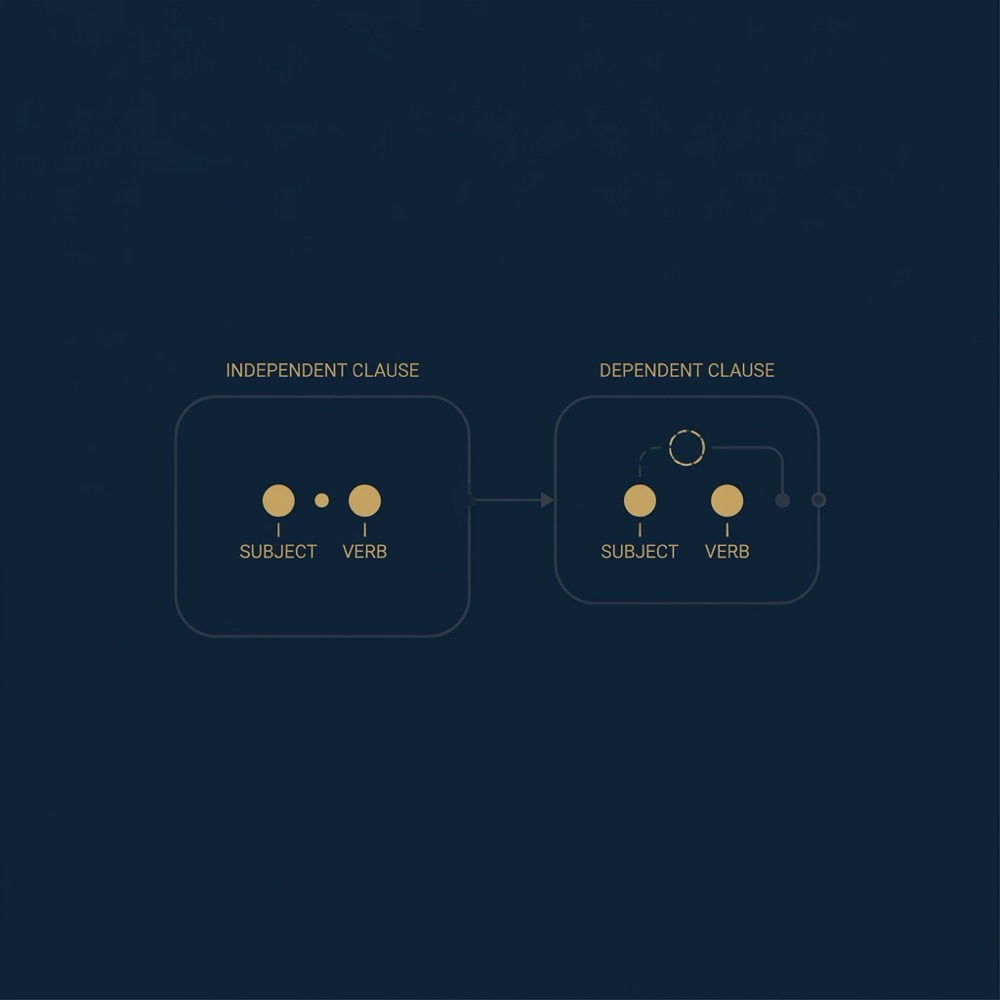
These micro-examples are useful in copy reviews and content architecture exercises focused on sentence-level edits.
Example rewrites: compound sentence conversions
Combine short independent clauses
When two short sentences are closely related, join them with a coordinating conjunction or a semicolon. Use a semicolon when the clauses are closely linked and you want a slightly stronger separation than a comma plus conjunction.
Example: "The copy was clear. It lacked examples." becomes "The copy was clear; it lacked examples." The semicolon suggests a tight relationship.
When to use semicolon versus coordinating conjunction
Prefer a coordinating conjunction when you want an explicit connector such as and, but, or, nor, for, so, yet. Use a semicolon for a subtle link without an extra word. Both choices change the rhythm and perceived strength of the connection between clauses Cambridge grammar on sentences.
Punctuation notes: when joining two independent clauses with a comma alone, avoid comma splices by adding a conjunction or using a semicolon.
Example rewrites: complex sentence forms
Using subordinators to show cause, time, or contrast
Use subordinators like because, although, when, if, and since to create dependent clauses that support the main clause. That converts flat statements into structured relationships that guide interpretation British Council sentences reference.
Example: "We released the feature. Users reported issues." becomes "After we released the feature, users reported issues." The time subordinator clarifies sequence.
Moving dependent clauses for emphasis
Place a dependent clause before the main clause to foreground context. For example, leading with a contrast clause can soften a claim: "Although tests passed, the rollout is paused." This ordering signals caution.
Remember that the main clause typically carries the primary point. Adjust clause order to align emphasis with reader needs and the document's flow.
Example rewrites: compound-complex and imperative sentences
When to layer coordination and subordination
Use compound-complex sentences when you need both equal-weight ideas and subordinate detail. Keep them readable by limiting the number of dependent clauses and by punctuating clearly. Compound-complex constructions are useful for layered explanations in long-form analysis, but use them sparingly in high-scan contexts Grammarly on sentence types.
Example: "The test failed, the team investigated, although the initial logs were inconclusive." Better reorganized: "Although the initial logs were inconclusive, the test failed and the team investigated." The revised order improves clarity.
Using imperative mood for instructions
Imperatives use an implied subject and the base verb to direct action. They are efficient in checklists and onboarding steps. Example: "Save your work, then close the app." The implied you keeps the instruction concise and direct.
Caution: overusing imperatives can sound abrupt; tailor the tone to the audience and context.
Practice scenarios and short exercises for teams
Three quick team exercises
Exercise 1, simple conversion: give each participant a paragraph and ask them to convert the most important sentence into a simple sentence that preserves facts. Time: five minutes.
Exercise 2, complex conversion: take a short list of facts and ask teams to craft a complex sentence that expresses cause or condition. Time: eight minutes.
Exercise 3, imperative drafting: create three short imperatives from descriptive sentences to use in a checklist. Time: five minutes.
How to run a rewrite review session
Set a clear objective and time limit. Have one reviewer check for preserved facts and one reviewer read the edits aloud to test rhythm. Capture which rewrites are treated as hypotheses and propose a small measurement plan if the sentence appears in production.
Treat results as data. Keep iterations small, and roll changes in stages when possible.
Wrap up: practical next steps and resources
Checklist for on-the-job rewrites
Quick checklist: identify purpose, mark clauses, pick a target type, apply one rewrite move, read aloud, confirm facts unchanged. Use this routine for consistent edits across content and teams.
Further reading: consult core references such as Purdue OWL, British Council, and Cambridge for canonical definitions and examples. For applied guides see the Orvus blog or the Orvus Ltd. homepage, and the Orvus about page. Additional educational resources include Grammarly, IVCC's sentence guide, and the University of Delaware pressbook.
To rewrite a sentence means producing an alternative version that changes emphasis, structure, or rhythm while preserving the original facts.
Choose a simple sentence when you need emphasis or fast comprehension; use a complex sentence when you must show cause, condition, or hierarchical relationships.
Treat rewrites as hypotheses: run small reader tests, compare comprehension, or monitor simple metrics like clicks or time on page to see if changes help readers.
Apply the checklist, run short review sessions, and adapt these techniques to your constraints and audience data.
References
- our services
- https://dictionary.cambridge.org/grammar/british-grammar/sentences
- https://www.grammarly.com/blog/types-of-sentences/
- https://www.grammarly.com/blog/sentences/kinds-of-sentences/
- https://facultyweb.ivcc.edu/rrambo/eng1001/sentences.htm
- https://udel.pressbooks.pub/language/chapter/simple-compound-and-complex-sentences/
- our knowledge base
- orvus.net
- about Orvus
Want this kind of work done for your business?
We build and run AI-powered marketing and automation. 15 minutes, honest assessment.
Book a call