 Orvus
OrvusHow do I remove old Google reviews? Steps to Regain Control
November 24, 2025
If you want to remove old Google review, this guide gives the clear, step-by-step answers and practical templates you can use right now. Think of an old review as a pebble in a shoe: small, irritating, but usually manageable. This article walks you through the two main removal paths, what Google will remove, how long actions tend to take, and the best tactics to protect your reputation with calm, effective work.
Two very different ways a review comes down
There are two fundamentally different routes to remove old Google review content: one that starts with the reviewer and one that starts with the business owner. If you wrote the review, you can remove it immediately. If you didn’t write it, removal depends on whether the review violates Google’s policies or a legal rule applies.

The reviewer-controlled route - fastest and final
If you want to remove old Google review that you yourself wrote, sign into the Google account you used, open Google Maps or Search, go to My Contributions and either edit or delete the review. This deletion is immediate and uncontested, which is why asking the reviewer directly is often the simplest solution for business owners who can find that route.
The business-owner route - policy flags and moderation
For business owners who need to remove old Google review written by someone else, the process is different. You can only ask Google to remove a review if it violates specific policies (spam, off-topic content, illegal content, conflicts of interest, personal data leaks, harassment). Flagging initiates a moderation process and outcomes vary by case and region.
If your team prefers a managed approach, consider working with a specialist who can help gather evidence and manage escalations. A discreet starting point is to look at Orvus Ltd. services for reputation-focused work - they focus on systems that reduce friction and get the right attention when escalation is required.
No - you cannot force a reviewer to remove content unless it violates Google’s policies or a legal order requires removal. The best first steps are respectful outreach, a calm public reply, and flagging where a policy violation exists; escalate with evidence and legal advice only if the claim is demonstrably false or harmful.
What Google will actually remove (and what it won’t)
Understanding what Google will remove is the single most calming fact in this whole process. Google removes content that clearly violates policies: spam and fake reviews, off-topic posts (political rants or ads), illegal material (threats, doxxing), conflicts of interest (paid or competitor reviews), personal and confidential information, and harassment or hate speech. But Google does not remove content just because it’s negative, old, or factually disputable. If the post is an opinion - for example, "the staff were rude" - Google usually leaves it alone.
Spam and fake content
Spam and fake reviews are a major removal category. If multiple accounts post identical or near-identical phrasing, or if an account only reviewed your business and nothing else, that’s a strong signal that the reviews are fake and may be removed.
Off-topic and promotional posts
Reviews that are clearly not about the customer experience - political commentary, advertisements, or links to unrelated services - qualify for removal as off-topic content.
Personal data and harassment
Posting private phone numbers, identity numbers, or doxxing material is a strong basis for removal. Likewise, explicit harassment or hate speech is a policy violation and can be removed.
How to delete your own Google review - the quick steps
To delete your own content: sign into the Google account used to post the review, locate the business on Google Maps or Search, go to My Contributions, find the review and choose Edit or Delete. There is no time limit: you can remove a review you wrote years ago. If your goal is to remove old Google review entries you made in the past, this is the fastest, simplest method.
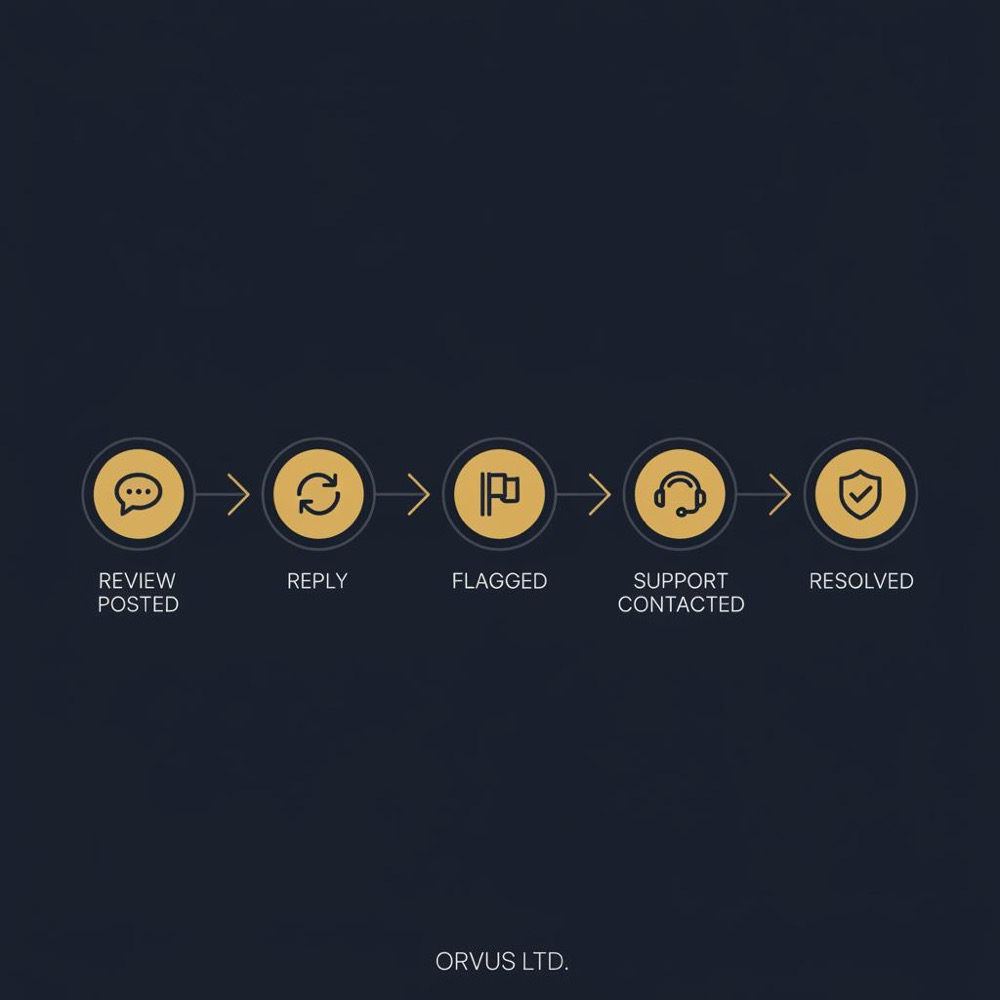
How business owners can request removal
Business owners should follow a clear sequence: (1) respond publicly with a calm, professional reply; (2) flag the review for policy violation if it fits a category; (3) open Business Profile support chat and provide documentation; (4) escalate legally only when needed. Each step increases the chance that the review will be removed or that its impact will be reduced.
Flagging the review
From your Business Profile dashboard or the Maps/Search listing, flag the review and choose the reason that best matches the violation. Google’s moderation team will evaluate the claim - but remember, flagging is not guaranteed to remove an honest negative review. For a practical walkthrough you can read a step-by-step guide at Remove Unwanted Google Reviews, Step-by-Step Guide.
Opening a support case
Many practitioners find that the Business Profile support chat gets faster attention than flagging alone. When you open a case, attach concise evidence: screenshots, timestamps, receipts, message logs, and any sign that the account is fake or coordinated. Clear, well-organised evidence improves your chances in moderation.
Removal timelines you should expect
Google does not publish a fixed timeline for removals. When a review clearly fits a policy (an obvious fake or a doxxing incident), removal often happens within days. More nuanced disputes can take weeks or even months. Region, language, local laws, and moderation capacity all affect speed. In some cases, a review will remain up while appeals are processed. For an official community discussion about timelines see Google's Review Removal Timeline.
Practical timeline ranges
• Clear policy match: a few days to two weeks.
• Disputed factual claims or ambiguous harassment: two to eight weeks.
• Legal takedown requests or court orders: months (depending on jurisdiction).
When escalation is necessary - and how to do it
If flagging and support chat aren’t enough, consider the escalation routes and their trade-offs: legal takedowns for defamation or privacy breaches; DMCA notices for copyrighted material; law enforcement for credible threats; and forensic evidence for coordinated fake-review campaigns. Escalation can work, but it can also be slow and expensive, so weigh the likely benefits carefully. See a practical escalation walkthrough at How To Remove Google Reviews: Step by Step Guide.
Legal takedowns
Defamation claims, privacy complaints and DMCA notices are formal routes to request removal. These require clear evidence and often legal counsel. If a review includes personally identifying information or false claims that cause real financial harm, legal channels can be effective.
Evidence of coordination
Showing a pattern helps: multiple accounts posting the same language, accounts created the same day, or reviews that target your business specifically and repeatedly. Consolidate this evidence and present it to Google with timestamps and screenshots.
What works well before you flag - calm public replies
Respond publicly with a calm, factual tone. A single thoughtful reply does more than many flags: it shows potential customers you care and that you’ll fix problems. Try a short, composed message that asks the reviewer to continue the conversation privately and offers a point of contact.
Example reply: "Thank you for your feedback. We're sorry to hear about your experience. Please contact us at [email] or [phone] and share the date of your visit so we can investigate and make this right."
Document everything - why this matters
If you plan to contest a review, documentation is essential. Gather receipts, reservation numbers, staff notes, timestamps from cameras (where lawful), and anything that proves your version of events. Take screenshots of the review and the reviewer’s profile. If you suspect a fake account, note its creation date and other reviews. A complete packet reduces back-and-forth and makes moderation clearer.
Templates you can use now
Below are ready-to-paste templates you can adapt when opening a support case or drafting a support-chat message. Edit the bracketed fields to match your situation.
Privacy/personal information template
"This review contains personal identifying information that reveals private data about our employee/client. Specifically, it lists a full name and personal contact details which are not relevant to a review and violate privacy. Attached are screenshots and staff logs demonstrating the name referenced is a private individual. We request removal under Google's policy on personal information."
Fake or coordinated review template
"We believe this review is fraudulent and part of a coordinated campaign. The account that posted this was created on [date], has no legitimate activity, and left identical or near-identical reviews for unrelated businesses on the same dates. Attached are screenshots showing repeated language and account metadata. Please investigate under the spam/fake content policy."
Defamation/false factual claim template
"The reviewer alleges [specific false claim]. We have attached evidence contradicting this, including receipts and staff logs indicating the date/time and service provided. We request removal under Google's illegal content/defamation policies because the claim is demonstrably false and causes reputational harm."
DMCA/copyright template
"This review contains copyrighted text copied from [source] and posted without permission. We request removal and include the URL to the original content for your review."
How to approach the reviewer - a human touch
Sometimes a short, respectful message to the reviewer works best. Avoid aggression and legal threats as the first step. Instead: apologise where appropriate, offer to make things right, and ask if they'd consider updating or removing their review. Many reviewers appreciate this approach and will change their review when they see you care.
Solicit authentic reviews to reduce harm
One of the most reliable defensive moves is to collect more genuine reviews. A steady flow of recent, honest feedback dilutes the impact of an old negative post. Make it easy for customers to leave reviews: include links in receipts, thank-you emails, and post-purchase messages. Never offer incentives for positive reviews - that violates Google’s policies.
Monitoring, playbooks and prevention
Set up daily or weekly review checks and create an internal playbook that outlines who responds to reviews, who collects evidence, and who opens support cases. Decide thresholds for legal advice and escalation. A practiced, calm process prevents panic and ensures consistent handling.
Dealing with AI-generated or coordinated campaigns
From 2024 into 2025, more businesses report clusters of suspicious reviews that appear machine-generated: similar phrasing, unusual details, and synchronized timestamps. Google treats this as spam/fraud when evidence shows coordination. Collect many examples, show the pattern and metadata, and consider digital forensics if the campaign is large. Removal is possible, but it can take repeated escalation.
Regional differences and transparency gaps
Moderation speeds and outcomes vary by country and language. Google does not publish detailed removal metrics per region, so businesses sometimes face uncertainty. If you operate across borders, treat each region as a separate case and gather local evidence where possible.
Practical checklist: what to do right now
1) If you wrote it, delete it now. 2) Reply publicly with a calm, factual message. 3) Flag if it clearly violates policy. 4) Open Business Profile support chat with evidence. 5) Consider legal routes only when the content is demonstrably illegal or defamatory. 6) Increase real reviews to reduce relative harm.
Realistic expectations: choose your energy wisely
Some reviews are worth escalating; many are not. Fighting every complaint consumes time and attention better spent improving service and collecting fresh reviews. Treat the removal process like triage: urgent and harmful content first; ambiguous or low-impact posts get a measured response and reputation-building instead of escalation.
Final templates and quick scripts
When you open a support case, paste one of the templates above and attach clear evidence. Keep messages short and factual. If the reviewer replies to your outreach, move the conversation offline and document the outcome.
When to involve outside help
For coordinated attacks or high-stakes legal claims, outside help can make the process smoother. Reputation firms and digital forensic teams can gather patterns and present a consolidated case to Google. If you prefer to explore this route, a discreet first step is to consult services that specialise in search, evidence collection and escalation.

Orvus Ltd. specialises in building systems and workflows that reduce friction across search and reputation tasks. They work with a limited number of brands to dig deep where it matters, helping with escalation strategy and automation when your team needs support.
Get calm, effective help with review management and escalation
If you want practical help turning review issues into long-term systems, explore professional services that combine technical SEO and escalation workflows - visit Orvus Ltd. services to learn how focused support can reduce the effort of managing reviews and escalations.
Summing up the most important actions
To remove old Google review content: (a) if you wrote it, delete it; (b) if you didn’t, evaluate whether it violates Google policy; (c) respond publicly with calm professionalism; (d) collect evidence and open a support case; (e) escalate legally only when justification is strong. And always invest in collecting real reviews so one old negative comment has less sway.
Common questions answered
Can I remove a Google review just because it’s negative? No - Google will not remove reviews solely because they are negative, old, or inconvenient.
Can I force a reviewer to take down a review? You cannot force a removal unless it violates policy. But direct, respectful outreach often works and many disputes settle this way.
When should I call a lawyer? Consult legal counsel when a review contains defamatory falsehoods that cause material harm or when a coordinated attack is severe and damaging.
Next steps and a calm closing thought
You cannot control every voice on the internet, but you can control how you respond. A thoughtful reply, solid documentation, and a steady stream of real reviews often do what a takedown never could: tell the whole story and restore trust. Keep perspective, act deliberately, and choose where to spend your energy.
No. Google does not remove a review solely because it is negative, old, or inconvenient. Removals are typically granted only when a review violates Google’s content policies (spam, off-topic content, personal information, harassment, conflicts of interest, or illegal content) or when a legal takedown applies. For negative but policy-compliant reviews, focus on calm replies and collecting fresh reviews to reduce the impact.
Start with a calm public reply that acknowledges the concern and invites an offline resolution. If the review contains personal data, harassment, or is clearly fake, flag it and open Business Profile support chat with documentation (screenshots, timestamps, receipts). If escalation is needed, collect evidence of coordination or falsehoods before contacting Google or seeking legal help. If you prefer professional assistance, consider a targeted service like Orvus Ltd. to help gather and present evidence.
Timelines vary. Clear policy violations (obvious spam or private data exposure) can be removed within days. Ambiguous disputes or cases requiring legal review can take weeks to months. Regional differences, language, and moderation capacity also affect timing. Using Business Profile support chat with concise evidence can sometimes speed up resolution.
References
Want this kind of work done for your business?
We build and run AI-powered marketing and automation. 15 minutes, honest assessment.
Book a call