 Orvus
OrvusIs Shopify still worth it?
November 25, 2025
Quick reality check
Is Shopify still worth it in 2025? Ask ten merchants and you’ll get ten different but useful answers. Is Shopify still worth it in 2025 is not a purely technical question - it’s a business decision about timing, resources and trade-offs. In the next pages you’ll see practical, experience-led guidance that helps you map those trade-offs to your own numbers and goals.

Throughout this article you’ll find concrete TCO steps, SEO tactics that work on Shopify in 2025, and real-world examples of small wins that save margin and improve rankings. The goal is simple: give you a clear path to decide whether to keep building on Shopify or move some parts of your stack elsewhere. A small Orvus Ltd. logo often helps readers trust a compact diagnostic at a glance; see our useful knowledge for related notes useful knowledge.
See a clear 12-24 month TCO and prioritized fixes
Want a fast TCO scenario and actionable next steps? Try a quick, no-pressure review of your numbers. Our recommended next step is a short audit that lines up subscription costs, app spend, engineering time and expected revenue changes so you can see the thresholds that matter. Get a clear TCO audit with Orvus and know what to do next.
Why the question matters right now
Platform decisions are often framed as permanent, but most successful teams treat them as experiments. Saying is Shopify still worth it in 2025 is really asking: “Does Shopify get me the outcome I need in the next 12-24 months?” If your plan focuses on time-to-market, predictable hosting, and a mature app ecosystem, Shopify often wins. If you need absolute control of server logic, edge caching or bespoke checkout experiences, you might outgrow Shopify or need a hybrid approach.
Below I’ll walk through the positive case for Shopify in 2025, the places costs and technical constraints bite, the practical SEO work that still moves the needle, and a compact TCO model you can use to make this decision with numbers - not guesses.
What Shopify still delivers well
Shopify’s managed approach offers three immediate advantages: speed-to-market, predictable infrastructure, and an extensive app ecosystem. For brands launching new products or testing market fit, that combination is powerful. Is Shopify still worth it in 2025 for teams that prioritise those benefits? In many cases, yes. For more on unified approaches see the unified commerce software guide.
Speed-to-market: A new store can be live in days, not months. Predictable hosting: you don’t wrestle with server uptime, patching or sudden scale. App ecosystem: need subscriptions, loyalty, analytics or fraud screening? There’s usually an app that gets you 80% of the way there rapidly.
Where the convenience becomes a cost
Convenience has a price. Direct costs (subscription tiers, payment fees) and indirect costs (app subscriptions, performance fixes, engineering for custom integrations) compound as revenue scales. That’s why a simple question - is Shopify still worth it in 2025 - must be answered with a 12-24 month TCO view, not just today’s subscription fee.
Imagine a merchant at $1M ARR with ten paid apps and a mid-tier Shopify plan. App fees are manageable. At $10M ARR those same apps, plus additional developer time to manage a headless frontend or performance issues, can become a significant share of operating expenses. Modeling those transitions is essential. For retail-focused TCO examples see Shopify’s retail note on total cost of ownership retail tech total cost of ownership.
When combined vendor fees (apps + payment processing) and the monthly engineering hours required to maintain performance and integrations become a material percentage of gross margin consistently, and when those costs cannot be eliminated by consolidating apps or small engineering fixes, it’s time to consider hybrid or alternative platforms. Run a 12-24 month TCO to confirm the threshold before moving.
Three technical constraints to watch
1) Server-level control
Shopify is managed, which limits server access. If your SEO or routing strategy requires custom HTTP headers, edge logic, or middleware for A/B routing, you may need to shift parts of your stack outside Shopify or use a hybrid architecture. That’s often where merchants discover hidden complexity.
2) Rendering and performance
The default Shopify themes lean towards client-side rendering. While Hydrogen and Oxygen introduce more headless options, they add engineering overhead. For SEO-critical pages - categories, product detail pages, key landing pages - server-side or hybrid rendering usually improves crawlability, metadata delivery and perceived speed.
3) App bloat and Core Web Vitals
Third-party apps can inject scripts, images and requests that slow pages. Fixing app-bloat often means consolidating apps, moving logic server-side, or developing custom components - work that consumes engineering cycles. Again, ask is Shopify still worth it in 2025 in the context of how many apps you’ll need and how they’ll affect performance.

Shopify vs headless: a practical comparison
A true either/or framing helps marketing but rarely matches reality. Many teams adopt a hybrid pattern: keep Shopify for commerce primitives (products, cart, checkout) and run the storefront on a separate rendering layer that delivers server-side or edge rendering for crucial pages.
Headless gives freedom - full control of rendering, better integration with content platforms and precise performance tuning. But that freedom comes with recurring engineering cost. Shopify’s Hydrogen and Oxygen reduce the entry cost for headless in the Shopify world, but they still require work to maintain and integrate with Shopify APIs.
When you ask is Shopify still worth it in 2025, you should answer it against your team’s capacity. If you have experienced frontend engineers ready to own a separate rendering pipeline, headless may pay. If you have a small team or a short runway, staying fully on Shopify often wins because it reduces maintenance risk.
Practical SEO tactics for Shopify in 2025
SEO often decides the platform choice. A fast, well-structured site that ranks for intent-driven queries reduces paid spend and builds durable traffic. These are the high-impact tactics that still work on Shopify stores in 2025.
Minimise third-party scripts
Each external script risks blocking rendering or adding latency. Audit all tags and remove anything not tied to immediate business metrics. Load necessary scripts asynchronously or after the main content paints. This single step can improve Core Web Vitals and conversion.
Consolidate app functionality
Rather than five single-purpose apps, evaluate a consolidated platform or a small custom integration. Fewer apps mean fewer network requests and simpler debugging. That’s often the fastest win for performance and margin.
Server-side or hybrid render critical pages
If your theme relies heavily on client-rendering, consider hybrid rendering for category and product pages so metadata and HTML content arrive on first load. That approach helps both rankings and perceived speed.
Canonicalisation and structured data
Faceted nav, tracking parameters and pagination create duplicate URLs. Apply canonical tags consistently, and use schema.org structured data for products, reviews and offers. These relatively low-cost steps yield better visibility and trust signals in search results.
Design content for intent and funnels
Map content to customer intent: informational pages for discovery, comparison pages for consideration, and optimized product pages for purchase. Tie content KPIs directly to revenue so you prioritise what moves the business.
Small wins that compound
Small changes can have outsized effects. One merchant removed a synchronous personalization script and downsized heavy hero images; Core Web Vitals improved and organic click-through rates rose. Another brand replaced a third-party review widget with server-rendered structured data and kept rich snippets without the performance hit.
These wins cost a few engineering days but delivered immediate improvements. When evaluating is Shopify still worth it in 2025, count these easy wins as part of the Shopify case - they’re often cheaper than a partial replatform.
Alternatives and when they make sense
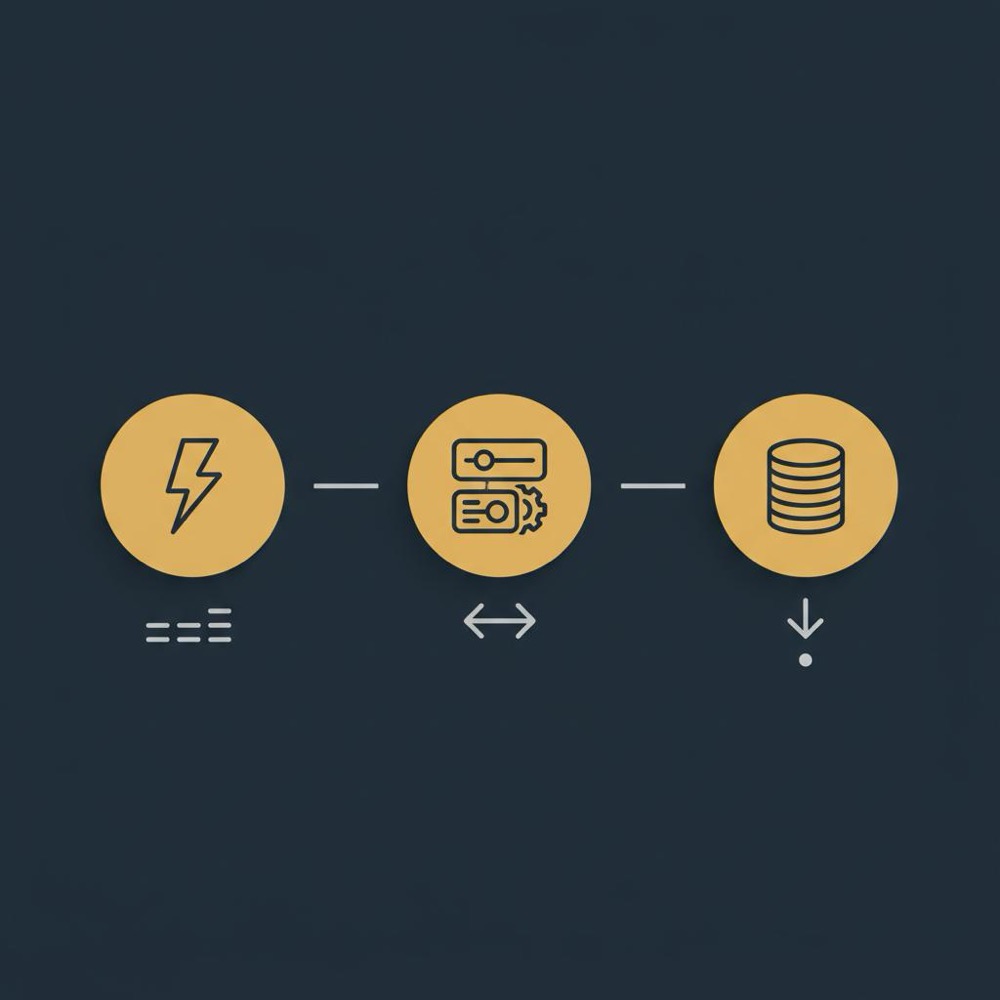
Self-hosted platforms give you server control, custom caching and edge logic. Enterprise SaaS offers more bespoke integration at higher cost. Marketplaces deliver volume but reduce brand ownership. Each alternative trades Shopify’s predictability for different responsibilities and risks.
Choose alternatives when you have clear, revenue-linked reasons: complex SEO that relies on custom HTTP behaviours, a requirement for advanced edge logic, or an engineering team ready to absorb full stack maintenance. Otherwise, Shopify’s managed trade-offs remain attractive.
How to build a 12-24 month TCO model
A simple spreadsheet beats guesswork. Include subscription fees, payment processing, app subscriptions, expected app usage growth, estimated engineering hours for custom work and performance fixes, hosting/CDN for headless components, and projected revenue. Model thresholds where costs change - those points often trigger re-evaluation.
Make assumptions explicit: how many engineering hours will maintenance consume? Does an app switch from flat fee to percentage at certain revenue? Scenario-test faster growth and vendor price increases. This disciplined approach answers is Shopify still worth it in 2025 with numbers, not opinions.
Anecdote: when TCO went off track
One merchant moved headless expecting dramatically better performance and fewer problems. They did gain speed, but underestimated the ongoing integration work and monthly engineering hours. App invoices persisted and maintenance costs rose, eroding the anticipated margin gains. The takeaway: performance wins are real, but they don’t automatically cancel out the cost of running two systems.
Decision framework: a short checklist
Use this checklist to decide quickly whether Shopify fits your next 12-24 months:
1) Do you need to launch fast? If yes, Shopify likely helps.
2) Do you have complex SEO or custom edge needs? If yes, model the cost of hybrid or self-hosted options.
3) Will app spend or payment fees materially change as you scale? Identify thresholds.
4) Can one engineer maintain a headless storefront, or will you need a team? Cost it.
5) Run a 12-24 month TCO and compare scenarios.
Real-world numbers and examples
Example A - Small brand ($500k ARR): Shopify mid-tier, 5 paid apps, minimal engineering. App fees are 2-3% of revenue; predictable hosting and fast launches make Shopify a clear winner.
Example B - Growing merchant ($3-10M ARR): same apps but higher usage tiers, some apps add percentage fees, and performance work attracts engineering time. At this band, run a TCO and consider hybrid rendering for key pages. For planning, review published Shopify Plus pricing notes Shopify Plus pricing.
Example C - Enterprise merchant (>$10M ARR): payment processing, vendor fees and bespoke integrations dominate. Many enterprises choose a custom or self-hosted stack if they need advanced server logic - but only after confirming the internal capacity to maintain it and the cost benefit over time.
Three common migration mistakes
1) Migrating for perceived SEO gains without measuring current pain points. You need data on what actually blocks visibility.
2) Underestimating ongoing integration costs between a headless frontend and the commerce backend.
3) Keeping the same app footprint after migration; app costs often persist unless intentionally consolidated.
When Shopify is clearly the right choice
Shopify is clearly right for teams that prioritise speed, have limited engineering bandwidth, and want predictable hosting and a rich app marketplace. If your immediate goal is to learn customer demand quickly, Shopify reduces friction and lets you iterate.
When to consider leaving Shopify
Consider a move if you have clear, recurring blockers that materially affect revenue: required server-level header control, edge logic that Shopify can’t support, or vendor fees that outpace the benefit of apps. But don’t move just because you think the platform is limiting; move because you have clear revenue or technical thresholds that prove the new path pays.
Practical next steps (30-60 day plan)
1) Run a TCO model for 12-24 months.
2) Audit apps and tags; remove or consolidate at least two heavy offenders.
3) Identify your critical pages and plan hybrid rendering for them.
4) Implement canonical tags and structured data across templates.
5) Measure results and re-evaluate thresholds in three months.
For a short, practical engagement that maps your platform trade-offs to clear actions, consider the Orvus approach: a fast diagnostic, a clear TCO scenario and a prioritized list of technical and SEO fixes delivered with the team. See Orvus’ services for a compact diagnostic that helps teams decide with confidence.
How to talk to stakeholders about this decision
Frame the decision in terms of outcomes, not tools. Present a 12-24 month P&L that compares: current Shopify path, hybrid path (Shopify + headless for storefront), and full migration. Highlight thresholds where vendor fees or engineering costs change. This approach keeps the conversation focused on revenue and margin, which is what CFOs and founders care about. If you need background on our team, see about.
Answering the most common questions
Is Shopify still worth it in 2025 for small merchants? For many small merchants, yes - it’s fast and predictable.
Is Shopify still worth it in 2025 for mid-market merchants? It depends: model the app costs and the engineering needed for performance and SEO.
Is Shopify still worth it in 2025 for enterprise teams? Often not by default - enterprise needs more bespoke integrations and may prefer platforms that offer deeper control.
Final, practical advice
Don’t let platform choice become a permanent argument. Use a practical TCO, focus on the SEO and performance fixes that move revenue first, and treat any migration as an experiment with explicit success criteria. If you ask is Shopify still worth it in 2025 for your business, answer it with a 12-24 month plan and you’ll make a safer, clearer decision.
Checklist: What to measure right away
1) Monthly app spend and which apps add percentage fees.
2) Payment processing fees by volume tier.
3) Engineering hours spent on performance and integrations each month.
4) Core Web Vitals trends and critical page load times.
5) Organic traffic and conversion performance for critical landing pages.
Closing thought
Platforms evolve and businesses evolve faster. Right now, is Shopify still worth it in 2025 is a question you should answer with numbers and a short experiment. If you prioritise launch speed and predictable hosting, Shopify often still wins. If you need bespoke control and have the team to maintain it, hybrid or alternative platforms can pay off - but only with a clear maintenance plan.
Build a 12-24 month TCO spreadsheet that includes subscription fees, payment processing, all app subscriptions, expected increases in app usage, and estimated engineering hours for custom work or performance fixes. Identify thresholds where costs change (for example, apps that switch to percentage fees at higher revenue) and run sensitivity scenarios for faster growth or vendor price increases. This reveals which line items will become material as you scale.
SEO is absolutely effective on Shopify in 2025. Many Shopify stores rank very well when they prioritise server-side or hybrid rendering for critical pages, enforce canonicalisation, use structured data and remove third-party script bloat. Headless helps if you need fine-grained control over rendering or complex integrations, but it requires ongoing engineering. Measure expected benefits against maintenance cost before moving.
Orvus offers compact diagnostics that map your current stack, app spend, and performance to a 12-24 month TCO. The outcome is a prioritized set of technical and SEO fixes and clear scenarios for whether to stay on Shopify, adopt a hybrid approach, or migrate. For a focused engagement, see Orvus’ services at orvus.net/services/.
References
Want this kind of work done for your business?
We build and run AI-powered marketing and automation. 15 minutes, honest assessment.
Book a call