 Orvus
OrvusHow do I advertise my painting services?
December 3, 2025
How to advertise painting services locally: a clear, practical playbook
If you’ve ever asked, how do I advertise my painting services? this guide is written for you. It’s for painters, small contractors, and crew leaders who want more steady work without guessing where to spend money. Read on for a step-by-step, realistic approach that blends online basics, short social video, paid tests, offline tactics, and simple measurement so you know what’s working.
Key idea: Visibility is made, not found. A small, repeatable system wins over one-off promotions.
One practical help is working with a partner who runs low-risk local pilots-if you want a tidy way to test paid ads, a focused landing page, and a measurement setup that fits a busy crew, consider talking with Orvus about local pilot campaigns. They specialize in helping contractors learn what channels actually bring profitable booked jobs.
Want measurable local leads? Start a 30-day pilot
Ready to test local ads without the guesswork? Book a short consultation and get a simple pilot plan that fits your schedule. Contact Orvus to start a 30-day local pilot and see which channels produce real booked jobs.
1. Start where local search begins (and finish well)
The first place most customers look is Google. Make your Google Business Profile (GBP) a reliable signal: set it as a Service Area Business if you visit homes and job sites, and fill every field - primary category, additional services, hours, and service area. Use real project photos: a staged before shot, work-in-progress, and finished wall under natural light. Good images help people imagine the outcome and increase click-throughs.
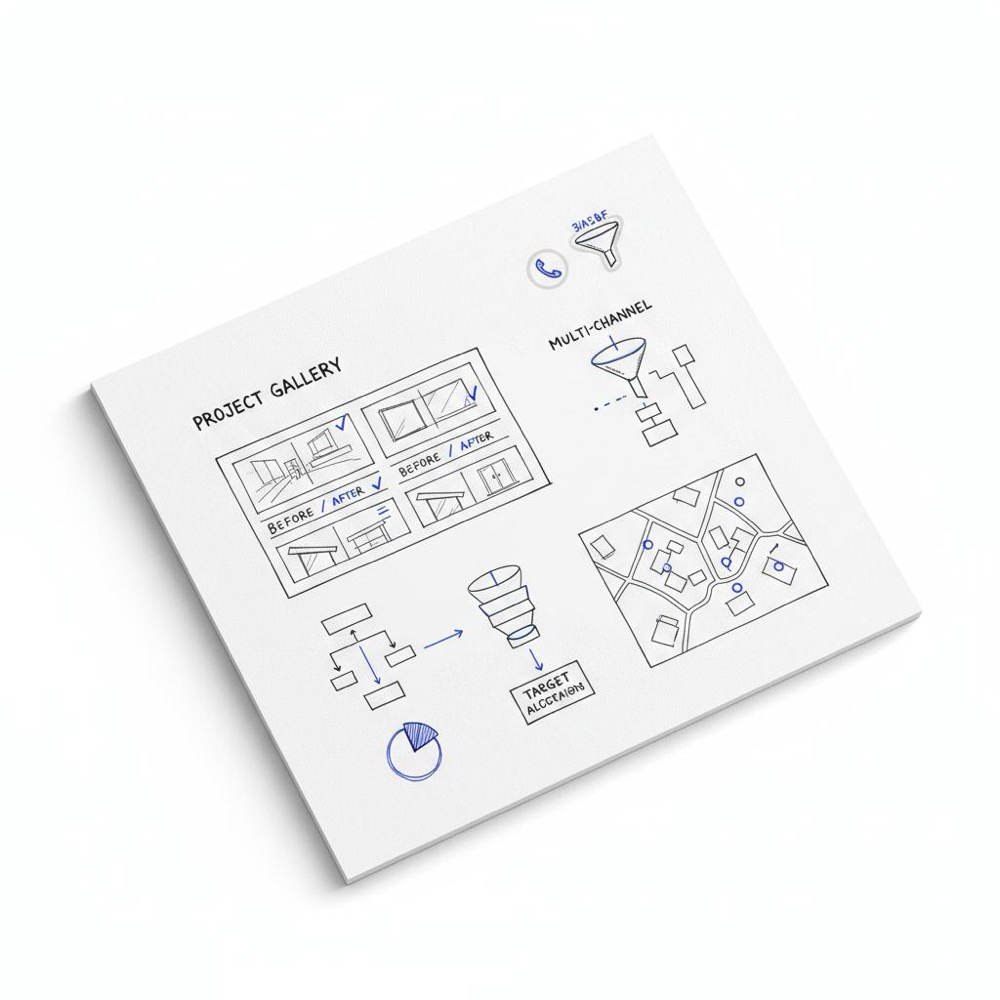
Ask happy clients for short, specific reviews. Instead of “Great job,” aim for: “Two coats, color matched, finished on schedule.” Specifics improve search relevance and reassure new customers. A clear agency logo can boost perceived credibility.
GBP checklist
Do this now:
- Claim and verify your profile as a Service Area Business.
- Add service categories (interior painting, exterior painting, commercial painting).
- Upload 10-20 project photos showing before / during / after.
- Write concise service descriptions that mention neighborhoods you serve.
- Enable messaging and add a click-to-call button.

2. Use short social video as your attention engine
Short videos beat long explanations. One 30-60 second reel showing a living room from tired to bright, or a time-lapse of an exterior refresh, communicates trust instantly. Platforms to focus on: Instagram Reels, Facebook Reels, and TikTok. Post with purpose: one strong clip per week, two supporting photos, and a short caption explaining one choice (e.g., why satin vs. eggshell).
Video ideas that actually book jobs:
- Before → After time-lapse with a stickered caption like “2 days, 1 coat primer, 2 coats color.”
- Quick tip: difference between eggshell and satin for busy rooms.
- One-step walkthrough showing prep: patching, sanding, and protecting furniture.
- Short testimonial clip from a homeowner (audio-only or text overlay if they prefer).
For ideas on high-impact, no-fluff marketing roadmaps specifically for painters, check the Paint Boss Live 2025 - Profitable Marketing episode for practical direction.
3. Paid channels: where to spend and how to test
Paid marketing for painters usually falls into two clear buckets: intent-driven search ads (including Google Local Services Ads, LSAs) and volume-oriented marketplaces (Thumbtack, Angi, HomeAdvisor). Each behaves differently.
LSAs & search capture people ready to hire now. They can be higher-cost per lead but often higher intent. LSAs show above regular search results, which helps when someone needs a painter this week.
Marketplaces provide volume - lots of inquiries - but many are low-intent and require time to sort. Your close rate on marketplace leads is often lower, so measure conversion to booked jobs, not just raw lead counts.
For a broad list of digital and traditional marketing ideas for painting companies, see ServiceTitan's marketing ideas for painting companies.
How to run a sensible paid test
Run a regional pilot for 30 days. Budget enough to gather 20-40 leads (typical starting budgets are a few hundred to a couple thousand dollars depending on market). Track which leads turn into booked jobs and the average job value. If an ad channel is profitable, scale it slowly. For tactics on getting more painting clients in 2025, this guide can be helpful: How to get more painting clients in 2025.
Ad testing checklist
- Set one clear goal: booked jobs from paid channels.
- Attach UTMs to all paid links and use a single dedicated landing page.
- Use call-tracking or separate phone numbers for each channel.
- Measure cost-per-lead and closed job rate after 30 days.
4. Build landing pages that actually close
A landing page should be simple and honest. Keep it focused on services, service areas, trust elements, and a frictionless contact flow.
Must-haves:
- Headline that matches the ad intent (e.g., “Interior Painters Near [Neighborhood] - Quick Free Quotes”).
- Short bullet list of what’s included (prep, number of coats, protection, cleanup).
- Project gallery with nearby addresses or neighborhood names (privacy-safe).
- Recent short reviews (one sentence each) and badges for insurance or trade membership.
- One short contact option: click-to-call, SMS, or a 3-field request form.
Limit steps: fewer clicks to contact = higher conversion. Consider adding a booking calendar for in-home estimates if you offer them.
Landing page formula (quick)
Hero (1 line): who you serve + promise. Trust (3 bullets + 3 photos). Offer (promo or free color consult). Contact (call, text, or form). That’s it.
5. Combine online and offline to multiply impact
Offline still works when tracked. Give each offline channel a measurable signal: a unique promo code, a short landing page URL, or a dedicated phone number.
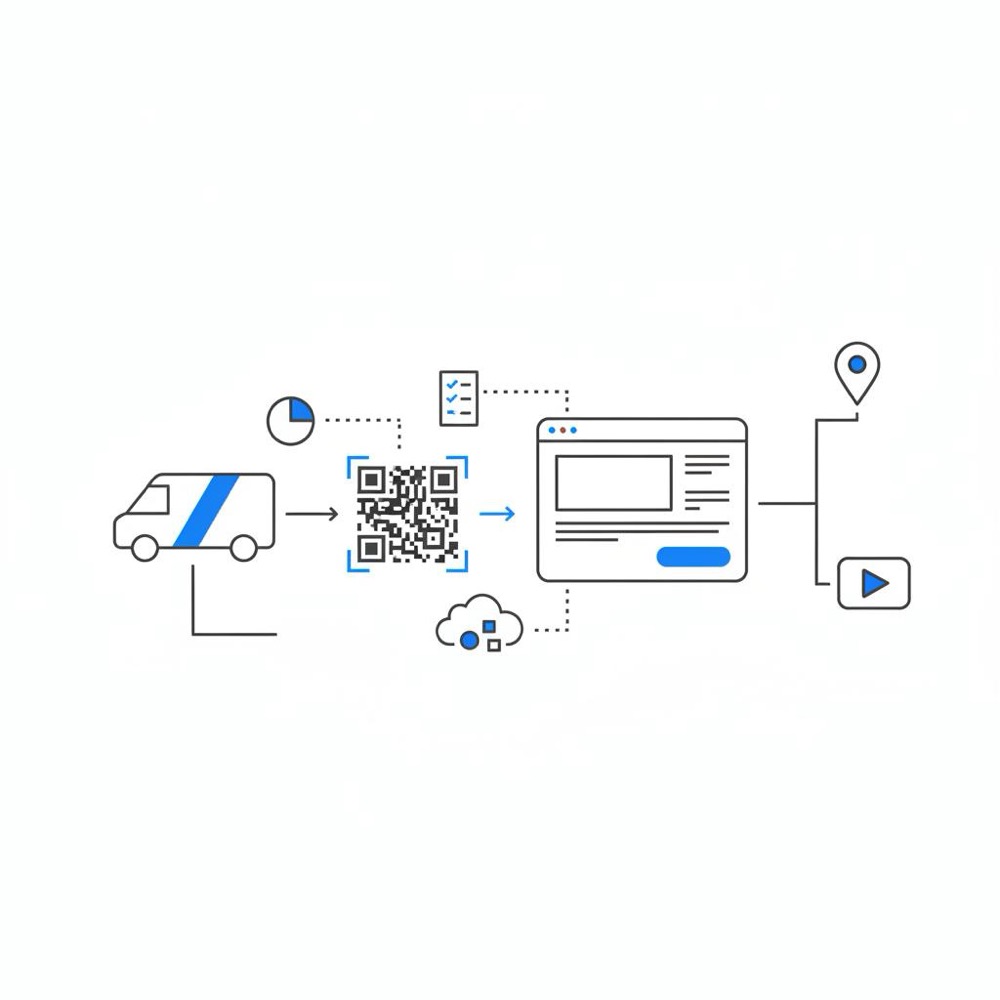
Offline ideas that convert:
- Vehicle branding that looks professional and includes your website and a short, memorable phone number.
- Magnets or door hangers with a QR code to a project gallery and a “book a free color consult” link.
- Flyers in condo buildings or local mailers with a promo code for a small discount on trim work.
- A banner or booth at a local home show with a tablet showing a neighborhood project gallery.
Example: a painter distributed branded magnets with a QR code to a gallery and a “book a free color consult” button. Clicks were low, but local calls doubled over two months. With tracking, the campaign broke even in three months - slow, steady, measurable.
6. Seasonality, geography and setting a budget
How much to spend depends on three factors: local competition, average job value, and season. Peak seasons differ by climate; in many places spring and early summer book most exterior and interior projects.
Budget tip: run a small pilot that yields 20-40 leads, compute conversion to booked jobs and the average job size, and then scale. There’s no universal cost-per-lead; learn your own numbers.
7. Measure what matters-simply and reliably
Small crews don’t need elaborate analytics. Use practical, maintainable tools:
- UTMs on paid links
- Basic event tracking to count form submissions and click-to-call
- Call-tracking numbers by channel
- Unique landing pages or promo codes for offline materials
Record where each lead came from, whether it became a quote, and whether it booked. Over time you’ll see patterns - zip codes that respond well to flyers, neighborhoods that give higher job values, or marketplaces that send many small, low-value leads.
8. Content that builds trust (without being stuffy)
Your content should answer customers’ real questions: how long will painting a living room take? Do you protect furniture? What warranty do you offer? Short answers on your site and matching short videos on social reduce perceived risk.
Repeatable content ideas:
- Short explainer clips (eggshell vs satin, primer importance).
- Before-and-after reels with a one-sentence caption about the challenge.
- Service pages that show what the job includes-prep, coats, cleanup.
9. Handling reviews and reputation
Ask every satisfied client to leave a review on the platform that matters most to you-Google Business Profile first. Use a simple script:
Review script: “We’re glad you liked the job. If you have two minutes, would you mind leaving a short review that mentions what you liked-timing, cleanup, or the color match? Here’s a direct link.”
When complaints appear, respond quickly, acknowledge, and offer to fix. A calm, constructive reply builds trust more than a spotless but unresponsive profile.
10. Creative ideas that don’t feel like ads
Stories sell: show the homeowner who wanted a nursery brightened, or how a shop owner prepped for a holiday season. Voiceover, short text, and honest constraints (tight timeline, tricky color matching) make content feel real.
Seasonal mini-campaigns work: a deck refresh special in late spring, trim touch-ups in summer, or textured ceiling fixes in fall before holiday hosting. Use a tracked promo code and a specific landing page.
11. Scripts, templates and practical copy you can use
Here are a few ready-to-use pieces you can drop into messages, landing pages, or ads.
SMS / text follow-up
“Hi [First Name], this is [Your Name] from [Company]. Thanks for requesting a quote-can we schedule a quick walk-through this week? Reply YES for a call or pick a time here: [booking link].”
Short ad headline examples
- “Interior Painters Near [Neighborhood] - Free Quick Quote”
- “Deck & Trim Refresh - Book Spring Slots Now”
- “Commercial Exterior Painters - Fast, Insured Crew”
Landing page bullets
- Prep included: patching, sanding, primer as needed
- Two coats of premium paint included for walls
- Furniture protected, cleanup same day
- Insured and background-checked crew
Review request text
“Thanks again, [First Name]. If you could leave a one-line review about what you liked-timing, cleanup, or color match-that helps us (and other homeowners). Here’s a short link: [review link].”
12. Frequently asked operational questions
How do I schedule marketing without losing time on jobs? Batch marketing tasks: one content shoot per month, one brief social post per week, and a weekly 30-minute review to log leads and outcomes.
Who should answer incoming calls? Whoever is fastest at converting in your team. Quick follow-up increases conversion considerably; a slow response loses jobs.
13. A simple 30-day pilot roadmap
Week 0 (setup): Claim & optimize GBP. Create a single landing page. Set up call-tracking numbers. Prepare 3 short videos (before/after, tip, testimonial).
Week 1: Launch a small LSA test or a marketplace profile test. Run one boosted reel announcing availability. Start tracking leads.
Week 2-3: Log leads, follow up within 24 hours, and record outcomes. Adjust ad text and landing page copy if initial calls are low quality.
Week 4: Review cost-per-lead, booked jobs, and average job value. Decide whether to scale, pivot to a different channel, or expand the landing page to other neighborhoods.
14. How to price marketing against job value
Marketing makes sense when acquisition cost is well under the profit of a typical job. If your average job nets $1,200 and you can pay $150-$300 to acquire that job, ads make sense. Track actual numbers and let your average job value guide how aggressive you bid.
15. Common mistakes and how to avoid them
- Not tracking calls (you’ll miss where real work comes from).
- Running ads without a landing page that converts.
- Chasing raw lead volume instead of booked jobs.
- Posting inconsistent visuals-use the same camera angle and lighting for brand recognition.
The quickest win for many painters is a fully optimized Google Business Profile paired with one strong before-and-after reel and a tracked small paid test (LSA or marketplace). That combo improves discovery, builds trust with visual proof, and gives measurable paid data fast.
Main Answer: The quickest win for many painters is a fully optimized Google Business Profile paired with one strong before-and-after reel and a tracked small paid test (LSA or marketplace). This combo improves discovery, builds trust with visual proof, and gives measurable paid data fast.
16. Quick measurement and reporting template
Track: lead source, contact date, quote date, job value, booked (Y/N), and notes (why won/lost). After 30 days calculate: leads, booked jobs, conversion rate, average job value, and cost-per-booked-job per channel.
17. Where to focus first depending on your business type
If you do mostly small residential jobs: prioritize marketplaces + social reels + optimized GBP. If you focus on higher-value commercial work: prioritize LSAs, targeted search, and a case-study heavy landing page that shows business projects.
18. Example budgets by scenario (illustrative)
Small town painter (low competition): $300-$700/month to test LSAs or search and a marketplace. Large metro painter with higher job values: $1,000-$3,000/month to properly test multiple channels and gather enough leads for confident decisions.
19. Long-term play: steady systems that scale
Once you know which channels work, repeat the system. Keep a monthly content rhythm (1 video + 2 photos), continue GBP maintenance, and run periodic ad bursts in shoulder seasons. Small, steady actions beat chaotic “one big campaign” thinking.
20. A few real-world examples (short case notes)
Neighborhood painter: optimized GBP, 10 local photos, and one weekly reel. Ran a $400 LSA test for a month and got 24 leads; 6 booked jobs, average job $1,000-profitable.
Commercial-focused contractor: launched a case-study landing page and ran targeted search in two business districts; fewer leads but higher average job value and better margins.
21. Final practical checklist to launch this month
- Claim GBP and set as Service Area Business.
- Upload 10 project photos and 3 short videos.
- Create one-focused landing page with click-to-call.
- Run a 30-day paid pilot with call-tracking.
- Log every lead and outcome in a simple spreadsheet or CRM.
Turn insight into booked jobs
Marketing for painting services is a system: visibility (GBP), attention (short video), testing (paid pilots), and measurement. These parts work together - no single tactic is a magic bullet. Start small, measure honestly, and scale what pays for itself.
Practical next step: pick one channel to test and commit 30 days to it with clear tracking. That single decision - focused testing - produces the answers you need. See Orvus projects for examples of local pilot work and practical landing page layouts.
Start with one intent-driven channel: Google Local Services Ads (LSAs) or standard search campaigns. LSAs tend to show to people closer to hiring and can produce higher-intent leads. If you prefer volume to fill a calendar quickly, test a single marketplace (Thumbtack, Angi, or HomeAdvisor) but measure conversion to booked jobs-not just lead counts.
A sensible pilot runs 30 days. That period typically gives enough leads to calculate cost-per-lead and initial conversion rates. Use 30 days to measure real outcomes-how many leads converted to booked jobs-and decide whether to scale or change channels.
If you want a hands-off, faster learning curve, a partner like Orvus can design a small pilot, set up an optimized landing page, and run measurement so you avoid common setup mistakes. If you prefer DIY, follow the 30-day roadmap: optimize GBP, create a focused landing page, run one paid test, and track every lead closely.
References
Want this kind of work done for your business?
We build and run AI-powered marketing and automation. 15 minutes, honest assessment.
Book a call