 Orvus
OrvusHow do I advertise my services on Thumbtack?
December 3, 2025
How do I advertise my services on Thumbtack? A plain-English guide that works
promote services on Thumbtack is simpler than it looks - when you treat Thumbtack as a measurable channel instead of a magic button. Thumbtack runs on a pay-per-lead model: you buy credits to contact matched customers. Those credits get you into the conversation; the rest is how you sell. This guide walks through how the system works, where costs show up, and a repeatable 4-8 week plan to discover what actually makes you money.
Why the right setup matters before you buy credits
Think of your Thumbtack profile like a shop window. If it’s dim, cluttered, or vague, people skip you-even if you paid for the lead. When you promote services on Thumbtack, small profile choices change the quality of the leads you receive. Clear service categories, honest photos, and a short package list help Smart Match route the right requests your way.
Quick checklist to finish before buying credits:
- Choose precise service categories (e.g., “kitchen remodels” vs “home improvement”).
- Add concise prices or starting packages (e.g., “interior paint packages start at $X”).
- Upload 6-10 high-quality photos of finished work, not stock imagery.
- Complete licensing, service area, and years in business fields.

How Thumbtack’s pay‑per‑lead model actually works
When a customer posts a job, Thumbtack’s Smart Match algorithm picks a handful of pros who might be a fit. Each pro must buy a lead credit to see contact details. The algorithm ranks pros based on profile data, reviews, response behavior, and historical outcomes. Buying a credit gives you access; your response and follow-up determine whether that access becomes a booking.
The central point: you don’t buy customers, you buy chances to speak with customers. Learn to convert chances.
Costs vary wildly-why averages mislead
Expect unpredictability. Lead price depends on category, city, season, competition and project size. A small rural repair can cost a few dollars per lead; a metropolitan high‑value renovation might be dozens or hundreds of dollars per lead. That’s why averages like “Thumbtack lead generation cost 2024: $X” are unreliable for your business. See Thumbtack’s own explanation of how pricing works for leads here, and industry overviews that report ranges from about $10 to $100+ per lead confirming wide variability.
Instead, run short tests in each market. Try a week or two with limited credits and track every result. That reveals your true cost per booked job in your specific area.
Step-by-step 4-8 week experiment to see if Thumbtack pays
Follow this blueprint when you promote services on Thumbtack. It’s low-risk and builds real data.
Week 1 - Setup (clean and focus)
- Tidy your profile: photos, packages, service areas.
- Decide what job types you’ll accept and what you’ll ignore.
- Prepare 3 short reply templates and one follow‑up script.
- Create a simple tracking sheet or CRM to record credits spent and outcomes.
Weeks 2-3 - Controlled buying & consistent outreach
- Buy a fixed small number of credits each day; keep outreach messages consistent.
- Track: when the lead arrived, credits paid, response time, initial booking rate, job value, and review.
Weeks 4-5 - Tweak one variable
- Change only one thing: target narrower, change message, or add package pricing.
- Keep tracking. Measure differences in booking rate and job value.
Weeks 6-8 - Scale the winner and test small lifts
- Scale the approach that gave better conversion; try a small price increase or a refined message.
- Monitor for seasonality or local events that might skew results.
Concrete tracking fields to capture
Use a spreadsheet with these columns to calculate real ROI:
- Date, Job category, Zip, Credits paid, Response time, Reply template used, Appointment set (Y/N), Job value, Travel cost/time, Supplies cost, Final profit margin, Review left (Y/N).
That lets you compute credit->appointment and appointment->pay conversions, and a true customer acquisition cost.
Real-world example that shows why testing works
A small painting company started by buying any lead tagged “interior paint.” Results were inconsistent: tiny touch-ups and big house jobs mixed together. After six weeks of tracking, they targeted multi-room interior jobs, added package pricing, and committed to a 30-minute response window. Their cost per booked job rose slightly but job value increased a lot, so their effective acquisition cost dropped nearly 40 percent. That’s the power of focusing where you want to work. Other contractors have reported similar lessons and case examples in industry writeups, for example a success story summarized by ServiceTitan.
Tip: If you’d prefer a partner to set up the experiments and tracking, Orvus contact page offers a practical, hands-on option to get the process started without guessing.
Speed matters - fast replies increase odds dramatically
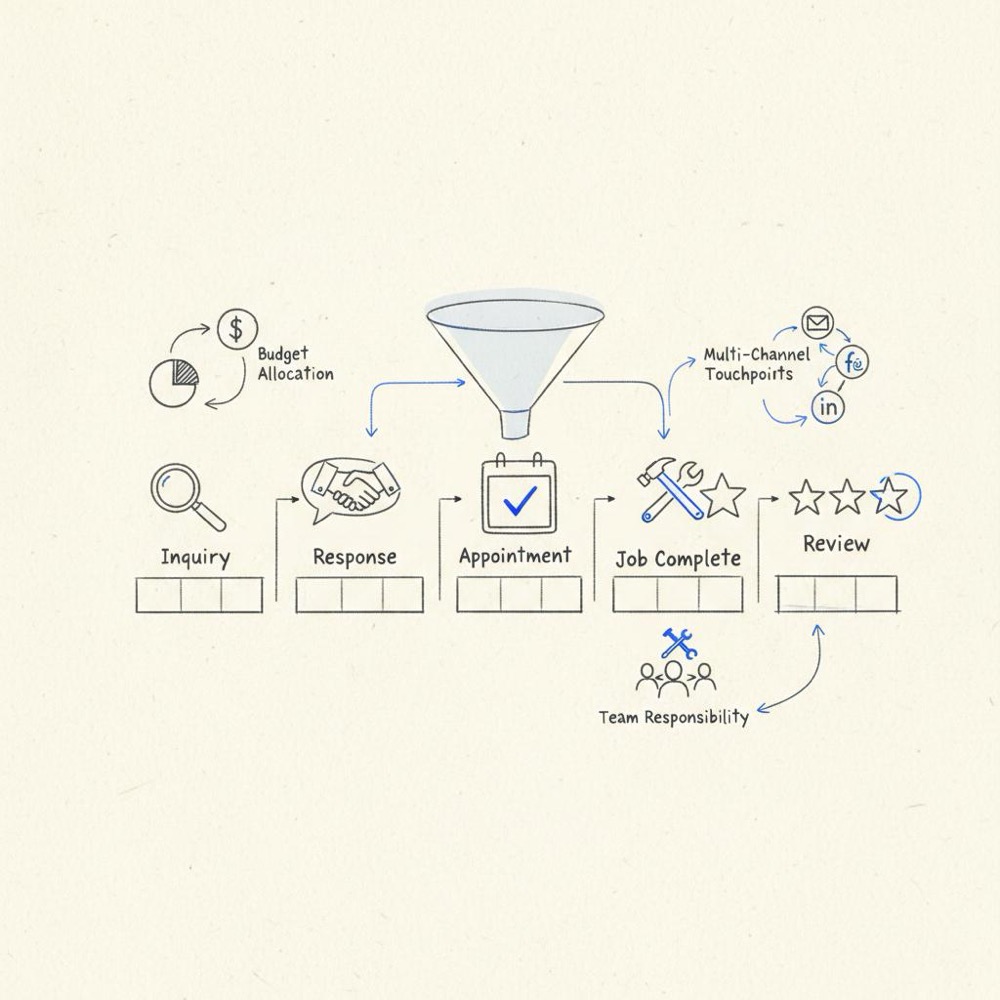
People on Thumbtack often message several pros. The person who replies first with a clear, friendly next step gets the best shot. Prepare short, personalizable templates so you can answer within minutes. That small change alone will lift your booking rate when you promote services on Thumbtack.
Buying many cheap leads often feels like momentum, but it can waste credits on low-value jobs and noisy matches. A smarter approach is selective buying, narrow targeting, and short A/B tests that reveal the price range that produces profitable bookings. Quality and conversion matter more than lead count.
Practical message templates you can copy and adapt
Here are three friendly, effective opening messages and one follow‑up. Personalize with the job detail and a local reference.
Template A - Quick evaluation
“Hi [Name], I’m [Your Name]. I’ve done similar multi-room interior paint jobs in [Neighborhood]. Does the job include priming or just top coats? I can come by for a free 15‑minute estimate - which day works this week?”
Template B - Package offer
“Hi [Name], we offer a standard 2‑room interior paint package that starts at $X and includes prep and two coats. If you send a couple of photos I’ll confirm whether this covers your job.”
Template C - Time-limited availability
“Hi [Name], I’m available next Wednesday and Saturday for estimates - if you need the job soon I can hold those spots for local clients. Want me to save one?”
Follow-up (48 hours)
“Just checking in - I can swing by for a quick estimate or suggest a ballpark number from photos. No pressure.”
Why these work
Short, human, and direct. Each message asks for one small action and gives a clear next step. They also include local context and pricing signals that reduce mismatch leads.
Targeting: say what you take, and what you won’t
Use Thumbtack’s filters to avoid bad matches. Narrow by travel distance, minimum job size, or scheduling windows. If you only do multi-room jobs or won’t touch messy renovs, put that in the profile and target. Rejecting irrelevant leads wastes credits and time.
When to widen and when to tighten
- Tighten targeting if credits convert poorly or you get many tiny jobs.
- Widen targeting if you’re not getting enough leads or you need to fill a slow week.
Pricing and packages that actually help
Stating a starting price often increases the chance the lead is a fit. Try three package tiers: Basic, Standard, and Premium. Packages save credits by repelling low-value inquiries and help customers self-select.
Measuring true ROI - more than credits
A simple math example helps clarify how costs add up. If a lead costs $30 and your conversion from lead to paying customer is 1-in-10, your raw cost per customer = $300. Add travel, materials, and time for follow-up and the real cost could be $400-$500 for a small job. But if the same customer becomes repeat business worth $1,500 over a year, then that acquisition cost is reasonable.
Measure each stage: credit -> response -> appointment -> job complete -> invoice paid -> review left. That sequence gives you conversion rates to multiply across and compute realistic acquisition costs.
What to track week to week
- Credits spent, leads received, replies sent, appointments booked, jobs completed, revenue, reviews earned.
Look for trends, not week-to-week noise. If your cost per lead rises sharply, pause and investigate profile or market changes.
Common mistakes that waste credits (and how to avoid them)
- Bidding on everything: set rules for what you will and won’t buy.
- Ignoring follow-up: leads don’t always reply immediately - use short nudges.
- Tracking only lead price: include time, travel, refunds, and repeat value.
- Neglecting review generation: ask at project close with a short link or text reminder.
Behavioral habits that save money
- Use saved replies, but personalize one line.
- Block overly broad categories you won’t serve.
- Pause spending when conversion drops and dig into why.
Advanced testing ideas to refine your approach
A/B testing works on Thumbtack if you change one thing at a time. Test these variables in small steps:
- Reply templates (tone, length, price mention).
- Package displays (three packages vs. single price).
- Targeting radius (10 miles vs. 25 miles).
- Response cadence (instant reply vs. 1-hour crafted reply).
Run each test until you have 20-40 leads per variation to see directional results; that’s often enough to spot meaningful differences.
Ways to improve conversions offline
Once you land appointments, process and finish the job well. Clear estimates, photos of progress, polite communication, and a friendly closeout script increase reviews and referrals - and make the original credit purchase pay off many times over.
Closeout script example
“Thanks for trusting us, [Name]. If you’re happy with the job, a quick review on Thumbtack helps us a lot. It also means I can keep offering great availability to local clients.”
How to budget and set cadence
Decide whether a steady daily spend or a burst approach fits your business. Daily spend keeps pipeline steady; bursts help chase seasonal spikes. Either way, measure. If your cost per lead doubles in a week, pause and troubleshoot.
When Thumbtack is a great fit - and when it isn’t
Thumbtack fits businesses with clear, repeatable services that can be scoped quickly: painters, cleaners, landscapers, locksmiths and many home‑service pros. It’s less predictable for complex, long‑sales‑cycle B2B services where customers prefer referrals and proposals.
Alternatives and how Thumbtack should fit in your mix
Don’t treat Thumbtack as your only source. Combine it with referral programs, local SEO, Google Ads, and repeat-customer outreach. When you promote services on Thumbtack, think of it as a paid acquisition channel that feeds into a broader customer lifecycle. See examples and portfolio work at Orvus projects or visit our homepage to learn more about how disciplined testing fits into a wider strategy.
How to ask for reviews without sounding pushy
Ask at a natural moment: after payment or a day after finishing. Keep the ask short and specific. Offer an easy link and thank them for time. Over time, reviews lower your cost per effective lead by making customers pick you sooner.
Example review request text
“Hi [Name], glad we finished up-if you have a moment, would you share a quick review of your experience? It helps small local businesses a lot.”
Frequently asked questions
How much does Thumbtack cost per lead?
There’s no single number. Cost varies by job type, geography, season, and competition. You’ll only know your cost after short tests in each market you serve.
Can I promote services on Thumbtack without overspending?
Yes. Control targeting, state availability and job size, and track conversions. Start small and optimize-don’t buy leads indiscriminately.
Does Smart Match guarantee good leads?
No guarantee. Smart Match helps route potential matches, but profile clarity, response speed, and follow-up determine results.
Extra: sample daily tracking spreadsheet (fields to copy)
Date | Lead ID | Category | Zip | Credits | Reply template | Response time | Appointment (Y/N) | Job value | Travel cost | Supplies | Profit | Review (Y/N)
Copy these columns into Google Sheets and set simple formulas to summarize weekly costs and conversions.
Next steps - if you want practical help
If you prefer expert assistance with setting up experiments, tracking and messaging, an outside partner can speed the learning curve. A short engagement-one or two 4-8 week experiments-often reveals whether Thumbtack will be profitable for your service lines.
Start a practical Thumbtack test with Orvus
Ready to set up disciplined Thumbtack testing? Learn how to run a 4-8 week experiment that reveals real customer-acquisition costs and the tactics that actually move the needle. Contact Orvus to get a practical setup and tracking plan that fits your schedule.
Closing practical checklist
- Clean profile and clear service categories.
- Packages or starting prices to filter leads.
- Fast, personal reply templates and a follow‑up sequence.
- A simple tracking sheet to measure credits → paid customers.
- Run a 4-8 week experiment and change one variable at a time.
Use this checklist to make Thumbtack a channel you can measure, tune and scale - not a guessing game.
There isn’t a single number. Lead cost varies by category, location, seasonal demand and competition. Expect anything from a few dollars for small rural jobs to dozens or even hundreds for high‑value metropolitan projects. The best way to know your cost is to run short, controlled tests and track credits-to-booked-job conversions.
Yes. Control your targeting, set clear availability and job-size filters, show simple pricing or packages, respond quickly, and track conversions. Start with small daily budgets, measure credit→appointment→pay conversions, and adjust targeting and messaging based on results.
Hiring a partner can speed learning and reduce wasted credits. Agencies like Orvus help set up the 4-8 week experiments, create tracking sheets, and refine messaging so you learn what actually pays. If you’d rather DIY, follow the blueprint in the article and keep tests small and measurable.
References
Want this kind of work done for your business?
We build and run AI-powered marketing and automation. 15 minutes, honest assessment.
Book a call